Normandy Chicken Plate: A Creamy, Herb-Infused French Classic
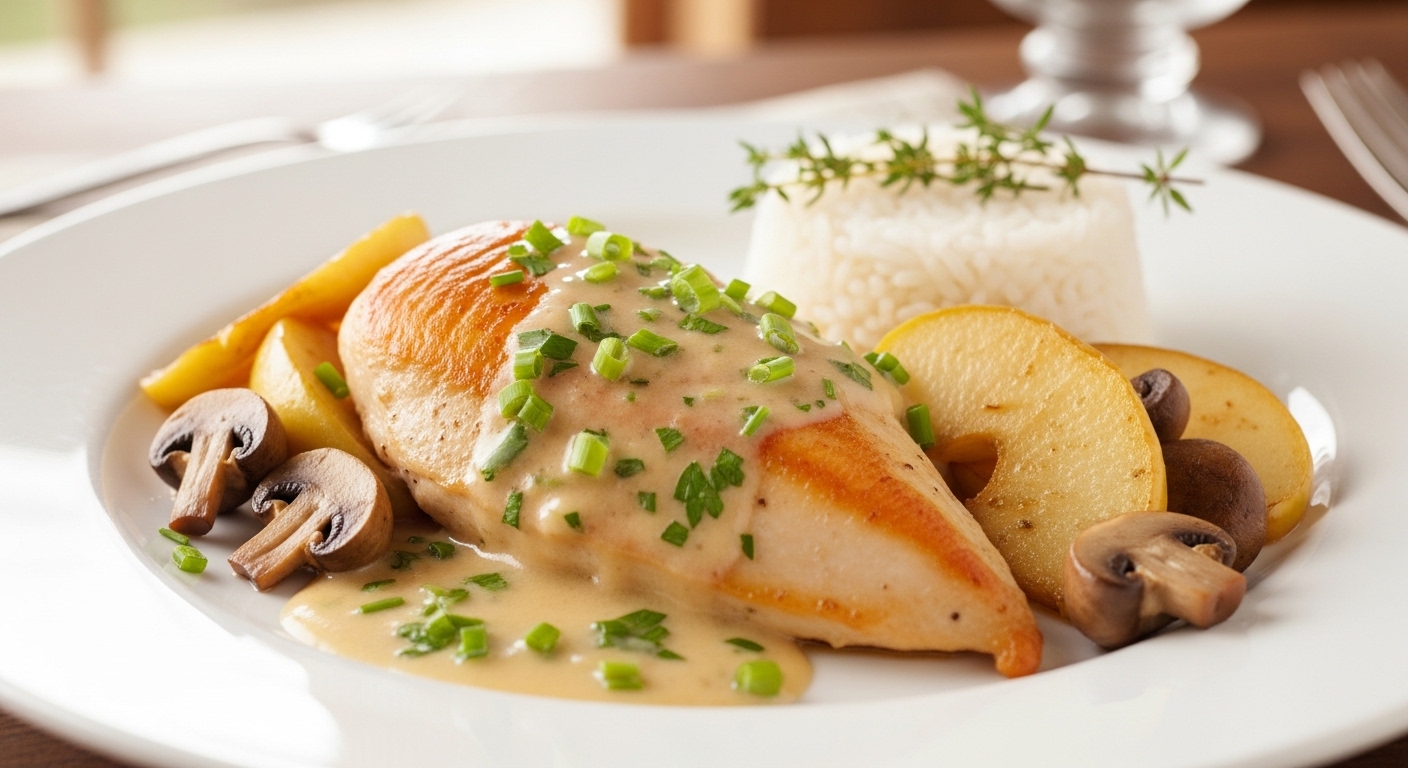
Imagine a dish that marries the tender juiciness of chicken with the rich, velvety embrace of cream, enhanced by the subtle sweetness of apples and the earthy depth of mushrooms—all harmonized with the unmistakable aroma of white wine. This is the essence of the **Normandy Chicken Plate**, a beloved French comfort food that has graced dinner tables across Europe and beyond. Originating from the Normandy region of France, this dish pays homage to the area’s famous apple orchards and dairy farms, using local ingredients like Calvados (apple brandy), Gruyère cheese, and fresh herbs to create a flavor profile that is both luxurious and deeply satisfying.
What sets the Normandy Chicken Plate apart is its balance of textures and flavors—crispy golden skin meets succulent meat, while a luscious sauce clings to every bite. It’s not just a meal; it’s an experience. Whether you’re hosting a cozy family dinner or impressing guests at a casual gathering, this classic recipe delivers elegance without complexity. And yes, you can absolutely recreate it at home with just a few key ingredients and some patience. Let’s dive into how to make this restaurant-worthy dish in your own kitchen.
Quick Recipe Summary Table
- Prep Time: 20 minutes
- Cook Time: 35 minutes
- Total Time: 55 minutes
- Servings: 4
- Cuisine: French
- Course: Main Course
- Calories (approx.): 520 kcal per serving
Why People Love the Normandy Chicken Plate
The magic of the Normandy Chicken Plate lies in its soulful simplicity. Unlike many gourmet recipes that rely on elaborate techniques or rare ingredients, this dish uses everyday staples transformed through thoughtful cooking. The combination of caramelized onions, sautéed mushrooms, tart apples, and deglazed white wine creates a sauce that’s both complex and approachable. When finished with heavy cream and a sprinkle of nutty Gruyère, the result is a silky, aromatic gravy that elevates even the most humble cut of chicken.
Another reason for its enduring popularity? It’s incredibly forgiving. Even if your sauce thickens too much or your chicken dries out slightly, the overall flavor remains rich and comforting. Plus, it pairs beautifully with sides like creamy mashed potatoes, wild rice pilaf, or crusty baguette—perfect for soaking up every last drop of that divine sauce.
Ingredients You’ll Need for Normandy Chicken Plate
Before we begin, gather these precise ingredients to ensure authenticity and balance:
For the Chicken:
- 4 bone-in, skin-on chicken thighs (about 6 oz each)
- 1 teaspoon kosher salt
- ½ teaspoon freshly ground black pepper
- 1 tablespoon olive oil
For the Sauce & Vegetables:
- 2 tablespoons unsalted butter
- 1 medium onion, finely chopped
- 8 ounces cremini mushrooms, sliced
- 1 Granny Smith apple, cored and thinly sliced
- 2 cloves garlic, minced
- 1 cup dry white wine (such as Sancerre or Chardonnay)
- 1 cup chicken stock
- ¾ cup heavy cream
- 1 tablespoon Dijon mustard
- 1 teaspoon fresh thyme leaves (or ½ tsp dried)
- Salt and pepper to taste
- ¼ cup grated Gruyère cheese (optional, but highly recommended)
- Fresh parsley, chopped (for garnish)
Step-by-Step Cooking Instructions
Follow these clear, beginner-friendly steps to master the Normandy Chicken Plate:
- Season and Sear the Chicken: Pat chicken thighs dry with paper towels. Season generously with salt and pepper. Heat olive oil in a large skillet over medium-high heat. Place chicken skin-side down and cook undisturbed for 6–7 minutes until golden brown and crispy. Flip and cook for another 4–5 minutes until internal temperature reaches 165°F (74°C). Transfer to a plate and cover loosely with foil to keep warm.
- Sauté Aromatics: In the same skillet, reduce heat to medium. Add 1 tablespoon butter and the onions. Cook for 5–6 minutes until soft and translucent. Add mushrooms and cook for 8–10 minutes until they release their moisture and turn deep golden. Stir in garlic and apple slices; cook for 3 more minutes.
- Deglaze with Wine: Pour in the white wine, scraping up any browned bits from the bottom of the pan (this builds flavor!). Let it simmer for 3–4 minutes until reduced by half.
- Add Stock and Simmer: Stir in chicken stock and bring to a gentle boil. Return chicken to the skillet, nestling it into the vegetables. Reduce heat to low, cover, and simmer for 10–12 minutes until chicken is fully cooked and tender.
- Finish the Sauce: Remove chicken from the skillet and set aside. Stir in heavy cream, Dijon mustard, and thyme. Simmer uncovered for 3–4 minutes until sauce thickens slightly. Taste and adjust seasoning with salt and pepper.
- Serve Immediately: Spoon sauce and vegetables over chicken. Sprinkle with grated Gruyère if desired. Garnish with fresh parsley before serving.
Chef Tips for Perfect Results
To elevate your Normandy Chicken Plate beyond restaurant quality, keep these expert tips in mind:
- Don’t Skip Deglazing: That fond (browned residue) at the bottom of your pan contains concentrated flavor—make sure to scrape it all into your sauce!
- Use Bone-In, Skin-On Thighs: They stay juicier during cooking and develop incredible flavor when seared properly.
- Control the Heat: Keep the sauce simmering gently—boiling will cause the cream to break or curdle.
- Taste as You Go: Adjust acidity (with a splash of vinegar), richness (more cream), or sweetness (extra apple) based on your preference.
Common Mistakes to Avoid
Even experienced cooks stumble sometimes. Here are pitfalls to sidestep:
- Overcooking the Chicken: Use a meat thermometer—chicken is done at 165°F internally.
- Using Sweet Apples: Stick with tart varieties like Granny Smith to avoid cloying sweetness.
- Rushing the Reduction: Letting the wine and stock simmer slowly intensifies the sauce—don’t skip this step.
- Skipping the Rest: Allowing the chicken to rest after searing ensures maximum juiciness.
Ingredient Substitutions & Variations
Make this dish your own with these smart swaps:
Substitutions:
- White Wine: Use apple cider vinegar + water (2:1 ratio) for non-alcoholic version.
- Heavy Cream: Swap with coconut milk (vegan option) or half-and-half.
- Gruyère: Parmesan works well as a substitute.
- Mushrooms: Cremini can be replaced with shiitake or button mushrooms.
Variations:
- Indian Style: Add 1 tsp garam masala, ½ tsp turmeric, and use yogurt instead of cream.
- Vegan/Vegetarian: Use chickpeas or cauliflower steaks instead of chicken.
- Lighter Version: Replace cream with Greek yogurt and add extra spinach.
Serving Suggestions
Pair your Normandy Chicken Plate with these crowd-pleasing sides:
- Creamy Mashed Potatoes: Their starchiness soaks up every bit of sauce.
- Wild Rice Pilaf: Adds earthy contrast and texture.
- Steamed Green Beans Almondine: Brightens the plate with crunch.
- Crusty Baguette: Essential for sopping up sauce—don’t forget!
Storage & Reheating Instructions
This dish keeps beautifully! Store leftovers in an airtight container in the fridge for up to 3 days. To reheat:
- Stovetop Method: Warm gently over low heat, adding a splash of cream or stock to loosen the sauce.
- Oven Method: Cover with foil and bake at 325°F (160°C) for 15–20 minutes.
- Avoid microwaving—it can make the chicken rubbery and separate the sauce.
Nutrition Facts (Approximate Per Serving)
- Calories: 520
- Protein: 38g
- Fat: 32g
- Carbohydrates: 12g
- Fiber: 2g
- Sugar: 6g
- Sodium: 680mg
Frequently Asked Questions (FAQs)
1. Can I make Normandy Chicken Plate ahead of time?
Yes! Assemble the dish up to a day ahead, refrigerate, then reheat gently on the stove or in the oven. Add extra cream if needed to restore richness.
2. What’s the role of Calvados in this recipe?
Traditionally, Calvados (apple brandy from Normandy) is used instead of white wine for extra depth and regional authenticity. If unavailable, high-quality brandy or even a splash of apple cider vinegar with a bit of sugar can mimic its tangy-sweet profile.
3. Why does my sauce separate?
This usually happens if the cream is added to a too-hot pan or stirred vigorously after boiling. Always keep the heat low when incorporating cream and stir gently.
4. Can I use chicken breasts instead of thighs?
Technically yes, but breasts lack the fat and collagen of thighs, making them prone to drying out. If using breasts, brine them first for extra moisture.
5. Is this dish gluten-free?
It’s naturally gluten-free if you use certified GF chicken stock and ensure your wine is processed without barley malt (most dry whites are safe).
Key Takeaways
- The Normandy Chicken Plate combines tender chicken, sweet-tart apples, earthy mushrooms, and a luxuriously creamy sauce inspired by French countryside cuisine.
- Authentic flavors come from deglazing with white wine and finishing with Gruyère—but smart substitutions keep it accessible.
- Proper searing, controlled simmering, and attention to doneness ensure foolproof results every time.
- With slight tweaks, this dish adapts beautifully to dietary needs—vegan, lighter, or spice-forward versions are entirely possible.
Conclusion: Bring French Comfort Home
There’s something profoundly comforting about a dish that feels indulgent yet achievable—one where each ingredient plays a meaningful role in a symphony of flavor. The Normandy Chicken Plate does exactly that. It doesn’t require hours in the kitchen or a pantry full of exotic goods; instead, it rewards you with deep satisfaction and delicious memories.
So roll up your sleeves, light your favorite playlist, and invite friends over for a meal that tastes like a Parisian bistro. Whether you follow the recipe faithfully or put your own spin on it, this classic will undoubtedly become a staple in your culinary rotation. After all, great food isn’t just about sustenance—it’s about connection, warmth, and joy shared around the table.
Now go ahead—grab those chicken thighs, chop those apples, and let the magic unfold. Your taste buds (and your guests) will thank you.