Seattle Salmon Plate: A Fresh, Flavorful Dish Inspired by the Pacific Northwest
Imagine biting into a perfectly seared salmon fillet, its skin crisp and golden, the flesh tender and buttery. That’s the essence of the Seattle Salmon Plate—a dish that captures the bold flavors and fresh ingredients of the Pacific Northwest in every bite. Whether you’re a seafood lover or someone looking to elevate your home-cooking game, this dish delivers on both taste and presentation. Originating from Seattle’s renowned seafood culture, the Seattle Salmon Plate is more than just a meal; it’s a celebration of coastal simplicity, sustainable sourcing, and culinary craftsmanship.
In this article, we’ll guide you through creating an authentic Seattle Salmon Plate at home—complete with a detailed recipe, chef tips, serving ideas, and even some creative variations. By the end, you’ll not only know how to cook salmon like a pro but also understand why this dish has become a beloved staple across kitchens and restaurants alike.
A Taste of the Pacific Northwest
The Seattle Salmon Plate draws inspiration from the region’s access to pristine Alaskan and Pacific salmon, paired with locally grown produce and artisanal accompaniments. It typically features wild-caught salmon—often sockeye or coho—grilled, baked, or pan-seared to perfection. What sets this dish apart isn’t just the fish itself, but the thoughtful combination of sides: roasted seasonal vegetables, creamy dill sauce, citrus-infused grains, or even a vibrant slaw.
What makes the Seattle Salmon Plate so popular? It balances rich, fatty salmon with bright, acidic elements that cut through the richness—think lemon zest, capers, or fresh herbs. The result? A harmonious plate that’s both satisfying and refreshing, perfect for any time of year.
Why Home Cooks Love the Seattle Salmon Plate
- Quick to Prepare: Despite its gourmet feel, the recipe can be made in under 40 minutes.
- Healthy & Nutrient-Rich: Packed with omega-3 fatty acids, protein, and essential vitamins.
- Customizable: Easily adapted for dietary preferences or ingredient availability.
- Restaurant-Quality Results: With the right techniques, you can serve restaurant-style salmon at home.
Quick Recipe Overview
| Prep Time | Cook Time | Total Time | Servings | Cuisine | Course | Calories (Approx.) |
|---|---|---|---|---|---|---|
| 15 minutes | 20 minutes | 35 minutes | 2 | Pacific Northwest / American Seafood | Dinner | 580 |
Ingredients for the Perfect Seattle Salmon Plate
Here’s everything you’ll need to create a stunning, restaurant-quality Seattle Salmon Plate:
For the Salmon:
- 2 wild-caught salmon fillets (6 oz each), skin-on
- 1 tablespoon olive oil
- 1 teaspoon sea salt
- ½ teaspoon freshly cracked black pepper
- 1 teaspoon smoked paprika (optional, for depth)
- Zest of 1 lemon
For the Lemon-Dill Sauce:
- ¼ cup Greek yogurt (or sour cream for richer flavor)
- 1 tablespoon fresh dill, finely chopped
- Juice of ½ lemon
- 1 teaspoon Dijon mustard
- Pinch of garlic powder
- Salt and pepper to taste
For Serving:
- 1 cup quinoa or wild rice, cooked
- 1 cup roasted asparagus or broccoli florets
- Fresh microgreens or arugula
- Lemon wedges for garnish
- Capers (optional)
Step-by-Step Cooking Instructions
Follow these simple steps to prepare an unforgettable Seattle Salmon Plate:
- Preheat your oven: Set it to 400°F (200°C). Line a baking sheet with parchment paper for easy cleanup.
- Prepare the salmon: Pat the fillets dry with paper towels. Rub them lightly with olive oil, then season generously with salt, pepper, smoked paprika, and lemon zest.
- Bake the salmon: Place the fillets skin-side up on the prepared baking sheet. Bake for 12–15 minutes, or until the internal temperature reaches 145°F (63°C) and the flesh flakes easily with a fork.
- Make the lemon-dill sauce: While the salmon bakes, whisk together all sauce ingredients in a small bowl until smooth. Taste and adjust seasoning.
- Cook the grain base: If using quinoa, rinse and cook according to package instructions. Wild rice may take longer—about 45–50 minutes.
- Roast the vegetables: Toss asparagus or broccoli with a drizzle of olive oil, salt, and pepper. Spread on another baking sheet and roast at 400°F for 10–12 minutes until tender-crisp.
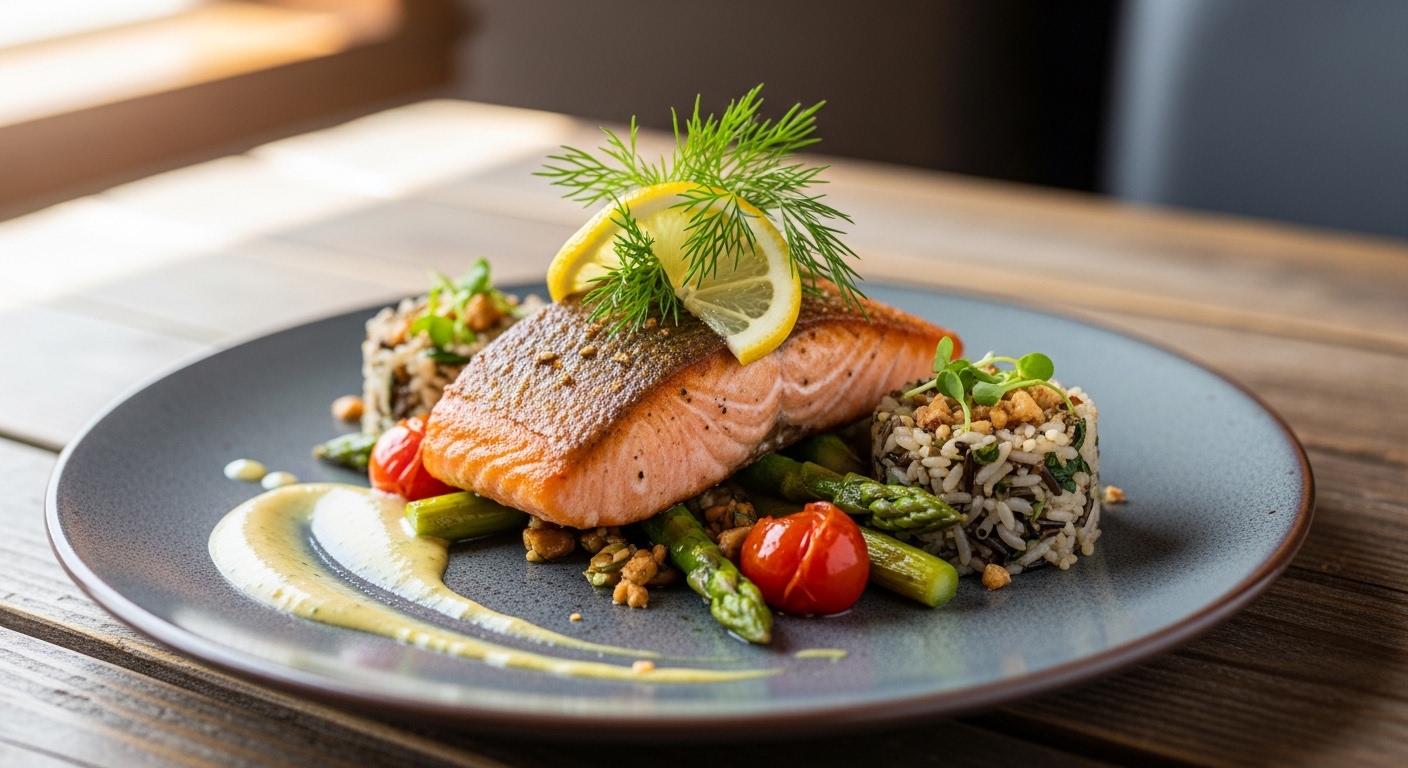
- Assemble the plate: Divide the warm grain between two plates. Top each with a salmon fillet. Arrange roasted vegetables around the sides. Drizzle with lemon-dill sauce. Garnish with microgreens, lemon wedges, and optional capers.
Chef Tips for Best Results
Want to take your Seattle Salmon Plate to the next level? Try these professional tips:
- Pat the salmon dry: Moisture prevents proper searing. Use paper towels before seasoning.
- Don’t overcook: Salmon continues cooking after removing from heat. Aim for slightly less doneness than your target.
- Use wild-caught salmon: It has a richer flavor and firmer texture compared to farmed varieties.
- Rest the fish briefly: Let the salmon sit for 2–3 minutes after baking to allow juices to redistribute.
- Flavor the grain: Cook your quinoa or rice with a splash of broth or lemon juice for extra aroma.
Common Mistakes to Avoid
Even experienced cooks can stumble when preparing salmon. Here are the most common pitfalls to avoid:
- Skipping the rest time: Rushing the resting step leads to dry, tough salmon.
- Using low-quality fish: Fresh, sushi-grade salmon makes a huge difference in taste and safety.
- Over-seasoning: Less is more—salmon has a delicate flavor. Stick to 3–4 key spices.
- Burning the sauce: Always whisk the lemon-dill sauce over low heat if warming it.
- Neglecting plating: A beautiful plate enhances the dining experience. Balance colors and textures.
Ingredient Substitutions and Variations
Flexibility is key in the kitchen. Here’s how to adapt the Seattle Salmon Plate:
Substitutions:
- Salmon: Use halibut, trout, or even chicken breast for a non-seafood option.
- Grain: Swap quinoa for couscous, or wild rice for brown rice.
- Veggies: Try roasted sweet potatoes, Brussels sprouts, or zucchini instead of asparagus.
- Sauce: Replace Greek yogurt with avocado crema or tahini dressing for a vegan twist.
Variations:
- Spicy Seattle Style: Add a dash of sriracha or harissa to the lemon-dill sauce.
- Asian Fusion: Glaze salmon with soy-ginger sauce and serve with jasmine rice and bok choy.
- Indian-Inspired: Marinate salmon in turmeric, cumin, and coconut milk, then bake with naan bread on the side.
- Vegan/Vegetarian: Use grilled portobello mushrooms or hearts of palm in place of salmon.
Serving Suggestions
Pair your Seattle Salmon Plate with complementary sides and drinks:
- Beverages: Serve with a crisp Sauvignon Blanc, Pinot Noir, or sparkling water with cucumber-lime.
- Appetizer Ideas: Start with a light arugula salad with shaved fennel and orange segments.
- Dessert: Finish with a lemon tart or mixed berry compote.
- Presentation Trick: Use slate boards or wooden platters for a rustic, coastal look.
Storage and Reheating Instructions
To enjoy leftovers:
- Refrigerate: Store cooked salmon and sides separately in airtight containers for up to 3 days.
- Reheat Safely: Warm salmon in the oven at 300°F (150°C) for 10–12 minutes. Avoid microwaving, which can make it rubbery.
- Reheat sides: Quinoa and roasted veggies reheat well in the microwave or stovetop.
- Make-ahead: Cook grains and prep vegetables ahead of time. Assemble and bake just before serving.
Nutrition Facts (Per Serving)
Each serving of the Seattle Salmon Plate provides:
- Calories: ~580
- Protein: 42g
- Fat: 32g (of which omega-3s: 4.5g)
- Carbohydrates: 38g
- Fiber: 6g
- Sugar: 4g
- Sodium: 720mg
- Vitamins: Rich in vitamin D, B12, and selenium
FAQ Section
1. Can I use frozen salmon for the Seattle Salmon Plate?
Yes! Just thaw it completely in the refrigerator overnight. Pat it dry thoroughly before seasoning to ensure even cooking and better texture.
2. How do I know when salmon is done cooking?
The salmon is ready when it turns opaque and flakes easily with a fork. The internal temperature should reach 145°F (63°C). Overcooked salmon becomes dry and loses its signature buttery texture.
3. Is the Seattle Salmon Plate suitable for a healthy diet?
Absolutely. Salmon is rich in heart-healthy omega-3s, and this recipe uses minimal oil and whole grains. You can further boost nutrition by adding more vegetables or using cauliflower rice instead of quinoa.
4. What’s the best way to store leftover lemon-dill sauce?
Keep it in an airtight container in the fridge for up to 5 days. Give it a stir before using, as the yogurt may separate slightly.
5. Can I grill the salmon instead of baking?
Definitely! Preheat your grill to medium-high. Oil the grates to prevent sticking, then cook skin-side down for 4–5 minutes per side. Keep a close eye on it to avoid charring.
Conclusion: Bring the Coast to Your Kitchen
There’s something magical about a dish that feels both luxurious and effortless—like the Seattle Salmon Plate. With its clean flavors, vibrant colors, and wholesome ingredients, it embodies the spirit of the Pacific Northwest. Whether you’re hosting dinner guests or treating yourself to a special meal, this recipe delivers on every front.
Now that you have the full recipe, tips, and serving suggestions, there’s no reason not to try it tonight. Grab some fresh salmon, fire up your oven, and let the aroma of lemon and herbs fill your kitchen. Before you know it, you’ll be serving a five-star dish that tastes like a summer day by the water—right in your own home.
So go ahead—make that Seattle Salmon Plate. Your taste buds will thank you, and your dinner table will never be the same.