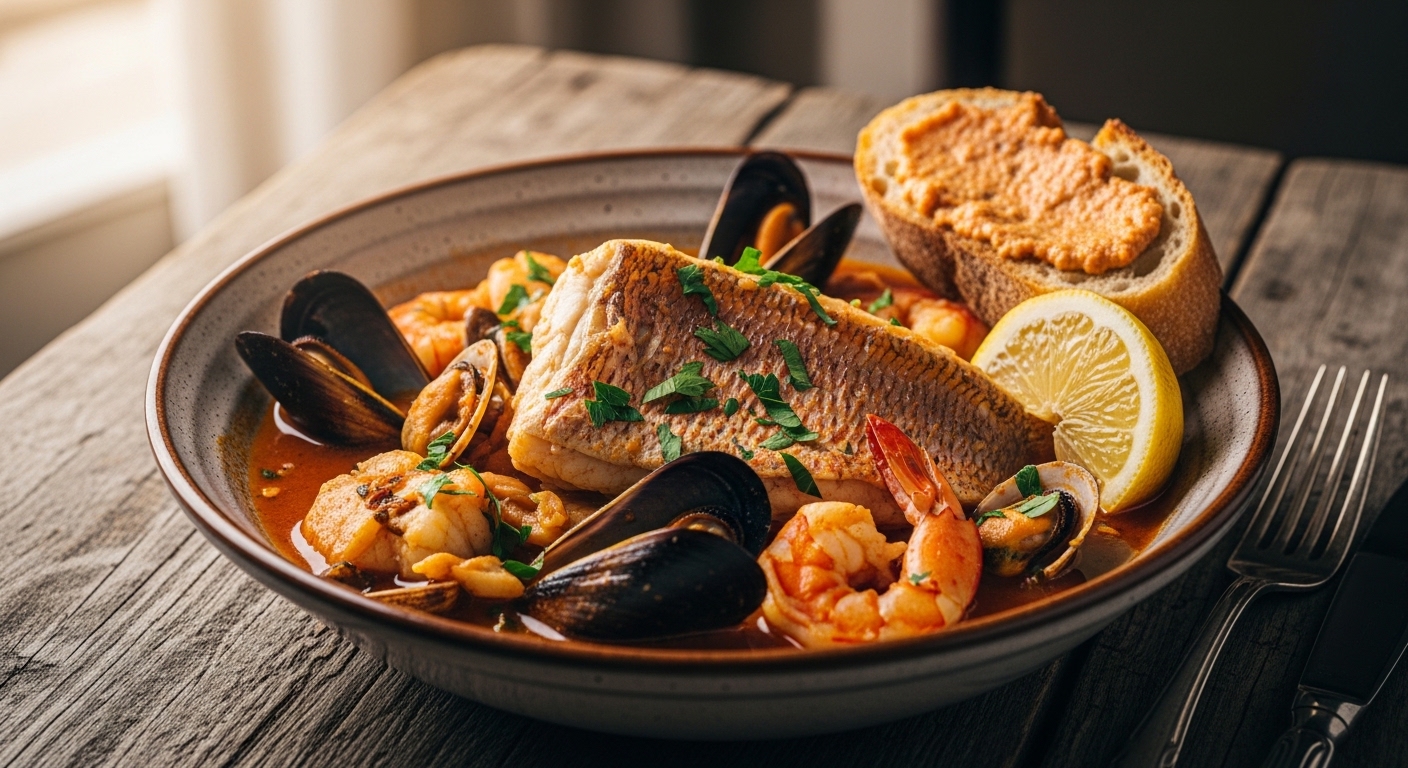
If you’ve ever dreamed of a warm, sun-drenched meal that captures the essence of Southern France—think fragrant herbs, vibrant vegetables, and fresh fish swimming in a rich, saffron-kissed broth—then Provençal Fish Stew is your answer. This classic dish, known locally as bouillabaisse, isn’t just a meal; it’s a celebration of the sea, the land, and Provençal culinary tradition. Rooted in Marseille, this hearty fish stew combines delicate white fish with shellfish, aromatic herbs like thyme and bay leaf, and a golden sofrito base infused with garlic, onions, tomatoes, and saffron. It’s a symphony of flavors that’s both comforting and sophisticated—perfect for family dinners or elegant entertaining.
Whether you’re a seafood lover, an admirer of French cuisine, or simply someone looking to elevate their home cooking, this recipe brings the soul of Provence right into your kitchen. In this detailed guide, we’ll walk you through every step of making an authentic Provençal Fish Stew, share pro tips for success, explore ingredient swaps, and even offer creative twists—like a vegetarian version or a restaurant-style upgrade. By the end, you’ll not only master the traditional recipe but also understand why this stew has been treasured across generations and continents.
Quick Recipe Summary Table
- Prep Time: 30 minutes
- Cook Time: 45 minutes
- Total Time: 1 hour 15 minutes
- Servings: 4–6
- Cuisine: French (Provençal)
- Course: Main Dish
- Calories (approx.): 380 per serving (with crusty bread)
Why Provençal Fish Stew Stands Out
Unlike other fish stews, Provençal Fish Stew is defined by its layered complexity and regional authenticity. The dish originated in the port city of Marseille, where fishermen created bouillabaisse using whatever fish they caught that day—often discarded varieties like rascasse (sea bass) or scorpionfish—to avoid waste. Over time, it evolved into a celebrated delicacy, now protected by a traditional method of preparation. What makes it special? The use of saffron, which gives the broth its signature golden hue and subtle earthy flavor, combined with a sofrito (tomato-onion-garlic base) and simmered with fennel, orange zest, and a bouquet garni. Served with rouille (a garlicky olive oil mayonnaise) and crusty bread, it’s more than food—it’s a cultural experience.
Modern versions often include lobster or shrimp for luxury, but the heart of the dish remains the harmony of fish, aromatics, and herbs. It’s ideal for seafood lovers, those seeking healthy, protein-rich meals, or anyone who appreciates bold Mediterranean flavors without heavy cream or butter.
Ingredients You’ll Need
Here’s everything required for an authentic, restaurant-quality Provençal Fish Stew. All ingredients are essential for achieving the true taste of Provence.
For the Stew Base:
- 2 tablespoons olive oil
- 1 large onion, finely chopped
- 3 garlic cloves, minced
- 1 fennel bulb, thinly sliced (reserve fronds for garnish)
- 2 carrots, diced
- 2 celery stalks, diced
- 1 large tomato, grated or finely chopped
- 1 teaspoon tomato paste
- ½ teaspoon saffron threads (soaked in 2 tbsp warm water for 10 minutes)
- 1 cup dry white wine (optional, substitute with fish stock if preferred)
- 4 cups fish stock (preferably homemade or low-sodium)
- 1 bay leaf
- 1 sprig each of fresh thyme and rosemary
- Zest of ½ orange
- Salt and freshly ground black pepper to taste
For the Fish & Shellfish:
- 1 lb (450g) firm white fish fillets (such as cod, halibut, or monkfish), cut into chunks
- 1 lb (450g) mixed seafood (shrimp, mussels, clams, squid—cleaned and prepared)
- 1 small potato, peeled and cubed
- 1 small sweet potato, peeled and cubed
For Rouille (Optional but Traditional):
- ½ cup mayonnaise
- 1 garlic clove, minced
- 1 tsp smoked paprika
- 1 tsp Dijon mustard
- Pinch of cayenne pepper
- 1 tbsp olive oil
Garnishes:
- Fresh parsley, chopped
- Chopped fennel fronds
- Crusty bread (for serving)
Step-by-Step Cooking Instructions
Follow these clear, beginner-friendly steps to create a stunning Provençal Fish Stew. Each stage builds flavor, so take your time and enjoy the process.
1. Prepare the Sofrito Base
Heat olive oil in a large, deep pot or Dutch oven over medium heat. Add the chopped onion and sauté for 5 minutes until soft. Stir in the garlic, fennel, carrots, and celery. Cook for another 7–10 minutes, stirring occasionally, until vegetables are tender and fragrant. This slow-cooked base is the foundation of your stew’s rich flavor.
2. Build the Broth
Add the grated tomato and tomato paste. Cook for 5 minutes, allowing the mixture to reduce slightly. Pour in the white wine (if using) and let it simmer for 2–3 minutes to cook off the alcohol. Now, add the saffron (with its soaking liquid), fish stock, bay leaf, thyme, rosemary, and orange zest. Season generously with salt and pepper. Bring to a gentle boil, then reduce heat and let it simmer for 15 minutes to meld the flavors.
3. Add Potatoes and Simmer
Stir in the cubed potatoes and sweet potatoes. Let the stew simmer for 10 minutes, or until the potatoes are just tender. This step ensures the broth absorbs all the vegetable goodness.
4. Introduce the Seafood
Carefully add the firm white fish chunks first, followed by the shellfish (mussels, clams, shrimp, and squid). Cover and cook for 8–10 minutes, or until the fish is opaque and flakes easily, and the shellfish open (discard any that don’t open). Stir gently to avoid breaking the fish.
5. Final Adjustments
Taste and adjust seasoning—add more salt, pepper, or a splash of lemon juice if needed. Remove the bay leaf and herb sprigs. Ladle the stew into bowls and serve immediately.
6. Serve with Rouille and Garnish
Mix together the rouille ingredients until smooth. Spoon a generous amount over each bowl of stew. Top with fresh parsley and fennel fronds. Accompany with crusty baguette slices for dipping.
Chef Tips for Perfect Provençal Fish Stew
- Use Fresh Saffron: Never skimp on quality. Real saffron delivers the golden color and distinct aroma. Soak it in warm water to release its full potential.
- Don’t Overcook the Fish: Add delicate fish like sole or flounder toward the end to prevent them from becoming tough.
- Layer the Flavor: The sofrito must caramelize slightly to develop depth. Don’t rush this step—low and slow is key.
- Make Ahead the Base: You can prepare the vegetable-soffritto broth up to a day in advance and refrigerate. Just reheat before adding seafood.
- Serve Hot and Fast: This stew tastes best immediately after cooking. The fish will continue to cook slightly from residual heat, so remove from heat when just done.
Common Mistakes to Avoid
- Using Too Much Salt: Fish is naturally salty, especially if using stock. Taste frequently and add salt sparingly.
- Overcrowding the Pot: Add seafood in batches if needed to prevent lowering the temperature too much.
- Skipping the Saffron Soak: This step unlocks the flavor. Don’t skip it!
- Not Cleaning Shellfish Thoroughly: Scrub mussels and clams under cold water and discard any cracked or open ones before cooking.
Ingredient Substitutions & Variations
Want to adapt the recipe? Here are flexible options:
- Vegetarian Provençal Stew: Skip the fish and seafood. Add chickpeas, artichoke hearts, and extra fennel. Use vegetable stock and serve with herbed polenta.
- Indian-Inspired Twist: Replace saffron with turmeric for color, add green chilies, ginger, and a splash of coconut milk. Serve with rice instead of bread.
- Lighter Version: Reduce oil, use low-fat mayo for rouille, and opt for leaner fish like tilapia.
- Gluten-Free: Ensure bread is gluten-free and check stock labels for allergens.
Serving Suggestions
- Traditional Style: With crusty baguette, rouille, lemon wedges, and a crisp rosé wine.
- Modern Plating: Serve in shallow bowls with microgreens, edible flowers, and a drizzle of truffle oil.
- Pairings: A chilled Sauvignon Blanc or a light rosé enhances the citrus and herbal notes.
Storage & Reheating
- Refrigeration: Store leftovers in an airtight container for up to 2 days. Note: Fish texture may soften upon reheating.
- Freezing: Not recommended—shellfish and fish become rubbery when frozen.
- Reheating: Warm gently on the stove over low heat, adding a splash of water or stock if too thick. Do not microwave, as it can split the fish.
Nutrition Facts (Approximate per Serving)
- Calories: 380
- Protein: 32g
- Fat: 18g (mostly unsaturated)
- Carbohydrates: 15g
- Fiber: 3g
- Sugar: 6g
- Sodium: 650mg (adjustable based on stock)
FAQs About Provençal Fish Stew
1. Can I make Provençal Fish Stew without saffron?
While traditional recipes call for saffron, you can substitute with turmeric for color and a hint of earthiness. For a richer flavor, try adding a pinch of smoked paprika. However, note that saffron contributes uniquely to the broth’s aroma.
2. Is bouillabaisse different from Provençal Fish Stew?
In essence, yes—bouillabaisse refers specifically to the Marseille version, which traditionally includes rascasse (scorpionfish), uses a complex fish bone broth, and is served with rouille and croutons. Our version is a modern, accessible adaptation of the same concept.
3. How do I choose fresh fish for this stew?
Look for firm, odorless fish with bright eyes and clear gills. Avoid fish with a strong “fishy” smell. Frozen fish is acceptable if labeled “previously frozen,” but fresh is ideal for texture and flavor.
4. Can I use canned fish like tuna or salmon?
No—these have too strong a flavor and won’t blend well. Stick to mild, firm white fish like cod, halibut, or snapper.
5. What if I don’t have fennel?
Substitute with celery or parsnip, though fennel adds a distinctive anise-like sweetness central to Provençal flavor. If unavailable, use 1 tbsp of fennel seed (ground) for aroma.
Key Takeaways
- Provençal Fish Stew is a vibrant, herb-infused dish rooted in Marseille’s coastal traditions.
- The secret lies in the sofrito base, saffron, and careful timing with seafood.
- Authentic presentation includes rouille, crusty bread, and fresh herbs.
- With simple substitutions, it can be made vegetarian, lighter, or globally inspired.
- This recipe is perfect for seafood lovers, healthy eaters, and anyone seeking a taste of the Mediterranean at home.
Conclusion: Bring the Coast to Your Kitchen
There’s something magical about a pot of bubbling, aromatic Provençal Fish Stew—it feels like a warm hug from the French Riviera. Whether you’re hosting a dinner party or craving comfort food with elegance, this recipe delivers on every front. It’s nutritious, satisfying, and deeply connected to the rhythms of Mediterranean life. With its balance of fresh seafood, earthy herbs, and golden saffron, it’s no wonder this stew has endured as a culinary icon.
So go ahead—gather your ingredients, light some candles, and let the sizzle of onions in olive oil transport you to Provence. Your taste buds will thank you. And who knows? You might just discover a new favorite way to enjoy seafood.
Leave a Reply