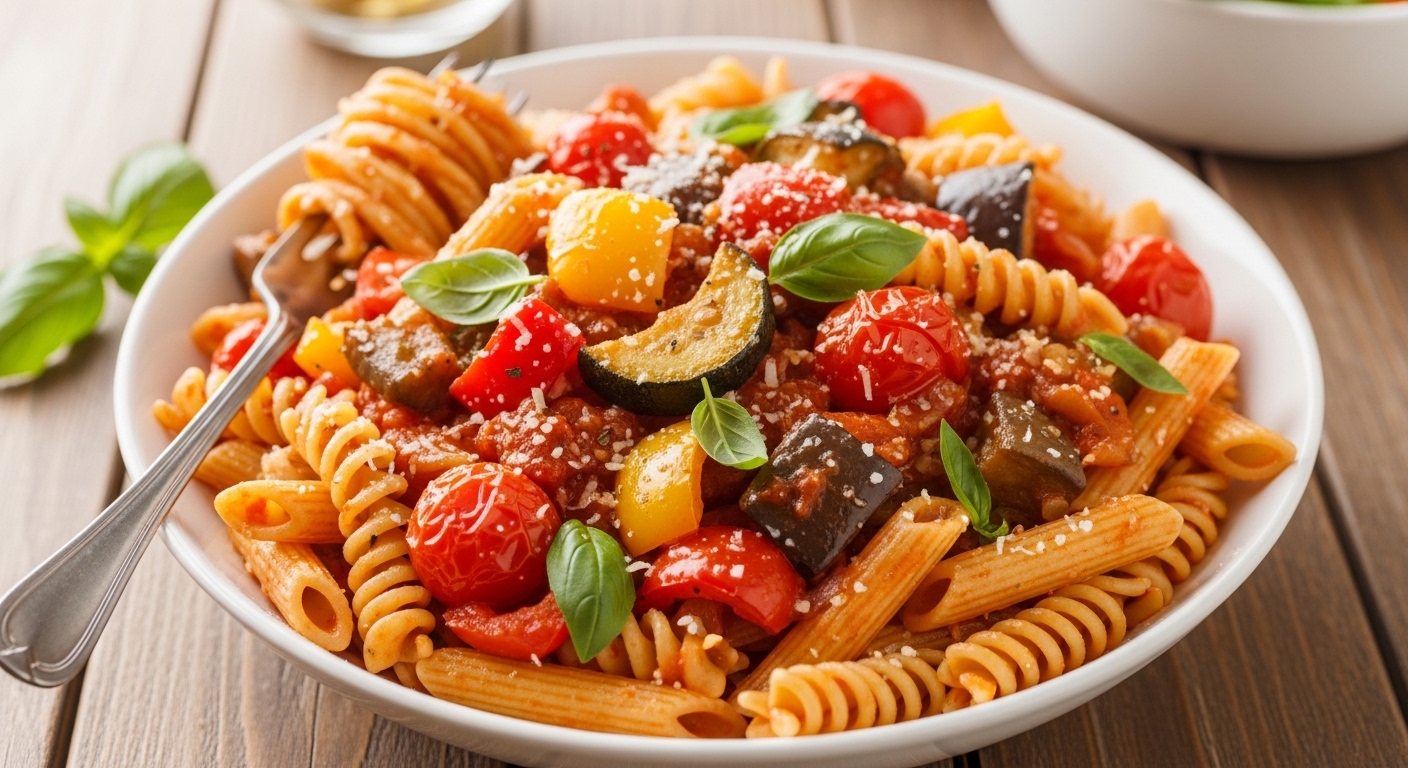
If you’re craving a warm, savory meal that’s bursting with Mediterranean flavors and satisfying pasta perfection, ratatouille pasta is the answer. This vibrant fusion dish combines the rustic, vegetable-rich essence of classic French ratatouille with the comforting embrace of al dente pasta. It’s not just a meal—it’s a celebration of summer produce, rich tomato sauce, aromatic herbs, and creamy texture that makes it perfect for weeknight dinners or elegant family gatherings.
Unlike traditional ratatouille, which is slow-cooked and chunky, this version marries tender pasta with a lightly simmered vegetable medley, creating a harmonious balance between texture and taste. Whether you’re a vegetarian, looking to use up leftover vegetables, or simply want a delicious twist on Italian cuisine, ratatouille pasta delivers bold flavor in every bite.
Quick Recipe Summary Table
| Prep Time | 15 minutes |
|---|---|
| Cook Time | 25 minutes |
| Total Time | 40 minutes |
| Servings | 4 |
| Cuisine | Italian-French Fusion |
| Course | Dinner |
| Calories (approx.) | 380 per serving |
What Is Ratatouille Pasta?
Ratatouille pasta blends the best of two culinary worlds: the hearty, herb-infused vegetable stew from Provence, France, and the beloved Italian staple of pasta. Traditionally, ratatouille features eggplant, zucchini, bell peppers, tomatoes, onions, and garlic, all slowly braised until tender and deeply flavored. When paired with pasta, these vegetables become a luscious, saucy base that clings perfectly to strands of spaghetti, penne, or fusilli.
This dish is especially popular among home cooks who want a flavorful, plant-based meal that’s both nutritious and satisfying. It’s packed with fiber, vitamins, and antioxidants—thanks to its colorful vegetable lineup—while still feeling indulgent thanks to olive oil, garlic, and fresh basil.
Why You’ll Love Making Ratatouille Pasta
- One-Pot Simplicity: While you may need to cook pasta separately, most of the vegetables can be sautéed and simmered together in one pan.
- Customizable & Flexible: Swap in seasonal veggies or add protein like chickpeas or grilled chicken.
- Great for Leftovers: The flavors deepen overnight, making it even richer the next day.
- Vibrant & Healthy: Loaded with colorful vegetables, it’s as good for your plate as it is for your taste buds.
Essential Ingredients for Perfect Ratatouille Pasta
Quality ingredients make all the difference. Use ripe, in-season produce for the best flavor and texture.
Vegetables:
- 1 large eggplant (about 1 lb), diced into ½-inch cubes
- 2 medium zucchinis, sliced into half-moons
- 1 red bell pepper, finely chopped
- 1 yellow onion, diced
- 3 cloves garlic, minced
- 1 cup cherry tomatoes, halved
Pasta & Flavor Base:
- 12 oz dried pasta (spaghetti, penne, or fusilli work best)
- ¼ cup extra virgin olive oil
- 1 tsp dried oregano
- ½ tsp smoked paprika (optional, adds depth)
- Salt and freshly ground black pepper to taste
Fresh Herbs & Finishing Touches:
- ¼ cup fresh basil, chopped
- ¼ cup grated Parmesan cheese (optional, for serving)
- Lemon zest (optional, brightens the dish)
Step-by-Step Cooking Instructions
- Prepare the Pasta: Bring a large pot of salted water to boil. Cook pasta according to package instructions until al dente. Drain and set aside. Reserve ½ cup of pasta water—this helps bind the sauce.
- Sauté the Eggplant: Heat olive oil in a large skillet over medium heat. Add eggplant and season with salt. Sauté for 6–8 minutes until golden and slightly softened. Remove and set aside.
- Cook the Vegetables: In the same pan, add more oil if needed. Sauté onion for 3–4 minutes until translucent. Add garlic and bell pepper; cook 2 minutes more.
- Add Zucchini and Tomatoes: Toss in zucchini and cherry tomatoes. Cook for another 5 minutes, stirring occasionally, until vegetables begin to soften.
- Simmer the Ratatouille: Return eggplant to the pan. Stir in oregano, smoked paprika, salt, and pepper. Reduce heat to low, cover, and let simmer for 10–12 minutes, stirring once or twice, until all vegetables are tender.
- Combine with Pasta: Add cooked pasta to the vegetable mixture. Toss well, adding reserved pasta water 2–3 tablespoons at a time if needed to create a glossy, cohesive sauce.
- Finish & Serve: Stir in fresh basil. Taste and adjust seasoning. Serve immediately, topped with Parmesan and lemon zest if desired.
Chef Tips for Best Results
- Salting Eggplant Prevents Bitterness: Sprinkle cubed eggplant with salt and let sit for 15 minutes, then rinse and pat dry before cooking. This removes excess moisture and bitterness.
- Don’t Overcook the Vegetables: Keep them slightly firm for better texture. They should be tender but not mushy.
- Use Fresh Herbs Last: Add basil at the end to preserve its bright, aromatic flavor.
- Toast Garlic Carefully: To avoid burnt garlic, cook it only until fragrant—about 30 seconds after adding.
- Make It Ahead: Assemble without pasta, cool, cover, and refrigerate for up to 3 days. Reheat with pasta added fresh.
Common Mistakes to Avoid
- Using Too Much Liquid: Ratatouille shouldn’t be watery. Let vegetables sweat and release their own juices.
- Skipping the Salt: Proper seasoning is key. Don’t rely on Parmesan alone for flavor.
- Overloading the Pan: Cook in batches if necessary to avoid steaming instead of sautéing.
- Using Low-Quality Olive Oil: Extra virgin oil provides the best aroma and taste—never substitute with generic vegetable oil.
Ingredient Substitutions & Variations
Vegetarian & Vegan Options:
- Replace Parmesan with nutritional yeast for a vegan-friendly cheesy note.
- Use chickpeas or white beans for added protein and heartiness.
Gluten-Free Version:
- Substitute regular pasta with gluten-free fusilli or brown rice pasta.
Indian-Inspired Twist:
- Add ½ tsp cumin, coriander, and garam masala for a warming, aromatic kick.
- Serve with naan bread and a dollop of mint-cilantro chutney.
Healthier Version:
- Use whole wheat pasta and reduce olive oil by half.
- Add spinach or kale at the last minute for extra greens.
Restaurant-Style Ratatouille Pasta:
- Braise vegetables slowly for 20 minutes to develop deeper flavor.
- Garnish with shaved Parmesan, microgreens, and a drizzle of aged balsamic glaze.
Serving Suggestions
Serve ratatouille pasta hot directly from the pan, garnished with fresh basil and a sprinkle of Parmesan. Pair it with:
- A crisp green salad dressed with lemon vinaigrette
- Crusty bread for dipping into the flavorful sauce
- White wine such as Sauvignon Blanc or Pinot Grigio
- For a decadent touch, top with grilled shrimp or chicken breast
Storage & Reheating Instructions
- Refrigerator: Store leftovers in an airtight container for up to 4 days.
- Freezer: Not recommended due to pasta texture changes.
- Reheating: Warm gently in a saucepan over low heat, adding a splash of water or broth to revive sauce consistency. Stir frequently to prevent sticking.
Nutrition Facts (Approximate Per Serving)
- Calories: 380
- Carbohydrates: 58 g
- Protein: 9 g
- Fat: 12 g
- Fiber: 7 g
- Sugar: 8 g
- Sodium: 420 mg
Key Takeaways
- Ratatouille pasta is a delicious fusion of French and Italian cuisines.
- It’s packed with vegetables, making it a healthy and satisfying meal.
- The dish is highly customizable—add proteins, swap veggies, or go gluten-free.
- Proper salting and cooking techniques ensure tender, flavorful results.
- Perfect for meal prep, leftovers taste even better the next day.
FAQs About Ratatouille Pasta
Can I make ratatouille pasta ahead of time?
Yes! You can prepare the vegetable base up to 3 days in advance. Just store it separately from the cooked pasta and combine when ready to serve.
Is ratatouille pasta suitable for vegetarians?
Absolutely. Traditional ratatouille is 100% plant-based. Just ensure any added cheese or broth used in the recipe is vegetarian.
How do I prevent my pasta from becoming soggy?
Drain pasta thoroughly and toss it with a little oil before combining with the sauce. Adding sauce gradually and using reserved pasta water helps maintain texture.
Can I freeze ratatouille pasta?
Not ideal. Freezing can make pasta mushy. However, the vegetable component freezes well and can be reheated with fresh pasta.
What’s the best pasta shape for ratatouille?
Penne, fusilli, or spaghetti work best because they hold onto the chunky vegetable sauce. Avoid long, thin noodles like linguine.
Conclusion: Ready to Whip Up Your Own Ratatouille Pasta?
Ratatouille pasta isn’t just a meal—it’s a burst of sunshine on a plate. With its vibrant colors, rich flavors, and wholesome ingredients, it brings comfort and creativity to your dinner table. Whether you’re cooking for one or feeding a crowd, this dish proves that healthy doesn’t have to mean boring.
Next time you’re in the mood for something warm, nourishing, and full of life, reach for this recipe. Grab some seasonal vegetables, toss them into a pot, and let the magic happen. Before you know it, you’ll be serving up restaurant-quality ratatouille pasta that’s equal parts delicious and nutritious.
So why wait? Gather your ingredients, fire up the stove, and let’s make some unforgettable ratatouille pasta together.
Leave a Reply