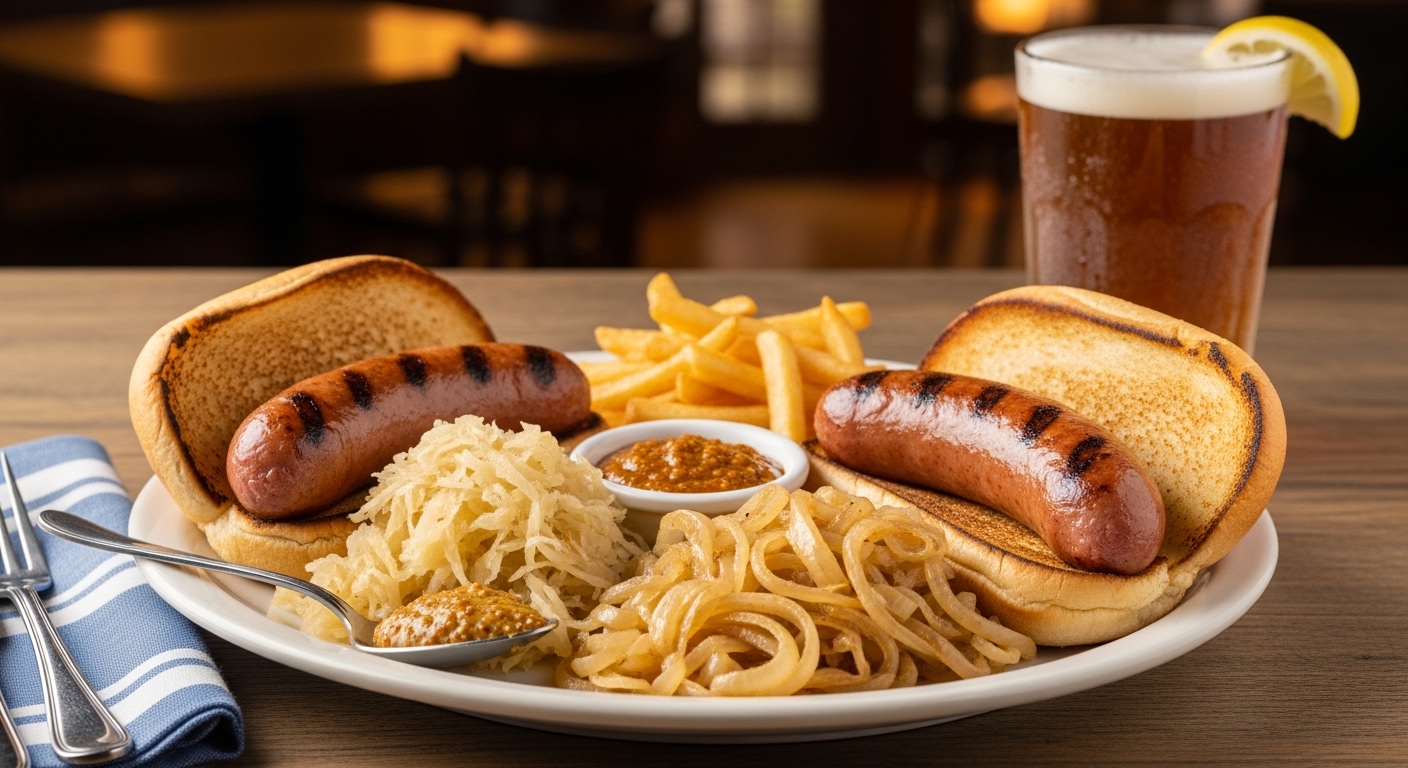
Imagine sinking your fork into a perfectly grilled bratwurst, smothered in rich sauerkraut, tangy mustard, and melted cheese—all served on a warm pretzel bun. That’s the magic of a Wisconsin Brat Plate. This hearty, flavor-packed dish isn’t just a meal; it’s a celebration of Midwestern culinary tradition. Rooted in German heritage and perfected over generations in Wisconsin, the brat plate is more than food—it’s a cultural icon that brings people together around picnic tables, tailgates, and family dinners alike.
Whether you’re a fan of bold flavors or someone looking for the ultimate comfort food, the Wisconsin Brat Plate delivers with its savory sausages, tangy sides, and irresistible combination of textures and tastes. In this article, we’ll dive deep into what makes this dish so beloved, how to make it at home like a true Wisconsinite, and why it belongs on every food lover’s bucket list.
What Is a Wisconsin Brat Plate?
A Wisconsin Brat Plate is a classic dish originating from the state’s strong German immigrant roots, especially in cities like Milwaukee. It typically features a grilled or boiled bratwurst—usually made from pork, veal, or beef—served with a side of warm, soft pretzel buns, sauerkraut, mustard, and sometimes onions. Topped with Swiss cheese and drizzled with beer cheese sauce, this plate is a symphony of savory, tangy, and creamy flavors.
The key to an authentic Wisconsin Brat Plate lies in balance. The bratwurst provides a juicy, meaty base, while the sauerkraut adds a refreshing acidity. The mustard cuts through the richness, and the cheese melts into a golden, gooey layer that ties everything together. Served with a cold beer—because, let’s be honest, it pairs perfectly—this dish is comfort food at its finest.
Wisconsin Brat Plate Recipe Summary Table
- Prep Time: 20 minutes
- Cook Time: 25 minutes
- Total Time: 45 minutes
- Servings: 4
- Cuisine: American (Midwest/German-Influenced)
- Course: Main Dish
- Calories: Approximately 680 per serving
Ingredients You’ll Need for an Authentic Wisconsin Brat Plate
Here’s exactly what you’ll need to recreate this iconic dish at home:
For the Brats and Beer Cheese Sauce:
- 4 fresh bratwursts (about 1/2 lb each)
- 1 cup dark beer (lager or pilsner works best)
- 1 cup milk
- 2 tablespoons butter
- 2 tablespoons all-purpose flour
- 2 cups shredded Swiss cheese
- 1 teaspoon Dijon mustard
- Salt and black pepper to taste
For Serving:
- 4 warm soft pretzel buns (store-bought or homemade)
- 1 cup sauerkraut, drained and warmed
- Kosher salt for boiling water (if boiling brats)
- Coarsely ground mustard
- Caramelized onions (optional)
- Lemon wedges (for garnish)
Step-by-Step Instructions to Make Your Own Wisconsin Brat Plate
1. Prep the Brats
If using fresh brats, you can either grill or boil them. For grilling: Preheat your grill to medium-high heat. Lightly oil the grates and grill the brats for about 12–15 minutes, turning occasionally, until golden and cooked through (internal temperature of 160°F). If boiling: Bring a pot of water to a gentle simmer with a tablespoon of kosher salt. Add the brats and cook for 10–12 minutes. Transfer to a baking sheet and finish under the broiler for 2–3 minutes to crisp the skin.
2. Make the Beer Cheese Sauce
In a medium saucepan, melt the butter over medium heat. Whisk in the flour to create a roux, cooking for 1–2 minutes until lightly golden. Slowly pour in the milk, whisking constantly to avoid lumps. Stir in the beer and bring to a gentle simmer. Reduce heat to low and gradually add the shredded Swiss cheese, stirring until smooth and creamy. Mix in the Dijon mustard, then season with salt and pepper. Keep warm.
3. Warm the Pretzel Buns and Sauerkraut
Slice the pretzel buns in half and lightly toast them in the oven or on the grill. Warm the sauerkraut in a small saucepan over low heat.
4. Assemble the Wisconsin Brat Plates
Place a grilled brat on each bottom half of the pretzel bun. Spoon a generous amount of beer cheese sauce over the top. Add a scoop of warm sauerkraut and a sprinkle of coarse mustard. Top with caramelized onions if desired. Serve immediately with lemon wedges on the side.
Chef Tips for the Perfect Wisconsin Brat Plate
- Use Fresh Bratwurst: Fresh brats have better texture and flavor than pre-cooked ones. Look for those sold in the refrigerated section.
- Don’t Skip the Beer in the Sauce: The beer adds depth and complexity—don’t substitute with water or broth.
- Grill for Best Flavor: Grilling gives brats a smoky char that’s impossible to replicate by boiling.
- Warm the Sauerkraut: Cold sauerkraut is too harsh. Warming it mellows the acidity and makes it easier to serve.
- Make Ahead the Cheese Sauce: Prepare the beer cheese sauce up to a day in advance and reheat gently before serving.
Common Mistakes to Avoid When Making a Wisconsin Brat Plate
- Overcooking the Brats: This dries out the sausage and ruins the texture. Use a meat thermometer to check internal temp.
- Lumpy Cheese Sauce: Always use a fine-mesh strainer when adding cheese to prevent clumps.
- Using Pre-Melted Cheese: Shred your own cheese for better melting and creaminess.
- Skipping the Mustard: The tang of coarse mustard balances the richness of the cheese and brat.
Ingredient Substitutions and Variations
- Vegetarian Option: Use smoked tofu sausage or vegan brats, and substitute dairy-free cheese.
- Gluten-Free: Use gluten-free pretzel buns or serve the brats over polenta instead.
- Spice It Up: Add a dash of hot mustard or red pepper flakes to the beer cheese sauce.
- Beef or Chicken Brat Alternative: Some regions use beef brats, though pork remains traditional.
- Indian-Inspired Twist: Replace sauerkraut with pickled mango chutney and serve with naan instead of pretzel buns.
Serving Suggestions to Elevate Your Wisconsin Brat Plate
Pair your Wisconsin Brat Plate with classic Midwest sides like:
- German potato salad with vinaigrette
- Coleslaw with a touch of honey
- Baked beans with brown sugar glaze
- Cornbread or garlic knots
For drinks, go classic with a cold Miller Lite or a craft German lager. For a non-alcoholic option, try sparkling apple cider.
Storage and Reheating Instructions
Storing Leftovers:
Store assembled brat plates in an airtight container in the refrigerator for up to 2 days. Keep cheese sauce separate if possible to prevent sogginess.
Reheating:
Reheat in a skillet over medium-low heat until warmed through. Alternatively, microwave individual portions with a damp paper towel to retain moisture.
Nutrition Facts (Approximate Per Serving)
- Calories: 680 kcal
- Protein: 28 g
- Fat: 42 g
- Carbohydrates: 48 g
- Fiber: 3 g
- Sugar: 6 g
- Sodium: 1,100 mg
- Cholesterol: 95 mg
*Note: Values vary based on ingredients used. Adjustments can be made for dietary needs.*
Key Takeaways
- A Wisconsin Brat Plate is a hearty, flavorful dish rooted in German-American tradition.
- The combination of grilled bratwurst, beer cheese sauce, sauerkraut, and pretzel buns creates a perfect balance of savory, tangy, and creamy.
- Making it at home requires fresh brats, a well-made beer cheese sauce, and proper assembly.
- With simple substitutions, it can be adapted for vegetarian, gluten-free, or spicier versions.
- This dish is perfect for game days, summer barbecues, or cozy family dinners.
FAQs About Wisconsin Brat Plates
1. Can I make the beer cheese sauce ahead of time?
Yes! The beer cheese sauce can be prepared up to 24 hours in advance. Store it in the refrigerator and reheat gently over low heat, adding a splash of milk or beer to restore consistency.
2. What’s the difference between a bratwurst and a hot dog?
Bratwurst are traditionally made with pork, veal, and spices like nutmeg and coriander. They’re usually thicker and more flavorful than standard hot dogs and require cooking methods like grilling or boiling before finishing.
3. Is sauerkraut necessary?
While not mandatory, sauerkraut is a hallmark of the Wisconsin Brat Plate. It adds essential tanginess that cuts through the richness of the cheese and brat. If unavailable, pickled red cabbage is a good alternative.
4. Can I use frozen brats?
It’s better to use fresh brats for the best texture and flavor. Frozen brats may be acceptable but often lack the same depth and should be thawed and cooked carefully.
5. How do I make this dish healthier?
Use leaner brats or turkey-based sausages, reduce the amount of cheese in the sauce, and load up on vegetables like roasted peppers or steamed broccoli on the side. Opt for whole-grain pretzel buns for added fiber.
Conclusion: Bring the Taste of Wisconsin Home Today
There’s something deeply satisfying about a Wisconsin Brat Plate—not just because it’s delicious, but because it tells a story. A story of immigrants who brought their culinary traditions to America and shaped a regional cuisine we still celebrate today. Whether you’re hosting a backyard barbecue, planning a football game feast, or simply craving something comforting and full of flavor, making a Wisconsin Brat Plate at home is easy, rewarding, and guaranteed to impress.
With this recipe, you now have everything you need to create an authentic, restaurant-quality version in your own kitchen. So fire up the grill, pour yourself a cold one, and get ready to enjoy one of America’s most beloved comfort foods. Trust us—once you’ve tasted a truly great Wisconsin Brat Plate, you’ll understand why it’s a staple in so many homes across the Midwest and beyond. Now it’s your turn to make it yours.
Leave a Reply