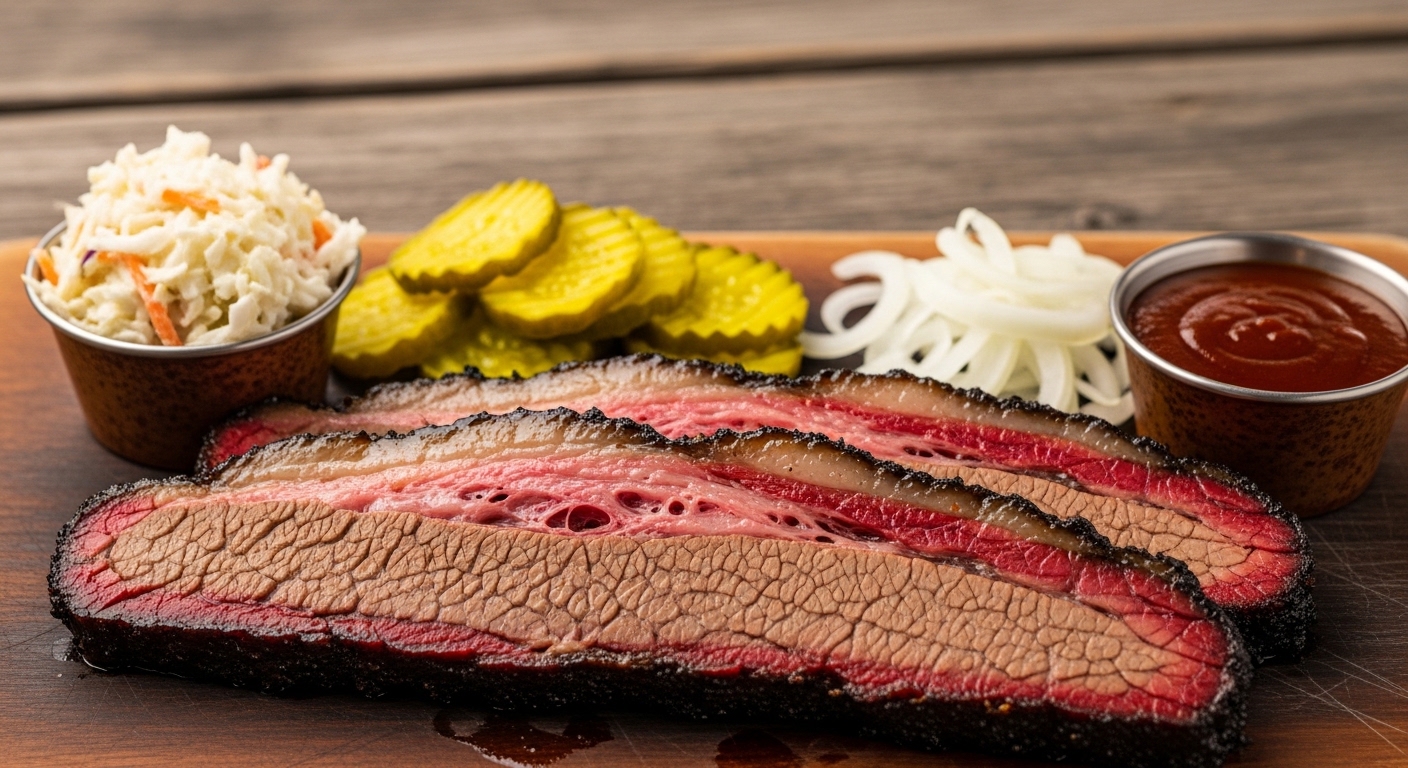
If you’re craving bold, smoky, melt-in-your-mouth beef that defines authentic Southern barbecue, the Texas brisket plate is your answer. This iconic dish isn’t just meat on a plate—it’s a cultural experience rooted in generations of pitmasters, low-and-slow smoking techniques, and a deep respect for flavor. Originating from Central Texas, where beef reigns supreme, the Texas brisket plate features a perfectly smoked brisket, sliced or chopped, served with minimal fuss and maximum impact. No sauce needed—just salt, pepper, fire, and time.
What makes this dish so beloved? It’s the harmony of bark, smoke ring, and juicy interior that only comes from 12+ hours of patient cooking over oak or post oak wood. Whether you’re a BBQ enthusiast or a first-time brisket eater, this recipe delivers restaurant-quality results at home. Let’s dive into how you can master the art of the Texas brisket plate—right in your backyard.
Texas Brisket Plate: Quick Recipe Summary
| Prep Time | 30 minutes |
| Cook Time | 12–16 hours |
| Total Time | 13–17 hours |
| Servings | 8–10 |
| Cuisine | American (Texas BBQ) |
| Course | Main Course |
| Calories (approx.) | 480 per serving |
What Makes a True Texas Brisket Plate?
The Texas brisket plate is defined by simplicity and technique. Unlike other BBQ styles drowned in sauce, Texas-style brisket relies on the natural flavor of the meat, enhanced only by a simple rub and hours of smoke. The goal? A dark, craggy bark on the outside, a pink smoke ring just beneath the surface, and a tender interior that pulls apart with ease.
Authentic Texas brisket is typically made from the packer brisket, which includes both the flat and the point cuts. The flat is leaner and more uniform, while the point is fattier and more flavorful. Many pitmasters prefer a whole packer cut for balance. The key is low-and-slow cooking—usually between 225°F and 250°F—using hardwood like oak, hickory, or pecan.
Serving style matters too. A traditional Texas brisket plate includes sliced brisket (against the grain), often with a side of pickles, onions, white bread, and maybe a smear of mustard or hot sauce. No beans, no coleslaw—just pure, unadulterated beef.
Ingredients for the Perfect Texas Brisket Plate
This recipe uses minimal ingredients to let the brisket shine. No fancy sauces, no sugar-heavy rubs—just the essentials.
- 1 whole packer brisket (10–14 lbs, untrimmed)
- ¼ cup coarse kosher salt
- ¼ cup coarse black pepper (freshly ground preferred)
- Optional: 1–2 tbsp garlic powder (for a slight twist, though purists skip it)
- Wood chunks or chips: Oak, post oak, or hickory (soaked if using a gas grill)
- Butcher paper or aluminum foil (for wrapping)
- Spray bottle with 50/50 apple cider vinegar and water (for spritzing)
Why These Ingredients?
- Salt and pepper only: This is the hallmark of Central Texas BBQ. The “Dalmatian rub” (black and white) enhances flavor without masking the meat.
- Whole packer brisket: Offers the best balance of lean and fatty sections for texture and moisture.
- Oak wood: Traditional in Texas, it provides a clean, medium smoke without overpowering the beef.
- Butcher paper: Preferred over foil for wrapping because it allows the brisket to “breathe,” preserving the bark while keeping it moist.
Step-by-Step Cooking Instructions
1. Trim the Brisket (1–2 hours before cooking)
Start by trimming the brisket. Remove the hard fat cap down to about ¼ inch thickness. This allows the rub to penetrate and smoke to adhere. Leave the thin membrane on the side (the “silver skin”) if it’s still intact—it helps hold the meat together.
Angle your knife to remove any large chunks of fat or silver skin on the meat side. The goal is a uniform surface for even cooking.
2. Apply the Rub (30 minutes before smoking)
Mix the salt and pepper in a bowl. Generously coat all sides of the brisket with the rub, pressing it gently into the meat. Let it sit at room temperature for 30 minutes while you prepare the smoker.
Pro tip: Don’t over-rub. A light, even layer is better than a thick crust that can burn.
3. Set Up the Smoker (225°F–250°F)
Preheat your smoker to 225°F–250°F. Use a two-zone setup if using a charcoal grill: coals on one side, meat on the other. Add wood chunks for smoke. For electric or gas smokers, follow manufacturer instructions for smoke infusion.
Maintain steady temperature throughout. Fluctuations can cause uneven cooking.
4. Smoke the Brisket (6–8 hours)
Place the brisket fat-side down (or up, depending on your smoker’s heat source) on the grates. Insert a meat probe into the thickest part of the flat. Close the lid and let it smoke.
After 3–4 hours, spritz the brisket every hour with the vinegar-water mix to keep the surface moist and encourage bark formation.
5. Wrap the Brisket (“The Texas Crutch”)
When the internal temperature reaches 165°F–170°F and the bark is dark and set, it’s time to wrap. This usually happens around the 6–8 hour mark.
Use butcher paper (not foil) to wrap the brisket tightly. This traps steam to push through the “stall” (when the temp plateaus around 150°F–170°F due to evaporative cooling).
6. Finish Cooking Until Tender (4–6 more hours)
Return the wrapped brisket to the smoker. Continue cooking until the internal temperature reaches 200°F–205°F. The best test? The probe should slide in like butter.
This can take 4–6 more hours, depending on size and smoker consistency.
7. Rest the Brisket (1–2 hours)
Once done, remove the brisket from the smoker and let it rest, still wrapped, in a cooler or warm oven (150°F) for at least 1 hour. This allows juices to redistribute.
Resting is non-negotiable. Skipping it leads to dry, tough meat.
8. Slice and Serve
Unwrap the brisket and place it on a cutting board. Slice against the grain into ¼-inch thick pieces. Separate the flat from the point if desired—the point can be chopped for burnt ends.
Serve immediately on a platter with pickles, sliced white onion, and white bread.
Chef Tips for the Best Texas Brisket Plate
- Use a reliable meat thermometer: Guessing leads to undercooked or overcooked brisket.
- Don’t peek too often: Every time you open the smoker, you lose heat and smoke.
- Patience is key: Rushing the process ruins the texture. Low and slow wins the race.
- Invest in good butcher paper: It’s worth the upgrade over foil for bark preservation.
- Let it rest: Even 30 minutes helps, but 1–2 hours is ideal.
Common Mistakes to Avoid
- Over-trimming the fat: Too little fat leads to dry brisket. Leave at least ¼ inch.
- Using too much rub: A heavy coat can burn and turn bitter.
- Wrapping too early: Wait until the bark is set (around 165°F).
- Cutting with the grain: Always slice against the grain for tenderness.
- Skipping the rest: Juices will spill out, leaving dry meat.
Ingredient Substitutions & Variations
- Rub variation: Add 1 tbsp garlic powder or smoked paprika for depth (though not traditional).
- Wood alternatives: Pecan for sweetness, hickory for boldness, or mesquite (use sparingly—it’s strong).
- Smaller cut: Use a flat cut (5–7 lbs) for quicker cooking, but expect less fat and moisture.
- Oven method: Not ideal, but possible. Smoke first on a grill, then finish in a 225°F oven wrapped in foil.
Serving Suggestions for Your Texas Brisket Plate
Keep it classic. A true Texas brisket plate needs minimal sides to let the beef shine.
- White bread: For sopping up juices.
- Dill pickles: Tart and crunchy contrast.
- Thinly sliced white onion: Adds a sharp, fresh bite.
- Hot sauce or mustard: Optional condiments for those who like a kick.
- Texas toast: A thicker, buttery alternative to plain bread.
Avoid heavy sides like mac and cheese or baked beans—they overpower the brisket’s subtlety.
Storage & Reheating Instructions
Store leftover brisket in an airtight container in the refrigerator for up to 4 days. For longer storage, freeze wrapped slices for up to 3 months.
To reheat, place slices in a baking dish, cover with foil, and warm in a 275°F oven for 20–30 minutes. Add a splash of beef broth to prevent drying.
Never microwave brisket—it turns tough and rubbery.
Nutrition Facts (Approximate per Serving)
- Calories: 480
- Total Fat: 32g
- Saturated Fat: 12g
- Cholesterol: 120mg
- Sodium: 800mg
- Protein: 42g
- Carbohydrates: 2g
Note: Values based on a 6-oz serving of lean brisket with salt and pepper rub. Sides not included.
Key Takeaways
- The Texas brisket plate is a celebration of simplicity, smoke, and skill.
- Use a whole packer brisket, salt and pepper rub, and oak wood for authenticity.
- Cook low and slow (225°F–250°F) for 12–16 hours, wrapping in butcher paper around 165°F.
- Rest the brisket for at least 1 hour before slicing against the grain.
- Serve with pickles, onions, and white bread—no sauce needed.
FAQs About Texas Brisket Plate
1. Can I make Texas brisket without a smoker?
Yes, but it’s challenging. Use a charcoal grill with indirect heat and wood chunks, or a gas grill with a smoker box. For best results, invest in a smoker or borrow one from a friend.
2. How do I know when the brisket is done?
The internal temperature should reach 200°F–205°F, and the probe should slide in with little resistance. The bark should be dark and firm.
3. Should I wrap brisket in foil or butcher paper?
Butcher paper is preferred in Texas BBQ. It keeps the brisket moist while preserving the bark. Foil steams the meat, softening the crust.
4. Can I use a pre-trimmed brisket?
Yes, but pre-trimmed briskets often have too much fat removed. Check the thickness of the fat cap—it should be about ¼ inch.
5. How long does smoked brisket last?
Refrigerated: 3–4 days. Frozen: up to 3 months. Reheat gently in the oven with broth to retain moisture.
Conclusion: Master the Texas Brisket Plate at Home
The Texas brisket plate isn’t just a meal—it’s a rite of passage for any BBQ lover. With patience, the right tools, and this detailed guide, you can recreate the smoky, tender magic of Central Texas in your own backyard. Remember: great brisket takes time, but every minute is worth it.
So fire up the smoker, grab that packer cut, and embrace the journey. Your taste buds—and your guests—will thank you. Now go make some smoke.
Leave a Reply