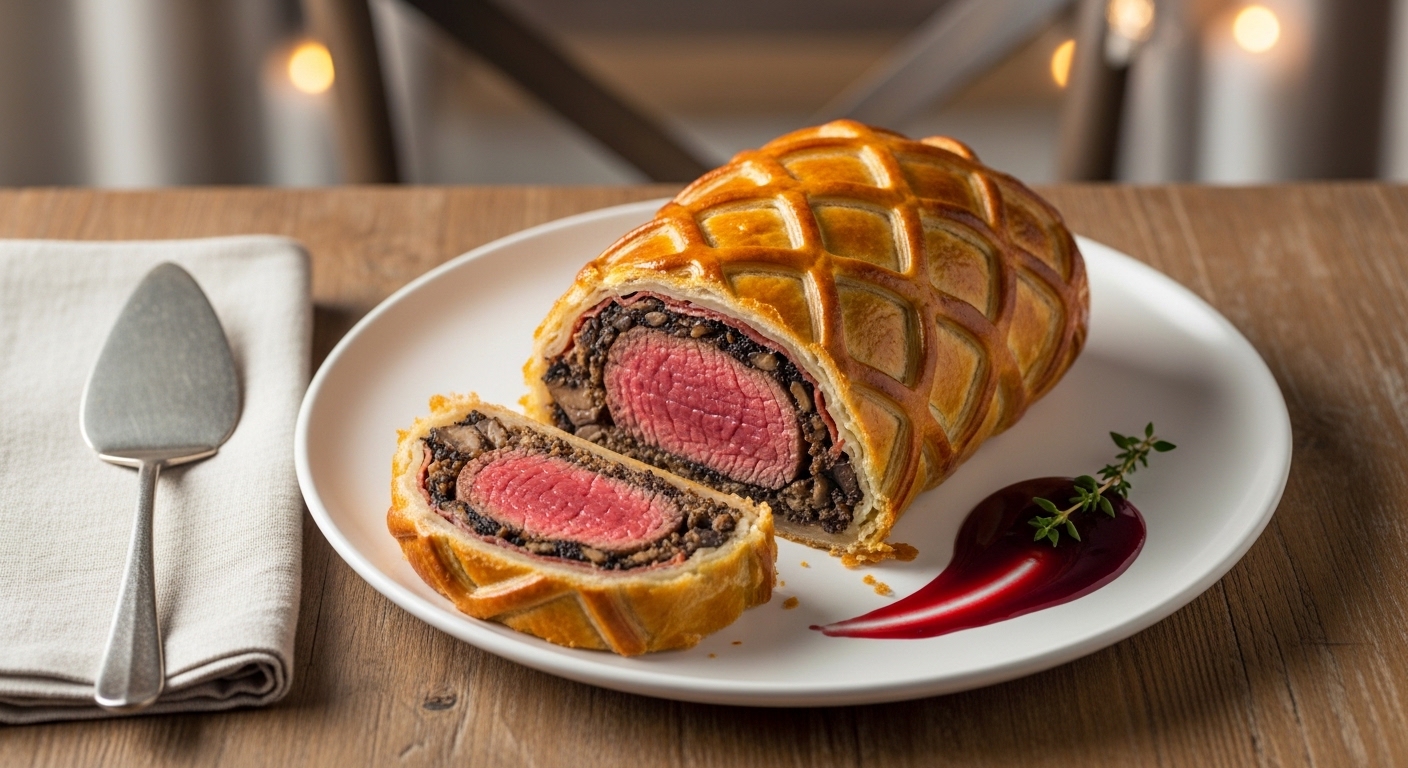
Imagine a golden, flaky puff pastry crust encasing tender, juicy beef tenderloin, layered with rich mushroom duxelles and savory prosciutto—this is Beef Wellington, the crown jewel of elegant home-cooked meals. Loved by food enthusiasts and dinner party hosts alike, this classic British dish combines simplicity with sophistication. Whether you’re celebrating a special occasion or simply want to impress your guests, Beef Wellington delivers restaurant-quality flavor and presentation without requiring a Michelin-starred kitchen. In this detailed guide, you’ll learn how to master this iconic recipe step by step—with chef-approved tips, common pitfalls to avoid, and creative variations to suit any taste.
Why Beef Wellington Is a Culinary Icon
Beef Wellington isn’t just a meal—it’s a statement. With roots often traced back to 19th-century England (and possibly named after the Duke of Wellington), this dish gained global fame through celebrity chefs like Gordon Ramsay and Julia Child. What makes it so irresistible? The contrast of textures: crisp, buttery pastry giving way to melt-in-your-mouth beef, all tied together with umami-rich mushroom duxelles. It’s hearty yet refined, rustic yet luxurious—perfect for holidays, anniversaries, or any moment that calls for something extraordinary.
Despite its reputation as a complex dish, Beef Wellington is more approachable than it seems—especially when broken down into manageable steps. With the right technique and a few quality ingredients, even home cooks can achieve stunning results. Let’s dive into everything you need to know to create your own perfect Beef Wellington.
Quick Recipe Summary
| Prep Time | 45 minutes |
|---|---|
| Cook Time | 40–50 minutes |
| Total Time | 1 hour 35 minutes |
| Servings | 4–6 people |
| Cuisine | British / European |
| Course | Main Course |
| Calories (approx.) | 680 per serving |
Ingredients List (Serves 4–6)
For the best Beef Wellington, use high-quality ingredients. Here’s exactly what you’ll need:
- Beef tenderloin center cut: 1.5 to 2 lbs (680–900g), trimmed
- Kosher salt: 1½ tsp, divided
- Freshly ground black pepper: 1 tsp
- Olive oil: 2 tbsp
- Dijon mustard: 2 tbsp (optional but recommended)
- Prosciutto: 6–8 thin slices
- Puff pastry: 1 lb (450g), store-bought or homemade, thawed if frozen
- Egg wash: 1 egg beaten with 1 tbsp water
For the Mushroom Duxelles:
- Cremini or button mushrooms: 12 oz (340g), finely chopped
- Shallots: 2 medium, minced
- Garlic: 2 cloves, minced
- Fresh thyme: 1 tsp, chopped
- Butter: 2 tbsp
- Olive oil: 1 tbsp
- Salt and pepper: to taste
Step-by-Step Cooking Instructions
1. Prepare the Beef
Start by seasoning the beef tenderloin generously with salt and pepper on all sides. Heat olive oil in a large skillet over high heat. Sear the beef on all sides—about 2 minutes per side—until a deep brown crust forms. This step locks in juices and adds flavor. Remove from heat and let cool slightly. Once cool enough to handle, brush the entire surface with Dijon mustard for a tangy kick that complements the richness of the beef.
2. Make the Mushroom Duxelles
In the same skillet, melt butter with olive oil over medium heat. Add minced shallots and garlic, sautéing until soft and fragrant—about 2 minutes. Add the chopped mushrooms and thyme. Cook, stirring frequently, until all moisture evaporates and the mixture becomes a thick, paste-like consistency—this usually takes 8–10 minutes. Season with salt and pepper. Let the duxelles cool completely before using; warm mushrooms can melt the puff pastry.
3. Assemble the Wellington Wrap
Lay out a large piece of plastic wrap on your work surface. Arrange the prosciutto slices in an overlapping layer, forming a rectangle large enough to wrap around the beef (about 12×10 inches). Spread the cooled mushroom duxelles evenly over the prosciutto. Place the seared beef in the center and use the plastic wrap to tightly roll the prosciutto and duxelles around the beef. Twist the ends of the plastic wrap to secure and refrigerate for 15–20 minutes to firm up.
4. Wrap in Puff Pastry
Roll out the puff pastry on a lightly floured surface to a rectangle slightly larger than your beef package. Unwrap the beef from the plastic and place it in the center of the pastry. Brush the edges of the pastry with egg wash. Fold the pastry over the beef, sealing the seams tightly. Trim any excess pastry and crimp the edges with a fork. Flip the Wellington seam-side down onto a parchment-lined baking sheet.
Optional: Create a decorative lattice or brush with additional egg wash for a glossy finish. Chill the assembled Wellington for 15 minutes before baking—this helps the pastry rise evenly.
5. Bake to Perfection
Preheat your oven to 400°F (200°C). Bake the Beef Wellington for 35–45 minutes, depending on your desired doneness. Use a meat thermometer to check internal temperature: 120–125°F (49–52°C) for rare, 130–135°F (54–57°C) for medium-rare. The pastry should be golden brown and crisp. Let rest for 10 minutes before slicing—this allows juices to redistribute.
Chef Tips for Best Results
- Chill between steps: Keeping components cold prevents the puff pastry from becoming soggy.
- Don’t skip the sear: A proper sear builds flavor and ensures a juicy interior.
- Use a meat thermometer: Overcooking is the #1 mistake—Beef Wellington is best served rare to medium-rare.
- Roll pastry evenly: Thin spots can tear or burn; thick spots won’t cook through.
- Rest before slicing: Cutting too soon causes juices to spill out.
Common Mistakes to Avoid
- Soggy bottom crust: Caused by excess moisture from undercooked mushrooms or warm duxelles. Always cool completely.
- Tough beef: Overcooking ruins tenderness. Stick to medium-rare unless you prefer well-done (not recommended).
- Leaky pastry: Seal seams tightly and avoid overfilling.
- Uneven baking: Rotate the baking sheet halfway through for even browning.
Ingredient Substitutions & Variations
Want to customize your Beef Wellington? Here are some tasty alternatives:
- Mushroom swap: Use wild mushrooms like porcini or shiitake for deeper flavor.
- Vegetarian version: Replace beef with a thick portobello mushroom cap or lentil-walnut loaf.
- Vegan option: Use plant-based puff pastry, vegan butter, and a beetroot or chickpea-based “duxelles.”
- Herb twist: Add chopped parsley or rosemary to the duxelles for freshness.
- Spicy kick: Mix a pinch of red pepper flakes into the mustard coating.
Serving Suggestions
Beef Wellington shines as a centerpiece dish. Serve it with:
- Roasted vegetables (carrots, asparagus, or Brussels sprouts)
- Creamy mashed potatoes or truffle mashed cauliflower
- A simple arugula salad with lemon vinaigrette
- A bold red wine reduction or red wine jus
Pair with a full-bodied red wine like Cabernet Sauvignon or Malbec to complement the rich flavors.
Storage & Reheating Instructions
Store leftover Beef Wellington in an airtight container in the refrigerator for up to 3 days. To reheat, place slices on a baking sheet and warm in a 350°F (175°C) oven for 10–15 minutes until heated through. Avoid microwaving—it makes the pastry soggy. For best results, enjoy within 24 hours.
Note: Beef Wellington does not freeze well due to the delicate puff pastry. If you must freeze, wrap tightly and consume within 1 month—but expect some texture loss.
Nutrition Facts (Approximate per Serving)
- Calories: 680
- Total Fat: 48g
- Saturated Fat: 18g
- Cholesterol: 120mg
- Sodium: 780mg
- Total Carbohydrates: 32g
- Dietary Fiber: 2g
- Sugars: 3g
- Protein: 38g
Key Takeaways
- Beef Wellington is a luxurious yet achievable dish perfect for special occasions.
- Success hinges on proper searing, fully cooled duxelles, and careful assembly.
- Use a meat thermometer to avoid overcooking—medium-rare is ideal.
- Customize with vegetarian, vegan, or herb-infused variations.
- Serve with sides that balance richness, like roasted veggies or a crisp salad.
Frequently Asked Questions (FAQs)
Can I make Beef Wellington ahead of time?
Yes! Assemble the Wellington up to 24 hours in advance, wrap tightly in plastic, and refrigerate. Bake just before serving for best texture.
What cut of beef is best for Beef Wellington?
Beef tenderloin (center-cut) is ideal—it’s lean, tender, and cooks evenly. Avoid cheaper cuts like sirloin, which can become tough.
Can I use frozen puff pastry?
Absolutely. Just ensure it’s fully thawed in the refrigerator overnight. Never use frozen pastry straight from the freezer.
Why is my Beef Wellington soggy underneath?
This usually happens when the mushroom duxelles isn’t cooked long enough to remove moisture. Always cook until dry and cool completely before wrapping.
Is Beef Wellington gluten-free?
Traditional Beef Wellington is not gluten-free due to puff pastry. However, you can use certified gluten-free puff pastry for a safe alternative.
Conclusion: Ready to Impress?
Beef Wellington may seem intimidating, but with this guide, you’re equipped to create a masterpiece that wows every time. From the first golden slice to the last bite, this dish delivers elegance, flavor, and satisfaction. Whether you’re cooking for loved ones or treating yourself, mastering Beef Wellington is a culinary achievement worth celebrating. So gather your ingredients, preheat that oven, and get ready to serve up something truly unforgettable. Your dinner table will never be the same.