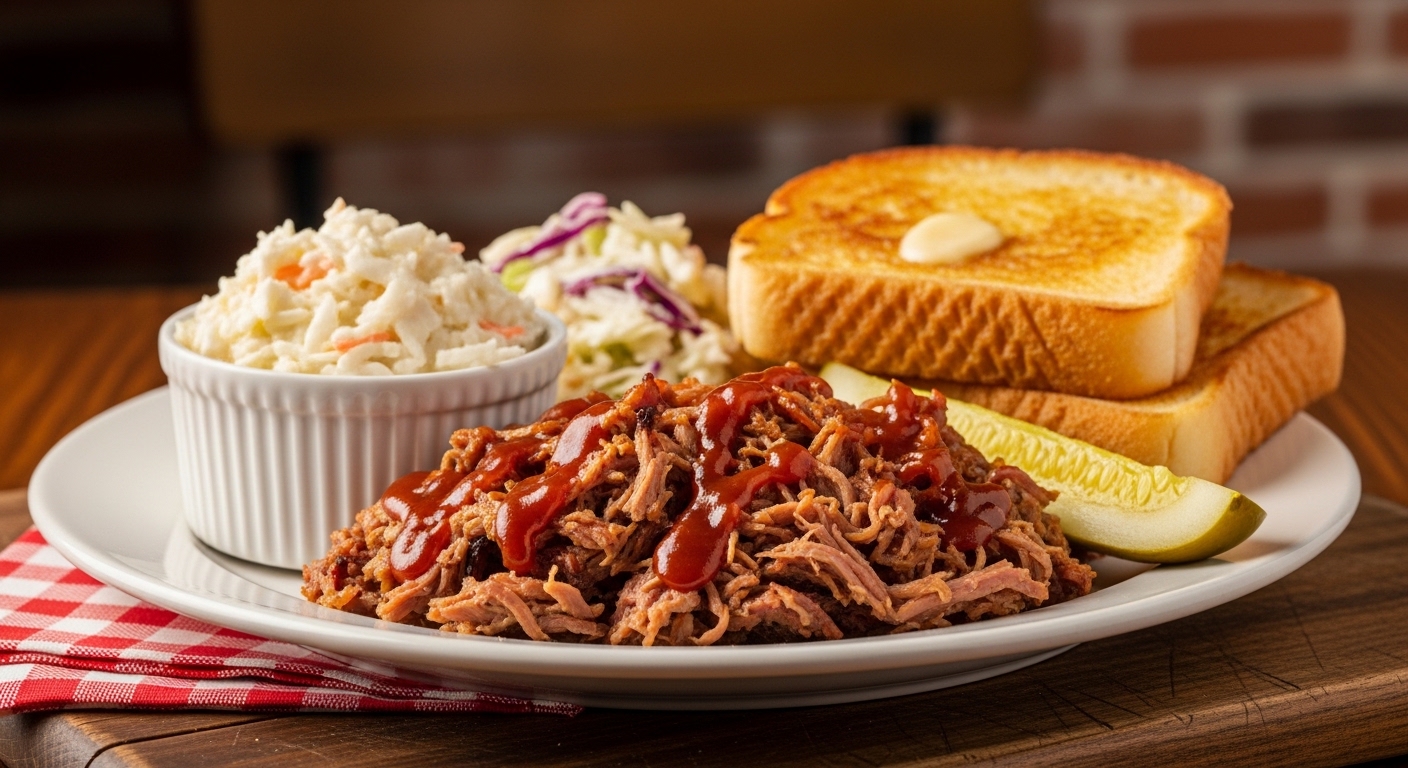
Ever wondered what makes Tennessee BBQ stand out from its Carolina and Kansas City cousins? If you’re craving a smoky, tangy, tender plate that’s rich in history and flavor, you’re about to discover why Tennessee BBQ Plate is a beloved staple across the South. Unlike other regional styles, this version is defined by its unique dry-rub seasoning—no sauce on the side—and slow-cooked pork shoulder (or sometimes ribs) that melts off the bone with every bite. It’s not just food; it’s tradition served over white bread or on a paper plate at backyard cookouts.
What Exactly Is a Tennessee BBQ Plate?
A Tennessee BBQ Plate centers around slow-smoked pork, typically cooked low and slow for 8–12 hours until it reaches that perfect fall-apart tenderness. What sets it apart is the absence of sauce—instead, diners are served the meat with a generous dusting of dry rub, often accompanied by classic sides like baked beans, coleslaw, and cornbread. The magic lies in the spice blend: paprika, brown sugar, garlic powder, onion powder, and a touch of cayenne create a bold yet balanced crust that enhances rather than overpowers the meat.
This style originated in East Tennessee, particularly in cities like Knoxville and Nashville, where pitmasters perfected the art of smoking without relying on tomato-based sauces. Over time, it became synonymous with authenticity and simplicity—a true test of skill in both seasoning and smoke management.
Why You’ll Love This Tennessee BBQ Plate Recipe
- Authentic Flavor Profile: Deep smokiness meets savory-sweet spice without overwhelming your palate.
- Beginner-Friendly: While smoking requires patience, this recipe simplifies the process using common kitchen tools.
- Versatile Serving Options: Enjoy straight off the smoker or transformed into sandwiches, tacos, or even pulled pork nachos.
- Perfect for Gatherings: Whether it’s a family dinner or a tailgate feast, this dish brings people together.
Quick Recipe Summary Table
| Prep Time | Cook Time | Total Time | Servings | Cuisine | Course | Calories (Approx.) |
|---|---|---|---|---|---|---|
| 45 minutes | 10–12 hours | 11–12.75 hours | 6–8 people | Southern / American | Main Course | ~650 per serving (with sides) |
Essential Ingredients for Your Tennessee BBQ Plate
To achieve that signature taste, you’ll need high-quality ingredients. Below is a precise list to ensure consistency and authenticity:
Dry Rub (Make Ahead!)
- 2 tbsp smoked paprika
- 1 tbsp brown sugar
- 1 tbsp kosher salt
- 1 tbsp black pepper
- 1 tsp garlic powder
- 1 tsp onion powder
- ½ tsp cayenne pepper (optional, for heat)
- ½ tsp ground mustard (for depth)
Pork Shoulder (Boston Butt)
- 5–7 lbs bone-in pork shoulder
- 2–3 quarts water (for brine, optional but recommended)
- 1 tbsp apple cider vinegar (to help break down connective tissue)
Sides (Traditional Complements)
- Baked beans (homemade or store-bought)
- Coleslaw (shredded cabbage, carrots, mayo-based dressing)
- Cornbread (sweet or savory, depending on preference)
- White bread (for sandwiches)
Step-by-Step Instructions: Crafting the Perfect Tennessee BBQ Plate
Follow these steps carefully to master the technique and deliver a restaurant-worthy experience at home.
Step 1: Brine the Pork (Optional but Highly Recommended)
Combine 2 quarts of water, ¼ cup salt, ¼ cup brown sugar, and 1 tbsp apple cider vinegar in a large pot. Bring to a simmer, stir until dissolved, then cool completely. Submerge the pork shoulder in the brine and refrigerate for 4–12 hours. This step enhances moisture retention and tenderizes the meat.
Step 2: Prep the Dry Rub
In a small bowl, mix all dry rub ingredients thoroughly. Set aside. Pat the pork shoulder dry with paper towels—this ensures the rub sticks better.
Step 3: Apply the Rub Generously
Rub the mixture evenly over the entire surface of the pork, pressing firmly so it adheres well. Let it sit uncovered in the fridge for at least 4 hours—ideally overnight. This allows the flavors to penetrate deeply.
Step 4: Smoke Low and Slow
Preheat your smoker to 225°F (107°C). Use hardwood like hickory, oak, or cherry for authentic Southern flavor. Place the pork directly on the grill grate, fat side up if possible. Maintain steady temperature and add wood chunks as needed. Smoke until internal temp reaches 195–203°F, usually 8–12 hours depending on size.
Step 5: Rest and Shred
Once done, wrap the pork loosely in foil and let it rest for at least 1 hour. This redistributes juices and makes shredding easier. Use two forks or your hands to pull apart the meat, discarding excess fat and gristle.
Step 6: Serve Immediately
Arrange shredded pork on plates or serve on white bread for sandwiches. Sprinkle lightly with extra dry rub if desired. Pair with traditional sides for an authentic Tennessee BBQ Plate experience.
Chef Tips for Maximum Flavor and Success
- Use a Meat Thermometer: Don’t guess—temperature is key to perfect doneness.
- Keep the Smoker Steady: Avoid opening too often; fluctuations affect cooking time and smoke quality.
- Rest Long Enough: Skipping this step results in dry, tough meat.
- Save the Drippings: Use rendered fat to make gravy or baste during the last hour of smoking.
- Experiment with Woods: Try mesquite for stronger flavor or pecan for mild sweetness.
Common Mistakes to Avoid
- Skipping the Rest Period: Meat shrinks when cut—resting prevents this.
- Overcooking Past 203°F: Beyond this point, texture turns mushy.
- Using Weak Rub Recipes: Authenticity demands bold, layered spices.
- Not Preparing Sides Ahead: Baked beans and coleslaw taste best cold—plan accordingly.
Ingredient Substitutions & Variations
Want to adapt this recipe? Here’s how:
For Beginners Without a Smoker:
Use a Dutch oven in the oven at 275°F. Add liquid smoke to mimic real smoke flavor.
Vegan/Vegetarian Version:
Replace pork with jackfruit or mushrooms seasoned similarly. Smoke jackfruit in a slow cooker with liquid smoke for 6 hours.
Indian-Inspired Twist:
Add garam masala, turmeric, and ginger-garlic paste to the rub. Serve with naan and mango chutney.
Healthier Option:
Choose leaner cuts like pork loin and reduce sugar in the rub. Grill instead of smoke when possible.
Serving Suggestions to Wow Your Guests
- Classic Paper Plate Style: Pile pork on wax paper with sides scattered around.
- BBQ Sandwich Bar: Offer white bread, pickles, onions, and mustard for DIY sandwiches.
- Loaded Baked Potato: Top with shredded pork, cheese, butter, and sour cream.
- BBQ Tacos: Mix pork with lime juice and cilantro; serve in corn tortillas.
Storage & Reheating Instructions
Storing Leftovers:
Keep shredded pork in an airtight container in the fridge for up to 5 days or freeze for 3 months.
Reheating:
Warm in a skillet over low heat with a splash of broth or apple cider vinegar to keep it moist. Alternatively, microwave with a damp paper towel for 1 minute.
Nutrition Facts (Approximate Per Serving)
- Calories: 650
- Protein: 45g
- Fat: 40g
- Carbohydrates: 20g
- Sodium: 1200mg
- Fiber: 3g
- Sugar: 8g
Key Takeaways: Why This Tennessee BBQ Plate Belongs in Your Rotation
- The secret to authentic Tennessee BBQ Plate lies in the dry rub and slow smoking—no sauce needed.
- Brining and resting are non-negotiable steps for juicy, tender results.
- Sides like baked beans and coleslaw complete the meal, honoring Southern traditions.
- This recipe is adaptable—smoker or oven, meat-lover or plant-based—there’s a version for everyone.
- With practice, you’ll develop your own signature smoke ring and spice balance.
FAQs About Tennessee BBQ Plate
1. Can I make this without a smoker?
Absolutely! Use a roasting pan in the oven at 275°F. Add a few drops of liquid smoke to enhance flavor. Cooking time will be slightly longer—around 4–5 hours.
2. How do I know when the pork is done?
Insert a meat thermometer into the thickest part. It should read 195–203°F. The meat should feel loose and easily separate when prodded with a fork.
3. Why isn’t my meat pulling apart?
Undercooked pork won’t shred properly. Ensure it hits the target temperature and rests long enough. Cold weather can also slow collagen breakdown—try cooking a bit longer.
4. Is Tennessee BBQ different from Memphis BBQ?
Yes! Memphis uses wet or dry rubs and serves pork shoulder with sauce. Tennessee leans toward dry rubs and no sauce, emphasizing the meat itself.
5. Can I use chicken instead of pork?
Yes, but adjust timing. Chicken cooks faster—about 45–60 minutes at 325°F after applying rub. Watch closely to avoid drying out.
Conclusion: Bring the Heat of Tennessee Home
Crafting a perfect Tennessee BBQ Plate is more than following a recipe—it’s about embracing patience, honoring tradition, and celebrating bold flavors. From the first whiff of wood smoke to the final bite of tender, spiced pork, every moment builds toward a meal that feels both rustic and refined.
Don’t be intimidated by the long cook time. Once you see the golden-brown bark form and hear the satisfying crackle of fat rendering, you’ll understand why generations have kept this method alive. Whether you’re hosting a summer cookout or simply treating yourself after a tough week, this dish delivers comfort with character.
So fire up the smoker, gather your favorite sides, and get ready to savor a slice of Southern heritage—one unforgettable Tennessee BBQ Plate at a time.