Tamale Plate: A Hearty, Flavorful Meal That Warms the Soul
Looking for a comforting, satisfying dish that’s rich in flavor, tradition, and warmth? You’ve found it—welcome to the heart of Tamale Plate, a beloved culinary experience rooted deeply in Latin American heritage. Whether you’re craving the smoky spices of masa, the savory pull of seasoned meats, or the creamy comfort of salsa verde, the Tamale Plate delivers every bite with bold authenticity. It’s not just a meal—it’s a celebration on a plate.
Originating from Mexico and widely embraced across Central America, the Tamale Plate is more than just food; it’s culture, history, and community all wrapped in corn dough. Traditionally, tamales are made by wrapping masa (corn dough) around fillings like pork, chicken, or beans, then steaming them. But when you elevate that concept into a full plate—complete with rice, beans, salsas, and garnishes—you get something truly extraordinary: a complete, balanced, and deeply satisfying meal.
Why People Love Tamale Plates
- Rich in Flavor: The blend of spices, slow-cooked meats, and tangy salsas creates layers of taste that linger on your palate.
- Comfort Food at Its Best: Warm, filling, and perfect for family gatherings, holidays, or a cozy dinner at home.
- Cultural Heritage: Each bite connects you to generations of tradition, especially during festive occasions like Día de los Muertos or Christmas.
- Customizable & Balanced: Easily adapted to vegetarian, vegan, or gluten-free diets while still delivering full flavor.
If you’re ready to bring the authentic taste of Mexico to your kitchen, this guide will walk you through everything—from making fresh masa to assembling the perfect plate with all the right sides and sauces.
Quick Recipe Summary
| Prep Time | Cook Time | Total Time | Servings | Cuisine | Course | Calories (Approx.) |
|---|---|---|---|---|---|---|
| 45 minutes | 2 hours | 2 hours 45 minutes | 6 | Mexican | Dinner | 520 per serving |
Ingredients List
For the Tamales:
- 2 cups masa harina (corn flour)
- 1.5 cups warm water
- 1 cup lard or vegetable shortening
- 1.5 tsp baking powder
- 1.5 tsp salt
- 2 cups shredded cooked chicken or pork (your choice)
- 1 cup finely chopped onions
- 1 cup diced green chiles (canned or fresh)
- 1 tbsp chili powder
- 1 tsp cumin
- 1/2 cup chicken or pork broth
- Corn husks (soaked in warm water for 30 minutes)
For the Plate Assembly:
- 2 cups cooked white rice
- 2 cups refried beans
- 1 avocado, sliced
- 1 tomato, diced
- 1/2 cup crumbled queso fresco or cotija cheese
- 1/2 cup salsa verde (green tomatillo salsa)
- Lime wedges for garnish
- Fresh cilantro, chopped
Step-by-Step Instructions
1. Prepare the Masa Dough
In a large mixing bowl, combine the masa harina, baking powder, and salt. In another bowl, cream together the lard until smooth. Gradually mix the lard into the dry ingredients until the texture resembles wet sand. Slowly add warm water and broth, mixing until the dough holds together but isn’t sticky.
Cover with a damp cloth and let rest while you prepare the filling.
2. Make the Filling
In a skillet over medium heat, sauté the onions until translucent. Add the shredded meat, green chiles, chili powder, and cumin. Cook for 10–12 minutes, stirring occasionally. Remove from heat and let cool slightly.
3. Assemble the Tamales
Take a soaked corn husk and spread about 2 tablespoons of masa onto the wide end, leaving space at the top and sides. Place 1–2 tablespoons of filling in the center. Fold the sides inward and roll up tightly. Tie the tamale with a strip of husk or kitchen string.
4. Steam the Tamales
Place tamales upright in a steamer basket, open side up. Fill a large pot with 2 inches of water and bring to a boil. Steam for 1 hour, checking water level occasionally. Tamales are done when the husk pulls away easily from the masa.
5. Serve the Tamale Plate
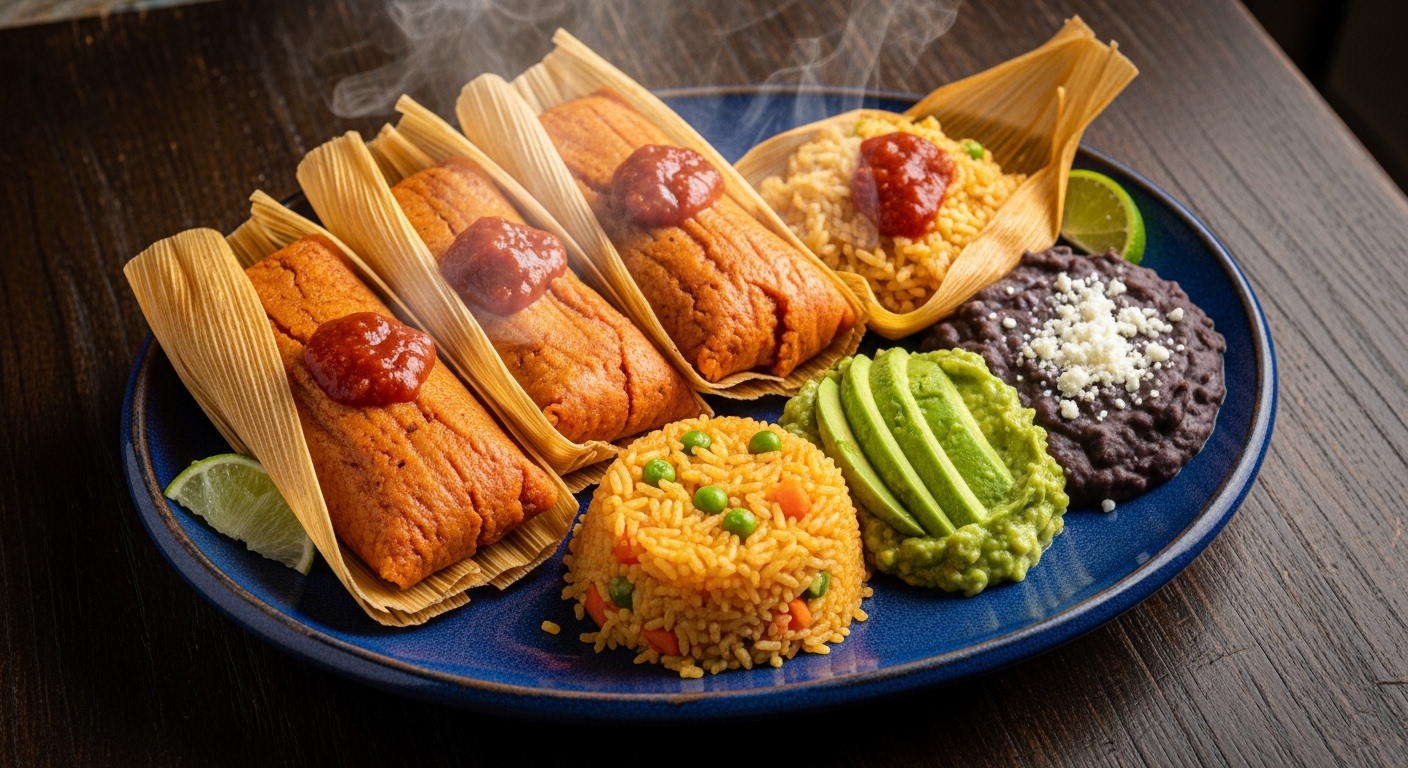
Arrange steamed tamales on a large platter. Surround with warm rice, refried beans, avocado slices, diced tomatoes, and a dollop of salsa verde. Sprinkle with crumbled cheese and cilantro. Serve with lime wedges on the side.
Chef Tips for Success
- Soak Husks Properly: Don’t skip soaking corn husks—they should be pliable, not brittle. If they tear, your tamales will leak.
- Keep Masa Soft: If your masa is too dry, add a splash of broth. Too sticky? Add a bit more masa harina.
- Steam Consistently: Maintain a steady boil. If the water evaporates too quickly, your tamales won’t cook evenly.
- Make Ahead: Tamales freeze beautifully! Cook them, cool, wrap individually, and store in the freezer for up to 3 months.
Common Mistakes to Avoid
- Not Using Enough Lard: This gives tamales their signature flaky, tender texture. Vegetable shortening works, but lard is traditional.
- Overfilling: Too much filling can cause the masa to split during steaming.
- Rushing the Steaming Process: Undercooked tamales have gummy masa. Patience is key!
- Skipping the Resting Time: Letting the masa rest helps develop the right consistency.
Variations & Substitutions
- Vegetarian Version: Use black beans, roasted poblanos, and mushrooms instead of meat.
- Vegan Option: Replace lard with coconut oil and use plant-based broth.
- Gluten-Free: Masa harina is naturally gluten-free—just ensure other ingredients are certified GF.
- Spicy Upgrade: Add jalapeños or chipotle peppers to the filling for extra kick.
- Sweet Tamales: Try a version with cinnamon, raisins, and panela (unrefined cane sugar).
Serving Suggestions
Serve your Tamale Plate family-style on a large wooden board or ceramic platter. Offer additional salsas—red or green—on the side so everyone can customize their experience. Pair with a cold beer, horchata, or agua fresca for the ultimate Mexican feast.
For a festive touch, serve during celebrations with marigold flowers or candles to honor tradition.
Storage & Reheating Instructions
- Refrigeration: Store tamales in an airtight container for up to 5 days. Keep rice and beans separate to avoid sogginess.
- Freezing: Uncooked tamales freeze well for up to 3 months. Steam frozen tamales directly from the freezer for 1.5 hours.
- Reheating: Steam reheated tamales for 20–25 minutes, or microwave with a damp paper towel for 2–3 minutes per tamale.
Nutrition Facts (Approximate per Serving)
- Calories: 520
- Protein: 22g
- Carbohydrates: 58g
- Fiber: 7g
- Fat: 24g
- Sodium: 780mg
- Iron: 20% DV
*Values based on standard recipe. Adjustments may vary with ingredient substitutions.
Key Takeaways
- The Tamale Plate is more than a dish—it’s a cultural experience rooted in flavor, tradition, and family.
- With the right masa, filling, and steaming technique, you can recreate authentic Mexican flavors at home.
- This meal is highly customizable—vegetarian, vegan, or gluten-free options are easy to implement.
- Perfect for holidays, potlucks, or any time you want to treat yourself to something rich, satisfying, and deeply flavorful.
Frequently Asked Questions (FAQs)
1. Can I make tamales ahead of time?
Yes! Both cooked and uncooked tamales freeze exceptionally well. Steam frozen tamales for 1.5 hours before serving. They reheat perfectly and maintain their texture and flavor.
2. What’s the difference between tamales and empanadas?
Tamales are wrapped in corn husks and steamed, while empanadas are baked or fried and typically use wheat dough. Tamales also have a softer, doughier texture.
3. Do I need special equipment to steam tamales?
A large pot with a steamer basket or colander works best. If you don’t have one, you can improvise with a large pot and a trivet to keep the tamales above the water.
4. Can I use canned masa harina?
Yes, always choose canned masa harina—it’s pre-cooked and easier to work with than dry versions. Just follow package instructions.
5. Is tamalada (making tamales) a group activity?
Absolutely! In many cultures, tamalada refers to the communal process of making tamales together. It’s a fun, bonding experience—perfect for families and friends.
Conclusion: Bring the Taste of Tradition Home
There’s something magical about a well-made Tamale Plate—the aroma of steaming corn husks, the rich pull of seasoned meat, the vibrant colors of fresh toppings. It’s more than a meal; it’s a journey back to roots, to celebration, to love shared across generations.
Whether you’re cooking for a holiday, hosting friends, or simply treating yourself to something special, this recipe delivers on every front. And the best part? With a little practice, you’ll master the art of tamale-making and become the go-to person for your next gathering.
So gather your ingredients, soak those husks, and let the steam rise—your kitchen is about to become a piece of Mexico. ¡Buen provecho!