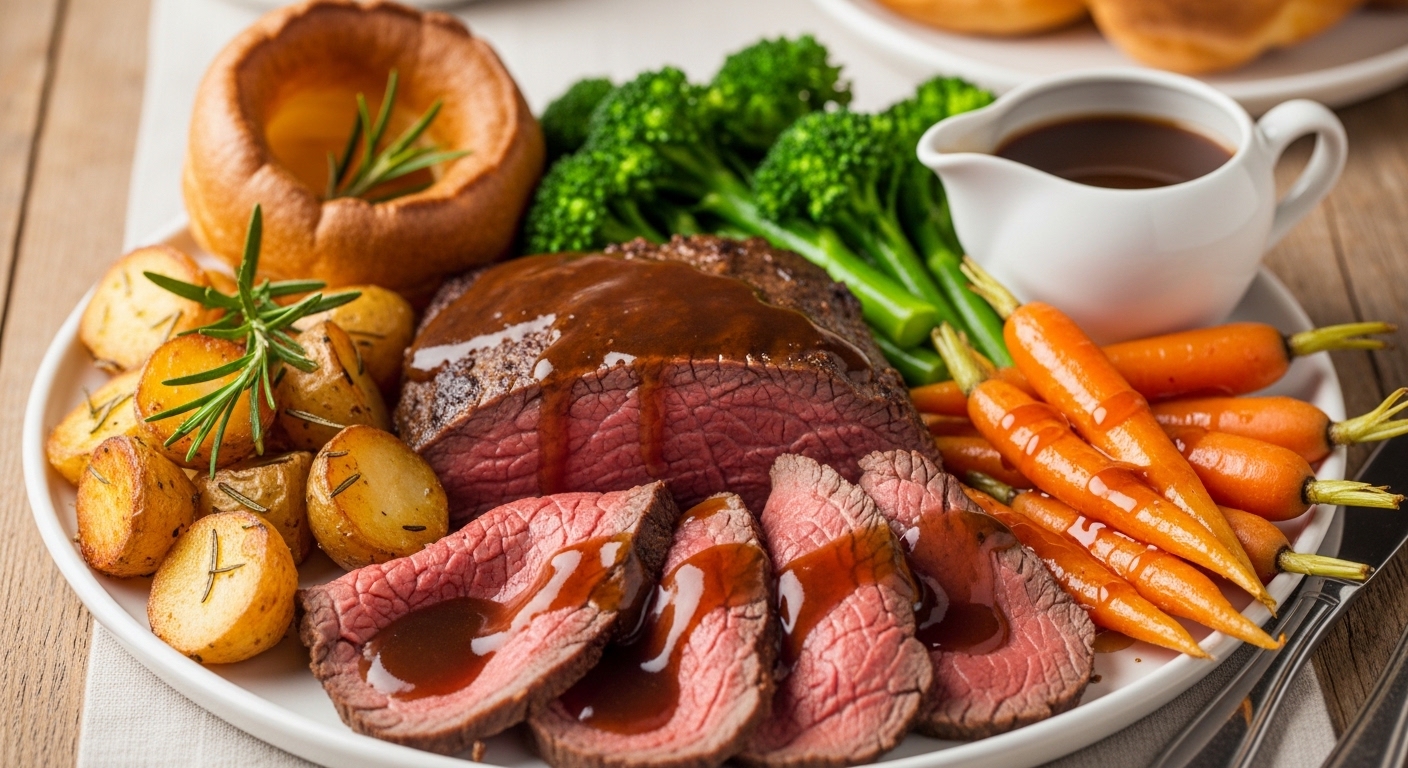
There’s something deeply comforting about the aroma of Sunday roast beef wafting through the kitchen—crisp edges, tender meat, and rich, savory juices mingling with roasted vegetables. This classic British tradition has transcended borders, becoming a beloved centerpiece for weekend meals across the globe. Whether you’re celebrating a special occasion or simply unwinding after a long week, a perfectly cooked Sunday roast beef delivers warmth, flavor, and nostalgia in every bite.
Originating in England during the 15th century, the Sunday roast was once a practical way for working families to prepare a hearty meal after church. Over time, it evolved into a cherished ritual, symbolizing togetherness and culinary craftsmanship. Today, Sunday roast beef remains a staple in homes from London to Los Angeles, celebrated for its simplicity, depth of flavor, and versatility. It’s not just a meal—it’s an experience.
What makes Sunday roast beef so irresistible? The answer lies in its balance: juicy, slow-roasted beef with a golden crust, paired with crispy potatoes, seasonal vegetables, and a rich gravy made from the pan drippings. It’s a dish that rewards patience and attention to detail, yet remains accessible even for home cooks. Whether you’re a seasoned chef or a beginner, mastering this recipe will earn you rave reviews and repeat requests.
Quick Recipe Summary
| Prep Time | 20 minutes |
| Cook Time | 2 hours 30 minutes |
| Total Time | 2 hours 50 minutes |
| Servings | 6–8 people |
| Cuisine | British |
| Course | Dinner |
| Calories (approx.) | 580 per serving |
Ingredients for the Perfect Sunday Roast Beef
To achieve a restaurant-quality Sunday roast beef, quality ingredients are essential. Here’s what you’ll need:
- 3–4 lbs (1.4–1.8 kg) beef ribeye or sirloin roast – well-marbled for tenderness
- 3 tbsp olive oil – for searing and roasting
- 4 cloves garlic – peeled and lightly crushed
- 3 sprigs fresh rosemary – for aromatic flavor
- 3 sprigs fresh thyme – adds earthy notes
- 1 large onion – quartered, for roasting
- 2 carrots – roughly chopped
- 2 celery stalks – chopped
- 1 cup beef stock – preferably homemade or low-sodium
- 1 tbsp Dijon mustard – optional, for a flavor boost
- Salt and freshly ground black pepper – to taste
For the Roasted Vegetables
- 2 lbs (900g) potatoes – Yukon Gold or Maris Piper, peeled and quartered
- 1 large parsnip – peeled and cut into chunks
- 1 large sweet potato – peeled and cubed (optional)
- 2 tbsp duck fat or butter – for rich, crispy potatoes
- 1 tsp sea salt
- ½ tsp smoked paprika – for depth
Step-by-Step Cooking Instructions
1. Prepare the Beef
Take the beef roast out of the refrigerator 1 hour before cooking to bring it to room temperature. This ensures even cooking. Preheat your oven to 450°F (230°C).
Pat the beef dry with paper towels—moisture prevents browning. Rub the entire surface with olive oil, then season generously with salt and pepper. For extra flavor, spread a thin layer of Dijon mustard over the meat.
2. Sear the Roast
Heat a heavy oven-safe skillet (like cast iron) over medium-high heat. Add 1 tablespoon of olive oil. Once hot, sear the beef on all sides until deeply browned—about 3–4 minutes per side. This step locks in juices and creates a flavorful crust.
Transfer the seared beef to a roasting pan. Add the garlic, rosemary, thyme, onion, carrots, and celery around the meat. These aromatics will infuse the beef and form the base for your gravy.
3. Roast the Beef
Place the roasting pan in the preheated oven. Roast at 450°F (230°C) for 15 minutes to develop a rich crust. Then, reduce the heat to 325°F (160°C) and continue roasting.
Cooking times vary by cut and desired doneness:
- Rare: 15–20 minutes per pound (internal temp: 120–125°F / 49–52°C)
- Medium-rare: 20–25 minutes per pound (130–135°F / 54–57°C)
- Medium: 25–30 minutes per pound (140–145°F / 60–63°C)
Use a meat thermometer to check doneness. Insert it into the thickest part, avoiding bone or fat.
4. Prepare the Potatoes and Vegetables
While the beef roasts, prepare the potatoes. Boil them in salted water for 8–10 minutes until just tender. Drain and let them steam dry for 2 minutes. This helps them crisp up in the oven.
Toss the potatoes, parsnip, and sweet potato with duck fat, salt, and smoked paprika. Spread them on a separate baking sheet.
After the beef has roasted for 45 minutes at 325°F, add the vegetables to the oven. Roast everything together for the remaining time. Flip the vegetables once halfway through for even browning.
5. Rest the Beef
Once the beef reaches your desired temperature, remove it from the oven. Transfer it to a cutting board, tent loosely with foil, and let it rest for 20–30 minutes. This allows juices to redistribute, ensuring a moist, tender roast.
6. Make the Gravy
While the beef rests, prepare the gravy. Pour the pan drippings into a saucepan, leaving about 2 tablespoons of fat. Skim off excess fat if needed.
Place the pan over medium heat. Add 2 tablespoons of flour and whisk for 1–2 minutes to cook out the raw taste. Gradually pour in 1 cup of beef stock, whisking constantly to avoid lumps. Simmer until thickened, about 5–7 minutes. Season with salt and pepper to taste.
Chef Tips for the Best Sunday Roast Beef
- Choose the right cut: Ribeye or sirloin are ideal for flavor and tenderness. Avoid lean cuts like round, which can dry out.
- Don’t skip the sear: A good sear builds the foundation for rich flavor and a beautiful crust.
- Use a meat thermometer: This is the most reliable way to avoid overcooking.
- Rest the meat: Never skip this step—it’s crucial for juicy results.
- Save the drippings: They’re gold for making gravy or enriching soups.
Common Mistakes to Avoid
- Cooking cold meat: Always bring beef to room temperature before roasting.
- Overcrowding the pan: This steams the meat instead of roasting it. Use a rack if needed.
- Skipping the rest: Cutting too soon releases precious juices.
- Using low-quality stock: Homemade or high-quality store-bought stock makes a big difference in gravy.
Ingredient Substitutions and Variations
- Beef alternatives: Try lamb leg or pork loin for a twist.
- Vegetable swaps: Add Brussels sprouts, turnips, or butternut squash.
- Herb variations: Swap rosemary for sage or oregano.
- Gluten-free gravy: Use cornstarch or arrowroot instead of flour.
- Healthier version: Trim excess fat and use olive oil instead of duck fat for potatoes.
Serving Suggestions
Serve your Sunday roast beef sliced against the grain, with a generous ladle of gravy. Pair it with:
- Yorkshire pudding
- Steamed green beans or broccoli
- A crisp green salad
- A glass of bold red wine like Cabernet Sauvignon or Malbec
Storage and Reheating Instructions
Store leftovers in an airtight container in the refrigerator for up to 3 days. Gravy can be kept separately for up to 5 days.
To reheat, slice the beef and warm it in a 300°F (150°C) oven for 15–20 minutes. Alternatively, gently reheat in a skillet with a splash of broth. Gravy can be reheated on the stovetop with a little extra stock to restore consistency.
Nutrition Facts (Approximate per Serving)
- Calories: 580
- Protein: 48g
- Fat: 32g
- Carbohydrates: 38g
- Fiber: 5g
- Sugar: 6g
- Sodium: 620mg
Key Takeaways
- Sunday roast beef is a timeless, comforting dish perfect for family meals.
- Use a quality cut, sear well, and rest the meat for best results.
- Roast vegetables alongside the beef for a complete, flavorful meal.
- Make gravy from pan drippings for an authentic, rich finish.
- Store and reheat properly to enjoy leftovers without losing quality.
FAQs About Sunday Roast Beef
How long should I cook a 3-pound beef roast?
For medium-rare, roast at 325°F (160°C) for about 20–25 minutes per pound, totaling roughly 60–75 minutes after the initial high-heat sear.
Can I cook Sunday roast beef in advance?
Yes! Cook the beef and vegetables up to 24 hours ahead. Store separately in the fridge. Reheat gently in the oven before serving.
What’s the best way to slice roast beef?
Always slice against the grain. This shortens the muscle fibers, making each bite tender and easy to chew.
Can I freeze leftover roast beef?
Absolutely. Wrap slices tightly in foil or freeze in portions. Use within 3 months for best quality. Thaw in the refrigerator before reheating.
What if my beef is too dry?
This usually happens from overcooking. Use a meat thermometer next time, and consider basting with pan juices during roasting. Serve with extra gravy to moisten.
Conclusion: Bring the Tradition Home
There’s no better way to end the week than with a perfectly cooked Sunday roast beef—juicy, aromatic, and deeply satisfying. It’s more than a recipe; it’s a ritual that brings people together, one delicious bite at a time. Whether you’re cooking for family, friends, or just treating yourself, this classic dish delivers comfort, flavor, and a sense of accomplishment.
So roll up your sleeves, preheat the oven, and embrace the timeless joy of a traditional roast. With this guide, you’re well on your way to mastering one of the most beloved meals in culinary history. Your kitchen will smell amazing, your table will look inviting, and your taste buds will thank you. Happy roasting!
Leave a Reply