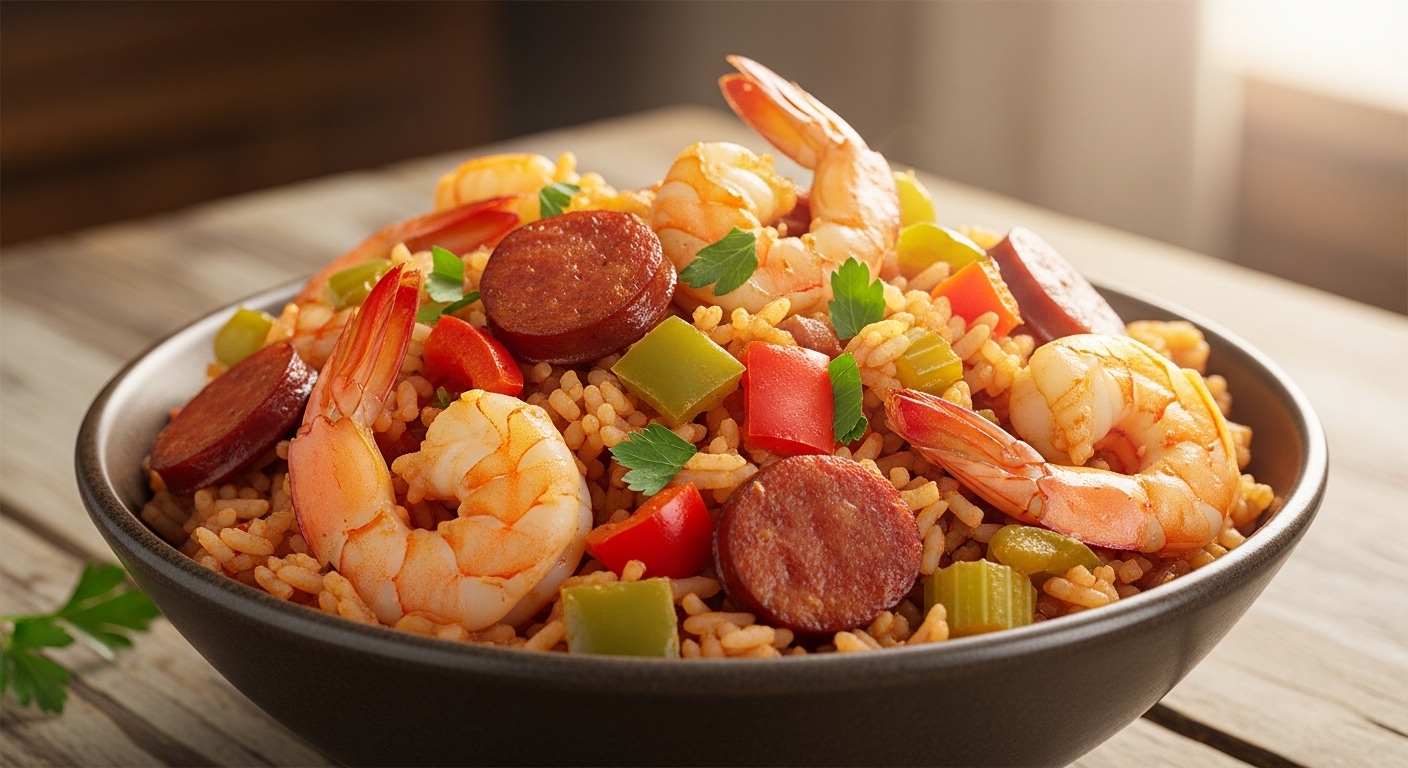
There’s something deeply satisfying about a bowl of shrimp jambalaya—warm, aromatic, and packed with bold Southern flavors. This dish isn’t just food; it’s a celebration on a plate. Originating from the vibrant streets of New Orleans, Louisiana, jambalaya blends Spanish, French, and African culinary traditions into one unforgettable meal. When you add plump, juicy shrimp to the mix, you get a protein-rich, smoky, and slightly spicy dish that’s perfect for any occasion.
Whether you’re craving comfort food after a long day or hosting a dinner party, a shrimp jambalaya bowl delivers rich flavor in every bite. It’s hearty enough to stand alone but versatile enough to pair with crusty bread or fresh greens. Best of all, it comes together quickly in a single pot—no need for complicated steps or multiple pans.
In this detailed guide, you’ll learn how to make an authentic, restaurant-quality shrimp jambalaya bowl at home, complete with chef tips, ingredient swaps, and serving ideas. Let’s dive into the soul of Louisiana cooking.
What Is Shrimp Jambalaya?
Jambalaya is a one-pot rice dish traditionally made with meat (like sausage), poultry, or seafood, combined with tomatoes, onions, peppers, and spices. The word “jambalaya” comes from the Spanish phrase “jamón bollo,” meaning “ham and beans,” reflecting its diverse roots.
The version we’re focusing on—shrimp jambalaya bowl—features succulent shrimp as the star protein, usually paired with chicken or andouille sausage for extra depth. Cooked in a flavorful tomato-based broth, the rice absorbs all the seasonings, creating a dish that’s both filling and complex.
Unlike paella, which uses saffron and cooks everything under direct heat, traditional jambalaya is simmered gently so the rice stays tender and the flavors meld beautifully. And when served in a bowl with a side of pickled vegetables or hot sauce, it becomes a complete, satisfying meal.
Quick Recipe Summary
- Prep Time: 15 minutes
- Cook Time: 30 minutes
- Total Time: 45 minutes
- Servings: 4
- Cuisine: Creole / Cajun
- Course: Main Dish
- Calories (approx.): 480 per serving
Ingredients You’ll Need
For a rich, authentic-tasting shrimp jambalaya bowl, gather these ingredients:
Main Ingredients
- 1 lb (450g) medium shrimp, peeled and deveined (tails optional)
- 1 tbsp olive oil or vegetable oil
- 1 lb (450g) smoked sausage (andouille or kielbasa work best)
- 1 cup long-grain white rice (preferably converted or jasmine)
- 1 large onion, diced
- 1 green bell pepper, diced
- 2 celery stalks, diced (the “Holy Trinity” of Cajun cooking)
- 4 garlic cloves, minced
- 1 can (14.5 oz / 400ml) diced tomatoes
- 2 cups (480ml) chicken broth
- 1 tsp smoked paprika
- 1/2 tsp cayenne pepper (adjust to taste)
- 1 tbsp Worcestershire sauce
- 1 bay leaf
- Salt and black pepper, to taste
- Fresh parsley, chopped (for garnish)
Optional Add-ins
- 2 boneless skinless chicken thighs, cut into strips
- 1/4 cup chopped green onions
- Hot sauce (to serve)
Step-by-Step Cooking Instructions
Follow these simple steps to create a perfect shrimp jambalaya bowl:
1. Prep Your Ingredients
Dice the onion, bell pepper, and celery. Mince the garlic. Cut the sausage into rounds. Pat the shrimp dry and set aside. Having everything ready ensures smooth cooking.
2. Sauté the Sausage
Heat oil in a large Dutch oven or heavy-bottomed skillet over medium heat. Add the sausage and cook until browned on both sides, about 5–6 minutes. Remove with a slotted spoon and set aside.
3. Build the Flavor Base
In the same pot, add a bit more oil if needed. Sauté the onion, bell pepper, and celery for 5–7 minutes until soft. Add the garlic and cook for another 30 seconds until fragrant.
4. Toast the Rice
Stir in the rice and cook for 2 minutes, stirring constantly, so it lightly coats with oil and starts to toast. This step prevents mushiness later.
5. Add Liquids and Seasonings
Pour in the diced tomatoes (with juice), chicken broth, Worcestershire sauce, smoked paprika, cayenne, salt, and pepper. Stir well, then add the bay leaf and reserved sausage.
6. Simmer the Rice
Bring the mixture to a boil, then reduce heat to low. Cover and simmer for 20 minutes, or until rice is tender and most liquid is absorbed.
7. Add the Shrimp
Gently stir in the shrimp. Cover and cook for 5–7 minutes, or until shrimp turn pink and curl. Avoid overcooking—shrimp become rubbery quickly.
8. Final Adjustments
Remove the bay leaf. Taste and adjust seasoning if needed. Stir in chopped parsley or green onions.
9. Serve Immediately
Ladle into bowls, top with hot sauce if desired, and enjoy while warm.
Chef Tips for the Perfect Shrimp Jambalaya Bowl
- Use fresh shrimp: Frozen shrimp are fine, but thaw completely and pat dry to avoid excess water.
- Don’t skip toasting the rice: It adds nutty depth and ensures fluffy grains.
- Balance the heat: Start with less cayenne and add more later if you like spice.
- Let it rest: After removing from heat, let the jambalaya sit covered for 5 minutes—it helps the flavors settle.
- Serve with acid: A squeeze of lime or a side of pickled okra cuts through the richness.
Common Mistakes to Avoid
- Overcooking the shrimp: They go from pink to rubbery in under 5 minutes. Add them late in cooking.
- Using the wrong rice: Short or medium grain rice can become gummy. Stick to long-grain varieties.
- Not draining the sausage fat: Excess grease makes the dish oily. Drain well before adding other ingredients.
- Rushing the simmer: Jambalaya needs time for rice to absorb flavor. Don’t peek too often—it lets steam escape.
Ingredient Substitutions & Variations
Want to customize your shrimp jambalaya bowl? Here are some smart swaps:
Protein Options
- Vegan/Vegetarian: Use chickpeas, mushrooms, or smoked tofu. Skip sausage and use vegetable broth.
- Chicken Jambalaya: Add cooked chicken breasts or thighs instead of sausage.
- Seafood Lovers: Mix in crab legs, crawfish, or scallops.
Rice Alternatives
- Cauliflower rice (low-carb option)
- Lemba (a Louisiana rice variety)
- Quinoa (for a protein boost)
Flavor Boosters
- Add a splash of beer or white wine during cooking.
- Include a diced tomato for extra acidity.
- Top with a fried egg for breakfast jambalaya.
Serving Suggestions
A great shrimp jambalaya bowl deserves thoughtful presentation and pairing:
- Garnish with fresh parsley, green onions, or sliced scallions.
- Serve with crusty French bread or cornbread on the side.
- Pair with a crisp green salad dressed in vinaigrette.
- Offer a selection of hot sauces—Tabasco, Crystal, or Louisiana brand.
- Add a pickle spear or marinated vegetables for brightness.
Storage and Reheating
Leftover jambalaya keeps beautifully:
- Refrigerate: Store in an airtight container for up to 4 days.
- Freeze: Cool completely, then freeze in portions for up to 3 months.
- Reheat: Warm on the stovetop with a splash of broth or water. Microwave in short bursts, stirring between each.
Avoid reheating in the microwave without covering—it dries out the rice.
Nutrition Facts (Approximate Per Serving)
- Calories: 480
- Protein: 32g
- Carbohydrates: 52g
- Fiber: 2g
- Sugar: 3g
- Fat: 18g
- Saturated Fat: 6g
- Cholesterol: 210mg
- Sodium: 890mg
FAQs About Shrimp Jambalaya Bowl
1. Can I make shrimp jambalaya ahead of time?
Yes! Jambalaya actually tastes better the next day as the flavors deepen. Just reheat gently on the stove with a little broth to restore moisture.
2. What’s the difference between jambalaya and gumbo?
Gumbo always includes a thickener (okra, roux, or filé powder) and has a soup-like consistency. Jambalaya is rice-based and drier—hence, the “bowl” name.
3. Can I make this in a slow cooker?
Absolutely. Brown the sausage first, then add all ingredients except shrimp. Cook on low for 6–7 hours. Add shrimp in the last 30 minutes.
4. Is shrimp jambalaya spicy?
It can be, depending on the cayenne and sausage used. Start mild and adjust to your taste. Smoked paprika adds heat without overwhelming.
5. Why is my rice mushy?
This usually happens if you use too much liquid or don’t toast the rice. Stick to the 2:1 rice-to-broth ratio and cook uncovered for the last 5 minutes to evaporate excess moisture.
Key Takeaways
- A shrimp jambalaya bowl is a flavorful, one-pot dish rooted in Creole tradition.
- Key components include the “Holy Trinity” (onion, celery, bell pepper), rice, and smoky sausage.
- Shrimp should be added last to prevent toughness.
- Customize with veggies, different proteins, or rice alternatives.
- Perfect for meal prep, family dinners, or entertaining guests.
Conclusion: Bring the Spirit of New Orleans Home
Cooking a shrimp jambalaya bowl isn’t just about following a recipe—it’s about embracing a culture, a history, and a sense of community. Every spoonful carries the warmth of Southern kitchens, the zest of Creole spice, and the joy of sharing a meal.
Whether you’re a seasoned cook or just starting out, this dish proves that delicious food doesn’t require perfection—just passion. So grab your pot, fire up the stove, and let the sizzle of sausage and the aroma of garlic transport you straight to the bayou.
Trust us: once you’ve tasted a homemade shrimp jambalaya bowl made with love and care, takeout will never feel as good again. Now, go ahead—make it, savor it, and share it. Your taste buds (and your guests) will thank you.
Leave a Reply