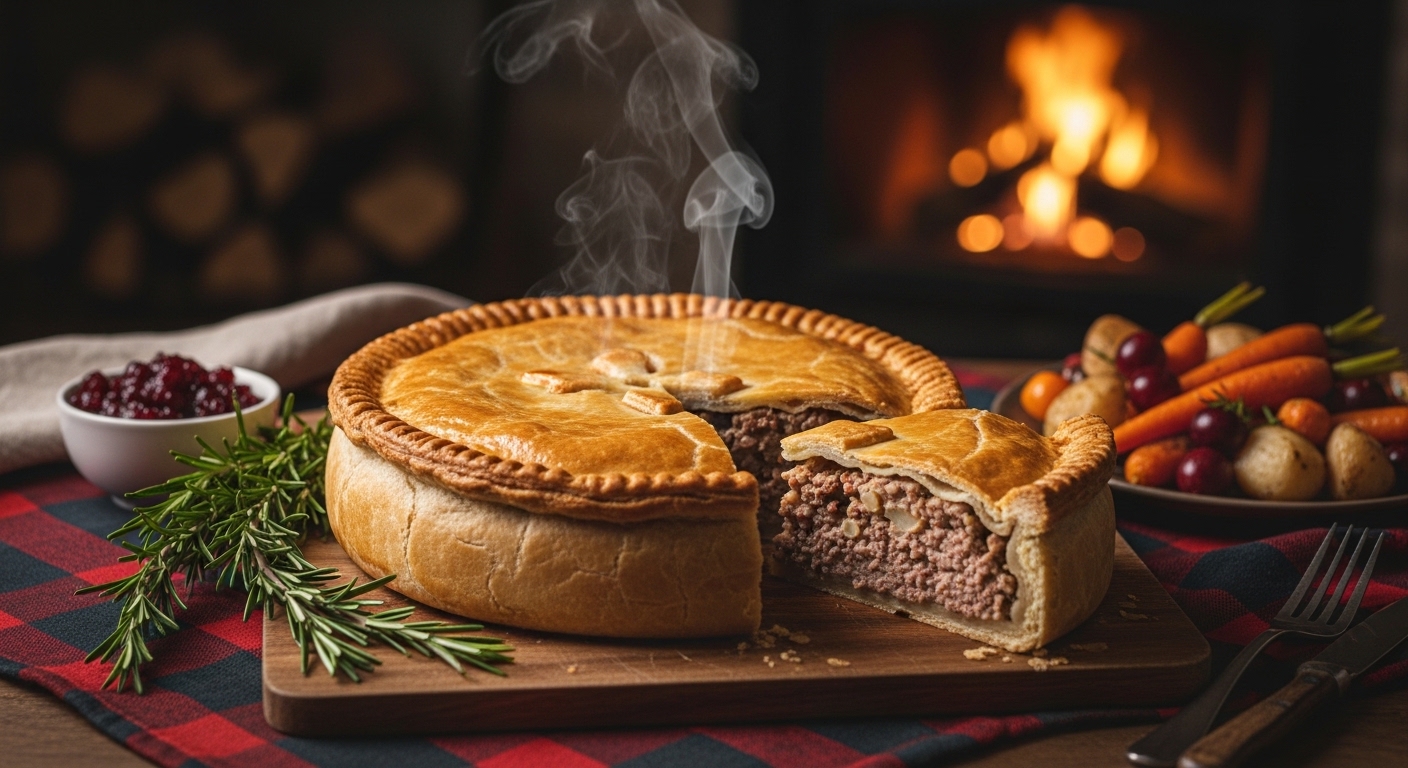
If you’re craving a rich, savory, and deeply comforting dish that warms the soul during cold Canadian winters, look no further than Canadian Tourtiere. This traditional Quebecois meat pie, often served on Christmas or New Year’s Eve, is a beloved staple of French-Canadian cuisine. Filled with a spiced blend of ground pork, beef, veal, and sometimes game meats, all simmered in wine and herbs, tourtière is more than just a meal—it’s a cultural symbol of warmth, family, and celebration.
Unlike its cousin, the American meat pie, Canadian Tourtiere stands out for its bold flavors, aromatic seasonings, and the way it brings generations together around the dinner table. Whether you’re a seasoned home cook or a beginner exploring international recipes, making authentic tourtière at home is a rewarding experience that connects you to centuries-old culinary traditions.
Quick Recipe Summary
| Prep Time | 45 minutes |
|---|---|
| Cook Time | 2 hours (including simmering and baking) |
| Total Time | 3 hours |
| Servings | 8–10 |
| Cuisine | Canadian, French-Canadian (Québécois) |
| Course | Mains, Pies & Pastries |
| Calories (approx.) | 380 per serving |
What Makes Canadian Tourtiere Special?
Tourtière isn’t just about ingredients—it’s about tradition. Originating in rural Quebec during the 17th century, this rustic meat pie was originally made by farmers using whatever cuts of meat they had on hand, often combining pork with game like rabbit or pheasant. Over time, it evolved into a festive dish, especially popular during winter holidays.
- The name “tourtière” comes from the Old French word tourtel, meaning “pie” or “pastry shell.”
- Each region in Quebec adds its own twist—some use red wine, others maple syrup for sweetness, and many include a signature spice blend.
- Traditionally, tourtière is served with a side of maple mustard or pickled beets to cut through the richness.
Key Ingredients You’ll Need
Authentic Canadian Tourtiere relies on high-quality meats, aromatic spices, and a buttery pie crust. Here’s what to gather:
For the Filling:
- 1.5 lbs (680g) ground pork
- 1 lb (450g) ground beef
- 0.5 lb (225g) ground veal (optional, but traditional)
- 1 medium onion, finely chopped
- 2 cloves garlic, minced
- 1 cup (240ml) red wine (preferably Beaujolais or Gamay)
- 1 cup (240ml) chicken broth
- 2 tbsp tomato paste
- 1 tsp dried thyme
- 1 tsp ground allspice
- ½ tsp ground cloves
- ½ tsp black pepper
- Salt to taste (start with 1 tsp)
- 2 tbsp butter or bacon fat
For the Pie Crust:
- 2 cups (250g) all-purpose flour
- 1 tsp salt
- 1 cup (225g) unsalted butter, cold and cubed
- ¼ cup ice water
Step-by-Step Cooking Instructions
1. Prepare the Pie Crust
- In a large bowl, mix flour and salt. Cut in the cold butter using a pastry cutter or your fingertips until the mixture resembles coarse crumbs.
- Gradually add ice water, one tablespoon at a time, mixing gently until the dough just comes together.
- Divide the dough in half, shape into discs, wrap in plastic, and refrigerate for at least 30 minutes.
2. Make the Meat Filling
- In a large skillet over medium heat, brown the onions and garlic in butter until soft and translucent.
- Add all the ground meats and cook until fully browned, breaking up clumps with a spoon.
- Pour in the red wine, broth, and tomato paste. Stir well and bring to a simmer.
- Add thyme, allspice, cloves, pepper, and salt. Reduce heat to low and let the mixture simmer uncovered for 45–60 minutes, stirring occasionally, until thickened and flavorful.
- Remove from heat and let cool slightly.
- Preheat oven to 375°F (190°C).
- Roll out one half of the dough to fit a 9-inch pie dish. Place the bottom crust into the pan.
- Fill with the cooled meat mixture and dot the top with small pieces of cold butter for extra richness.
- Roll out the second half of the dough. Lay it over the filling and press the edges to seal. Trim excess dough and crimp decoratively.
- Cut a few slits in the top crust to allow steam to escape.
- Bake for 50–60 minutes, or until the crust is golden brown and the filling bubbles.
- Let rest for at least 20 minutes before slicing—this helps the filling set.
- Use cold butter and ice water—this ensures a flaky, tender crust.
- Simmer slowly—the long cooking time allows flavors to meld deeply.
- Test for doneness—insert a knife into the center; it should come out clean with no raw meat.
- Make ahead—Tourtiere tastes even better the next day as flavors mature.
- Overcooking the filling—it can become dry and tough.
- Using warm butter for the crust—it melts too quickly and creates dense layers.
- Skipping the rest time—rushing leads to a messy slice.
- Vegan/Vegetarian version: Use lentils, mushrooms, and textured vegetable protein (TVP) with smoked paprika and umami-rich soy sauce.
- Game meat swap: Try adding ½ lb of ground rabbit or venison for a wilder flavor.
- Gluten-free crust: Use a 1:1 gluten-free flour blend.
- Spice variation: Add cinnamon or nutmeg for a sweeter profile, common in some Quebec households.
- A dollop of maple mustard or Dijon mustard on the side.
- Pickled beets or cornichons for tangy contrast.
- A crisp green salad with apple slices for freshness.
- Traditional sides like mashed potatoes or roasted root vegetables.
- Refrigerate: Store leftovers in an airtight container for up to 4 days.
- Freeze: Wrap tightly and freeze for up to 3 months. Thaw overnight in the fridge.
- Reheat: Warm in a 350°F (175°C) oven for 20–25 minutes, or microwave individual slices with a damp paper towel.
- Calories: 380
- Protein: 22g
- Fat: 26g
- Carbohydrates: 18g
- Fiber: 1g
- Sugar: 2g
- Sodium: 650mg
3. Assemble the Tourtiere
4. Bake and Serve
Chef Tips for Perfect Canadian Tourtiere
Common Mistakes to Avoid
Ingredient Substitutions & Variations
Serving Suggestions
Serve Canadian Tourtiere hot with:
Storage & Reheating
Nutrition Facts (Approximate per Serving)
FAQs About Canadian Tourtiere
1. Is tourtière only eaten during holidays?
While traditionally served during Christmas and New Year’s in Quebec, many families enjoy tourtière year-round, especially during colder months. It’s a comforting dish that transcends seasons.
2. Can I use store-bought pie crust?
Yes! For convenience, high-quality pre-made pie crusts work well. Just ensure they’re cold and follow the same assembly steps.
3. Why is allspice so important in tourtière?
Allspice gives tourtière its signature warm, slightly sweet flavor. It mimics the taste of cinnamon, nutmeg, and cloves—hence why it’s called “allspice.”
4. What’s the difference between tourtière and pâté?
Both are meat-based pies, but tourtière is typically baked and served hot, while pâté is often chilled or served cold. Tourtière also uses a flaky crust, whereas pâté usually has a smoother, loaf-like texture.
5. Can I make tourtière without veal?
Absolutely. Many modern recipes omit veal entirely. Pork and beef alone create a delicious filling. The key is balancing fat content to keep it moist.
Conclusion: Bring Quebec Home With You
Canadian Tourtiere is more than just a recipe—it’s a taste of heritage, resilience, and community. Whether you’re hosting a winter feast or simply want to cozy up with a homemade pie, this dish delivers warmth in every bite. With its rich spices, hearty meats, and buttery crust, tourtière invites you to slow down, savor the moment, and celebrate the joy of cooking.
So roll up your sleeves, gather your loved ones, and bake your own piece of Quebec history. Trust us—once you’ve tasted authentic Canadian Tourtiere, you’ll be coming back for seconds.
Pro tip: Pair your tourtière with a glass of red wine or a warm spiced cider for the full Quebec experience!
Leave a Reply