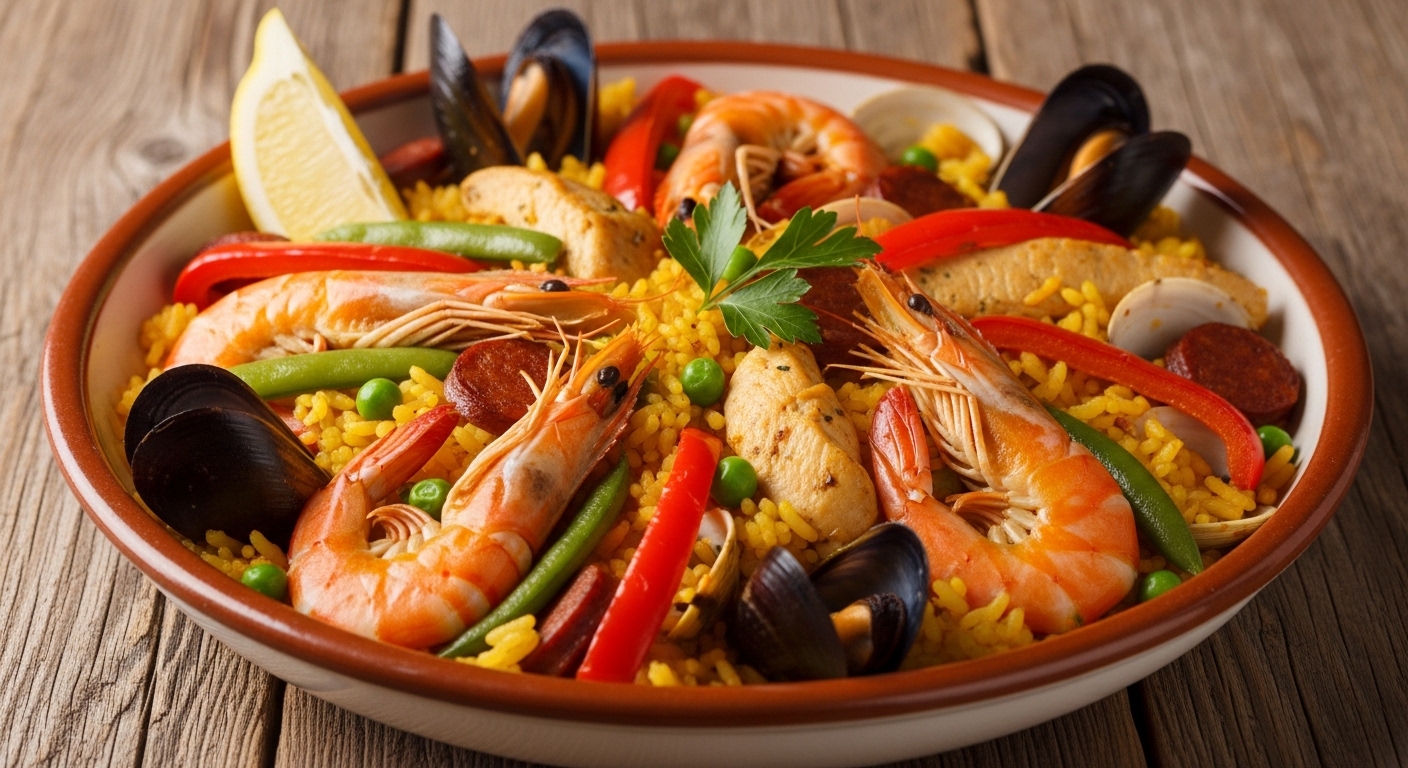
Looking for a dish that combines bold flavors, vibrant colors, and rustic charm? The rustic paella bowl is your answer. Originating from the sun-drenched fields of Spain, particularly Valencia, this one-pan masterpiece blends saffron-infused rice with an array of proteins and seasonal vegetables, all cooked to perfection over an open flame. Unlike its more refined cousins, the rustic version embraces imperfections—charred edges, slightly chewy textures, and a smoky aroma that speaks to traditional fogós (open-fire cooking). Whether you’re hosting a casual dinner or craving comfort food with depth, a well-made rustic paella bowl delivers satisfaction in every bite.
Why Rustic Paella Bowls Are Loved Worldwide
The appeal of the rustic paella bowl lies in its balance of simplicity and complexity. It’s not about perfection; it’s about soul. Each ingredient plays a role: golden chicken thighs, plump chorizo slices, crisp green beans, earthy mushrooms, and smoky paprika all harmonize with the fragrant saffron rice. The result? A dish that’s both nourishing and deeply flavorful, ideal for sharing among friends or enjoying as a solo feast. Plus, its customizable nature makes it perfect for dietary preferences—whether you’re vegetarian, seafood-loving, or meat-inclusive.
Quick Recipe Summary
| Prep Time | Cook Time | Total Time | Servings | Cuisine | Course | Calories (Approx.) |
|---|---|---|---|---|---|---|
| 20 minutes | 35 minutes | 55 minutes | 4 | Spanish | Main Course | 520 per serving |
Ingredients You’ll Need for a Delicious Rustic Paella Bowl
- 1½ cups (300g) short-grain rice (preferably Bomba or Calasparra)
- 4 cups (950ml) chicken or fish stock, warmed
- ½ tsp saffron threads, soaked in ¼ cup hot water for 10 minutes
- 3 tbsp olive oil
- 1 large onion, finely diced
- 4 garlic cloves, minced
- 1 red bell pepper, chopped
- 1 cup (120g) frozen peas
- 8 oz (225g) boneless skinless chicken thighs, cut into chunks
- 6 oz (170g) chorizo sausage, sliced
- 1 cup (150g) mushrooms, sliced
- 1 cup (150g) green beans, trimmed and halved
- 1 lemon, cut into wedges
- Salt and black pepper, to taste
- Fresh parsley, chopped (for garnish)
Step-by-Step Cooking Instructions
- Prepare the Saffron Base: In a small bowl, soak the saffron threads in ¼ cup of hot water. Set aside. This infuses the rice with its signature golden hue and floral aroma.
- Sauté the Aromatics: Heat 2 tablespoons of olive oil in a large paella pan or wide skillet over medium heat. Add the diced onion and cook until soft and translucent (about 5 minutes). Stir in the garlic and bell pepper, cooking for another 3–4 minutes until fragrant.
- Add Meats and Chorizo: Push everything to the side and add the chicken thighs and chorizo slices. Cook until the chicken is lightly browned on all sides and the chorizo renders some of its fat (about 6–7 minutes).
- Toast the Rice: Sprinkle the short-grain rice evenly over the mixture. Stir gently to coat the grains in the rendered fats. Let them toast for 1–2 minutes to develop nuttiness.
- Add Liquids and Saffron: Pour in the warm stock and the saffron infusion. Season generously with salt and pepper. Stir once, then let the mixture come to a gentle boil.
- Add Vegetables: Scatter the mushrooms, green beans, and peas over the surface. Do not stir again—this allows the rice to form a crust at the bottom, known as the sofrito.
- Simmer and Finish: Reduce heat to low-medium. Cover the pan loosely with a lid or foil and simmer for 18–22 minutes, or until the rice is tender and most of the liquid is absorbed. Avoid stirring during this time.
- Rest and Serve: Remove from heat, cover with a clean towel for 5 minutes to finish steaming. Garnish with fresh parsley and serve with lemon wedges on the side.
Chef Tips for Perfect Rustic Paella Bowls
- Use a Wide Pan: A shallow, wide pan ensures even heat distribution and proper formation of the socarrat (the crispy caramelized layer at the bottom).
- Don’t Stir After Adding Liquid: This disrupts the texture and prevents the prized crust from forming.
- Keep Stock Hot: Cold liquid slows down cooking and can make the rice soggy.
- Test Rice Doneness: Taste a grain near the end—it should be al dente, not mushy.
- Let It Rest: Resist the urge to serve immediately; resting helps flavors meld and steam finishes cooking.
Common Mistakes to Avoid
- Overcrowding the Pan: Too many ingredients slow cooking and lead to uneven results.
- Using Long-Grain Rice: Short-grain varieties absorb liquid better and stay tender.
- Stirring Frequently: This breaks up the crust and creates gummy rice.
- Skipping the Saffron Soak: Grinding saffron directly into dry rice won’t release its full flavor.
- Adding Too Much Salt Early: High heat can intensify saltiness—adjust seasoning toward the end if needed.
Ingredient Substitutions & Variations
Want to adapt this recipe? Here are flexible swaps:
- Protein Options:
- Seafood Paella Style: Replace meats with mussels, clams, shrimp, and squid.
- Vegetarian Version: Skip meats; boost flavor with smoked paprika, artichokes, and roasted peppers.
- Vegan Option: Use vegetable stock, omit chorizo, add chickpeas or tofu for protein.
- Vegetable Swaps:
- Zucchini, eggplant, or cherry tomatoes work beautifully.
- Replace green beans with asparagus or fava beans.
- Spice Level: Add smoked paprika for depth, chili flakes for heat, or cumin for warmth.
Serving Suggestions
Serve your rustic paella bowl family-style in the pan or divide into individual bowls. Pair with a crisp white wine like Albariño or a light beer. Add a simple green salad with vinaigrette and crusty bread on the side. For extra flair, sprinkle with extra virgin olive oil and flaky sea salt before serving.
Storage and Reheating Instructions
- Refrigeration: Store leftovers in an airtight container for up to 4 days.
- Freezing: Not recommended—rice becomes mushy when frozen and reheated.
- Reheating: Warm in a skillet over low heat with a splash of broth or water to restore moisture. Cover to retain steam.
Nutrition Facts (Approximate Per Serving)
| Calories | Carbohydrates | Protein | Fat | Saturated Fat | Sodium | Fiber | Sugar |
|---|---|---|---|---|---|---|---|
| 520 | 58g | 28g | 22g | 6g | 980mg | 3g | 5g |
Key Takeaways
- The rustic paella bowl celebrates bold, communal eating with minimal fuss.
- Short-grain rice, saffron, and a wide pan are essential for authenticity.
- Customization makes it ideal for vegetarians, vegans, and seafood lovers alike.
- Avoid stirring after adding liquid to preserve the coveted socarrat.
- Resting the dish improves texture and flavor integration.
FAQs About Rustic Paella Bowls
What type of rice should I use for rustic paella?
Short-grain rice like Bomba or Calasparra is best because it absorbs liquid slowly and remains firm yet tender. Arborio can also work but may become too creamy.
Can I make paella without saffron?
Traditionally, saffron defines authentic paella, but you can substitute turmeric for color and smoked paprika for flavor if unavailable. However, the dish will lack its distinctive aroma.
How do I achieve the crispy bottom layer (socarrat)?
Ensure the pan is wide and shallow, avoid stirring, and cook on medium-low heat. The key is letting the rice caramelize undisturbed at the bottom.
Is rustic paella bowl suitable for meal prep?
Yes! It stores well for up to 4 days. Just reheat gently with a bit of liquid to prevent drying out.
Can I cook paella in a regular frying pan?
Absolutely—any wide, heavy-bottomed skillet works. Just ensure it has enough surface area for even cooking.
Conclusion: Bring the Spirit of Spain Home
The rustic paella bowl isn’t just a meal—it’s an experience. With its rich history, vibrant presentation, and adaptable nature, it invites you to slow down, gather around, and savor life’s simple pleasures. Whether you’re cooking for one or feeding a crowd, this dish proves that sometimes, the most beautiful things come with a little imperfection. So fire up the pan, gather your favorite ingredients, and let the sizzle of chorizo and the scent of saffron fill your kitchen. Your table awaits.
Leave a Reply