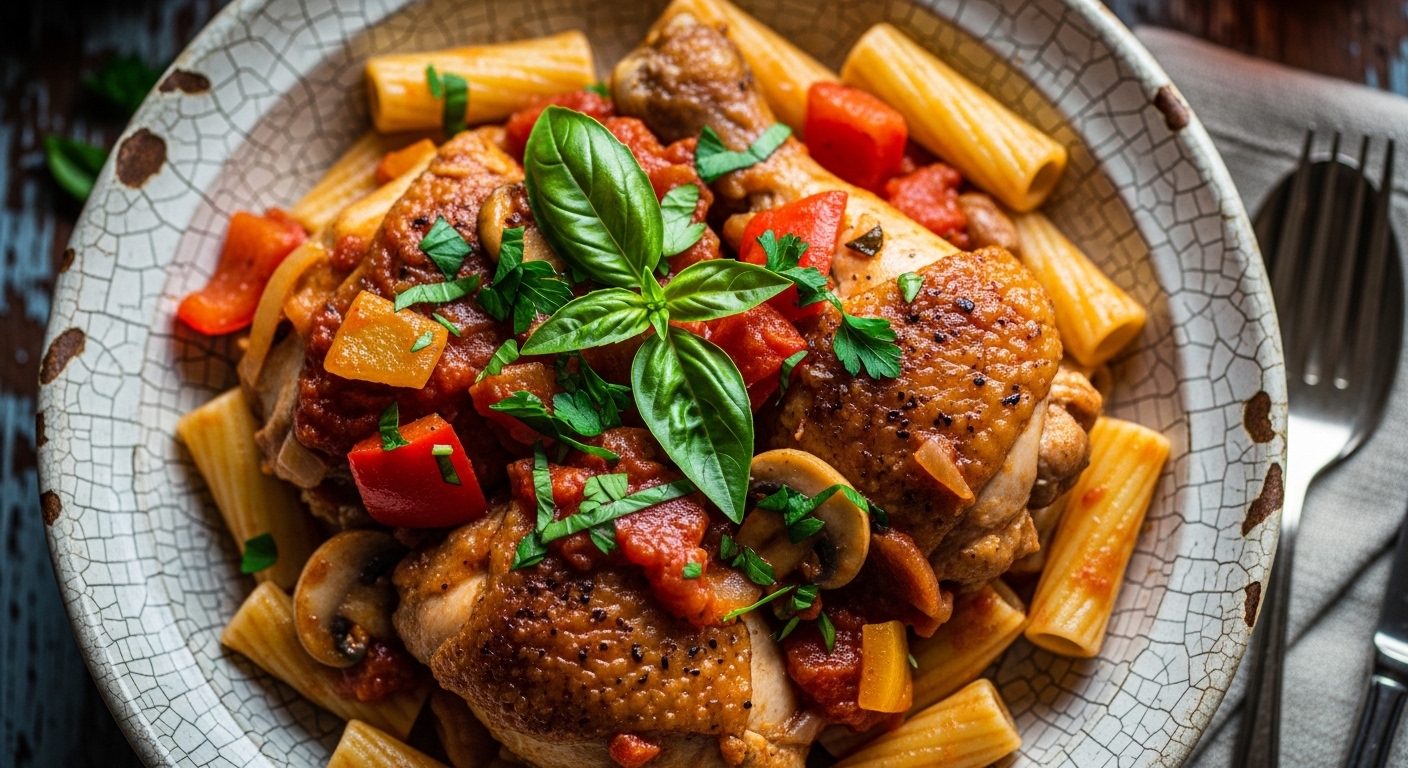
There’s something deeply comforting about a warm bowl of Roman Chicken Cacciatore—rich, savory, and layered with the bold flavors of tomatoes, mushrooms, and herbs. While traditional chicken cacciatore is an Italian staple, the Roman version stands out with its slightly sharper tomato base, use of guanciale (Italian cured pork jowl), and a rustic, soul-warming profile that makes it perfect for family dinners or cozy weeknight meals. If you’re craving authentic Italian comfort food with a touch of sophistication, this dish delivers on all fronts.
Why Roman Chicken Cacciatore Is Worth Trying
Unlike lighter versions found in other regions of Italy, Roman Chicken Cacciatore leans into depth and richness. The inclusion of guanciale instead of pancetta or bacon adds a unique umami punch, while the slow-cooked sauce allows the chicken to absorb every last bit of flavor. Whether served over creamy polenta, crusty bread, or simple pasta, this dish is a celebration of simplicity and technique. Plus, it’s one of those recipes that tastes even better the next day—perfect for meal prep lovers.
Quick Recipe Summary
- Prep Time: 20 minutes
- Cook Time: 45 minutes
- Total Time: 1 hour 5 minutes
- Servings: 4
- Cuisine: Italian, Roman
- Course: Main Course
- Calories (approx.): 520 per serving
Ingredients You’ll Need
Here’s everything you’ll need to make an authentic Roman-style Chicken Cacciatore:
For the Chicken:
- 4 bone-in, skin-on chicken thighs (about 1.5 lbs / 680g)
- Salt and freshly ground black pepper, to taste
- 1 tablespoon olive oil
For the Sauce:
- 4 oz (115g) guanciale, diced (substitute with pancetta if unavailable)
- 1 medium onion, finely chopped
- 3 garlic cloves, minced
- 1 teaspoon dried oregano
- 1/2 teaspoon red pepper flakes (adjust to taste)
- 1 (28 oz / 794g) can whole peeled tomatoes, crushed by hand
- 1 cup (240ml) dry white wine
- 1 cup (240ml) chicken broth
- 1 cup (150g) sliced cremini mushrooms
- 1 tablespoon tomato paste
- 1 bay leaf
- Fresh parsley, chopped (for garnish)
- Grated Parmigiano-Reggiano, optional (for serving)
Step-by-Step Cooking Instructions
Follow these easy steps to create a restaurant-quality Roman Chicken Cacciatore at home:
- Season and Sear the Chicken: Pat the chicken thighs dry and season generously with salt and pepper. Heat olive oil in a large Dutch oven or heavy skillet over medium-high heat. Add the chicken, skin-side down, and sear for 6–7 minutes until golden brown. Flip and sear the other side for 3–4 minutes. Remove and set aside.
- Cook the Guanciale: In the same pot, add the diced guanciale and cook over medium heat until crispy and rendered, about 4–5 minutes. Use a slotted spoon to remove and set aside, leaving the fat in the pan.
- Sauté Aromatics: Add the chopped onion to the pan and cook until soft and translucent, about 4 minutes. Stir in the garlic, oregano, and red pepper flakes, cooking for another minute until fragrant.
- Deglaze with Wine: Pour in the white wine, scraping up any browned bits from the bottom of the pan. Let it simmer and reduce by half, about 3–4 minutes.
- Add Tomatoes and Simmer: Stir in the crushed tomatoes, tomato paste, chicken broth, bay leaf, and mushrooms. Return the chicken (along with any juices) to the pot, nestling it into the sauce. Bring to a gentle boil, then reduce heat to low. Cover and simmer for 30 minutes, turning the chicken halfway through.
- Finish and Serve: After 30 minutes, uncover and check seasoning. Remove the bay leaf. If the sauce is too thin, let it simmer uncovered for a few more minutes to thicken. Sprinkle with crispy guanciale and fresh parsley before serving.
Chef Tips for Perfect Roman Chicken Cacciatore
Want your dish to shine? Here are some pro tips:
- Use Bone-In, Skin-On Chicken: It stays juicier during long cooking and adds rich flavor.
- Don’t Skip the Guanciale: It’s essential for authentic Roman flavor. If unavailable, pancetta works but won’t be as rich.
- Crush Tomatoes by Hand: It gives a coarser texture than using a blender, which keeps the sauce rustic.
- Low and Slow is Key: Keep the heat low after adding liquid to prevent the chicken from drying out.
- Let It Rest: Allow the dish to sit for 10 minutes before serving to let flavors meld.
Common Mistakes to Avoid
Even experienced cooks make errors. Here’s how to dodge them:
- Overcooking the Chicken: Check internal temperature—it should read 165°F (74°C). Overcooked meat becomes tough.
- Skipping the Deglazing Step: This removes fond (browned bits), which are packed with flavor. Always deglaze!
- Using Canned Tomato Paste Instead of Fresh: Fresh or high-quality canned tomatoes make a noticeable difference.
- Not Seasoning at Each Stage: Taste and adjust salt and pepper after searing and again before serving.
Ingredient Substitutions & Variations
Flexibility is key in Italian cooking. Try these swaps:
Substitutions:
- Guanciale → Pancetta or Bacon: Pancetta has a similar smoky flavor; bacon is sweeter but still works.
- White Wine → Dry Vermouth or Chicken Broth: Use vermouth for a classic Italian twist, or substitute with broth for a non-alcoholic version.
- Mushrooms → Artichoke Hearts or Olives: For a different textural element, try marinated artichokes or Kalamata olives.
Variations:
- Vegetarian Roman Cacciatore: Replace chicken with extra mushrooms, eggplant, or chickpeas. Use vegetable broth and add a splash of soy sauce for depth.
- Spicy Version: Increase red pepper flakes or add a pinch of cayenne.
- Lighter Option: Use boneless, skinless chicken thighs and reduce oil slightly. Serve with zucchini noodles instead of pasta.
Serving Suggestions
Pair your Roman Chicken Cacciatore with these crowd-pleasing sides:
- Polenta: Creamy, buttery polenta is the ultimate Italian companion—slather the sauce over it for maximum comfort.
- Pasta: Toss cooked pappardelle or rigatoni with the sauce and a sprinkle of Parmesan.
- Bread: Crusty ciabatta or sourdough for mopping up every drop of sauce.
- Green Salad: A simple arugula salad with lemon vinaigrette balances the richness.
Storage & Reheating Tips
This dish gets better with time! Here’s how to store and reheat:
- Refrigerate: Store in an airtight container for up to 4 days.
- Freeze: Best for up to 3 months. Thaw overnight in the fridge before reheating.
- Reheat Safely: Warm gently on the stove over medium-low heat, adding a splash of broth or water if needed. Avoid microwaving directly—it can make the chicken rubbery.
Nutrition Facts (Approximate Per Serving)
- Calories: 520
- Protein: 42g
- Fat: 28g
- Carbohydrates: 18g
- Fiber: 4g
- Sugar: 8g
- Sodium: 780mg
FAQs About Roman Chicken Cacciatore
1. What makes Roman Chicken Cacciatore different from regular chicken cacciatore?
The main difference lies in the use of guanciale instead of pancetta or bacon, which adds a deeper, fattier, more complex flavor. Roman versions also tend to have a tangier, less sweet tomato base and are often cooked longer to develop richer sauce.
2. Can I make this dish ahead of time?
Absolutely! In fact, many Italian dishes improve when made a day in advance. The flavors meld beautifully, and the chicken becomes even more tender. Just reheat gently on the stove.
3. Is Roman Chicken Cacciatore gluten-free?
Yes, as written, it’s naturally gluten-free. Just ensure your chicken broth and any added ingredients (like wine) are certified gluten-free if necessary.
4. Can I use chicken breasts instead of thighs?
You can, but thighs are preferred because they stay moist and flavorful during long cooking. Breasts risk drying out unless you monitor closely.
5. What’s the best way to serve this dish?
Tradition calls for creamy polenta or hearty pasta like pappardelle. A crisp green salad and a glass of Chianti make it a complete meal.
Key Takeaways
- Roman Chicken Cacciatore is richer and deeper than standard versions, thanks to guanciale and slow-simmered tomatoes.
- Bone-in, skin-on chicken thighs are ideal for juiciness and flavor.
- The dish benefits from resting time and can be made ahead for even better taste.
- Customize with substitutions like pancetta, mushrooms, or vegetarian options.
- Serve over polenta, pasta, or crusty bread for the full experience.
Conclusion: Bring Rome to Your Kitchen
Roman Chicken Cacciatore isn’t just a recipe—it’s an invitation to slow down, savor, and enjoy the beauty of Italian home cooking. With its bold flavors, tender chicken, and deeply satisfying sauce, this dish proves that sometimes the simplest ingredients create the most memorable meals. Whether you’re hosting a dinner party or simply treating yourself, this recipe delivers warmth, tradition, and undeniable deliciousness. So grab your knife, light your favorite playlist, and get cooking—your taste buds will thank you.