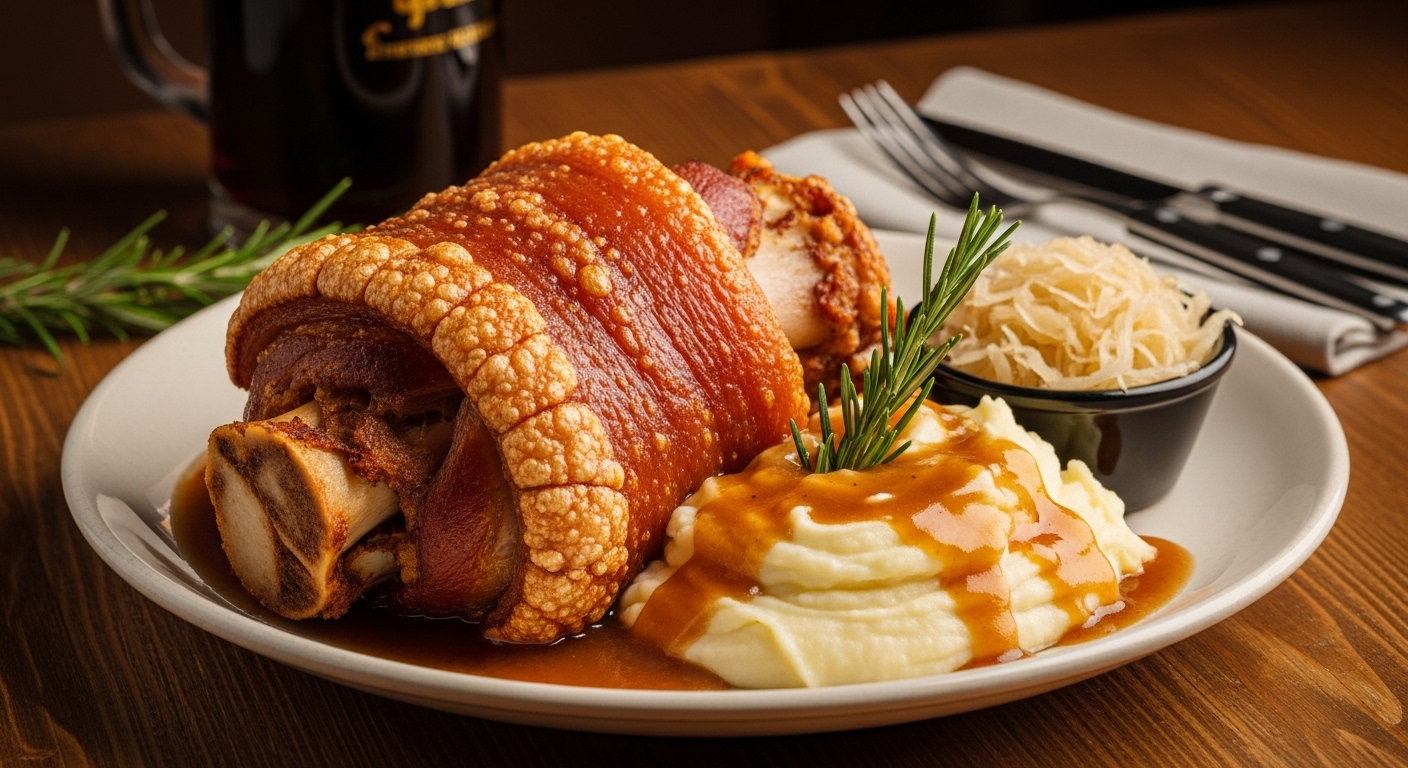
If you’re craving a rich, fall-off-the-bone meat dish that delivers deep umami flavor with every bite, the **pork knuckle plate** is your answer. This traditional European favorite—especially beloved in German, Austrian, and Bavarian cuisine—has made its way into modern kitchens and restaurant menus worldwide. Known for its crispy skin, tender collagen-rich meat, and bold seasoning, a well-prepared pork knuckle plate is the ultimate comfort food for meat lovers.
Whether slow-roasted, braised, or grilled, pork knuckle transforms into a succulent centerpiece that pairs perfectly with hearty sides like sauerkraut, mashed potatoes, or dark beer gravy. Its robust flavor profile and satisfying texture make it a go-to for special occasions, family dinners, or even upscale pub fare. In this detailed guide, you’ll learn how to master this iconic dish at home—complete with a foolproof recipe, pro tips, and variations to suit any palate.
Quick Recipe Summary
| Prep Time | 20 minutes |
| Cook Time | 3 hours |
| Total Time | 3 hours 20 minutes |
| Servings | 4 |
| Cuisine | German / European |
| Course | Main Course |
| Calories (approx.) | 680 per serving |
What Is a Pork Knuckle Plate?
The **pork knuckle plate**—also known as *Schweinshaxe* in German—is a dish centered around the lower part of the pig’s leg, typically including the hock and part of the shank. This cut is prized for its high collagen content, which breaks down during slow cooking to create incredibly tender, juicy meat with a melt-in-your-mouth texture.
Traditionally, pork knuckle is roasted until the skin becomes crackling-crisp while the interior stays moist and flavorful. It’s often served as a full plate with traditional sides, making it a complete meal that’s both rustic and refined. The dish is especially popular during Oktoberfest and winter gatherings, where its hearty nature shines.
Why People Love the Pork Knuckle Plate
There’s a reason this dish has stood the test of time. Here’s what makes the pork knuckle plate so irresistible:
- Rich, meaty flavor: The slow-cooked fat and collagen infuse every bite with deep, savory notes.
- Crispy skin: When done right, the exterior is golden, crunchy, and addictive.
- Versatile preparation: Can be roasted, braised, or even smoked for different textures.
- Perfect for sharing: Ideal for family-style dining or festive occasions.
- Comfort food at its finest: Warm, filling, and deeply satisfying.
Ingredients for the Perfect Pork Knuckle Plate
Main Ingredients
- 4 pork knuckles (about 1.5–2 lbs each), skin-on
- 2 tablespoons coarse sea salt
- 1 tablespoon freshly ground black pepper
- 1 tablespoon caraway seeds (essential for authentic flavor)
- 2 teaspoons garlic powder
- 1 teaspoon smoked paprika
- 1 large onion, quartered
- 2 carrots, roughly chopped
- 2 celery stalks, roughly chopped
- 4 cups low-sodium chicken or vegetable broth
- 1 bottle (12 oz) dark beer (optional, but highly recommended)
- 2 bay leaves
- 1 tablespoon apple cider vinegar (helps tenderize and crisp skin)
For Serving (Traditional Sides)
- 1 lb sauerkraut, warmed
- 2 large potatoes, peeled and boiled or mashed
- 1 cup brown gravy (made from pan drippings)
- Fresh parsley, chopped (for garnish)
Step-by-Step Cooking Instructions
Step 1: Prepare the Pork Knuckles
Pat the pork knuckles completely dry with paper towels. Moisture is the enemy of crispy skin, so this step is crucial. Score the skin in a diamond pattern using a sharp knife—about 1/4 inch deep—being careful not to cut into the meat. This helps the fat render and the skin crisp up.
Step 2: Season Generously
In a small bowl, mix the salt, pepper, caraway seeds, garlic powder, and smoked paprika. Rub this mixture all over the pork knuckles, making sure to get it into the scored cuts. Let them sit uncovered in the refrigerator for at least 2 hours—or ideally overnight—to dry the skin and enhance flavor.
Step 3: Preheat and Sear (Optional but Recommended)
Preheat your oven to 300°F (150°C). For extra depth of flavor, sear the knuckles in a hot skillet with a little oil until the skin is lightly browned on all sides. This step is optional but adds a rich, caramelized crust.
Step 4: Braise Low and Slow
Place the pork knuckles in a large roasting pan or Dutch oven. Add the onion, carrots, celery, bay leaves, vinegar, broth, and beer (if using). The liquid should come about halfway up the sides of the meat—do not submerge completely.
Cover tightly with a lid or foil and braise in the oven for 2.5 to 3 hours, or until the meat is fork-tender and pulls away easily from the bone.
Step 5: Crisp the Skin
Remove the lid or foil and increase the oven temperature to 450°F (230°C). Return the pan to the oven and roast uncovered for 20–30 minutes, or until the skin is golden brown and crackling. Baste occasionally with pan juices to keep the meat moist.
Step 6: Rest and Serve
Let the pork knuckles rest for 10 minutes before serving. This allows the juices to redistribute, ensuring maximum tenderness.
Chef Tips for the Best Pork Knuckle Plate
- Dry brining is key: Salting the meat and letting it rest uncovered in the fridge overnight dramatically improves crispiness and flavor.
- Use a meat thermometer: The internal temperature should reach 190–195°F (88–90°C) for optimal tenderness.
- Don’t skip the vinegar: It helps break down connective tissue and promotes crispy skin.
- Save the drippings: Use them to make a rich, flavorful gravy by reducing with a bit of flour and broth.
- Serve immediately: Pork knuckle is best enjoyed hot, right out of the oven.
Common Mistakes to Avoid
- Not drying the skin: Wet skin = soggy results. Always pat dry and refrigerate uncovered.
- Overcooking: While pork knuckle needs time, too long can make it mushy. Check for doneness with a fork.
- Skipping the sear: Searing builds flavor through the Maillard reaction—don’t skip it if time allows.
- Using low-quality cuts: Choose knuckles with thick, intact skin and good marbling for best results.
- Ignoring seasoning: Caraway and garlic are essential—don’t substitute or omit without reason.
Ingredient Substitutions and Variations
Healthier Version
- Trim excess fat before cooking.
- Use low-sodium broth and reduce added salt.
- Serve with roasted root vegetables instead of mashed potatoes.
Indian-Style Pork Knuckle
- Marinate in yogurt, ginger-garlic paste, turmeric, garam masala, and cumin.
- Braise with tomatoes, onions, and green chilies.
- Serve with naan or jeera rice.
Vegetarian / Vegan Alternative
- Replace with jackfruit or king oyster mushrooms, braised in similar spices and beer.
- Use vegetable broth and add smoked paprika for depth.
Restaurant-Style Finish
- Glaze with a mix of honey, mustard, and beer in the last 10 minutes of roasting.
- Serve with a side of pickled red cabbage and horseradish cream.
Serving Suggestions
The classic **pork knuckle plate** is a full meal in itself. Serve each portion with:
- A generous scoop of creamy mashed potatoes
- Warm, tangy sauerkraut
- A rich brown gravy made from pan drippings
- A cold pint of German lager or dark beer
- Garnish with fresh parsley for a pop of color
For a modern twist, try it with polenta, roasted Brussels sprouts, or a crisp green salad with apple cider vinaigrette.
Storage and Reheating Instructions
- Refrigeration: Store leftovers in an airtight container for up to 3 days.
- Freezing: Freeze cooked pork knuckle (without sides) for up to 2 months. Thaw overnight in the fridge before reheating.
- Reheating: Warm in a 350°F (175°C) oven covered with foil for 20–25 minutes, or until heated through. Avoid microwaving to preserve crispiness.
Nutrition Facts (Approximate per Serving)
- Calories: 680
- Total Fat: 48g
- Saturated Fat: 18g
- Cholesterol: 180mg
- Sodium: 950mg
- Carbohydrates: 12g
- Protein: 52g
- Iron: 25% DV
*Note: Values may vary based on specific ingredients and portion sizes.*
Key Takeaways
- The **pork knuckle plate** is a rich, tender, and flavorful main dish rooted in European tradition.
- Proper preparation—especially drying the skin and slow cooking—is essential for crispy, juicy results.
- Traditional sides like sauerkraut and mashed potatoes complete the meal perfectly.
- With a few tweaks, the recipe can be adapted for health-conscious, Indian, or vegetarian diets.
- Perfect for special dinners, holiday feasts, or impressing guests with authentic comfort food.
FAQ
Can I cook pork knuckle in a slow cooker?
Yes! Brown the knuckles first, then place them in the slow cooker with vegetables, broth, and seasonings. Cook on low for 8–10 hours. For crispy skin, finish under the broiler for 5–10 minutes before serving.
Is pork knuckle the same as ham hock?
Not exactly. Pork knuckle refers to the lower leg, often including the joint, while ham hock is specifically the ankle joint and surrounding meat. They’re similar but not interchangeable in all recipes.
Can I use boneless pork shoulder instead?
While pork shoulder is tender and flavorful, it lacks the skin and bone that give pork knuckle its signature texture and presentation. For authenticity, stick with the real cut.
How do I know when the pork knuckle is done?
The meat should be fork-tender and easily pull away from the bone. Use a meat thermometer: 190–195°F (88–90°C) is ideal for collagen breakdown.
Can I make this recipe ahead of time?
Absolutely. Cook the pork knuckles fully, then cool and refrigerate. Reheat in the oven before crisping the skin. This actually enhances flavor and texture.
Final Thoughts
The **pork knuckle plate** is more than just a meal—it’s an experience. From the first crackle of the skin to the rich, savory bite of tender meat, every element comes together to create something truly special. Whether you’re cooking for a festive gathering or simply treating yourself to a luxurious dinner, this dish delivers on flavor, tradition, and satisfaction.
Don’t be intimidated by the long cook time—the hands-on effort is minimal, and the results are well worth it. With this detailed guide, you’re equipped to make a restaurant-quality pork knuckle plate right in your own kitchen. So fire up the oven, grab a good beer, and get ready to enjoy one of the most comforting dishes in European cuisine.
Try it once, and it might just become your new favorite comfort food.
Leave a Reply