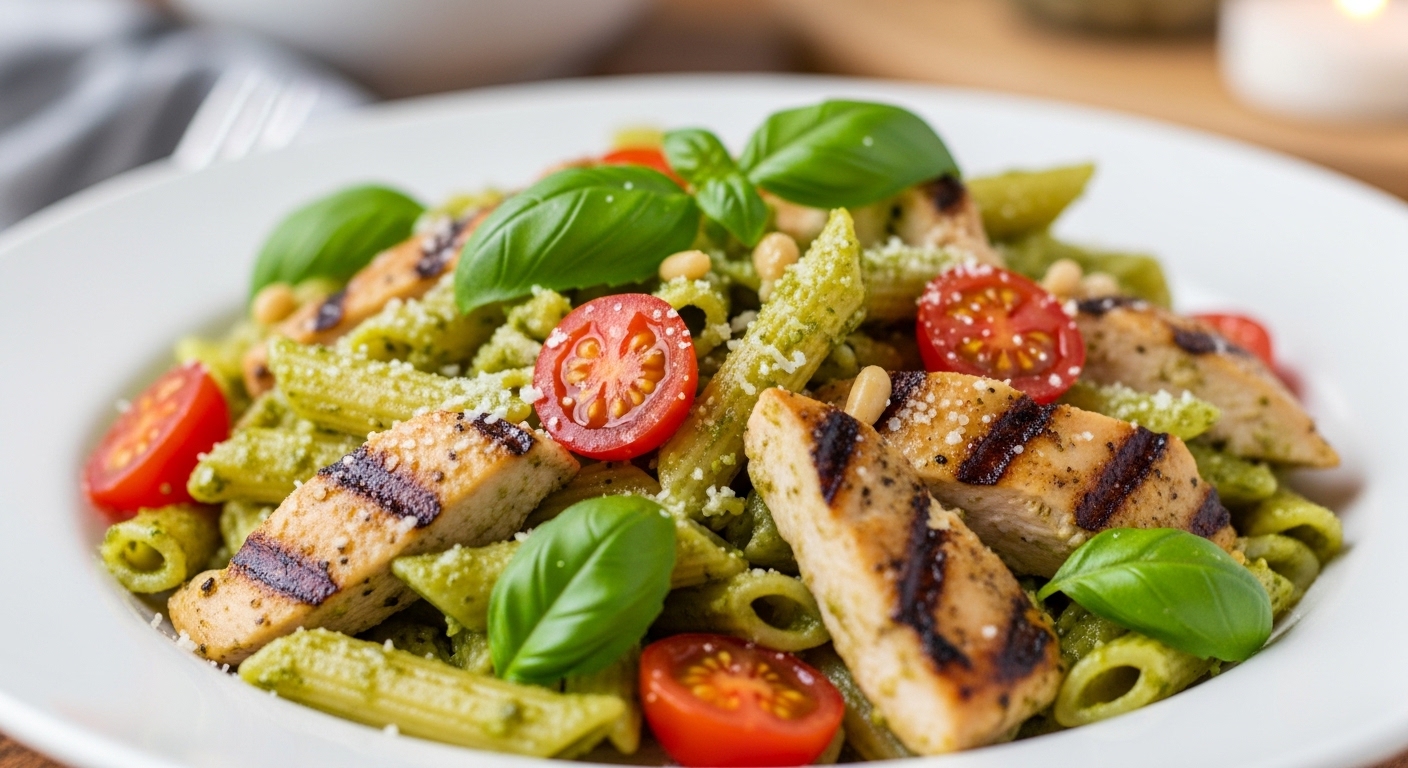
Looking for a dinner that’s rich in flavor, ready in under 30 minutes, and uses just one pot? Pesto chicken pasta delivers bold basil notes, tender juicy chicken, and perfectly cooked al dente pasta—all without the kitchen cleanup. Originating from Italy’s Liguria region, pesto has evolved globally into countless variations, but when paired with grilled chicken and fresh pasta, it becomes a crowd-pleasing comfort dish that balances simplicity with sophistication.
This recipe combines creamy basil pesto with sautéed chicken breast, garlic-infused olive oil, and your favorite short pasta like penne or farfalle. Whether you’re meal-prepping for the week or impressing guests on a busy Friday night, this dish is as versatile as it is delicious. Let’s dive into how to make restaurant-quality pesto chicken pasta at home—with no fancy equipment required.
Quick Recipe Summary Table
- Prep Time: 15 minutes
- Cook Time: 15 minutes
- Total Time: 30 minutes
- Servings: 4
- Cuisine: Italian-inspired
- Course: Main Dish
- Calories (approx.): 580 kcal per serving
Ingredients You’ll Need for Pesto Chicken Pasta
Here’s everything you need to create this vibrant, herb-packed meal. Use high-quality ingredients for the best taste.
For the Chicken:
- 1 lb (450g) boneless, skinless chicken breasts, cut into bite-sized strips
- 1 tsp olive oil
- Salt and freshly ground black pepper, to taste
- 1/2 tsp garlic powder
- 1/2 tsp dried oregano (optional)
For the Pasta:
- 12 oz (340g) dry pasta (penne, fusilli, or rotini work best)
- 4 cups (960ml) water
- 1 tsp salt (for cooking pasta)
For the Pesto Sauce:
- 1 cup (about 30g) fresh basil leaves, packed
- 1/4 cup (35g) pine nuts or walnuts
- 2 cloves garlic
- 1/4 cup (60ml) extra-virgin olive oil (plus more for drizzling)
- 1/4 cup (25g) grated Parmesan cheese (or nutritional yeast for vegan option)
- Zest of 1 lemon
- Salt and pepper to taste
Optional Garnishes:
- Extra basil leaves
- Additional Parmesan or Pecorino Romano
- Lemon wedges
How to Make Pesto Chicken Pasta Step by Step
This recipe is designed for beginners but yields impressive results every time. Follow these steps carefully for perfect texture and flavor.
- Prepare the pesto first. In a food processor or blender, combine basil, pine nuts, garlic, lemon zest, and Parmesan. Pulse until coarsely chopped. With the motor running, slowly pour in olive oil until smooth and creamy. Season with salt and pepper. Set aside.
- Cook the pasta. Bring 4 cups of water to a rolling boil in a large saucepan. Add salt and pasta. Cook according to package instructions until al dente (usually 8–10 minutes). Reserve 1/2 cup of pasta water before draining.
- Season and sear the chicken. Pat chicken strips dry and season with salt, pepper, garlic powder, and oregano. Heat olive oil in a large skillet over medium-high heat. Add chicken and cook for 5–7 minutes, stirring occasionally, until golden and cooked through (internal temperature of 165°F/74°C).
- Combine everything. Return drained pasta to the same pot (off heat). Add pesto and toss well. If the mixture seems too thick, add a splash of reserved pasta water. Add the cooked chicken and gently fold to combine.
- Garnish and serve immediately. Top with extra basil, Parmesan, and a drizzle of olive oil. Serve warm with lemon wedges on the side.
Chef Tips for Perfect Pesto Chicken Pasta
- Use fresh basil. Dried basil lacks the bright, aromatic punch of fresh. If you must use dried, reduce it by half.
- Toast nuts lightly. For deeper flavor, toast pine nuts or walnuts in a dry pan over low heat for 3–5 minutes before blending.
- Don’t overcook the chicken. Remove from heat slightly before it reaches full doneness—it will finish cooking off-heat.
- Reserve pasta water wisely. The starchy water helps bind the pesto to the pasta, creating a silky sauce.
- Make ahead the pesto. Store homemade pesto in an airtight container with a thin layer of olive oil on top. It keeps in the fridge for up to 5 days.
Common Mistakes to Avoid
- Overloading the pesto. Too much cheese or oil makes it greasy. Stick to the ratio for balanced flavor.
- Using cold pesto. Warm the pesto slightly in the microwave (10 seconds) if it’s too thick after refrigeration.
- Rushing the chicken. Low heat ensures even cooking and prevents dryness.
- Skipping the pasta water. Without it, the dish can look dry and unappetizing.
- Using pre-made pesto exclusively. While convenient, homemade pesto offers superior aroma and freshness.
Ingredient Substitutions & Variations
Make this recipe fit your dietary needs or available ingredients with these smart swaps:
- Vegetarian version: Replace chicken with sautéed mushrooms, roasted eggplant, or chickpeas.
- Vegan option: Use nutritional yeast instead of Parmesan and skip chicken. Add white beans for protein.
- Gluten-free: Choose certified gluten-free pasta made from rice, corn, or quinoa.
- Nut allergy swap: Omit nuts entirely or replace with sunflower seeds—just adjust texture.
- Alternative proteins: Shrimp, grilled salmon, or baked tofu are excellent substitutes.
- Variations: Add cherry tomatoes, spinach, sun-dried tomatoes, or artichoke hearts for extra color and texture.
Serving Suggestions & Presentation
Serve your pesto chicken pasta hot, garnished for visual appeal. Pair it with a simple green salad dressed in lemon vinaigrette to cut through the richness. For a complete meal, offer crusty bread or garlic knots on the side. Presentation matters—use a wide bowl or shallow plate to showcase the vibrant green sauce and golden chicken pieces.
For special occasions, sprinkle edible flowers or microgreens over the top. A sprig of fresh basil adds elegance without effort.
Storage & Reheating Instructions
Store leftovers in an airtight container in the refrigerator for up to 3 days. The pesto may separate slightly—just stir before eating.
Reheating tip: Gently reheat on the stove over low heat, adding a splash of water or milk to loosen the sauce. Avoid microwaving straight from cold, as it can make the pesto slimy.
Note: Freshness declines after 24 hours, so best consumed within two days.
Nutrition Facts (Approximate Per Serving)
- Calories: 580
- Protein: 32g
- Carbohydrates: 58g
- Fiber: 3g
- Sugar: 3g
- Fat: 26g
- Saturated Fat: 5g
- Cholesterol: 80mg
- Sodium: 520mg
- Vitamin C: 12% DV
- Iron: 18% DV
Key Takeaways
- Pesto chicken pasta is a quick, nutritious, and satisfying one-pot meal.
- Homemade pesto elevates flavor compared to store-bought versions.
- The dish is highly customizable for dietary preferences—vegetarian, vegan, or gluten-free.
- Proper technique (like using pasta water) ensures a creamy, cohesive sauce.
- With minimal prep and cleanup, it’s ideal for busy weeknights.
Frequently Asked Questions (FAQs)
Can I make pesto chicken pasta ahead of time?
Yes, but best enjoyed the same day. Store assembled pasta in the fridge and reheat gently with added liquid to prevent drying out.
What’s the difference between traditional pesto and this recipe?
Traditional pesto alla Genovese includes only basil, garlic, pine nuts, Parmesan, and olive oil—no chicken or pasta. This version modernizes it by integrating protein and carbs into one dish.
Can I use frozen basil instead of fresh?
Not recommended. Frozen basil is mushy and lacks flavor. If unavailable, substitute with equal parts fresh basil and a pinch of dried basil.
Is pesto chicken pasta healthy?
It’s relatively balanced—high in protein and fiber, moderate in carbs and fat. Opting for whole-grain pasta and lean chicken boosts its nutritional profile.
Why is my pesto too thick?
Add 1–2 tablespoons of warm water or reserved pasta water while blending. You can also mix in Greek yogurt or ricotta for creaminess.
Conclusion: Your New Go-To Dinner Is Just Minutes Away
Pesto chicken pasta isn’t just a meal—it’s a celebration of fresh flavors, effortless preparation, and Italian culinary tradition made accessible. Whether you’re feeding a family, hosting friends, or treating yourself, this recipe proves that great meals don’t require hours in the kitchen. With bold basil, succulent chicken, and perfectly al dente pasta, every bite is a burst of sunshine. So grab your whisk, fire up that pan, and turn ordinary ingredients into extraordinary flavor. Trust us—you’ll be making this again and again.