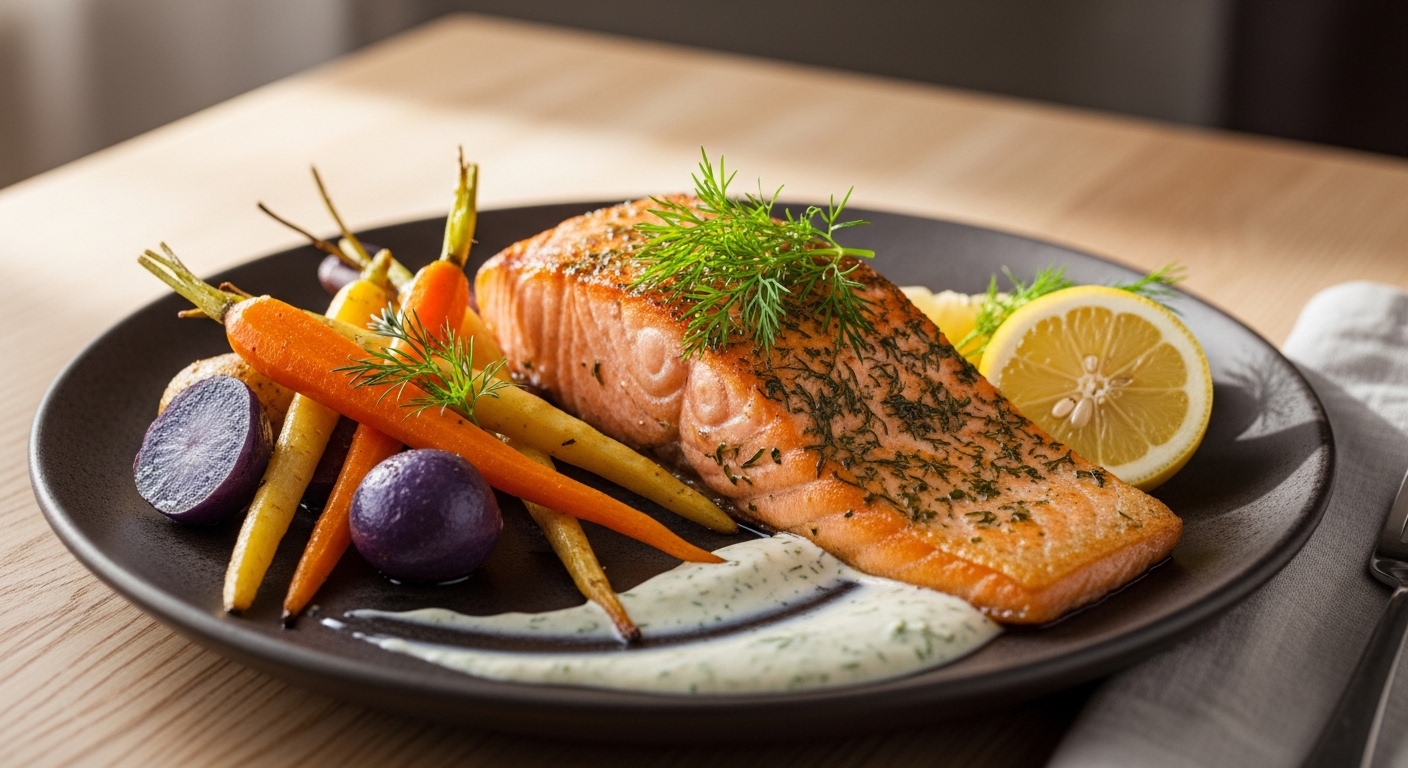
Imagine a dish so fresh, so flavorful, it tastes like you’ve just stepped into a coastal Norwegian kitchen—warm sea breeze in every bite. The Oslo Salmon Plate is more than just a meal; it’s an experience. Originating from the heart of Scandinavia, this elegant yet simple salmon preparation celebrates the purity of high-quality fish, enhanced with minimal ingredients that let nature do the talking. Whether you’re hosting a dinner party or treating yourself to something special, the Oslo Salmon Plate delivers restaurant-worthy results with ease.
In this guide, we’ll walk you through everything you need to know—from sourcing the perfect salmon fillet to plating it like a pro. Plus, you’ll learn chef secrets, common pitfalls to avoid, and creative twists to make it your own. Let’s dive into one of Europe’s most beloved seafood dishes!
Quick Recipe Summary
| Prep Time | 15 minutes |
|---|---|
| Cook Time | 12–15 minutes |
| Total Time | 30 minutes |
| Servings | 2 adults |
| Cuisine | Scandinavian / Norwegian |
| Course | Dinner, Main Course |
| Calories (approx.) | 420 kcal per serving |
What Makes the Oslo Salmon Plate Special?
The beauty of the Oslo Salmon Plate lies in its simplicity and authenticity. Unlike heavily sauced or fried salmon dishes, this recipe highlights the natural richness of Norwegian salmon—often sustainably farmed or wild-caught from cold North Atlantic waters. Traditionally served with dill, lemon, and boiled potatoes, it embodies the “less is more” philosophy of Nordic cuisine.
What sets it apart is not just the ingredient quality but how it’s prepared. Light searing preserves moisture while developing a golden crust, and a quick finish in the oven ensures even doneness without drying out the flesh. Paired with tangy mustard-dill sauce and crisp vegetables, each forkful offers a balance of creamy texture and bright acidity.
Essential Ingredients for Your Oslo Salmon Plate
To achieve authentic flavor and presentation, use fresh, high-quality components. Here’s what you’ll need:
- 2 x 6 oz (170g) salmon fillets – skin-on, center-cut, preferably Norwegian or Scottish
- 1 tbsp unsalted butter – chilled
- 1 tbsp neutral oil (e.g., sunflower or grapeseed)
- 1 lemon – sliced into wedges
- 2 tbsp fresh dill – finely chopped, plus extra for garnish
- Salt and freshly ground black pepper – to taste
For the classic accompaniment:
- 2 medium Yukon Gold potatoes – peeled and halved
- 2 tbsp whole-grain mustard
- 2 tbsp crème fraîche or sour cream
- 1 small shallot – minced (optional)
- 1 cup steamed green beans or asparagus
Step-by-Step Cooking Instructions
1. Prepare the Potatoes
Bring a pot of salted water to a boil. Add the potato halves and cook for 12–15 minutes until tender. Drain well and set aside.
2. Make the Dill Mustard Sauce
In a small bowl, mix crème fraîche, whole-grain mustard, half the chopped dill, and a pinch of salt. Stir until smooth. Chill if time allows—it thickens nicely.
3. Season and Sear the Salmon
Pat salmon fillets dry with paper towels. Season generously with salt and pepper on both sides. Heat oil and butter in a non-stick skillet over medium-high heat until foaming subsides. Place salmon skin-side down and cook undisturbed for 4–5 minutes until skin crisps. Flip carefully and cook for another 2–3 minutes, depending on thickness. For medium-rare, internal temperature should read 120°F (49°C).
4. Finish in the Oven (Optional but Recommended)
Transfer skillet to a preheated 375°F (190°C) oven for 3–5 minutes to ensure even cooking and perfect doneness—especially helpful if fillets are thicker than ¾ inch.
5. Steam Vegetables
While salmon rests, steam green beans or asparagus for 4–5 minutes until tender-crisp. Toss lightly with a drizzle of olive oil and a sprinkle of lemon zest.
6. Assemble the Oslo Salmon Plate
Arrange warm potatoes on two plates. Top each with a salmon fillet, skin-side up. Spoon generous dollops of dill mustard sauce nearby. Scatter steamed vegetables around the plate. Garnish with remaining dill, lemon wedges, and a final crack of black pepper.
Chef Tips for Perfect Results
- Pat salmon dry thoroughly—excess moisture prevents proper browning.
- Don’t rush the sear. Let the skin develop a crust before flipping; it’s worth the wait!
- Use room-temperature butter for even emulsification when adding to hot oil.
- Rest the salmon 2–3 minutes after cooking to redistribute juices.
- Serve immediately—salmon continues cooking slightly off-heat.
Common Mistakes to Avoid
- Overcooking: Salmon becomes dry and flaky too quickly. Use a meat thermometer for accuracy.
- Skipping the skin: Skin adds texture and helps prevent sticking. Leave it on unless instructed otherwise.
- Using low-quality fish: Freshness is key. Look for firm flesh with a mild ocean scent.
- Neglecting seasoning: Never underestimate salt and pepper—they elevate the entire dish.
Ingredient Substitutions & Variations
Vegetarian/Vegan Version
Replace salmon with grilled king oyster mushrooms or smoked tofu. Marinate in soy-ginger glaze for umami depth. Serve over roasted root vegetables.
Healthier Lightened-Up Option
Reduce butter to ½ tbsp and swap crème fraîche for Greek yogurt. Add avocado slices for creaminess and healthy fats.
Indian-Inspired Twist
Add turmeric, cumin, and garam masala to the sear. Serve with basmati rice pilaf and cucumber raita.
Beginner-Friendly Hack
Bake salmon at 400°F (200°C) for 15–18 minutes instead of pan-searing—no flipping required!
Serving Suggestions
Pair your Oslo Salmon Plate with:
- A crisp white wine like Pinot Grigio or Sauvignon Blanc
- A crisp green salad with arugula and apple slices
- Pickled red onions or beetroot relish for color and tang
- Dark chocolate mousse for dessert—yes, really!
Storage & Reheating Instructions
Refrigerate: Store leftover salmon in an airtight container for up to 2 days. Keep sauce and sides separate.
Reheat Safely: Warm gently in a skillet over low heat with a splash of water or broth. Avoid microwaving—it dries out the fish. Reheat only once.
Nutrition Facts (Approximate Per Serving)
- Calories: 420 kcal
- Protein: 38g
- Fat: 24g (including omega-3s)
- Carbohydrates: 18g
- Fiber: 2g
- Sugar: 3g
- Sodium: 320mg
FAQ
Q: Can I use frozen salmon?
A: Yes! Thaw completely in the fridge overnight and pat very dry before cooking. It may be slightly firmer, so reduce cook time by 1–2 minutes.
Q: Why does my salmon stick to the pan?
A: This usually happens when the pan isn’t hot enough or the salmon isn’t dried properly. Ensure high heat and zero moisture on the surface.
Q: Is the Oslo Salmon Plate suitable for special occasions?
A: Absolutely. Its elegant plating and gourmet taste make it ideal for anniversaries, holidays, or impressing guests—without hours of prep.
Q: What’s the difference between Norwegian and Atlantic salmon?
A: Norwegian salmon is typically fattier and sweeter due to controlled aquaculture diets. Atlantic wild-caught can vary more in fat content. Both work well here.
Q: Can I make this ahead of time?
A: Best enjoyed fresh, but you can prep components like sauce and veggies up to a day ahead. Cook salmon right before serving.
Conclusion: Bring Scandinavian Elegance to Your Table
The Oslo Salmon Plate isn’t just about food—it’s about celebrating clean flavors, sustainable sourcing, and mindful cooking. With this recipe, you’re not replicating a trend; you’re honoring a culinary tradition that values respect for ingredients above all else.
So go ahead—grab that fresh salmon, light your favorite music, and treat yourself to something extraordinary. Whether you follow the classic version or add your twist, every bite will whisper “you did this beautifully.”
Now, roll up those sleeves. Your next unforgettable meal starts here.
Leave a Reply