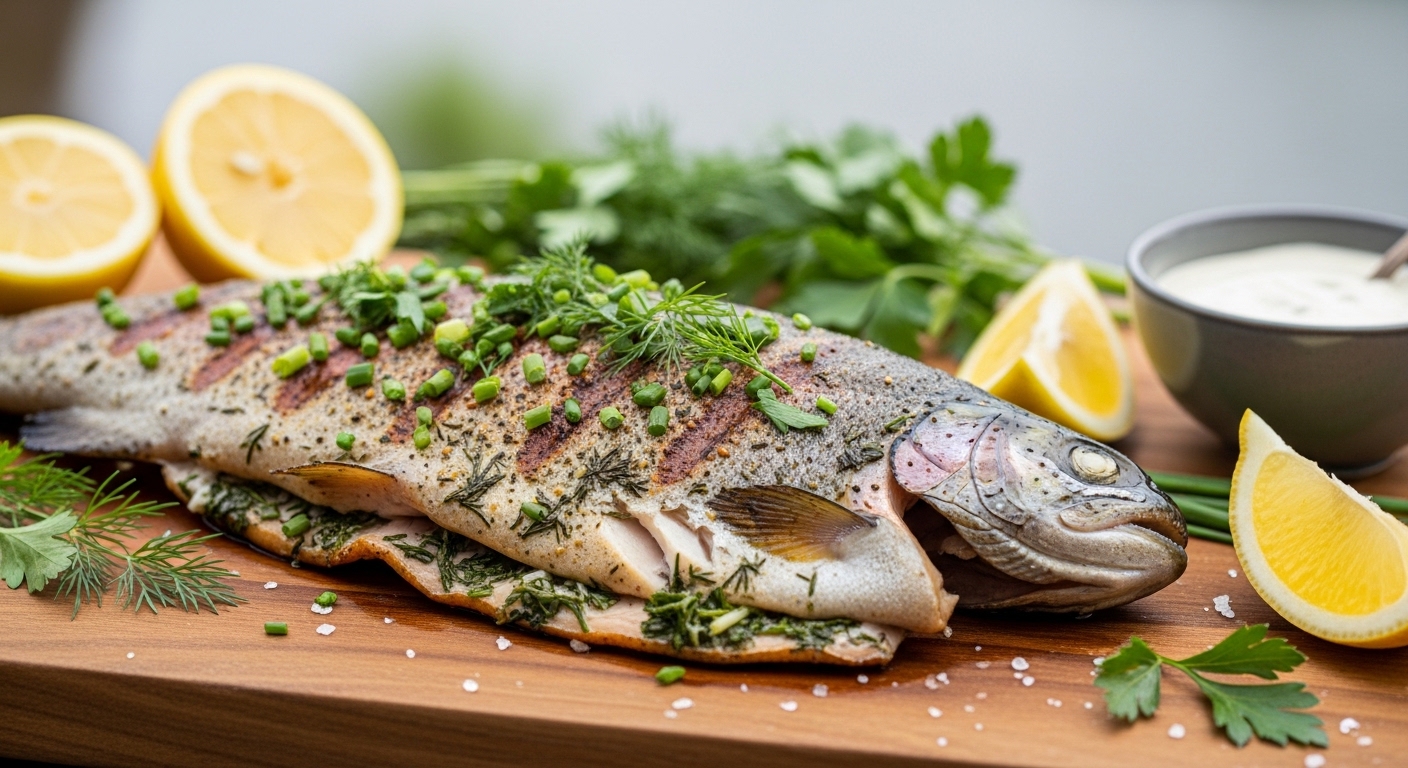
Oregon Herb Trout Recipe: A Flavorful Pacific Northwest Delight
Ever tasted a dish so fresh, so vibrant, and so deeply rooted in regional flavor that it feels like a walk through Oregon’s misty forests? Oregon herb trout is more than just a fish dish—it’s a celebration of the Pacific Northwest’s bounty, combining wild-caught trout with aromatic herbs native to the region. Whether you’re a home cook looking to impress guests or simply craving a taste of coastal elegance, this recipe delivers bold flavors, tender texture, and stunning presentation in every bite. With its bright herbal notes, citrus undertones, and buttery richness, herb trout embodies the essence of sustainable seafood and farm-to-table dining.
Quick Recipe Summary
| Prep Time | Cook Time | Total Time | Servings | Cuisine | Course | Calories (approx.) |
|---|---|---|---|---|---|---|
| 20 minutes | 15–18 minutes | 35–40 minutes | 4 | Pacific Northwest / American | Main Course | 320 per serving |
What Makes Oregon Herb Trout Special?
The magic of Oregon herb trout lies in its simplicity and authenticity. Freshly caught rainbow trout or cutthroat trout from Oregon’s rivers and lakes are pan-seared or roasted and then infused with a fragrant blend of local herbs such as Douglas fir needles, Oregon grape root, cilantro, dill, and thyme. These ingredients aren’t just garnishes—they’re essential components that elevate the fish’s delicate flavor. The result is a dish that’s light yet satisfying, earthy yet zesty, and deeply connected to the landscape of the Pacific Northwest.
Cooked over an open flame or in a cast-iron skillet, the trout develops a golden crust while staying moist inside. Paired with seasonal vegetables and a squeeze of lemon, it becomes a centerpiece worthy of any dinner party—or quiet family meal.
Ingredients You’ll Need (Serves 4)
- 4 x 6-ounce trout fillets (skin-on for best texture), preferably wild-caught Oregon trout
- 2 tablespoons olive oil or grass-fed butter
- 1 tablespoon fresh dill, finely chopped
- 1 tablespoon fresh cilantro, chopped
- 1 teaspoon dried Oregon-grown thyme (or regular thyme)
- ½ teaspoon ground Oregon-grape root powder (substitute with turmeric + lemon peel if unavailable)
- Zest and juice of 1 lemon
- 3 cloves garlic, minced
- Salt and freshly cracked black pepper, to taste
- Optional garnish: microgreens, lemon slices, edible flowers
Step-by-Step Cooking Instructions
- Prepare the Trout: Rinse the trout fillets under cold water and pat them completely dry with paper towels. This ensures a good sear. Season both sides generously with salt and pepper.
- Make the Herb Blend: In a small bowl, mix together the dill, cilantro, thyme, Oregon grape root powder, garlic, lemon zest, and half of the lemon juice. Set aside.
- Heat the Pan: Place a heavy-bottomed skillet (preferably cast iron) over medium-high heat. Add the olive oil and let it shimmer slightly—don’t let it smoke.
- Pan-Sear the Trout: Carefully place the trout fillets skin-side down into the hot oil. Cook for 4–5 minutes without moving them until the skin becomes crispy and golden brown. Gently flip using a spatula and cook for another 3–4 minutes, depending on thickness.
- Add the Herb Mixture: Reduce heat to low. Spoon the herb blend over the top of each fillet. Drizzle with the remaining lemon juice and add a pat of butter if desired for extra richness.
- Steam & Finish: Cover the skillet with a lid and let the trout steam for 2–3 minutes, allowing the herbs and aromatics to infuse the fish. Remove from heat.
- Rest & Serve: Let rest for 2 minutes before plating. Garnish with fresh herbs, lemon slices, and optional microgreens.
Chef Tips for Perfect Herb Trout
- Choose Fresh Fish: Look for trout with firm flesh, clear eyes, and a mild ocean scent. Avoid any strong “fishy” odor.
- Don’t Skip Drying: Wet skin prevents browning. Patting dry is non-negotiable for that perfect crust.
- Control the Heat: Medium-high heat gives you searing power without burning the delicate flesh.
- Use Local Herbs When Possible: Wild thyme, Douglas fir tips (used sparingly), and Oregon grape root add authentic regional depth.
- Serve Immediately: Herb trout tastes best fresh off the pan—its aromatic profile fades quickly.
Common Mistakes to Avoid
- Overcooking: Trout cooks fast! Overdone fish becomes dry and flaky. Aim for an internal temperature of 145°F (63°C).
- Skipping the Skin: Removing skin before cooking removes natural moisture and crispiness. Leave it on unless instructed otherwise.
- Using Dried Herbs Exclusively: While okay in a pinch, fresh herbs provide brightness and complexity that dried ones can’t match.
- Ignoring Acidity Balance: Too much lemon juice can overpower; too little mutes the flavor. Adjust to taste.
Ingredient Substitutions & Variations
For Non-Oregon Locations:
- Trout Substitute: Use steelhead trout, salmon, or even Arctic char—similar texture and fat content.
- Herbs: Replace Oregon grape root with turmeric + lemon peel or a pinch of sumac for tanginess.
- Vegetarian Option: Swap trout with portobello mushrooms marinated in herb-lemon sauce and grilled.
Restaurant-Style Enhancements:
- Add a splash of white wine or sake when deglazing the pan after searing.
- Dust with smoked paprika before flipping for a subtle smokiness.
- Serve with a side of roasted baby potatoes and asparagus drizzled with herb-infused olive oil.
Serving Suggestions
Pair your Oregon herb trout with:
- A crisp Oregon Pinot Noir or Sauvignon Blanc
- Steamed wild rice or quinoa pilaf
- Roasted root vegetables (carrots, parsnips, beets)
- Fresh arugula salad with orange segments and pumpkin seeds
For a complete Pacific Northwest experience, present the dish on wooden boards with pinecones or cedar planks for grilling aroma.
Storage & Reheating Instructions
- Refrigeration: Store leftovers in an airtight container for up to 2 days.
- Freezing: Not recommended—herbs lose potency and texture suffers upon thawing.
- Reheating: Best enjoyed cold or at room temperature. If warming, use a low oven (300°F/150°C) with a splash of water to prevent drying. Avoid microwaving—it dulls the skin’s crunch and herbs’ fragrance.
Nutrition Facts (Approximate Per Serving)
| Calories | Protein | Fat | Carbohydrates | Fiber | Sugar | Sodium |
|---|---|---|---|---|---|---|
| 320 kcal | 28 g | 19 g | 2 g | 0.5 g | 1 g | 380 mg |
*Values may vary based on oil used and portion size.
Healthier Version: Lightened-Up Herb Trout
Want to reduce calories without sacrificing flavor? Try this modification:
- Replace half the olive oil with water or broth in the pan.
- Use skinless trout fillets (still delicious, less fat).
- Increase herb ratio by 25% to compensate for reduced oil.
- Skip the butter and instead finish with a squeeze of lemon and a sprinkle of nutritional yeast.
This version cuts calories by ~40% while enhancing umami through fermented or savory elements.
Indian-Inspired Take: Masala Herb Trout
Bring global flair to the classic recipe:
- Marinate trout in yogurt, ginger-garlic paste, turmeric, red chili powder, and cumin-coriander blend for 30 minutes.
- Sear after marinating, then finish with a dollop of mint-cilantro chutney and a drizzle of tamarind glaze.
- Serve with basmati rice and sautéed spinach (sukhan).
This fusion honors Oregon’s love of trout while embracing Indian spice wisdom.
FAQ
1. Where can I buy authentic Oregon trout?
Look for sustainably farmed or wild-caught trout labeled “Oregon Trout” at specialty grocers, farmers’ markets, or online from reputable fisheries like Oregon Trout or Columbia River hatcheries.
2. Can I make herb trout in the oven?
Absolutely! Preheat oven to 400°F (200°C). Place seasoned trout on a parchment-lined baking sheet, top with herb mixture, and bake for 12–15 minutes. It won’t have the same crispy skin but will remain moist and flavorful.
3. Is Oregon grape root safe to eat?
Yes, but only as a culinary spice—not medicinal use. It has a mildly bitter, citrusy flavor similar to turmeric and ginger. Always source food-grade powder from trusted suppliers.
4. How do I know when trout is fully cooked?
Fish should turn opaque and flake easily with a fork. Internal temperature should reach 145°F (63°C). If it still looks translucent in the center, return to heat briefly.
5. What’s the difference between rainbow trout and cutthroat trout?
Rainbow trout are common in farms and rivers, with mild, slightly sweet flavor. Cutthroat trout—native to Oregon—are smaller, leaner, and often considered more flavorful and delicate. Both work beautifully in this recipe!
Key Takeaways
- Oregon herb trout combines wild-caught fish with native Pacific Northwest herbs for an unforgettable taste experience.
- The key steps—dry skin, high heat, gentle steaming—ensure tender, flavorful results every time.
- Substitutions allow adaptation to local ingredient availability without compromising authenticity.
- This dish pairs wonderfully with local wines and seasonal vegetables, making it ideal for sustainable dining.
- With proper storage, leftovers can be enjoyed the next day—though best eaten fresh.
Conclusion: Bring the Spirit of the Cascades to Your Table
There’s something profoundly satisfying about cooking a dish that connects you to a place—in this case, the lush, green valleys and clean mountain streams of Oregon. Oregon herb trout isn’t just a meal; it’s a tribute to nature’s generosity and the joy of simple, honest ingredients. Whether you’re hosting a summer barbecue, preparing a romantic dinner, or simply treating yourself to chef-quality cuisine at home, this recipe delivers elegance, flavor, and soul.
So fire up that skillet, gather your freshest herbs, and let the aroma of sizzling trout and fragrant thyme fill your kitchen. Your taste buds—and your guests—will thank you. And who knows? After one bite, you might just feel like you’re standing beside a river in the heart of the Pacific Northwest.
Ready to cook? Grab those trout, fresh herbs, and lemon—your table awaits.