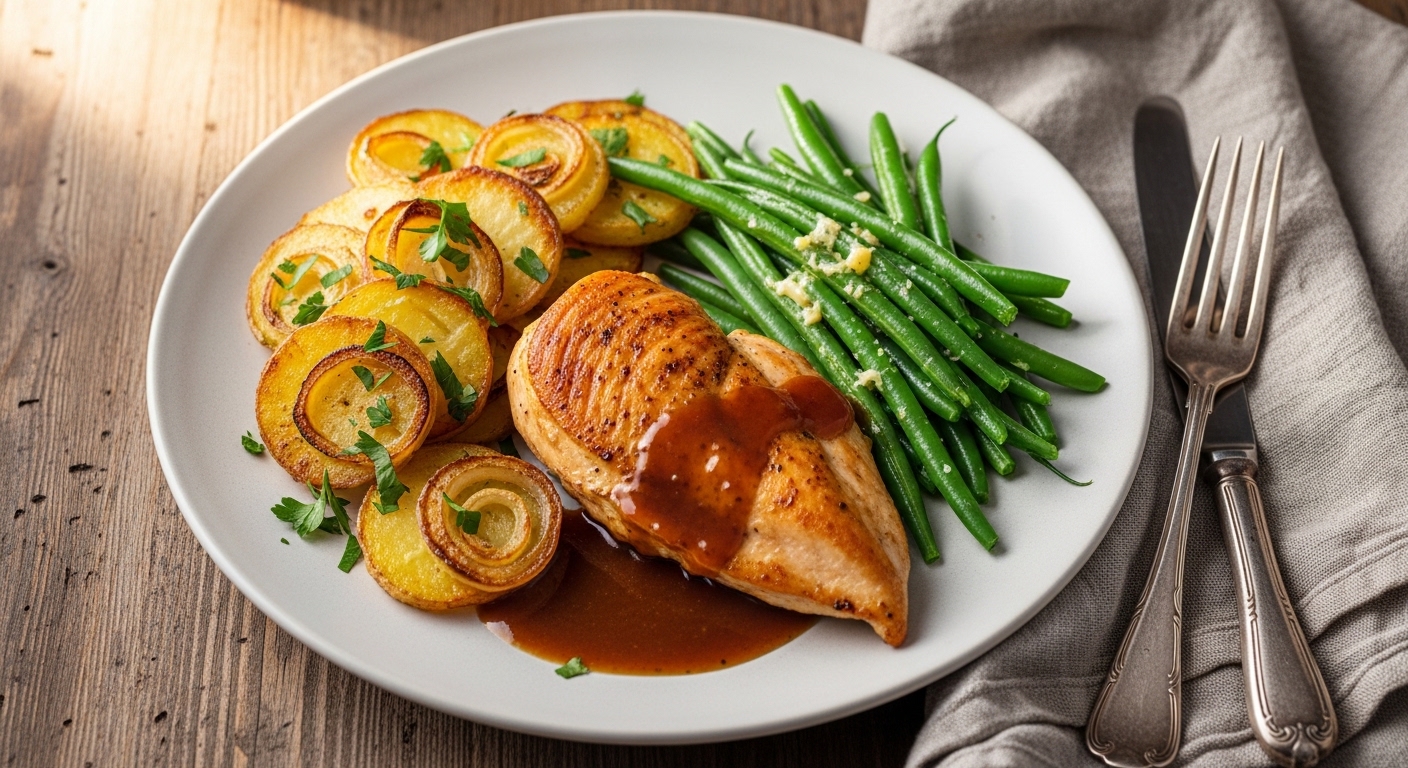
The Lyonnaise chicken dinner is a luxurious French dish that brings together tender chicken, silky onions, and a creamy sauce—all baked to golden perfection. Originating from Lyon, one of France’s culinary capitals, this recipe celebrates simplicity with depth of flavor. The dish is beloved for its rich onion gravy, crispy chicken skin, and aromatic herbs. Whether you’re hosting a dinner party or treating yourself to restaurant-quality meals at home, the Lyonnaise chicken dinner delivers elegance without complexity.
What Makes Lyonnaise Chicken Dinner So Special?
At its heart, the Lyonnaise chicken dinner is about transforming humble ingredients into something extraordinary. It begins with a whole chicken or chicken thighs, roasted until golden and juicy. Simultaneously, onions are slowly caramelized in butter and oil, creating a deeply sweet and savory base. This fond is then deglazed with white wine and chicken stock, forming the foundation of a luscious sauce. A splash of heavy cream finishes it off, giving the dish its signature silkiness.
Unlike many French recipes that require hours of prep, this version balances authenticity with convenience. It’s perfect for Sunday dinners or special occasions, offering restaurant-style results in under two hours. The dish pairs beautifully with crusty baguette, mashed potatoes, or steamed green beans—making it a versatile centerpiece for any meal.
Quick Recipe Summary Table
- Prep Time: 20 minutes
- Cook Time: 1 hour 15 minutes
- Total Time: 1 hour 35 minutes
- Servings: 4
- Cuisine: French
- Course: Main Course
- Calories (approx.): 680 per serving
Complete Ingredients List
To make an authentic and delicious Lyonnaise chicken dinner, gather these precise ingredients:
- Whole chicken (3–4 lbs) – or 8 bone-in, skin-on chicken thighs
- 3 large yellow onions, thinly sliced (about 4 cups)
- 4 tbsp unsalted butter
- 2 tbsp olive oil
- 1 cup dry white wine (Chardonnay or Sauvignon Blanc)
- 2 cups low-sodium chicken stock
- ½ cup heavy cream
- 2 sprigs fresh thyme
- 2 bay leaves
- Salt and freshly ground black pepper, to taste
- 1 tbsp all-purpose flour (optional, for thickening)
Step-by-Step Cooking Instructions
Step 1: Prepare the Chicken
Pat the chicken dry with paper towels. Season generously inside and out with salt and pepper. If using a whole chicken, tuck the wings under. Preheat your oven to 375°F (190°C).
Step 2: Sear the Chicken
In a large Dutch oven or oven-safe skillet, heat 2 tablespoons of butter and 1 tablespoon of olive oil over medium-high heat. Sear the chicken skin-side down for 5–7 minutes until deeply golden. Flip and sear the other side for another 3–4 minutes. Remove and set aside.
Step 3: Caramelize the Onions
Reduce heat to medium-low. Add the remaining butter and oil to the same pan. Add the sliced onions and stir to coat. Cook slowly, stirring occasionally, for 35–40 minutes until deep golden brown and caramelized. Sprinkle with a pinch of sugar if desired to enhance sweetness.
Step 4: Deglaze and Build the Sauce
Pour in the white wine, scraping up all the browned bits from the bottom of the pan. Let it simmer for 5 minutes to reduce slightly. Stir in the chicken stock, thyme, and bay leaves. Return the chicken to the pan, nestling it into the onions.
Step 5: Roast in the Oven
Transfer the skillet to the preheated oven. Roast uncovered for 40–45 minutes, or until the internal temperature reaches 165°F (74°C) on a meat thermometer.
Step 6: Finish the Sauce
Remove the chicken and vegetables. If the sauce seems thin, mix 1 tablespoon of flour with 2 tablespoons of cold water and whisk into the liquid. Simmer for 3–4 minutes until thickened. Stir in the heavy cream and adjust seasoning.
Step 7: Serve Immediately
Arrange the chicken and onions on a platter. Spoon the rich sauce over the top. Garnish with chopped parsley if desired.
Chef Tips for Best Results
- Use a meat thermometer: Overcooking dries out chicken—accuracy ensures juiciness.
- Don’t rush the onions: Slow caramelization is key to avoiding bitterness.
- Let the sauce rest: Allow it to sit for 5 minutes before serving so flavors meld.
- Skim excess fat: For a lighter version, skim visible fat from the sauce before adding cream.
Common Mistakes to Avoid
- Using too much heat when cooking onions: High heat burns them instead of browning.
- Skipping the searing step: This removes flavor and prevents crisp skin.
- Over-reducing the wine: Can leave a harsh, vinegary taste.
- Not resting the chicken: Causes juices to run out when carved.
Ingredient Substitutions & Variations
For a Lighter Version
Replace heavy cream with half-and-half or whole milk. Use skinless chicken thighs and reduce butter by half.
Indian-Inspired Twist
Add 1 tsp each of garam masala, turmeric, and cumin during sautéing. Replace white wine with apple cider vinegar and add 1 chopped tomato with the onions.
Vegetarian/Vegan Option
Substitute chicken with portobello mushrooms or eggplant. Use vegetable stock and coconut cream instead of dairy.
Beginner-Friendly Tips
Use boneless chicken thighs to reduce cooking time and risk of drying. Pre-slice onions ahead of time. Follow steps in order to avoid confusion.
Serving Suggestions
- Bread: Warm baguette or sourdough for soaking up the sauce.
- Side Dishes: Creamy mashed potatoes, sautéed spinach, or buttered green beans.
- Wine Pairing: A light Chardonnay or Pinot Noir complements the richness.
Storage & Reheating Instructions
- Refrigerate: Store in an airtight container for up to 4 days.
- Freeze: Cool completely, then freeze sauce separately for up to 3 months. Thaw overnight in fridge.
- Reheat: Gently warm in a saucepan over low heat, adding a splash of stock or cream to restore moisture. Avoid boiling to prevent curdling.
Nutrition Facts (Approximate Per Serving)
- Calories: 680
- Protein: 48g
- Fat: 38g
- Carbohydrates: 18g
- Fiber: 2g
- Sugar: 8g
- Sodium: 520mg
Key Takeaways
- The Lyonnaise chicken dinner combines roasted chicken with caramelized onions in a creamy, wine-infused sauce.
- It’s a French classic that’s both elegant and approachable for home cooks.
- With proper technique—slow-cooked onions and accurate temperature control—the dish becomes restaurant-worthy.
- Customizable variations allow for dietary preferences without sacrificing flavor.
- Proper storage makes leftovers easy to enjoy within a few days.
FAQs
1. Can I use chicken breasts instead of thighs or a whole chicken?
Yes, but breasts cook faster and can dry out. Pound them evenly, and check for doneness earlier. Consider adding a splash of broth if sauce seems too thick.
2. What if I don’t have white wine?
Substitute with chicken stock or apple cider vinegar (use 2 tbsp vinegar + ¾ cup stock). The acidity helps balance the richness.
3. How do I keep the chicken moist during roasting?
Baste occasionally with the pan juices, and avoid opening the oven frequently. Using a roasting rack also improves airflow.
4. Can I make this in advance?
Absolutely! Assemble everything, refrigerate overnight, then bake covered for 1 hour before finishing uncovered. Add cream just before serving.
5. Is there a low-fat version?
Yes. Use skinless chicken, substitute half the butter with olive oil, and replace heavy cream with Greek yogurt or skimmed milk.
Conclusion: Bring Lyon Home with Every Bite
The Lyonnaise chicken dinner isn’t just a meal—it’s an experience. With its golden crust, tender meat, and velvety onion sauce, every bite tells a story of French tradition and comfort. Whether you’re new to French cooking or a seasoned chef, this recipe proves that greatness lies in the details: patience with the onions, respect for the sear, and love for the final presentation.
Next time you’re craving something indulgent yet refined, reach for this recipe. Your guests will ask for seconds—and your pantry will thank you for stocking quality wine and fresh herbs. Bon appétit!
Leave a Reply