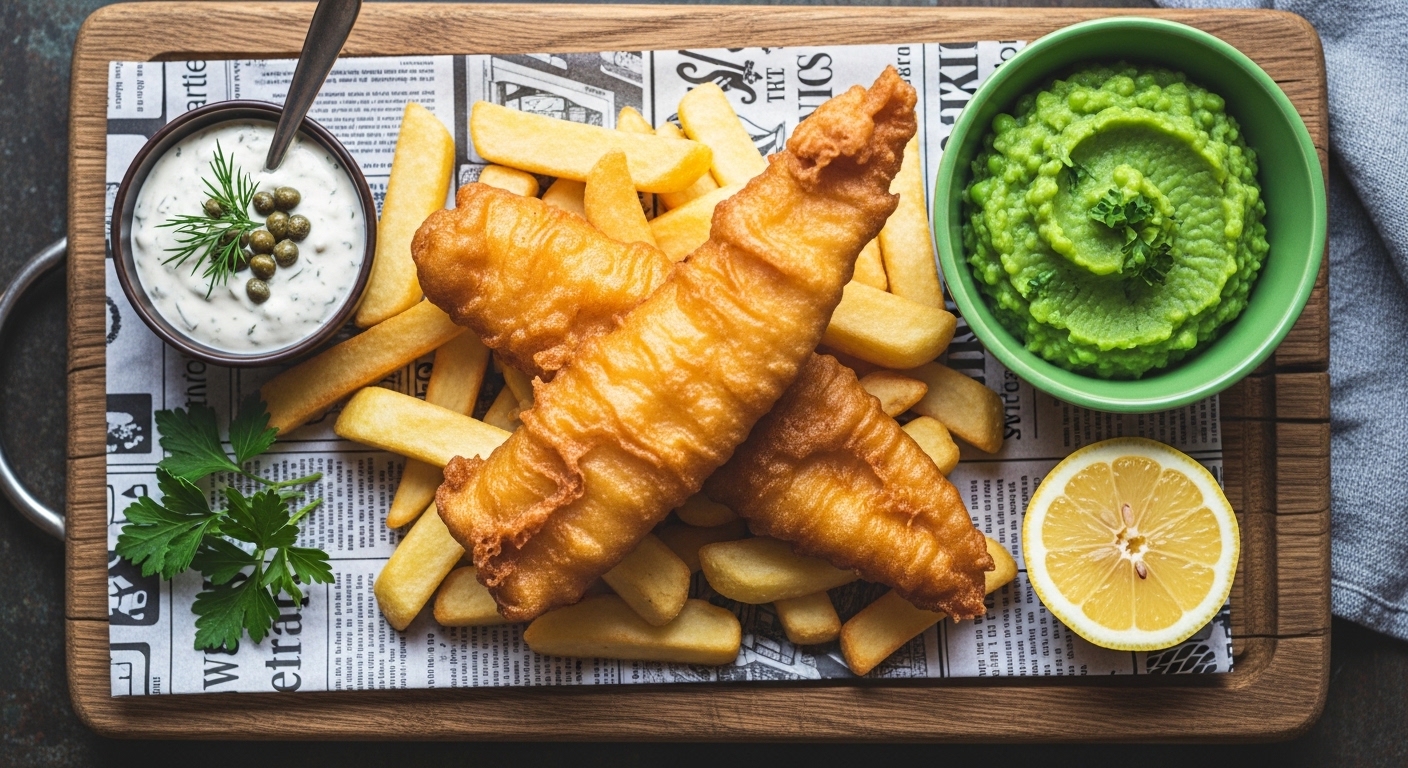
There’s something undeniably comforting about a hearty London Fish Supper—crispy battered fish served alongside golden chips, mushy peas, and a tangy tartare sauce. This beloved British dish isn’t just food; it’s nostalgia wrapped in a plate, evoking memories of seaside holidays, family dinners, and cozy pub evenings. Whether you’re craving the authentic taste of a traditional English meal or looking to impress guests with a crowd-pleasing entrée, mastering the London Fish Supper recipe is your ticket to culinary success.
Originating in coastal towns like Brighton and Blackpool, this dish became a staple across London pubs and restaurants during the 20th century. Its popularity soared thanks to its affordability, satisfying flavors, and the perfect balance of textures—crunchy batter giving way to flaky white fish, paired with soft mashed potatoes and vibrant green peas. Today, modern chefs are reimagining this classic by using sustainable seafood options, gluten-free batters, and even plant-based alternatives—proving that tradition can evolve without losing its soul.
In this comprehensive guide, we’ll walk you through creating an unforgettable London Fish Supper at home, complete with expert tips, common pitfalls to avoid, and creative twists to make it your own. Ready to dive into one of Britain’s most iconic meals? Let’s get cooking!
Quick Recipe Summary Table
- Prep Time: 20 minutes
- Cook Time: 25 minutes
- Total Time: 45 minutes
- Servings: 4
- Cuisine: British / English
- Course: Main Dish
- Calories (approx.): 680 per serving
Ingredients You’ll Need
To craft the ultimate London Fish Supper, gather these fresh, high-quality ingredients:
For the Fish:
- 4 sustainably sourced cod fillets (or haddock or pollock)
- 1 cup plain flour (plus extra for dusting)
- 1 tsp baking powder
- ½ tsp salt
- ½ tsp black pepper
- 1 large egg
- ¾ cup cold beer (preferably lager—light and bubbly!)
- Vegetable oil (for frying)
For Mushy Peas:
- 1 cup frozen peas (thawed)
- 2 tbsp butter
- 1 small onion (finely chopped)
- Salt and pepper to taste
For Tartare Sauce:
- ½ cup mayonnaise
- 1 tbsp capers (chopped)
- 1 tbsp cornichons (diced)
- 1 tsp Dijon mustard
- 1 tsp lemon juice
- Pinch of paprika
For Serving:
- 800g potatoes (peeled and cut into chunks)
- Fresh parsley (chopped, for garnish)
- Lemon wedges
Step-by-Step Cooking Instructions
1. Prepare the Chips First
Start by boiling peeled potato chunks in salted water for 10–12 minutes until just tender. Drain well, then shake them in the pot to create fluffy edges—this is key to crispy chips!
Heat oven to 200°C (400°F). Toss potatoes with a drizzle of oil and spread on a baking tray. Roast for 25–30 minutes until golden and crisp.
2. Make the Batter
In a mixing bowl, combine flour, baking powder, salt, and pepper. Whisk in the egg, then gradually add the cold beer while stirring gently—you want a smooth, lump-free batter that’s slightly thick but still pourable.
Let the batter rest for 10 minutes while you prep the fish.
3. Prep the Fish
Dry the cod fillets thoroughly with paper towels—moisture prevents crispness. Dust lightly with flour, shaking off excess.
Heat oil in a deep pan or fryer to 170°C (340°F). Carefully dip each fillet into the batter, letting excess drip off before placing gently into the hot oil. Fry for 4–5 minutes until golden brown and cooked through.
Transfer to a wire rack set over a baking sheet lined with paper towels to drain excess oil.
4. Whip Up Mushy Peas
Sauté onion in butter until soft and translucent. Add thawed peas, season with salt and pepper, then mash coarsely with a potato masher—leave some texture for authenticity!
5. Assemble the Supper
On warmed plates, arrange two fried fish fillets side by side. Top each with a generous spoonful of mushy peas and a portion of roasted chips.
Drizzle with homemade tartare sauce and sprinkle with parsley. Serve immediately with lemon wedges on the side.
Chef’s Tips for Perfect Results
- Keep oil temperature steady: Use a thermometer if possible—too cool = greasy; too hot = burnt outside, raw inside.
- Don’t overcrowd the pan: Fry fish one or two at a time to maintain oil heat.
- Use cold beer: Cold liquid creates more bubbles in the batter, yielding extra-crispy results.
- Rest the batter: Allowing it to sit helps gluten relax and improves texture.
- Garnish simply: Lemon and parsley elevate the dish without overpowering the flavors.
Common Mistakes to Avoid
- Using warm batter: Warm batter fries unevenly and produces soggy fish.
- Slicing fish before battering: Always batter whole fillets, then slice after frying—this locks in moisture better.
- Skipping the resting step: Rushing the process leads to dense, chewy batter.
- Overcooking the chips: They should be golden and crisp, not pale and limp.
Ingredient Substitutions & Variations
- Gluten-free version: Replace wheat flour with rice flour or a certified GF blend.
- Vegan option: Use firm tofu steaks instead of fish, and vegan mayo in the sauce.
- Spicy twist: Add cayenne pepper to the batter or serve with sriracha mayo.
- Indian-inspired: Use chickpea flour (besan) batter with turmeric and cumin for a South Asian flavor profile.
- Healthier bake instead of fry: Coat fish in panko breadcrumbs and bake at 200°C for 15–20 minutes.
Serving Suggestions & Pairings
Serve your London Fish Supper with a side salad featuring mixed greens dressed in vinaigrette to cut through the richness. For drinks, pair with a crisp lager, cloudy apple cider, or a light white wine like Pinot Grigio.
Traditionalists love a side of pickled onions or a slice of malt vinegar-soaked bread. For a festive touch, offer aioli or remoulade sauce on the side.
Storage & Reheating Tips
- Refrigeration: Store leftover fish and chips separately in airtight containers for up to 2 days.
- Reheating: Never microwave—it makes everything soggy. Instead, reheat chips in a 220°C oven for 10 mins, then quickly pan-fry fish in butter or oil for 1–2 minutes per side.
- Mushy peas: Can be frozen for up to 3 months—just defrost and reheat gently on the stove.
Nutrition Facts (Approximate Per Serving)
- Calories: 680
- Protein: 32g
- Carbohydrates: 58g
- Fat: 32g
- Fiber: 4g
- Sugar: 6g
- Sodium: 890mg
FAQs About London Fish Supper
Q: What’s the difference between a fish supper and fish and chips?
A: Technically, “fish supper” often refers specifically to the full meal—fish, chips, peas, and sauce—while “fish and chips” might imply just those two components. But in everyday usage, they’re interchangeable!
Q: Can I use frozen fish fillets?
A: Yes! Just ensure they’re fully thawed and patted dry before battering. Frozen fish can sometimes release excess moisture, which affects crispiness.
Q: Why does my batter keep sinking into the oil?
A: This usually means the oil wasn’t hot enough when the fish was added. Wait until the oil shimmers and a drop of batter sizzles immediately upon contact.
Q: Is there a vegetarian alternative to the fish supper?
A: Absolutely! Swap fish for grilled halloumi, cauliflower “steaks,” or marinated tempeh. The rest of the meal remains the same.
Q: How do I make this dish lighter without sacrificing flavor?
A: Try air-frying the fish at 200°C (390°F) for 12–15 minutes, tossing halfway. Or bake the chips instead of roasting for less fat content—still delicious!
Key Takeaways
- London Fish Supper combines crispy battered fish, fluffy chips, mushy peas, and tangy sauce—a true comfort classic.
- Mastering the batter (cold beer + rested mix) ensures maximum crispness.
- Authenticity lies in attention to detail: oil temperature, resting times, and proper assembly.
- Modern adaptations allow for dietary needs—gluten-free, vegan, or baked versions work beautifully.
- With practice, you’ll recreate pub-quality results right in your kitchen.
Conclusion: Bring the Pub Home
There’s no denying the magic of a perfectly executed London Fish Supper—its combination of textures and flavors transports you straight to a bustling seaside promenade or a snug corner of a neighborhood gastropub. Whether you’re preparing it for a Sunday roast, a casual family dinner, or impressing friends at a gathering, this dish delivers both familiarity and celebration.
By following this detailed recipe, paying attention to technique, and embracing subtle variations, you’ll not only honor the heritage of this British favorite but also put your unique spin on it. So fire up the stove, grab that bottle of lager, and let the sizzle of batter hitting hot oil signal the start of something deliciously memorable. Your table awaits—serve up a plate worthy of London’s finest suppers!
Leave a Reply