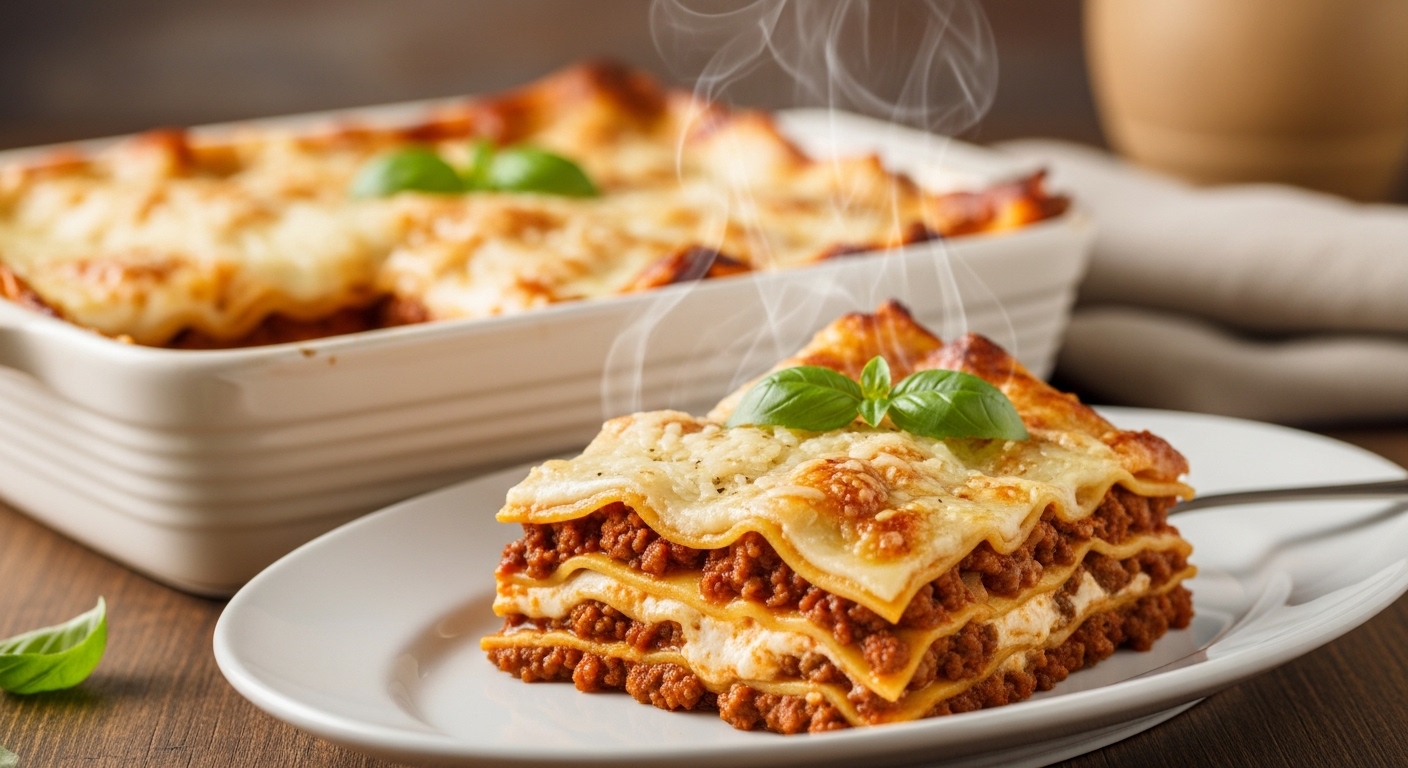
Imagine layers of tender pasta, slow-simmered meat sauce, creamy béchamel, and melted cheese—each bite a warm embrace of flavor. That’s Lasagna Bolognese, the iconic Italian dish that has won hearts across continents. Originating from the Emilia-Romagna region, particularly Bologna, this isn’t just a meal—it’s a tradition. Unlike its American cousin loaded with ricotta, authentic Lasagna Bolognese relies on a deeply savory ragù, silky béchamel, and fresh egg-based pasta sheets. It’s rich, hearty, and deeply satisfying, making it the ultimate comfort food for family dinners, holidays, or when you simply want to feel like you’re dining in a rustic Italian trattoria.
Why Lasagna Bolognese Stands Out
What sets Lasagna Bolognese apart is its complexity and balance. The ragù—a slow-cooked blend of beef, pork, soffritto (onions, carrots, celery), tomatoes, and milk—develops a deep umami richness over hours. Paired with béchamel (a white sauce made from butter, flour, and milk), it creates a luxurious texture that melts in your mouth. Fresh pasta sheets, slightly chewy and egg-rich, hold everything together without turning soggy. This isn’t fast food; it’s a labor of love that rewards patience with unmatched depth of flavor.
People love it because it’s nostalgic, indulgent, and deeply satisfying. Whether served at a Sunday family gathering or a cozy weeknight dinner, it brings people together. And while it may seem intimidating, with the right steps, even beginners can master it.
Quick Recipe Summary
| Prep Time | 45 minutes |
| Cook Time | 3 hours 30 minutes |
| Total Time | 4 hours 15 minutes |
| Servings | 8 |
| Cuisine | Italian (Emilia-Romagna) |
| Course | Main Course |
| Calories (approx.) | 520 per serving |
Ingredients You’ll Need
For the Lasagna Bolognese to be authentic and flavorful, use high-quality ingredients. Here’s what you’ll need:
For the Ragù Bolognese:
- 500g (1.1 lbs) ground beef (preferably chuck)
- 250g (0.55 lbs) ground pork
- 1 medium onion, finely chopped
- 1 medium carrot, finely chopped
- 1 celery stalk, finely chopped
- 2 cloves garlic, minced
- 2 tbsp olive oil
- 100ml (⅓ cup) dry white wine
- 800g (28 oz) canned crushed tomatoes
- 2 tbsp tomato paste
- 250ml (1 cup) whole milk
- 250ml (1 cup) beef or chicken stock
- 1 tsp dried oregano
- 1 bay leaf
- Salt and freshly ground black pepper to taste
For the Béchamel Sauce:
- 50g (3½ tbsp) unsalted butter
- 50g (⅓ cup) all-purpose flour
- 500ml (2 cups) whole milk, warmed
- Pinch of nutmeg
- Salt and white pepper to taste
For Assembly:
- 12 fresh lasagna sheets (or dried, if fresh unavailable)
- 100g (1 cup) grated Parmigiano-Reggiano
- 50g (½ cup) grated Grana Padano (optional, for extra depth)
Step-by-Step Cooking Instructions
Step 1: Prepare the Ragù Bolognese
Heat olive oil in a large, heavy-bottomed pot over medium heat. Add the chopped onion, carrot, and celery (the soffritto). Sauté for 8–10 minutes until soft and fragrant. Add garlic and cook for another minute.
Add the ground beef and pork. Break up the meat with a wooden spoon and cook until browned, about 10 minutes. Pour in the white wine and let it simmer until mostly evaporated—this removes the alcohol and concentrates the flavor.
Stir in the tomato paste and cook for 2 minutes to deepen the color. Add the crushed tomatoes, stock, oregano, bay leaf, salt, and pepper. Bring to a gentle simmer, then reduce heat to low. Cover partially and let it cook for 2.5 to 3 hours, stirring occasionally. The sauce should thicken and the flavors meld.
In the last 30 minutes, pour in the milk. This adds richness and balances the acidity of the tomatoes. Continue simmering until the ragù is thick, glossy, and deeply aromatic.
Step 2: Make the Béchamel Sauce
In a medium saucepan, melt the butter over medium heat. Add the flour and whisk continuously for 2 minutes to cook out the raw flour taste (this is called a roux).
Gradually add the warmed milk, whisking constantly to prevent lumps. Continue cooking and whisking until the sauce thickens to a smooth, pourable consistency—about 8–10 minutes.
Season with nutmeg, salt, and white pepper. Remove from heat and set aside. Cover the surface with plastic wrap to prevent a skin from forming.
Step 3: Cook the Lasagna Sheets (if using dried)
If using dried lasagna sheets, cook them in salted boiling water according to package instructions until al dente. Drain and lay them flat on a clean kitchen towel to prevent sticking. Fresh sheets can be used directly.
Step 4: Assemble the Lasagna Bolognese
Preheat your oven to 180°C (350°F). Lightly grease a 9×13-inch baking dish.
Start with a thin layer of ragù on the bottom. Then build layers in this order:
- Lasagna sheet
- Ragù
- Béchamel
- Grated Parmigiano-Reggiano
Repeat until all ingredients are used, finishing with a top layer of béchamel and a generous sprinkle of cheese.
Step 5: Bake to Perfection
Cover the dish with aluminum foil and bake for 25 minutes. Remove the foil and bake for another 15–20 minutes, or until the top is golden and bubbling.
Let the Lasagna Bolognese rest for at least 15 minutes before slicing. This allows the layers to set and makes serving easier.
Chef Tips for Best Results
- Simmer the ragù low and slow—rushing this step sacrifices depth of flavor.
- Use fresh pasta sheets if possible—they absorb sauce better and have a superior texture.
- Warm the milk before adding it to the béchamel to prevent lumps.
- Let the lasagna rest after baking—this is crucial for clean slices.
- Taste and adjust seasoning in both sauces before assembling.
Common Mistakes to Avoid
- Overloading with cheese—authentic Bolognese uses cheese sparingly; the focus is on the ragù and béchamel.
- Using pre-made sauces—they lack the depth of homemade ragù and béchamel.
- Skipping the milk in the ragù—it tenderizes the meat and balances acidity.
- Baking too hot—high heat can cause the top to burn before the center heats through.
- Cutting too soon—serving immediately after baking leads to a messy, soupy slice.
Ingredient Substitutions & Variations
Vegetarian Option:
Replace meat with a mix of lentils, mushrooms, and lentil-walnut crumble. Use vegetable stock and ensure béchamel is made with plant-based milk and butter.
Vegan Version:
Use vegan butter, plant-based milk, and nutritional yeast instead of cheese. Substitute meat with lentils or textured vegetable protein (TVP).
Gluten-Free:
Use gluten-free lasagna sheets and ensure your flour for béchamel is gluten-free (or use cornstarch as a thickener).
Healthier Twist:
Use lean ground turkey, reduce cheese by half, and add spinach or zucchini slices between layers for extra nutrients.
Serving Suggestions
Serve your Lasagna Bolognese with a simple green salad dressed in olive oil and balsamic vinegar. A glass of Chianti or Sangiovese complements the rich flavors perfectly. For a complete Italian experience, pair it with garlic bread or focaccia.
It’s also excellent the next day—leftovers often taste even better as the flavors continue to meld.
Storage & Reheating Instructions
- Refrigerator: Store in an airtight container for up to 4 days.
- Freezer: Wrap tightly and freeze for up to 3 months. Thaw in the fridge overnight before reheating.
- Reheating: Cover with foil and bake at 160°C (325°F) until heated through (about 25–30 minutes). Add a splash of milk if it seems dry.
Nutrition Facts (Approximate per Serving)
- Calories: 520
- Protein: 28g
- Carbohydrates: 38g
- Fat: 28g
- Saturated Fat: 14g
- Fiber: 4g
- Sugar: 8g
- Sodium: 680mg
Key Takeaways
- Lasagna Bolognese is a traditional Italian dish from Bologna, featuring slow-cooked ragù, béchamel, and fresh pasta.
- The ragù must simmer for at least 2.5 hours to develop deep flavor.
- Béchamel adds creaminess and balances the richness of the meat sauce.
- Letting the lasagna rest before serving ensures clean, beautiful slices.
- Authentic versions use minimal cheese—focus on sauce quality.
Frequently Asked Questions (FAQ)
1. Can I make Lasagna Bolognese ahead of time?
Yes! Assemble the lasagna up to a day in advance, cover, and refrigerate. Add 10–15 minutes to the baking time if cooking from cold. You can also freeze it before or after baking.
2. Can I use ricotta instead of béchamel?
Traditional Bolognese does not use ricotta. Béchamel is essential for authenticity and texture. However, if you prefer a creamier, American-style lasagna, ricotta can be substituted—but it won’t be authentic.
3. How do I prevent my lasagna from being watery?
Ensure your ragù is thick and not too liquid. Drain excess fat if needed. Also, avoid over-saucing the layers. Letting the lasagna rest after baking helps the layers set and absorb excess moisture.
4. Can I use all beef instead of beef and pork?
Yes, but the pork adds fat and tenderness. For a richer flavor, stick to the traditional mix. If using all beef, choose a fattier cut like ground chuck.
5. Is fresh pasta necessary?
Fresh pasta is ideal—it’s more tender and absorbs sauce beautifully. However, high-quality dried sheets work well too. Just ensure they’re cooked al dente if required.
Final Thoughts: Why You Should Make This Tonight
Lasagna Bolognese is more than a recipe—it’s an experience. It’s the kind of dish that fills your kitchen with warmth, invites conversation, and leaves everyone asking for seconds. While it takes time, every minute is worth it. The slow-cooked ragù, the silky béchamel, the golden cheese crust—it all comes together in a symphony of flavor that’s hard to forget.
Don’t be intimidated by the steps. With this guide, even a beginner can create a restaurant-worthy masterpiece. Gather your ingredients, put on some Italian music, and let the cooking begin. Your family—and your taste buds—will thank you.
So, are you ready to make the most authentic, comforting Lasagna Bolognese of your life? Preheat that oven, and let’s get layering.
Leave a Reply