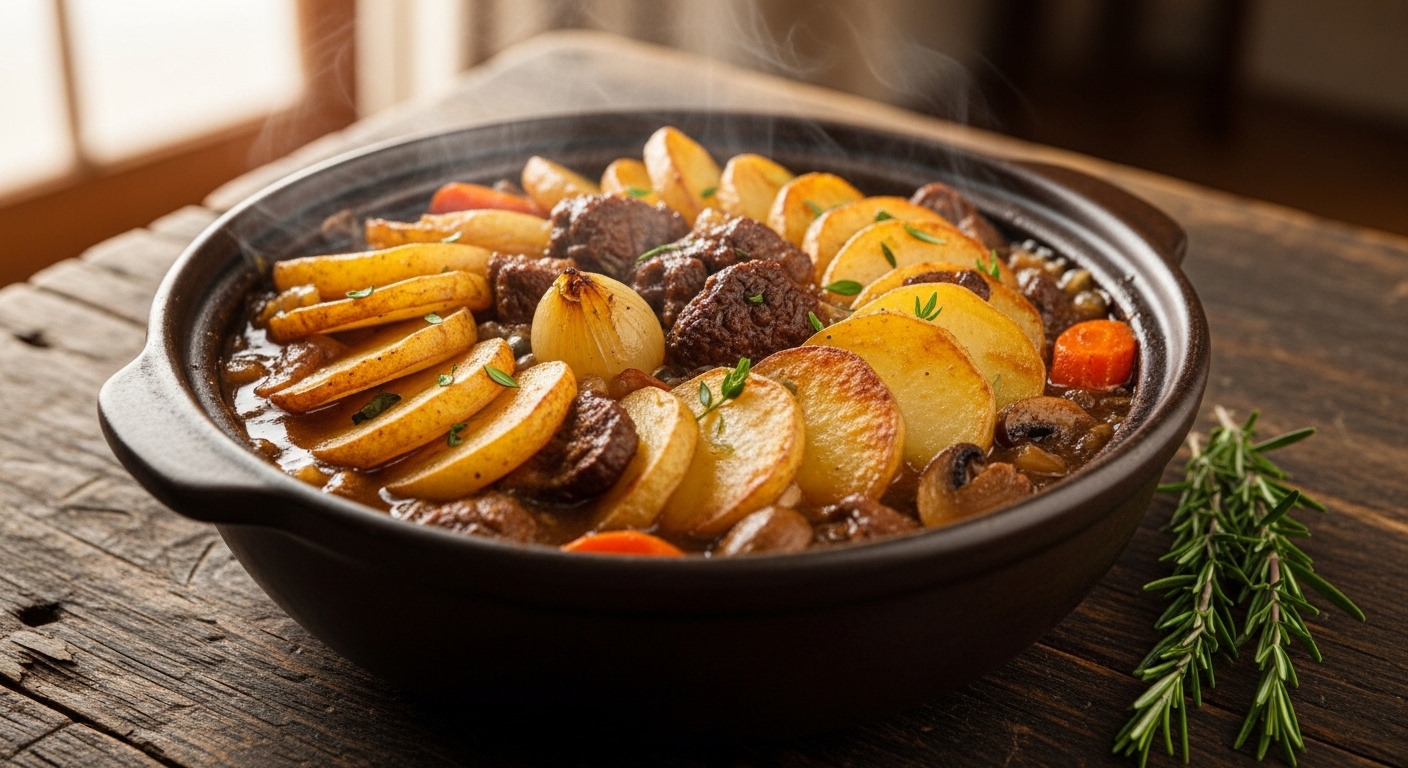
Imagine a dish so deeply comforting that one spoonful feels like a warm embrace on a chilly Lancashire evening. That’s exactly what you get with a traditional Lancashire Hotpot—a slow-cooked, savory casserole that has been a staple of Northern English cuisine for over two centuries. Originating in the textile mills and working-class homes of 19th-century Lancashire, this humble yet hearty meal was born out of necessity: simple ingredients, one pot, and hours of slow cooking while women worked long shifts at the looms. Today, it’s celebrated not just for its rich history but for its deeply satisfying layers of tender lamb, caramelized onions, and golden potato topping that crisps to perfection in the oven.
What makes Lancashire Hotpot truly special is its balance of textures and flavors—meltingly soft meat, sweet-savory onions, and a crisp, buttery potato crust that gives way to a rich, aromatic gravy beneath. It’s the kind of dish that fills your kitchen with an irresistible aroma and warms your soul with every bite. Whether you’re cooking for a family dinner, a cozy weekend meal, or impressing guests with authentic British fare, this recipe delivers comfort, tradition, and flavor in every serving.
Quick Recipe Summary
| Prep Time | 20 minutes |
| Cook Time | 2 hours 30 minutes |
| Total Time | 2 hours 50 minutes |
| Servings | 4–6 |
| Cuisine | British (Northern English) |
| Course | Main Course |
| Calories (approx.) | 520 per serving |
Ingredients for Authentic Lancashire Hotpot
To make a truly traditional Lancashire Hotpot, you’ll need simple, high-quality ingredients. The beauty of this dish lies in its simplicity—no fancy techniques, just slow-cooked perfection.
- 1 kg (2.2 lbs) lamb neck or shoulder, cut into large chunks
- 2 large onions, thinly sliced
- 4 large potatoes (Maris Piper or Russet), peeled and sliced 5mm thick
- 2 carrots, peeled and diced (optional but recommended)
- 2 celery stalks, diced (optional)
- 2 tbsp plain flour
- 500ml (2 cups) lamb or beef stock
- 1 tbsp Worcestershire sauce
- 1 tsp fresh thyme leaves (or ½ tsp dried)
- 2 bay leaves
- 50g (3½ tbsp) unsalted butter, plus extra for dotting
- Salt and freshly ground black pepper, to taste
- 1 tbsp vegetable oil
Step-by-Step Cooking Instructions
1. Prepare the Meat
Preheat your oven to 160°C (320°F, fan-assisted). Pat the lamb pieces dry with kitchen paper and season generously with salt and pepper. In a large frying pan, heat the oil over medium-high heat. Brown the lamb in batches—don’t overcrowd the pan—until deeply golden on all sides. This step builds flavor, so don’t skip it. Transfer the browned meat to a large ovenproof casserole dish.
2. Sauté the Aromatics
In the same pan, melt 1 tbsp of butter. Add the sliced onions and cook slowly for 10–12 minutes until soft, golden, and sweet. Stir in the diced carrots and celery (if using) and cook for another 5 minutes. Sprinkle the flour over the vegetables and stir well to coat. Cook for 1–2 minutes to remove the raw flour taste.
3. Build the Layers
Pour the stock and Worcestershire sauce into the pan, stirring to combine with the onion mixture. Bring to a gentle simmer, then pour this rich gravy over the lamb in the casserole dish. Add the thyme and bay leaves. Stir gently to mix, then taste and adjust seasoning if needed.
4. Layer the Potatoes
Arrange the potato slices in overlapping layers over the meat and vegetables. Start from the outside and work inward in a spiral. Season each layer lightly with salt and pepper. Dot the top with small pieces of the remaining butter—this helps create that golden, crispy crust.
5. Slow Cook to Perfection
Cover the casserole with a tight-fitting lid or foil and place in the preheated oven. Bake for 2 hours. Then, remove the lid or foil and increase the oven temperature to 200°C (400°F). Return the dish to the oven for another 30–40 minutes, or until the potato topping is golden brown and crisp.
Chef Tips for the Best Lancashire Hotpot
- Use lamb with bone and fat: Traditional recipes call for lamb neck or shoulder with some bone—it adds depth and keeps the meat tender during long cooking.
- Don’t rush the browning: A good sear on the meat locks in juices and develops a rich fond (browned bits) that flavors the gravy.
- Layer potatoes evenly: Aim for uniform thickness so they cook evenly. A mandoline slicer helps.
- Let it rest: Allow the hotpot to rest for 10–15 minutes after baking. This helps the flavors meld and makes serving easier.
- Use a heavy-based casserole: A cast iron or enameled Dutch oven distributes heat evenly and prevents scorching.
Common Mistakes to Avoid
- Overcrowding the pan when browning meat: This steams the meat instead of searing it. Cook in batches if needed.
- Skipping the flour step: The flour thickens the gravy naturally. Without it, your hotpot may be too watery.
- Using thin potato slices: Too thin, and they’ll turn to mush. Too thick, and they won’t crisp properly. Aim for 5mm.
- Baking uncovered too early: The first 2 hours must be covered to tenderize the meat. Only uncover for the final crisping stage.
Ingredient Substitutions & Variations
While traditionalists swear by lamb, there are several ways to adapt Lancashire Hotpot to suit dietary needs or preferences:
- Beef version: Swap lamb for beef shin or chuck steak. Cook time remains the same.
- Vegetarian option: Replace meat with mushrooms, lentils, or a mix of root vegetables. Use vegetable stock and add a splash of soy sauce for umami.
- Vegan version: Use plant-based butter and omit Worcestershire sauce (or use a vegan brand). Add smoked paprika for depth.
- Gluten-free: Replace plain flour with cornstarch or a gluten-free flour blend.
- Indian-inspired twist: Add 1 tsp garam masala, ½ tsp turmeric, and a chopped green chili to the onions for a spiced variation.
Serving Suggestions
Lancashire Hotpot is a complete meal in itself, but it pairs beautifully with simple sides. Serve it hot from the casserole with:
- Steamed green vegetables (kale, cabbage, or broccoli)
- A crisp green salad with a sharp vinaigrette
- Crusty bread or warm crusty rolls to mop up the gravy
- A dollop of mint sauce or redcurrant jelly on the side (classic British accompaniments)
Storage & Reheating Instructions
This dish actually tastes better the next day, as the flavors deepen overnight. Store leftovers in an airtight container in the refrigerator for up to 3 days. For longer storage, freeze for up to 2 months—thaw overnight in the fridge before reheating.
To reheat, cover with foil and warm in a 180°C (350°F) oven for 25–30 minutes, or until piping hot throughout. Add a splash of stock if the gravy has thickened too much.
Nutrition Facts (Approximate per Serving)
| Calories | 520 |
| Protein | 38g |
| Carbohydrates | 42g |
| Fat | 22g |
| Fiber | 6g |
| Sugar | 8g |
| Sodium | 680mg |
Key Takeaways
- Lancashire Hotpot is a slow-cooked British classic made with lamb, onions, and a crispy potato topping.
- The dish originated in 19th-century Lancashire and was designed for working families.
- Brown the meat well, layer ingredients carefully, and cook covered first, then uncovered to crisp the potatoes.
- It’s highly adaptable—vegetarian, vegan, gluten-free, and spiced variations are all possible.
- Best served with greens and bread, and even better the next day.
Frequently Asked Questions (FAQs)
Can I make Lancashire Hotpot in a slow cooker?
Yes! Brown the meat and sauté the onions as directed, then transfer everything to a slow cooker. Cook on low for 6–8 hours. Add the potatoes in the last 2 hours and finish under a hot oven or grill to crisp the top.
Why is my potato topping not crisping?
This usually happens if the oven isn’t hot enough or the potatoes are too thick. Ensure you uncover the dish for the final 30–40 minutes at 200°C (400°F). Also, avoid stacking potatoes too high—2–3 layers max.
Can I use mutton instead of lamb?
Yes, but mutton is stronger in flavor and tougher. Increase cooking time by 30–45 minutes and consider marinating it overnight in stock with herbs.
Is Lancashire Hotpot the same as Irish stew?
Not quite. While both are slow-cooked meat stews, Lancashire Hotpot features a potato crust and is typically made with lamb and onions. Irish stew usually includes more root vegetables and no potato topping.
Can I prepare it ahead of time?
Absolutely. Assemble the dish up to a day in advance, cover, and refrigerate. Add 10–15 minutes to the cooking time if baking from cold.
Conclusion: A Dish Worth Slowing Down For
Lancashire Hotpot isn’t just a recipe—it’s a piece of culinary history, a symbol of resilience, and a testament to the power of simple ingredients transformed by time and heat. Whether you’re drawn to its rich heritage or simply craving a deeply satisfying meal, this dish delivers on all fronts. It’s the kind of food that brings people together, warms the heart, and leaves you feeling truly nourished.
So next time you’re looking for a comforting, crowd-pleasing dinner that requires minimal effort but maximum flavor, reach for this timeless British classic. Gather your ingredients, preheat your oven, and let the slow magic of Lancashire Hotpot work its charm. Your kitchen—and your taste buds—will thank you.
Ready to try it? Grab your casserole dish and get cooking. This is one tradition worth keeping alive.
Leave a Reply