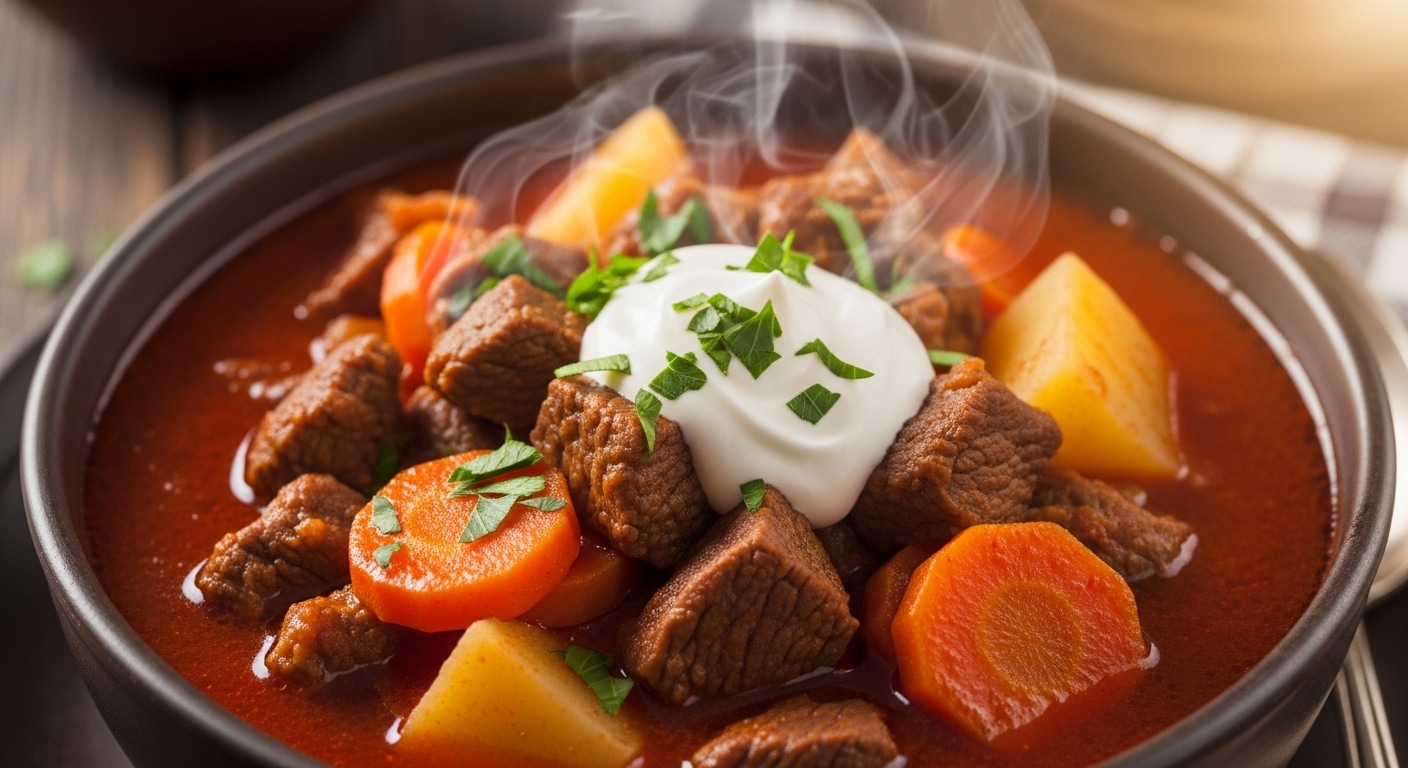
Imagine a rich, deeply savory stew simmering on the stove, its aroma filling your kitchen with notes of smoky paprika, tender beef, and earthy vegetables. That’s Hungarian goulash—a rustic, soul-warming dish born in the rolling plains of Hungary and beloved across Europe and beyond. Far from the watery soups often mistaken for goulash, authentic Hungarian goulash is a thick, robust stew made with slow-cooked beef, onions, and the signature spice that defines it: sweet Hungarian paprika. It’s comfort food at its finest—simple to make, deeply satisfying, and perfect for cold days or family gatherings.
Originally a meal for Hungarian herdsmen (or “csikós”) who cooked it over open fires, goulash has evolved into a national treasure. Today, it’s a staple in Hungarian homes and restaurants, celebrated for its bold flavors and hearty texture. Whether you’re a seasoned cook or a beginner, this recipe delivers an authentic taste of Hungary with easy-to-follow steps and pantry-friendly ingredients.
Quick Recipe Summary
| Prep Time | 15 minutes |
| Cook Time | 2 hours 15 minutes |
| Total Time | 2 hours 30 minutes |
| Servings | 6 |
| Cuisine | Hungarian |
| Course | Main Course |
| Calories (approx.) | 380 per serving |
Authentic Hungarian Goulash Recipe
This recipe stays true to traditional Hungarian methods while being accessible for home cooks. The key lies in building deep flavor layers—starting with caramelized onions, blooming paprika in fat, and slow-simmering the beef until it falls apart. Serve it with crusty bread, dumplings, or egg noodles for a complete meal.
Ingredients
- 2 lbs (900g) beef chuck, cut into 1-inch cubes
- 3 tbsp lard or vegetable oil (traditional recipes use lard)
- 3 large yellow onions, finely chopped
- 4 cloves garlic, minced
- 3 tbsp sweet Hungarian paprika (essential—do not substitute smoked paprika)
- 1 tsp caraway seeds, lightly crushed
- 2 bay leaves
- 4 cups (950ml) beef broth (low-sodium preferred)
- 2 medium carrots, peeled and sliced
- 2 medium potatoes, peeled and cubed
- 1 red bell pepper, diced
- 1 tbsp tomato paste
- Salt and freshly ground black pepper, to taste
- 1 tbsp white vinegar or lemon juice (optional, for brightness)
- Fresh parsley, chopped (for garnish)
Step-by-Step Instructions
- Brown the beef: Pat the beef cubes dry with paper towels. Heat 2 tbsp of lard or oil in a heavy-bottomed Dutch oven or large pot over medium-high heat. Working in batches, brown the beef on all sides. Remove and set aside. Do not overcrowd the pan—this ensures a good sear.
- Caramelize the onions: Reduce heat to medium. Add the remaining 1 tbsp of fat to the pot. Add the chopped onions and a pinch of salt. Cook, stirring occasionally, for 15–20 minutes until deeply golden and sweet. This step is crucial—it builds the flavor base of your goulash.
- Bloom the paprika: Stir in the minced garlic and cook for 30 seconds until fragrant. Immediately add the paprika and caraway seeds. Stir constantly for 30–60 seconds—just long enough to release the aroma. Be careful not to burn it, as paprika turns bitter when overheated.
- Combine and simmer: Return the browned beef to the pot. Add the tomato paste, bay leaves, and beef broth. Stir well, scraping up any browned bits from the bottom. Bring to a gentle boil, then reduce heat to low. Cover and simmer for 1 hour.
- Add vegetables: After 1 hour, add the carrots, potatoes, and bell pepper. Stir gently. Continue simmering, uncovered, for another 45–60 minutes, or until the beef is fork-tender and the vegetables are soft.
- Finish and season: Remove bay leaves. Taste and adjust seasoning with salt and pepper. For a brighter finish, stir in the vinegar or lemon juice. This small addition balances the richness.
- Serve: Ladle the goulash into bowls. Garnish with fresh parsley. Serve hot with crusty bread, Hungarian nokedli (dumplings), or buttered egg noodles.
Chef Tips for the Best Hungarian Goulash
- Use real Hungarian paprika: Sweet Hungarian paprika is non-negotiable. It’s milder and sweeter than Spanish or generic paprika. Look for brands like Szeged or Kalocsa.
- Don’t skip the lard: While oil works, lard adds depth and authenticity. If avoiding animal fats, use a neutral oil with a teaspoon of smoked paprika for complexity.
- Low and slow wins: Simmering gently ensures tender beef and melded flavors. Avoid high heat, which can toughen the meat.
- Let it rest: Like many stews, goulash tastes even better the next day. The flavors deepen overnight.
Common Mistakes to Avoid
- Burning the paprika: Adding paprika to oil that’s too hot will make it bitter. Always bloom it just after the onions are done, over low heat.
- Overcooking the vegetables: Add potatoes and carrots in the last hour, not at the beginning, to prevent mushiness.
- Using lean beef: Chuck roast has the right fat and collagen content for tender, juicy results. Avoid sirloin or other lean cuts.
- Skipping the sear: Browning the beef adds depth. Don’t rush this step.
Ingredient Substitutions & Variations
While traditionalists may cringe at changes, here are some practical swaps and twists:
Vegetarian Hungarian Goulash
Replace beef with 2 cups of chopped mushrooms, 1 cup of lentils, and 1 cup of diced eggplant. Use vegetable broth and add extra umami with 1 tbsp soy sauce or miso paste.
Vegan Goulash
Follow the vegetarian version and ensure broth and tomato paste are vegan. Use olive oil instead of lard.
Healthier Version
Use lean beef or bison, reduce oil by half, and add extra vegetables like celery, parsnips, or zucchini. Serve over cauliflower rice or quinoa.
Instant Pot/Pressure Cooker Method
Sear beef and onions using the sauté function. Add remaining ingredients, seal, and cook on high pressure for 35 minutes. Natural release for 15 minutes.
Slow Cooker Adaptation
Brown beef and onions first. Transfer to slow cooker with all ingredients except potatoes and carrots. Cook on low for 6–8 hours. Add vegetables in the last 2 hours.
Serving Suggestions
Hungarian goulash is a meal in itself, but these pairings elevate the experience:
- Hungarian nokedli: Small, soft dumplings that soak up the rich broth.
- Buttered egg noodles: A classic side that complements the stew’s texture.
- Sourdough or rye bread: Perfect for mopping up every last drop.
- Pickled vegetables: A tangy side like sauerkraut or pickled cucumbers cuts through the richness.
- Hungarian wine or beer: A glass of Egri Bikavér (“Bull’s Blood”) or a crisp lager balances the meal.
Storage & Reheating Instructions
- Refrigeration: Store in an airtight container for up to 4 days.
- Freezing: Freeze for up to 3 months. Thaw overnight in the fridge before reheating.
- Reheating: Warm gently on the stove over low heat, adding a splash of broth if needed. Avoid microwaving at high power to prevent drying.
Nutrition Facts (Approximate per Serving)
- Calories: 380
- Protein: 32g
- Fat: 18g (Saturated: 7g)
- Carbohydrates: 28g
- Fiber: 5g
- Sugar: 6g
- Sodium: 520mg (varies with broth)
Key Takeaways
- Authentic Hungarian goulash is a thick, paprika-rich stew, not a soup.
- Sweet Hungarian paprika and slow cooking are essential for depth of flavor.
- Caramelized onions and seared beef build the foundation of great goulash.
- It’s freezer-friendly and tastes even better the next day.
- Easy to adapt for vegetarians, vegans, or health-conscious eaters.
Frequently Asked Questions (FAQ)
What makes Hungarian goulash different from other stews?
Hungarian goulash is defined by its use of sweet paprika, caraway seeds, and a slow-simmered beef base. Unlike American versions that may be soupier, authentic goulash is thick and stew-like, with deep, smoky-sweet flavors.
Can I make goulash without paprika?
No—paprika is the soul of goulash. If you don’t have Hungarian paprika, use a blend of sweet and smoked paprika, but the flavor won’t be traditional. Avoid chili powder, which is much hotter and different.
Is goulash the same as a soup?
No. While some modern versions are broth-heavy, traditional Hungarian goulash is a stew with a rich, velvety texture. It’s hearty enough to be a main course, not a starter.
Can I use ground beef instead of cubes?
Technically yes, but it’s not traditional. Ground beef won’t develop the same depth of flavor or texture. Stick to chuck roast for authenticity.
How do I thicken goulash if it’s too watery?
Simmer uncovered to reduce, or mix 1 tbsp flour with 2 tbsp cold water and stir in. Alternatively, mash a few potatoes against the side of the pot to naturally thicken.
Conclusion: Bring Hungary to Your Kitchen
Hungarian goulash isn’t just a recipe—it’s a taste of history, tradition, and home. With its bold paprika, tender beef, and comforting warmth, it’s a dish that brings people together. Whether you’re cooking for a crowd or enjoying leftovers on a quiet evening, this stew delivers satisfaction in every bite.
So grab your Dutch oven, toast those caraway seeds, and let the aroma of paprika fill your kitchen. Once you’ve tasted authentic Hungarian goulash, you’ll understand why it’s stood the test of time. Give it a try—you won’t be disappointed.
Leave a Reply