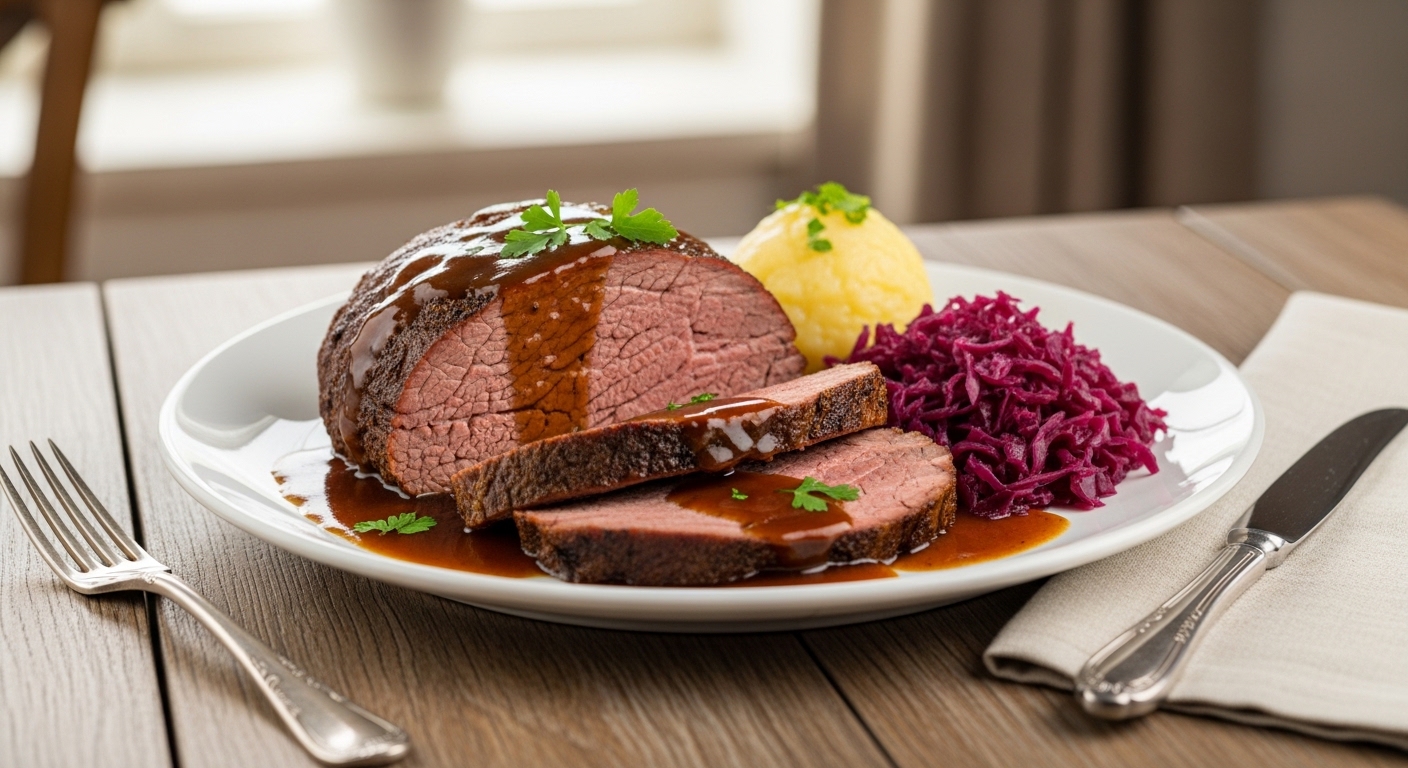
Imagine tender, melt-in-your-mouth beef steeped in a rich, tangy-sweet marinade that’s been slow-cooked for hours until it practically falls apart with a fork. That’s German Sauerbraten—the crown jewel of traditional German cuisine. Originating in the Rhineland region centuries ago, this vinegar-marinated pot roast was born out of necessity: before refrigeration, cooks used acidic brines to preserve meat. Today, it’s a beloved comfort food served during holidays, family gatherings, and cozy winter dinners across Germany and beyond.
What makes German Sauerbraten so special isn’t just its deep, complex flavor—it’s the harmony of sour, sweet, savory, and aromatic spices that develop over days of marinating and slow braising. The result? A deeply satisfying dish that’s as much about tradition as it is about taste. Whether you’re cooking for Oktoberfest, a Sunday roast, or simply craving something hearty and authentic, this recipe delivers every time.
Quick Recipe Summary
| Prep Time | 20 minutes (+ 2–3 days marinating) |
| Cook Time | 3–4 hours |
| Total Time | 2–3 days (including marination) |
| Servings | 6–8 |
| Cuisine | German (Rhenish) |
| Course | Main Course |
| Calories (approx.) | 420 per serving |
Why German Sauerbraten Stands Out
Unlike typical pot roasts, German Sauerbraten relies on a long marination process using red wine vinegar, red wine, and a blend of aromatic vegetables and spices. This not only tenderizes the meat but also infuses it with a uniquely balanced flavor profile—tangy from the vinegar, rounded out by caramelized sugar or gingerbread cookies (Pfeffernüsse or Lebkuchen), and deepened by cloves, juniper berries, and bay leaves.
The dish is traditionally made with beef rump, bottom round, or chuck—cuts that benefit most from slow cooking. After marinating for at least 48 hours (ideally 72), the meat is seared, then braised in its own marinade until fork-tender. The final gravy is thickened and sweetened slightly, creating a glossy, deeply flavorful sauce that clings perfectly to dumplings or red cabbage.
Complete Ingredients List
For the marinade:
- 3 lbs (1.4 kg) beef rump or chuck roast
- 2 cups (480 ml) red wine vinegar
- 1 cup (240 ml) dry red wine (like Pinot Noir or Riesling)
- 1 large onion, sliced
- 2 carrots, chopped
- 2 celery stalks, chopped
- 4 cloves garlic, smashed
- 10 black peppercorns
- 6 whole cloves
- 2 bay leaves
- 10 juniper berries (lightly crushed)
- 1 tsp mustard seeds
- 1 tbsp brown sugar (optional, for balance)
For cooking & gravy:
- 2 tbsp vegetable oil
- 2 tbsp all-purpose flour
- 1–2 crushed gingersnap cookies or Lebkuchen (key for authentic sweetness!)
- Salt and freshly ground black pepper to taste
- Water or beef broth (as needed)
Step-by-Step Cooking Instructions
Step 1: Marinate the Meat (2–3 Days Ahead)
In a large non-reactive bowl or food-safe container, combine vinegar, red wine, onion, carrots, celery, garlic, and all spices. Add the beef roast, ensuring it’s fully submerged. Cover and refrigerate for 48–72 hours, turning the meat once daily.
Step 2: Sear the Meat
Remove the beef from the marinade and pat it very dry with paper towels—this ensures a good sear. Strain the marinade, reserving the liquid and vegetables separately. Heat oil in a heavy Dutch oven over medium-high heat. Sear the meat on all sides until deeply browned (about 3–4 minutes per side). Remove and set aside.
Step 3: Build the Braising Base
In the same pot, add the reserved marinade vegetables. Sauté for 5 minutes until softened. Sprinkle flour over the vegetables and stir for 1 minute to cook out the raw taste. Slowly pour in the reserved marinade liquid, stirring constantly to prevent lumps.
Step 4: Braise Until Tender
Return the seared beef to the pot. Bring to a gentle simmer, then cover and reduce heat to low. Braise for 3–4 hours, turning the meat once halfway through, until it’s easily pierced with a fork. Add water or broth if the liquid reduces too much.
Step 5: Finish the Gravy
Remove the beef and keep warm. Strain the cooking liquid again, pressing vegetables to extract all flavor. Return liquid to the pot. Stir in crushed gingersnaps or Lebkuchen until dissolved and the gravy thickens slightly (about 5–10 minutes). Season with salt and pepper to taste.
Step 6: Serve
Slice the sauerbraten against the grain or shred gently. Spoon hot gravy over the meat and serve immediately.
Chef Tips for Perfect German Sauerbraten
- Don’t skip the marination! At least 48 hours is essential for tenderness and flavor penetration.
- Dry the meat thoroughly before searing—wet meat steams instead of browning.
- Use real gingersnaps or Lebkuchen—they’re not just sweet; they add depth and body to the gravy.
- Taste and adjust the final gravy: it should be balanced—tangy but not sour, sweet but not cloying.
- Low and slow wins—rushing the braise leads to tough meat.
Common Mistakes to Avoid
- Using lean cuts like sirloin tip—they dry out during long cooking. Stick to well-marbled roasts.
- Overcooking the gravy after adding cookies—it can become too thick or bitter.
- Skipping the flour roux—this helps thicken the sauce naturally without gumminess.
- Not straining the marinade twice—bits of spice can make the gravy gritty.
Ingredient Substitutions & Variations
For a lighter version: Use turkey or chicken thighs (reduce cook time to 1.5–2 hours).
Vegetarian twist: Replace beef with large portobello mushrooms or seitan; marinate and braise similarly.
Gluten-free? Use cornstarch instead of flour and certified GF gingersnaps.
No red wine? Substitute with additional vinegar and beef broth, plus a splash of balsamic for depth.
Regional variation: In Franconia, some recipes use raisins or apple cider vinegar for extra sweetness.
Serving Suggestions
German Sauerbraten is traditionally paired with:
- Potato dumplings (Kartoffelklöße)—they soak up the gravy beautifully.
- Red cabbage (Rotkohl)—its sweet-sour notes complement the meat.
- Boiled potatoes—simple and classic.
- A crisp green salad with apple cider vinaigrette cuts through the richness.
Storage & Reheating Instructions
Refrigeration: Store cooled sauerbraten and gravy in an airtight container for up to 4 days.
Freezing: Freeze for up to 3 months. Thaw overnight in the fridge before reheating.
Reheating: Gently warm on the stovetop over low heat, adding a splash of broth if needed. Avoid microwaving for best texture.
Nutrition Facts (Approximate per Serving)
- Calories: 420
- Protein: 38g
- Fat: 22g (Saturated: 8g)
- Carbohydrates: 18g
- Fiber: 2g
- Sugar: 9g
- Sodium: 380mg
Key Takeaways
- German Sauerbraten is a slow-braised, vinegar-marinated beef dish with deep historical roots.
- Marination for 2–3 days is non-negotiable for authentic flavor and tenderness.
- The signature tangy-sweet gravy comes from red wine vinegar, red wine, and crushed gingersnaps.
- Best served with potato dumplings and red cabbage for a complete traditional meal.
- Make-ahead friendly—flavors deepen over time, and leftovers taste even better.
Frequently Asked Questions (FAQs)
Can I make German Sauerbraten without marinating for days?
While you can reduce marination to 24 hours, the texture and flavor won’t be as rich or tender. For best results, stick to 48–72 hours.
What cut of beef is best for Sauerbraten?
Beef rump, bottom round, or chuck roast are ideal—they have enough connective tissue to become tender during long braising.
Why do some recipes use gingersnap cookies?
Gingersnaps (or Lebkuchen) add subtle sweetness and help thicken the gravy naturally, balancing the acidity of the vinegar. It’s a traditional technique dating back centuries.
Is German Sauerbraten spicy?
No—it’s not spicy in the chili sense. The warmth comes from cloves, peppercorns, and juniper, which add aromatic complexity without heat.
Can I cook this in a slow cooker?
Yes! After marinating and searing, transfer everything to a slow cooker and cook on low for 6–8 hours. Finish the gravy on the stovetop for best thickening.
Conclusion: Bring a Taste of Germany to Your Table
German Sauerbraten isn’t just a recipe—it’s a culinary journey into the heart of German tradition. With its bold flavors, tender texture, and comforting aroma, it’s the kind of dish that turns a regular dinner into a celebration. Though it requires planning ahead, the reward is a meal that’s deeply satisfying, culturally rich, and utterly unforgettable.
So roll up your sleeves, grab your Dutch oven, and give this classic a try. Your taste buds (and your family) will thank you. Prost!
Leave a Reply