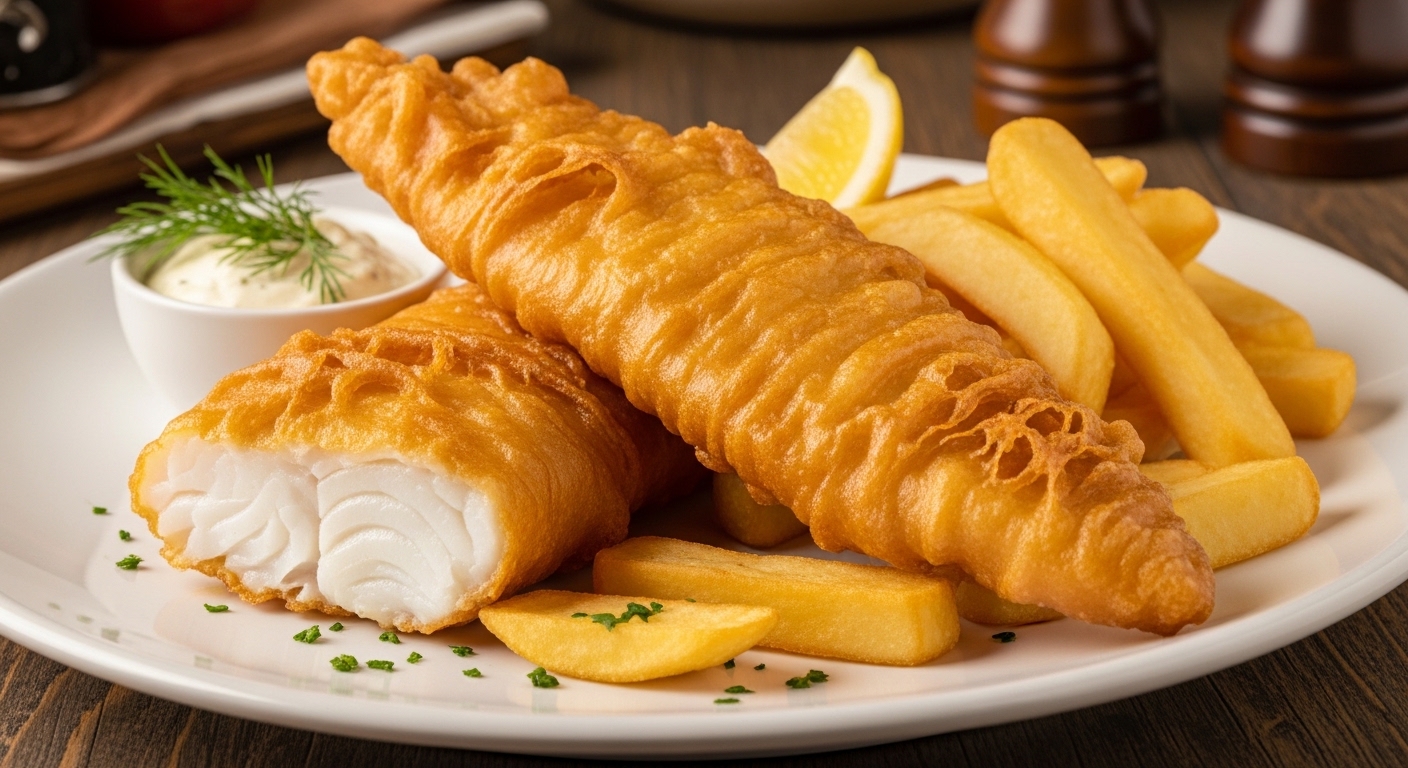
Why Everyone Falls in Love with Fish and Chips
There’s something irresistibly comforting about biting into a perfectly golden, flaky piece of fish wrapped in a crispy beer batter, paired with thick-cut chips that are fluffy inside and crunchy outside. Fish and chips isn’t just a meal—it’s a cultural icon, a nostalgic British tradition, and a global comfort food favorite. Whether you’re dining by the seaside in Brighton or recreating it in your kitchen, this dish delivers a satisfying crunch, savory depth, and that unbeatable combo of textures.
Originating in 19th-century England, fish and chips became a staple for working-class families thanks to its affordability and hearty appeal. Today, it’s enjoyed worldwide, with each region adding its own twist. But nothing beats the classic version: fresh cod or haddock, double-fried chips, mushy peas, and a splash of malt vinegar. In this recipe, we’ll show you how to make authentic, restaurant-quality fish and chips at home—crisp, golden, and bursting with flavor.
Quick Recipe Summary
| Prep Time | 30 minutes |
| Cook Time | 40 minutes |
| Total Time | 1 hour 10 minutes |
| Servings | 4 |
| Cuisine | British |
| Course | Main Course |
| Calories (approx.) | 650 per serving |
Ingredients You’ll Need
For the Fish:
- 4 (6-ounce) skinless cod or haddock fillets
- 1 cup all-purpose flour
- 1 teaspoon baking powder
- 1 teaspoon salt
- 1/2 teaspoon black pepper
- 1 cup cold beer (lager or ale works best)
- 1 egg yolk
- Vegetable oil (for frying)
For the Chips:
- 4 large russet potatoes (about 2.5 lbs), peeled
- Salt, to taste
- Vegetable oil (for frying)
For Serving (Optional but Recommended):
- Mushy peas
- Malt vinegar
- Lemon wedges
- Tartar sauce
- Sea salt flakes
Step-by-Step Cooking Instructions
1. Prepare the Chips (Double-Fry Method)
Start with the chips since they require two frying stages. Cut the peeled potatoes into thick batons, about 1/2 inch wide. Rinse them under cold water to remove excess starch, then pat completely dry with a clean kitchen towel.
In a large pot or deep fryer, heat 3 inches of vegetable oil to 300°F (150°C). Fry the chips in batches for 4–5 minutes until soft but not browned. Remove and drain on paper towels. Let them cool completely—this step ensures a fluffy interior.
2. Make the Beer Batter
In a mixing bowl, combine 1 cup flour, baking powder, salt, and pepper. In a separate bowl, whisk together the cold beer and egg yolk. Gradually pour the wet mixture into the dry ingredients, stirring gently until just combined. Don’t overmix—small lumps are fine. The batter should be smooth but not thick. Let it rest for 10–15 minutes while you prepare the fish.
3. Fry the Chips Again (Second Fry)
Increase the oil temperature to 375°F (190°C). Fry the par-cooked chips in batches for 3–4 minutes until golden brown and crispy. Drain on fresh paper towels and season immediately with salt.
4. Fry the Fish
Pat the fish fillets dry with paper towels—this is crucial for a crisp batter. Lightly dust each fillet with flour (this helps the batter adhere). Dip each piece into the beer batter, letting excess drip off.
Carefully lower the battered fish into the hot oil (375°F). Fry for 5–6 minutes, turning once, until the batter is golden and the fish flakes easily with a fork. Avoid overcrowding the pan—fry in batches if needed.
Remove and drain on a wire rack (not paper towels, to prevent sogginess). Season lightly with salt.
5. Serve Immediately
Arrange the hot fish and chips on a plate. Serve with mushy peas, a squeeze of lemon, a splash of malt vinegar, and a dollop of tartar sauce. Enjoy while hot and crispy!
Chef’s Tips for Perfect Fish and Chips
- Use cold beer: The carbonation creates a light, airy batter. A lager or pale ale adds subtle flavor without overpowering.
- Don’t skip the double fry: The first fry cooks the potatoes; the second makes them crispy. This is the secret to great chips.
- Keep oil temperature steady: Use a thermometer. Too hot, and the batter burns; too cool, and it absorbs oil.
- Rest the batter: Letting it sit allows the flour to hydrate and the bubbles to develop, resulting in a crispier coating.
- Fry fish last: Serve immediately after frying for the best texture. Reheating ruins the crispness.
Common Mistakes to Avoid
- Overmixing the batter: This develops gluten, making the coating tough instead of light.
- Using warm beer: Cold beer keeps the batter crisp. Warm beer leads to a soggy finish.
- Not drying the fish: Moisture prevents the batter from sticking and causes splattering.
- Frying too many pieces at once: This lowers the oil temperature, resulting in greasy food.
- Skipping the flour dusting: A light coat of flour helps the batter adhere smoothly.
Ingredient Substitutions & Variations
Healthier Version:
- Bake the chips: Toss potato batons with 1 tbsp olive oil, spread on a baking sheet, and bake at 425°F (220°C) for 25–30 minutes, flipping halfway.
- Air-fry the fish: Spray battered fish with oil and air-fry at 400°F (200°C) for 12–15 minutes, flipping once.
Indian-Style Twist:
- Add 1 tsp garam masala and 1/2 tsp turmeric to the batter for a spiced flavor.
- Serve with tamarind chutney and mint-coriander raita instead of tartar sauce.
Vegetarian / Vegan Option:
- Replace fish with thick-cut halloumi or tofu steaks.
- Use plant-based milk and a flax egg (1 tbsp ground flax + 3 tbsp water) in the batter.
- Serve with vegan mushy peas (made with green peas, mint, and plant butter).
For Beginners:
- Use pre-cut frozen chips to save time (bake or air-fry as directed).
- Opt for a store-bought tempura batter mix if short on time.
- Fry in a deep fryer with a basket for easier handling.
Serving Suggestions
Serve your fish and chips on a sheet of parchment paper or newspaper for that classic British chip shop vibe. Pair with:
- A side of mushy peas (simmered peas with mint and butter)
- Homemade tartar sauce (mayo, pickles, capers, lemon, dill)
- A crisp green salad with a simple vinaigrette
- A pint of cold lager or a glass of chilled white wine
Storage & Reheating Instructions
Fish and chips are best enjoyed fresh, but leftovers can be stored:
- Refrigerate: Keep in an airtight container for up to 2 days.
- Reheat chips: Spread on a baking sheet and bake at 400°F (200°C) for 10 minutes to restore crispness.
- Reheat fish: Place on a wire rack in the oven at 375°F (190°C) for 8–10 minutes. Avoid microwaving—it makes the batter soggy.
Nutrition Facts (Approximate per Serving)
- Calories: 650
- Total Fat: 32g
- Saturated Fat: 3g
- Cholesterol: 95mg
- Sodium: 980mg
- Total Carbohydrates: 65g
- Dietary Fiber: 5g
- Sugars: 3g
- Protein: 38g
*Note: Values may vary based on oil absorption and portion size.*
FAQs About Fish and Chips
What’s the best fish for fish and chips?
Cod and haddock are the top choices due to their firm texture, mild flavor, and flaky white flesh. Hake and pollock are also excellent alternatives.
Can I make the batter ahead of time?
It’s best to make the batter fresh, but you can prepare it up to 1 hour in advance. Store it in the fridge and give it a gentle stir before using.
Why is my batter soggy?
Sogginess usually comes from warm oil, overmixing, or not drying the fish. Ensure your oil is at 375°F and your fish is patted dry.
Can I freeze fish and chips?
Freezing is not recommended—the batter loses its crispness. However, you can freeze uncooked battered fish for up to 1 month. Fry from frozen, adding 1–2 minutes to cooking time.
What’s the difference between chips and fries?
In the UK, “chips” are thick-cut and double-fried, while “fries” (common in the US) are thinner and single-fried. British chips are heartier and more substantial.
Key Takeaways
- Authentic fish and chips rely on fresh fish, a light beer batter, and perfectly double-fried potatoes.
- Temperature control is critical—maintain 375°F for crispy results.
- Serve immediately with classic sides like mushy peas and malt vinegar.
- Customize with healthier, vegetarian, or regional twists to suit your taste.
Final Thoughts: Bring the Chip Shop Home
There’s no need to wait for a trip to the coast or a rainy day in London to enjoy this beloved dish. With the right technique and a few quality ingredients, you can recreate the magic of fish and chips in your own kitchen. Crispy on the outside, tender on the inside, and packed with flavor, this recipe delivers the real deal—no passport required.
So grab your apron, heat up that oil, and get ready to impress your family with a meal that’s as comforting as it is delicious. Once you taste that first bite of golden fish and fluffy chips, you’ll understand why this dish has stood the test of time. Happy frying!
Leave a Reply