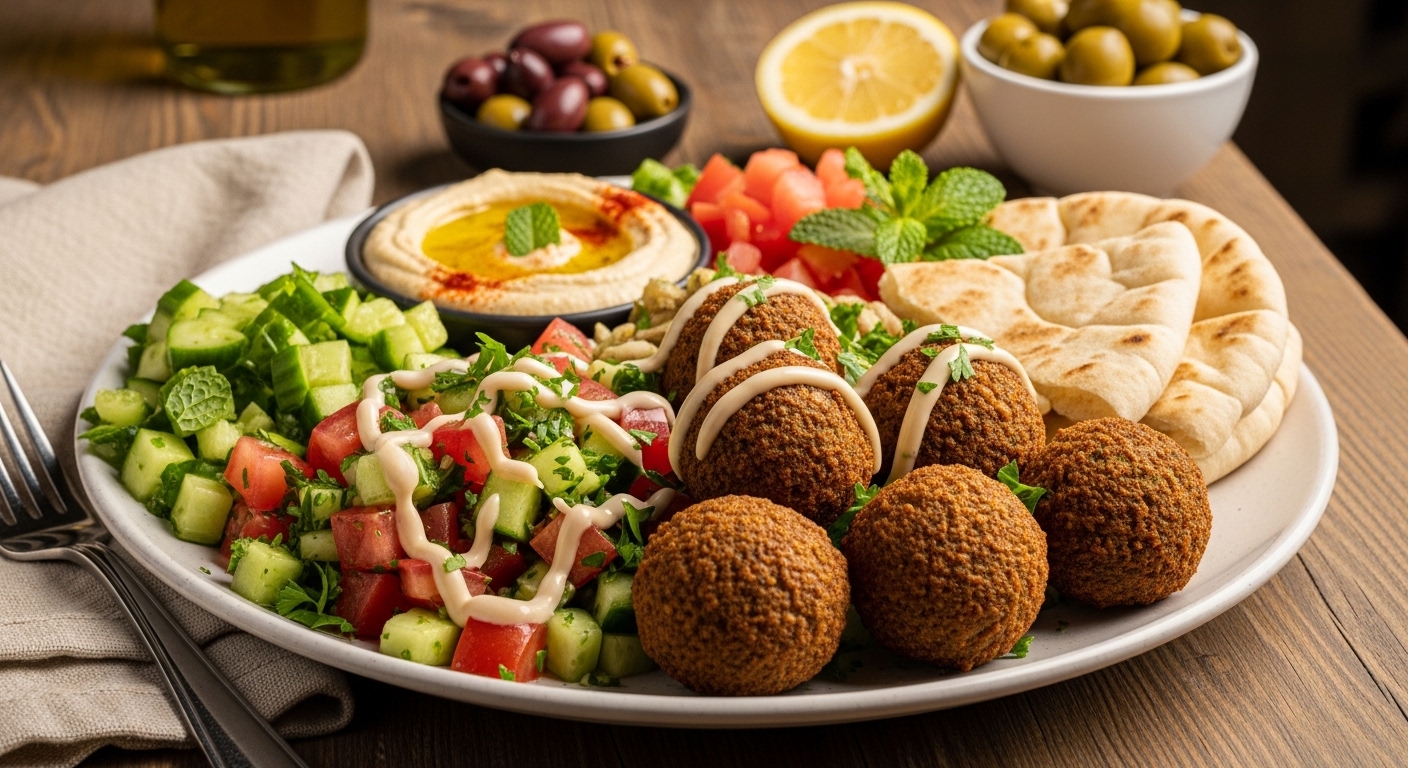
Imagine a plate so vibrant, aromatic, and satisfying that it instantly transports you to sun-drenched streets of Cairo or bustling markets in Beirut. Picture golden, crispy falafel balls nestled among fresh vegetables, drizzled with creamy tahini sauce, sprinkled with parsley, and served with warm pita bread—all coming together in what we call a **Falafel Plate Mediterranean Style**. This isn’t just a meal; it’s an experience. Rich in flavor, packed with nutrients, and deeply rooted in tradition, this dish has become a global favorite for its balance of textures, tastes, and cultural heritage.
But what exactly makes a Falafel Plate Mediterranean Style so special? It’s not just about the chickpeas or the spices—it’s the harmony of ingredients, the care in preparation, and the way each element complements the next. Whether you’re new to Middle Eastern cuisine or a seasoned foodie looking for a fresh take, this recipe delivers authenticity with a modern twist. Let’s dive into how to create your own version at home—crisp on the outside, tender inside, bursting with earthy herbs and warming spices.
Why People Love the Falafel Plate Mediterranean Style
The popularity of the Falafel Plate Mediterranean Style lies in its versatility and soul-warming appeal. Originating from Egypt centuries ago, falafel evolved into a staple across the Levant, Turkey, Greece, and beyond. Traditionally made from ground fava beans or chickpeas, seasoned with garlic, cumin, coriander, and parsley, then deep-fried to perfection, falafel offers a satisfying crunch that melts in your mouth.
What sets the Mediterranean-style version apart is how it’s served—often as part of mezze platters, salads, or hearty wraps. The addition of tzatziki, hummus, tabbouleh, pickles, and grilled veggies creates layers of flavor and texture that elevate the humble falafel into something extraordinary. Plus, it’s naturally vegan-friendly, making it accessible to everyone regardless of dietary preferences.
Quick Recipe Summary Table
- Prep Time: 30 minutes
- Cook Time: 25 minutes
- Total Time: 55 minutes
- Servings: 4
- Cuisine: Mediterranean / Middle Eastern
- Course: Main Dish, Lunch, Dinner
- Calories (approx.): 480 per serving
Essential Ingredients for Your Falafel Plate Mediterranean Style
To craft an authentic and delicious Falafel Plate Mediterranean Style, gather these ingredients:
For the Falafel Balls:
- 1 cup dried chickpeas (not canned), soaked overnight
- ½ cup fresh parsley, finely chopped
- ¼ cup fresh cilantro, finely chopped
- 3 green onions, sliced
- 3 garlic cloves
- 1 teaspoon ground cumin
- ½ teaspoon baking soda
- ½ teaspoon salt
- ¼ teaspoon black pepper
- Vegetable oil (for frying)
For Serving & Toppings:
- 4 pita breads (whole wheat or traditional)
- 1 cucumber, diced
- 1 tomato, diced
- ½ red onion, thinly sliced
- Fresh parsley and mint leaves
- Homemade hummus
- Tzatziki sauce
- Tahini sauce (mix ¼ cup tahini, 2 tbsp lemon juice, 1 garlic clove, and water to desired consistency)
- Lemon wedges
- Paprika or sumac for garnish
Step-by-Step Instructions to Make the Perfect Falafel Plate Mediterranean Style
Follow these simple steps to bring your Falafel Plate Mediterranean Style to life:
- Soak the Chickpeas Overnight – Place 1 cup of dried chickpeas in a large bowl and cover with plenty of water. Let them soak for at least 8 hours (or up to 24 hours). This softens them and ensures they cook evenly.
- Drain and Dry Completely – After soaking, drain the chickpeas thoroughly and pat them completely dry using paper towels. Excess moisture prevents proper binding.
- Blend Until Coarse – In a food processor, pulse the chickpeas, parsley, cilantro, green onions, garlic, cumin, salt, pepper, and baking soda until the mixture resembles coarse sand. Do not over-process—you want some texture.
- Chill the Mixture – Transfer the falafel dough to a bowl, cover, and refrigerate for at least 30 minutes. This helps the flavors meld and makes shaping easier.
- Shape the Falafels – Using wet hands, form the dough into small patties or balls (about 1 inch in diameter). Each should hold together but not be overly dense.
- Heat Oil for Frying – In a deep skillet or pot, heat about 2 inches of vegetable oil to 350°F (175°C). Use a thermometer for accuracy.
- Deep-Fry Until Golden – Carefully drop 4–6 falafels into the hot oil. Fry in batches without overcrowding. Cook for 2–3 minutes, turning occasionally, until golden brown and crisp. Remove with a slotted spoon and drain on paper towels.
- Prepare the Plate – Warm pita breads slightly. Arrange falafels on a large platter or individual plates. Add sides like hummus, tzatziki, tahini, chopped veggies, and fresh herbs.
- Garnish and Serve – Drizzle with sauces, sprinkle with paprika or sumac, and serve immediately with lemon wedges on the side.
Chef Tips for Best Results
- Use Dried Chickpeas, Not Canned – Canned chickpeas contain additives and excess moisture, which can ruin the texture. Dried ones yield the perfect crumbly yet cohesive falafel.
- Don’t Skip Chilling – Allowing the mixture to rest improves binding and flavor development.
- Wet Your Hands When Shaping – Prevents sticking and helps maintain shape during frying.
- Control Oil Temperature – Too hot, and the outside burns before cooking through. Too cool, and they absorb too much oil and become greasy.
- Serve Immediately – Falafel tastes best fresh and hot. If you must store, keep raw falafels in the fridge and fry just before serving.
Common Mistakes to Avoid
- Using Canned Chickpeas – Leads to soggy, oily falafel.
- Over-Processing the Mixture – Results in dense, gummy falafel instead of light and airy.
- Skipping the Baking Soda – This leavening agent helps create a lighter texture by trapping gas.
- Frying at Wrong Temperature – Causes uneven cooking and poor crispness.
- Serving Cold Falafel – Loses its signature crunch and warmth.
Ingredient Substitutions & Variations
Make It Vegan:
This recipe is already plant-based! Just ensure all sauces (tahini, hummus) are certified vegan.
Healthier Version (Baked Falafel):
Instead of frying, preheat oven to 375°F (190°C). Lightly grease a baking sheet, place shaped falafels on it, brush with olive oil, and bake for 25–30 minutes, flipping halfway. This reduces calories and fat while keeping great taste.
Indian-Inspired Twist:
Add garam masala, turmeric, or a touch of chili powder to the falafel mix for an aromatic Indian-Mediterranean fusion. Serve with raita or mango chutney alongside.
Gluten-Free Option:
Ensure pita bread is gluten-free if needed. Most whole wheat pitas are fine, but check labels carefully.
Serving Suggestions That Wow
- Classic Wrap Style: Layer falafel in pita with lettuce, tomatoes, pickled turnips, and generous dollops of tzatziki.
- Falafel Salad Bowl: Toss falafel with tabbouleh, cucumber-tomato salad, olives, and feta (if non-vegan).
- Mezze Platter: Present falafel alongside baba ghanoush, stuffed grape leaves, olives, and flatbreads for a shareable feast.
- Mediterranean Meal Prep: Assemble individual containers with falafel, quinoa, roasted peppers, and tahini dressing for easy lunches.
Storage & Reheating Instructions
- Raw Falafel Dough: Store in the fridge for up to 3 days. Freeze shaped falafels on a tray, then transfer to a bag for up to 1 month.
- Cooked Falafel: Keep in an airtight container in the fridge for up to 2 days. Reheat in a pan with a bit of oil over medium heat for 3–4 minutes per side.
- Avoid Microwaving: It makes falafel soggy. Pan-frying or baking is preferred for re-crisping.
Nutrition Facts (Approximate Per Serving)
- Calories: 480 kcal
- Protein: 14 g
- Carbohydrates: 52 g
- Fat: 22 g
- Fiber: 9 g
- Sugar: 6 g
- Sodium: 680 mg
Key Takeaways
– The Falafel Plate Mediterranean Style is a vibrant, nutritious, and culturally rich dish that blends crispy falafel with fresh, tangy sides.
– Authentic results come from using dried chickpeas, minimal processing, and proper frying technique.
– It’s naturally vegan, customizable, and ideal for meal prep or entertaining.
– With the right balance of herbs, spices, and sauces, this dish delivers both comfort and sophistication.
FAQs About Falafel Plate Mediterranean Style
Can I make falafel ahead of time?
Yes! You can prepare the falafel dough, shape them, and freeze uncooked falafels for up to one month. Simply thaw slightly and fry when ready.
Is falafel always fried?
Traditionally yes, but you can bake or air-fry them for a lighter option. The key is achieving crispiness without oil overload.
What makes Mediterranean-style falafel different?
The difference lies in the accompaniments—think tzatziki, hummus, tahini, and fresh vegetables—which give it a more balanced, colorful presentation compared to simpler versions.
Can I use fava beans instead of chickpeas?
Absolutely! In parts of Egypt and Syria, fava beans are used. Just ensure they’re soaked and cooked properly before blending.
How do I know when falafel is done?
They should float slightly in the oil, turn golden brown, and have a firm yet springy texture. Cut one open to check—the inside should be moist, not raw or dry.
Conclusion: Bring the Mediterranean Home Tonight
There’s magic in a well-made Falafel Plate Mediterranean Style—the kind of magic that turns a regular dinner into a celebration. From the first bite of those perfectly golden falafel balls to the final sip of lemon-infused tahini sauce, every moment is a nod to tradition, health, and joy. Whether you’re hosting friends, feeding a family, or treating yourself after a long week, this dish delivers on all fronts.
So roll up your sleeves, gather your ingredients, and let the aromas of cumin, garlic, and fresh herbs fill your kitchen. You don’t need a passport to enjoy the flavors of the Mediterranean—just this simple, satisfying recipe. Trust us, once you taste your homemade Falafel Plate Mediterranean Style, you’ll wonder why you didn’t try it sooner. Now go ahead—make it, savor it, and share it with someone who deserves a little extra goodness.
Leave a Reply