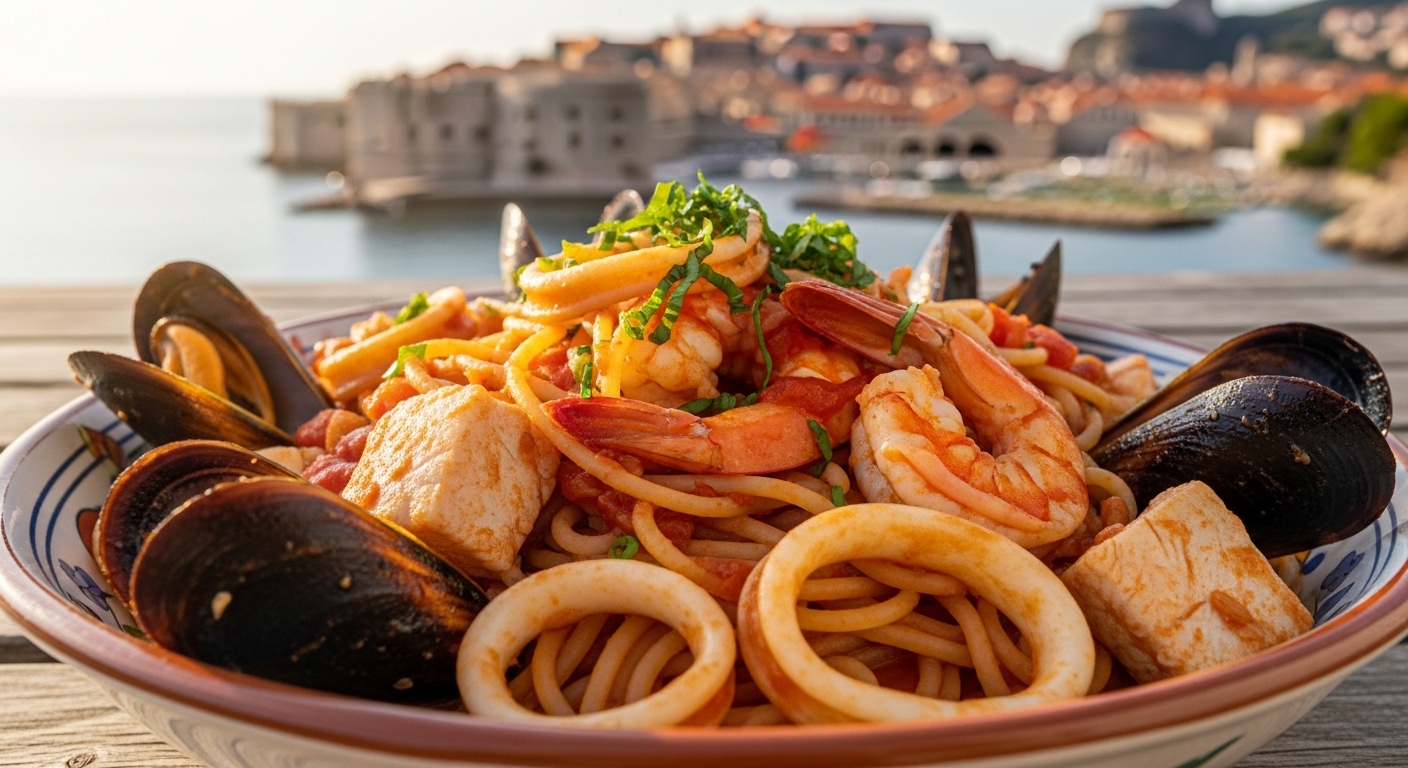
Have you ever dreamed of a meal that captures the essence of sun-drenched Croatian coastlines, with briny sea breezes and vibrant flavors dancing on your palate? Look no further than Dubrovnik seafood pasta—a dish that blends rich Adriatic seafood with al dente noodles in a tangy, garlic-infused tomato sauce. This isn’t just another pasta recipe; it’s a culinary journey to the ancient walled city of Dubrovnik, where every bite feels like a summer stroll along the Stradun.
Whether you’re planning a romantic dinner, impressing guests at a casual gathering, or simply craving something fresh and satisfying, this authentic-style Dubrovnik seafood pasta delivers bold, balanced flavor with minimal effort. And yes—it’s surprisingly easy to make at home.
Why Dubrovnik Seafood Pasta Stands Out
Unlike generic seafood pastas that can taste bland or overly fishy, Dubrovnik-style versions are rooted in Mediterranean simplicity. The key lies in using high-quality, fresh seafood (think mussels, shrimp, squid) paired with zesty tomatoes, aromatic herbs like oregano and marjoram, and a splash of white wine for brightness. Unlike heavy cream-based sauces, traditional recipes rely on olive oil and simmered tomatoes to let the ocean flavors shine.
This dish is beloved not only because of its taste but also its connection to Croatia’s coastal heritage. Dubrovnik, known as the “Pearl of the Adriatic,” has long been a hub for fishermen and chefs who masterfully balance saltwater richness with earthy, herbal notes. When you cook Dubrovnik seafood pasta, you’re recreating that harmony—without needing to sail across the Mediterranean.
Quick Recipe Summary Table
- Prep Time: 20 minutes
- Cook Time: 25–30 minutes
- Total Time: 45–50 minutes
- Servings: 4
- Cuisine: Croatian / Mediterranean
- Course: Main Dish
- Calories (approx.): 480 per serving
Ingredients You’ll Need
Authentic Dubrovnik seafood pasta hinges on fresh, seasonal ingredients. Here’s exactly what to gather:
Main Ingredients
- 1 lb (450g) linguine or spaghetti – Choose a sturdy pasta that holds up well in the sauce
- 2 tbsp extra virgin olive oil – For sautéing and finishing
- 4 cloves garlic, minced – The aromatic backbone of the dish
- 1 small red onion, finely chopped – Adds sweetness and depth
- 1 cup canned crushed tomatoes (preferably San Marzano) – Rich, sweet tomato base
- ½ cup dry white wine – For acidity and complexity (use chicken broth if avoiding alcohol)
- 1 tsp dried oregano – Classic Mediterranean herb
- ½ tsp dried marjoram – Often used in Dalmatian cooking
- Salt and black pepper, to taste
- Pinch of red pepper flakes – Optional, for a gentle kick
Seafood Mix
- 12 large shrimp, peeled and deveined
- 1 cup fresh mussels, scrubbed and debearded
- ½ lb (225g) squid rings, cleaned
- 1 cup clams, scrubbed (optional)
Garnish & Finish
- ¼ cup fresh parsley, chopped
- Zest of 1 lemon – Brightens the whole dish
- Freshly grated Parmesan or Pecorino Romano (optional)
Step-by-Step Cooking Instructions
Follow these simple steps to recreate restaurant-quality Dubrovnik seafood pasta at home.
- Boil the Pasta: Bring a large pot of salted water to a rolling boil. Cook linguine according to package instructions until al dente. Reserve 1 cup of pasta water before draining.
- Sauté Aromatics: While pasta cooks, heat olive oil in a large skillet over medium heat. Add garlic and red onion, sautéing for 2–3 minutes until fragrant and soft—do not brown.
- Add Tomatoes & Herbs: Stir in crushed tomatoes, oregano, marjoram, salt, pepper, and red pepper flakes. Simmer for 5 minutes to meld flavors.
- Deglaze with Wine: Pour in white wine, scraping up any browned bits from the pan. Let reduce by half (about 3–4 minutes).
- Incorporate Seafood: Add shrimp and squid to the sauce. Cook for 2–3 minutes until shrimp turn pink. Then add mussels and clams (if using), cover the pan, and steam for 4–5 minutes until shells open. Discard any unopened shells.
- Combine Pasta & Sauce: Drain pasta and return it to the pot. Add the seafood sauce and toss gently. If too thick, add reserved pasta water 1 tablespoon at a time until desired consistency.
- Finish & Serve: Stir in parsley and lemon zest. Drizzle with extra olive oil and serve immediately, topped with grated cheese if desired.
Chef Tips for Perfect Results
- Buy Live Mussels/Clams: Ensure they’re closed or tightly shut—tap them; if they don’t close, discard them.
- Don’t Overcook Shrimp: They become rubbery after 3–4 minutes. Remove from heat once pink.
- Use Fresh Herbs:** Dry herbs work, but fresh oregano and parsley elevate the flavor significantly.
- Simmer Slowly:** Let the tomato sauce reduce slowly to concentrate flavor—don’t rush this step.
Common Mistakes to Avoid
- Overcrowding the Pan:** Sautéing too much seafood at once lowers the temperature and steams instead of searing.
- Skipping the Wine:** It adds essential acidity and depth—substitute with lemon juice + broth.
- Using Low-Quality Tomato Paste:** Canned San Marzano tomatoes make a noticeable difference in sweetness and texture.
- Neglecting Pasta Water:** It acts as a natural emulsifier—always reserve some!
Ingredient Substitutions & Variations
Make this recipe your own with these swaps:
- Pasta Alternatives: Use fusilli, penne, or even gluten-free orecchiette.
- Vegetarian Option: Skip seafood and add artichoke hearts, cherry tomatoes, and capers for briny depth.
- Vegan Version: Replace seafood with king oyster mushrooms or jackfruit, use vegetable broth instead of wine.
- Spicier Twist: Increase red pepper flakes or add a diced Anaheim pepper.
- Heartier Addition: Include cooked scallops or crab meat for luxury.
Restaurant-Style Enhancements
- Add a pinch of smoked paprika for a subtle Iberian influence.
- Top with crispy pancetta or guanciale for savory umami.
- Serve with a side of garlic bread or a crisp white wine like Pinot Grigio.
Serving Suggestions
Pair this vibrant dish with:
- A chilled glass of Croatian Malvazija or Italian Vermentino.
- Crusty bread to soak up the flavorful sauce.
- Simple green salad with arugula, lemon vinaigrette, and shaved fennel.
- For dessert, finish with a slice of ricotta and fig tart—a nod to local Croatian sweets.
Storage & Reheating Instructions
- Refrigerate: Store in an airtight container for up to 2 days.
- Freeze:** Not recommended—seafood becomes mushy upon thawing.
- Reheat Gently: Warm over low heat with a splash of water or broth to revive texture. Avoid microwaving—it dries out the seafood.
Nutrition Facts (Approximate Per Serving)
- Calories: 480 kcal
- Protein: 28g
- Carbohydrates: 62g (of which sugars 4g)
- Fat: 12g (mostly unsaturated from olive oil)
- Fiber: 3g
- Sodium: 720mg
FAQ: Everything You Need to Know About Dubrovnik Seafood Pasta
Can I use frozen seafood?
Yes, but fresh is best. If using frozen, thaw shrimp completely and pat dry. Frozen mussels/clams should be defrosted overnight in cold water.
How do I clean squid properly?
Remove the head and innards. Peel off the outer skin. Trim the tentacles and cut into rings. The internal quill (pen) must be removed from the body tube.
What if I don’t have all the seafood listed?
Substitute with whatever’s fresh at your fish market—scallops, cod fillets, or even lobster tails work beautifully.
Can I make this ahead of time?
Best served fresh, but you can prepare the sauce and cook the seafood separately up to 2 hours ahead. Recombine just before serving.
Is this dish gluten-free?
Only if you use certified gluten-free pasta. Traditional wheat-based pastas contain gluten.
Key Takeaways
- D
Leave a Reply