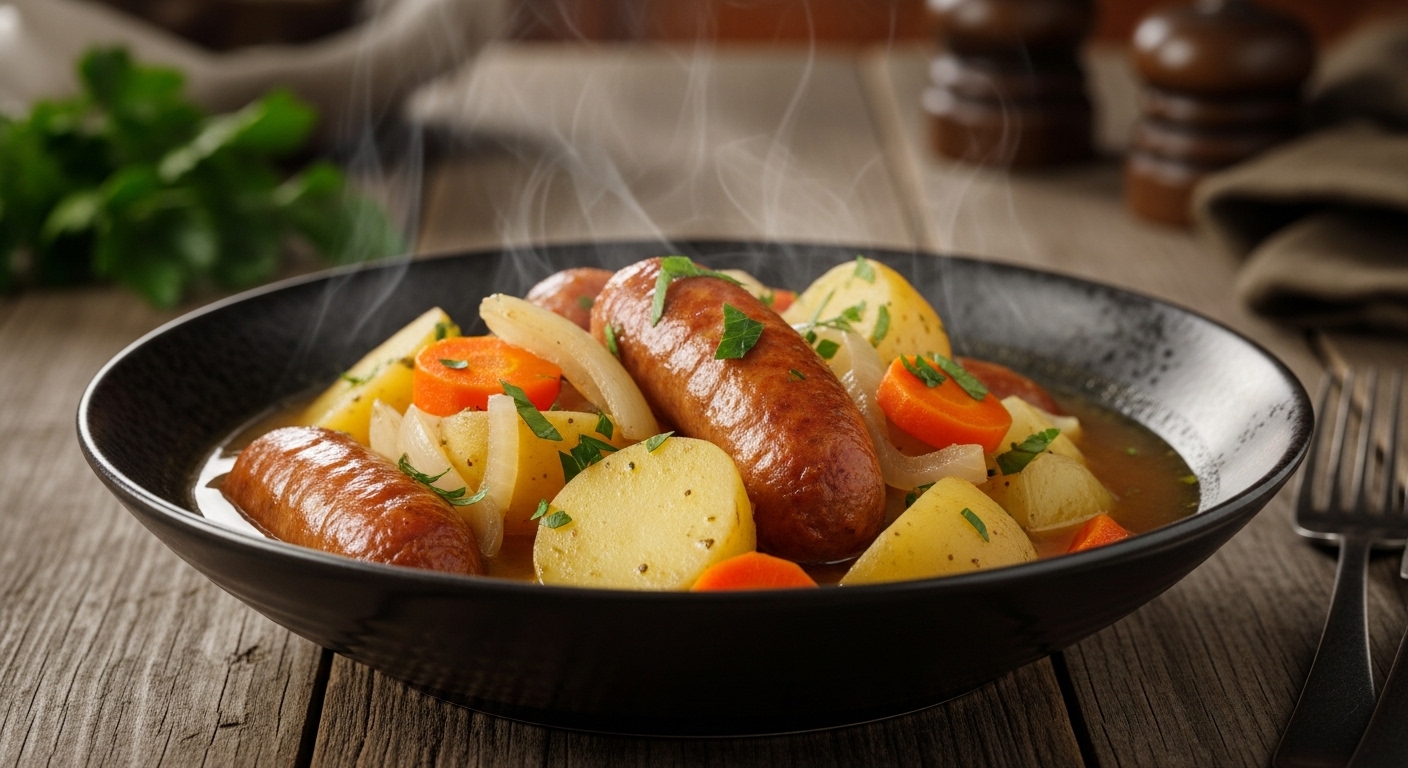
Imagine a dish born from necessity, perfected by generations of Dubliners, and now cherished as one of Ireland’s most comforting classics. That’s Dublin Coddle—a rustic, deeply savory one-pot stew made with sausages, bacon, potatoes, and onions, slow-cooked in a rich broth until tender and fragrant. Originally a frugal meal for working-class families, it’s now a beloved symbol of Irish home cooking, especially on cold winter nights. What makes Dublin Coddle so special? It’s simple, hearty, and packed with flavor—no fancy techniques or exotic ingredients required. Just honest, slow-simmered goodness that fills your kitchen with the aroma of smoked bacon, thyme, and golden potatoes.
If you’re looking for an authentic Irish comfort food recipe that’s easy to make, budget-friendly, and deeply satisfying, you’ve found it. This traditional Dublin Coddle recipe stays true to its roots while offering modern tips for the best results. Whether you’re Irish at heart or simply craving a cozy meal, this dish delivers warmth in every spoonful.
Quick Recipe Summary
| Prep Time | 15 minutes |
|---|---|
| Cook Time | 1 hour 30 minutes |
| Total Time | 1 hour 45 minutes |
| Servings | 4 |
| Cuisine | Irish |
| Course | Dinner |
| Calories (approx.) | 520 per serving |
What Is Dublin Coddle? A Taste of Irish History
Dublin Coddle isn’t just a meal—it’s a slice of Irish history. Born in the 18th century, this dish was traditionally made by Dublin’s working class, particularly butchers and their families, who would use leftover sausages, bacon, and potatoes from the day’s trade. The name “coddle” comes from the French word caudle, meaning to warm or stew gently, reflecting the slow-cooked method that defines the dish.
Unlike Irish stew, which often features lamb or mutton, Dublin Coddle relies on pork products—specifically Irish pork sausages and back bacon—combined with starchy potatoes and sweet onions. It’s typically cooked in a heavy pot (like a Dutch oven) and left to simmer slowly, allowing the flavors to meld into a rich, savory broth. Some versions include beer or stout for depth, while others stick to a simple stock. Either way, the result is a deeply comforting, stick-to-your-ribs dish that’s perfect for chilly evenings.
What sets Dublin Coddle apart is its simplicity. There’s no need for complex techniques or hard-to-find ingredients. It’s the kind of recipe that feels like a hug from your grandmother—unpretentious, nourishing, and full of soul.
Ingredients for Authentic Dublin Coddle
To make a traditional Dublin Coddle, you’ll need just a handful of high-quality, fresh ingredients. Here’s what to gather:
- 8 Irish pork sausages (preferably traditional link sausages with natural casings)
- 8 oz (225g) back bacon, cut into thick strips (or use thick-cut smoked bacon)
- 6 medium potatoes (Russet or Maris Piper work best), peeled and cut into 1-inch chunks
- 2 large onions, peeled and thickly sliced
- 2 cloves garlic, minced (optional, but recommended)
- 2 cups (500ml) chicken or vegetable stock (low-sodium preferred)
- 1 cup (250ml) stout or dark beer (optional, but adds depth)
- 1 tablespoon fresh thyme leaves (or 1 tsp dried thyme)
- 1 bay leaf
- Salt and black pepper to taste
- 2 tablespoons butter or oil (for browning)
- Fresh parsley, chopped (for garnish)
Step-by-Step Cooking Instructions
Follow these easy steps to create a rich, flavorful Dublin Coddle that tastes like it’s been simmering all day.
Step 1: Brown the Sausages and Bacon
Heat a large, heavy-bottomed pot or Dutch oven over medium-high heat. Add 1 tablespoon of oil or butter. Once hot, add the sausages and cook for 5–6 minutes, turning occasionally, until golden brown on all sides. Remove and set aside. In the same pot, add the bacon strips and cook for 3–4 minutes until lightly crisp. Remove and set aside with the sausages. Keep the rendered fat in the pot—it’s flavor gold!
Step 2: Sauté the Aromatics
Reduce heat to medium. Add the sliced onions and a pinch of salt. Cook for 6–8 minutes, stirring occasionally, until soft and lightly caramelized. Add the minced garlic (if using) and cook for another minute until fragrant. This builds the flavor base of your coddle.
Step 3: Layer the Ingredients
Return the sausages and bacon to the pot. Add the potato chunks, thyme, bay leaf, and a generous grind of black pepper. Pour in the stock and beer (if using), ensuring the liquid covers the ingredients by about ¾ inch. If needed, add a little water.
Step 4: Simmer Slowly
Bring the mixture to a gentle boil, then reduce heat to low. Cover and simmer for 1 hour to 1 hour 15 minutes. Stir occasionally to prevent sticking. The potatoes should be tender, and the broth slightly thickened. Avoid overcooking—potatoes can become mushy.
Step 5: Final Seasoning and Serve
Remove the bay leaf. Taste and adjust seasoning with salt and pepper. If the broth is too thin, simmer uncovered for 5–10 minutes to reduce. Garnish with fresh parsley and serve hot.
Chef Tips for the Best Dublin Coddle
- Use quality sausages: Traditional Irish pork sausages with herbs and spices make all the difference. Avoid overly processed varieties.
- Don’t skip the browning: Searing the sausages and bacon builds deep, caramelized flavor.
- Low and slow wins: Simmer gently to prevent potatoes from breaking apart.
- Add beer for depth: A splash of stout (like Guinness) enhances richness without overpowering.
- Let it rest: Like many stews, Dublin Coddle tastes even better the next day. Reheat gently on the stove.
Common Mistakes to Avoid
- Overcooking the potatoes: They should be tender but not falling apart. Check at the 50-minute mark.
- Using too much liquid: The broth should be flavorful but not watery. Aim for a stew-like consistency.
- Skipping the caramelized onions: They add sweetness and depth—don’t rush this step.
- Using low-fat sausages: Traditional coddle relies on the fat from sausages and bacon for flavor.
Ingredient Substitutions & Variations
While traditional Dublin Coddle is pork-based, you can adapt it to suit dietary preferences or what’s in your pantry.
Vegetarian Dublin Coddle
Swap sausages for plant-based sausages (like Beyond Meat or homemade lentil-walnut patties). Use smoked tofu or tempeh instead of bacon. Replace chicken stock with vegetable stock. Add mushrooms for umami depth.
Vegan Dublin Coddle
Use vegan sausages, smoked coconut bacon, and vegetable stock. Skip butter—use olive oil instead. Garnish with fresh herbs and a squeeze of lemon for brightness.
Healthier Version
Use leaner sausages (turkey or chicken), reduce bacon to 4 oz, and add extra vegetables like carrots, celery, or leeks. Use low-sodium stock and limit added salt.
Indian-Inspired Dublin Coddle
Infuse the broth with garam masala, turmeric, and ginger. Add diced tomatoes and a splash of coconut milk. Serve with naan or basmati rice for a fusion twist.
Serving Suggestions
Dublin Coddle is a complete meal, but a few simple sides elevate it:
- Fresh Irish soda bread or crusty sourdough for dipping
- A simple green salad with apple cider vinaigrette
- Buttered cabbage or kale sautéed with garlic
- A pint of stout or a crisp Irish cider
Serve in deep bowls with a generous ladle of broth, sausages, and potatoes. A sprinkle of parsley adds color and freshness.
Storage & Reheating Instructions
Dublin Coddle stores beautifully. Let it cool completely, then transfer to an airtight container. It keeps well in the refrigerator for up to 4 days. For longer storage, freeze for up to 3 months.
To reheat, place on the stove over low heat, adding a splash of stock or water if needed to loosen the broth. Stir gently to avoid breaking the potatoes. Alternatively, reheat in the microwave in 1-minute intervals, stirring in between.
Nutrition Facts (Approximate per Serving)
- Calories: 520
- Total Fat: 32g
- Saturated Fat: 11g
- Cholesterol: 95mg
- Sodium: 1,100mg
- Carbohydrates: 38g
- Dietary Fiber: 4g
- Sugars: 6g
- Protein: 24g
Note: Values may vary based on ingredient brands and substitutions.
Key Takeaways
- Dublin Coddle is a traditional Irish one-pot dish made with sausages, bacon, potatoes, and onions.
- It’s slow-cooked for deep, savory flavor and is perfect for cold weather.
- The recipe is simple, budget-friendly, and highly adaptable.
- For best results, brown the meats, caramelize the onions, and simmer gently.
- Enjoy with soda bread, a green salad, and a pint of stout for an authentic Irish experience.
Frequently Asked Questions (FAQs)
Can I make Dublin Coddle in a slow cooker?
Yes! Brown the sausages and bacon first, then transfer everything to a slow cooker. Cook on low for 6–8 hours or high for 3–4 hours. Add potatoes in the last 2 hours to prevent overcooking.
Is Dublin Coddle the same as Irish stew?
No. While both are Irish one-pot dishes, Irish stew typically uses lamb or mutton, while Dublin Coddle features pork sausages and bacon. Coddle also has a richer, smokier flavor.
Can I use different types of potatoes?
Yes. Starchy potatoes like Russet or Maris Piper hold their shape best. Waxy potatoes (like Yukon Gold) can become too soft if overcooked.
Can I make Dublin Coddle ahead of time?
Absolutely. It tastes even better the next day as the flavors meld. Store in the fridge and reheat gently before serving.
What’s the best beer to use in Dublin Coddle?
A dark stout like Guinness adds rich, malty depth. You can also use a mild ale or skip the alcohol and use extra stock.
Conclusion: Try Dublin Coddle Tonight
Dublin Coddle is more than just a recipe—it’s a taste of Irish heritage, a celebration of humble ingredients, and a reminder that the best meals are often the simplest. Whether you’re cooking for family, friends, or just yourself on a quiet evening, this dish brings warmth, comfort, and a sense of tradition to your table.
So grab a pot, gather your ingredients, and let the slow simmer of sausages, bacon, and potatoes fill your home with the unmistakable aroma of Ireland. Once you try it, you’ll understand why Dublin Coddle has stood the test of time. Sláinte!