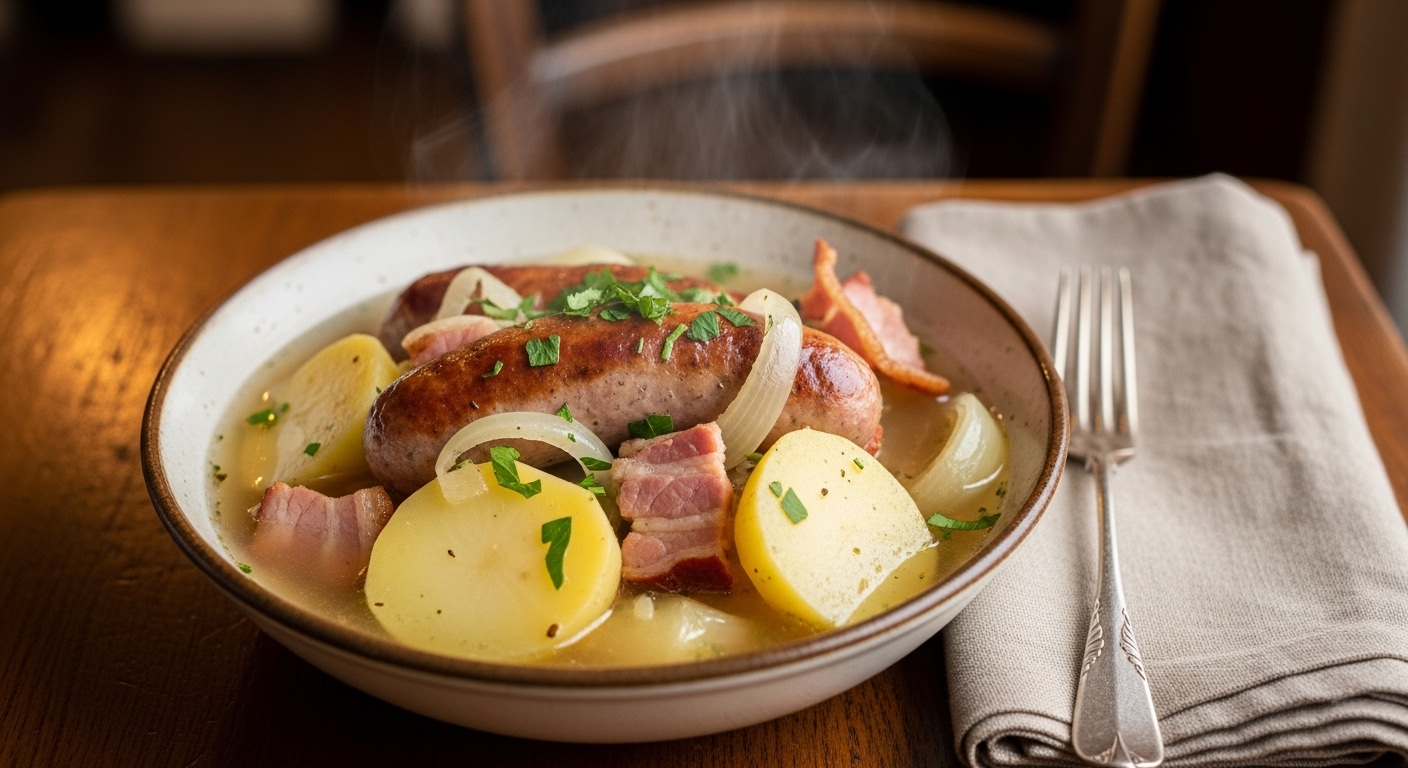
If you’re searching for a deeply comforting, rustic Irish dish that warms the soul and fills the kitchen with rich, savory aromas, Dublin Coddle is your answer. This humble yet flavorful one-pot meal hails from the working-class neighborhoods of Dublin, where families once stretched simple ingredients into nourishing dinners. Made with layers of bacon, sausages, potatoes, and onions slow-cooked in broth, Dublin Coddle is the epitome of Irish comfort food—earthy, hearty, and deeply satisfying.
Unlike more elaborate stews, Dublin Coddle doesn’t rely on fancy techniques or exotic spices. Instead, it celebrates the beauty of slow cooking and pantry staples. It’s the kind of dish that tastes even better the next day, making it perfect for meal prep or cozy weeknight dinners. Whether you’re exploring traditional Irish cuisine or just craving a stick-to-your-ribs meal, this recipe delivers authentic flavor with minimal effort.
What Is Dublin Coddle?
Dublin Coddle is a traditional Irish stew that originated in the city of Dublin, particularly among laborers and factory workers in the 19th and early 20th centuries. The name “coddle” comes from the French word caudle, meaning to gently cook or simmer—fitting for this slow-cooked, layered dish.
At its core, Dublin Coddle is a one-pot wonder combining smoked bacon, Irish sausages (often pork-based), potatoes, and onions, all simmered in a savory broth. Some versions include carrots or herbs like thyme and parsley, but the beauty lies in its simplicity. It’s traditionally cooked overnight in a low oven or left to bubble gently on the stovetop, allowing the flavors to meld into a rich, aromatic stew.
What makes Dublin Coddle special isn’t just its taste—it’s its history. Born out of necessity, it was a way to use up leftover meats and vegetables, turning scraps into something deeply nourishing. Today, it’s a beloved symbol of Irish home cooking, often served on cold winter nights with a side of crusty bread or buttered soda bread.
Dublin Coddle Recipe Summary
| Prep Time | 15 minutes |
| Cook Time | 1 hour 30 minutes |
| Total Time | 1 hour 45 minutes |
| Servings | 4–6 |
| Cuisine | Irish |
| Course | Dinner, Main Course |
| Calories (approx.) | 520 per serving |
Ingredients for Authentic Dublin Coddle
This recipe uses traditional ingredients to deliver the most authentic flavor. All measurements are precise for consistent results.
- 500g (1.1 lbs) smoked bacon joints or thick-cut smoked back bacon, cut into chunks
- 500g (1.1 lbs) Irish pork sausages (or good-quality British-style sausages)
- 800g (1.75 lbs) potatoes (Maris Piper, Russet, or Yukon Gold), peeled and sliced into 1cm rounds
- 2 large onions, thinly sliced
- 2 carrots, peeled and sliced (optional, but traditional in some versions)
- 3 garlic cloves, minced
- 1.5 liters (6 cups) chicken or vegetable stock
- 150ml (2/3 cup) dry white wine (optional, but adds depth)
- 2 sprigs fresh thyme
- 1 bay leaf
- 2 tbsp chopped fresh parsley
- 2 tbsp butter (optional, for richness)
- Salt and black pepper to taste
Step-by-Step Cooking Instructions
Follow these easy steps to make a rich, flavorful Dublin Coddle at home. This method ensures tender meat, creamy potatoes, and a deeply savory broth.
1. Brown the Meats
Heat a large, heavy-based pot or Dutch oven over medium-high heat. Add the bacon chunks and cook for 5–6 minutes until lightly browned and fat begins to render. Remove and set aside. In the same pot, brown the sausages on all sides (about 3–4 minutes). Remove and set aside with the bacon.
2. Sauté the Aromatics
In the same pot, add the sliced onions and carrots (if using). Cook for 5–7 minutes until softened and lightly caramelized. Add the minced garlic and cook for another minute until fragrant.
3. Layer the Ingredients
Return the bacon and sausages to the pot. Layer half the potato slices over the meat, followed by half the onions and carrots. Repeat with the remaining potatoes and vegetables. This layering helps distribute flavor evenly.
4. Add Liquid and Herbs
Pour in the stock and white wine (if using). Add the thyme sprigs and bay leaf. Bring to a gentle simmer, then reduce heat to low. Cover and cook for 1 hour, stirring occasionally.
5. Finish and Serve
After 1 hour, check the potatoes—they should be tender but not falling apart. Stir in the chopped parsley and butter (if using). Season with salt and pepper to taste. Simmer uncovered for another 15–20 minutes to thicken the broth slightly.
Serve hot, ideally with crusty bread or Irish soda bread to soak up the rich broth.
Chef Tips for the Best Dublin Coddle
- Use smoked bacon: The smokiness is key to authentic flavor. Avoid unsmoked or Canadian-style bacon.
- Don’t skip the wine: Even a small amount adds acidity and depth. If avoiding alcohol, substitute with apple cider vinegar (1 tbsp).
- Low and slow is best: Simmer gently to prevent potatoes from breaking down too much.
- Let it rest: Like most stews, Dublin Coddle tastes better the next day. The flavors deepen overnight.
- Use a heavy pot: A Dutch oven or cast-iron pot retains heat and cooks evenly.
Common Mistakes to Avoid
- Overcooking the potatoes: They should be tender but hold their shape. Check at the 1-hour mark.
- Using water instead of stock: Stock adds richness. Water will result in a bland broth.
- Skipping the browning step: Searing the meat builds flavor through the Maillard reaction.
- Over-seasoning early: Wait until the end to add salt, as the bacon and sausages are already salty.
Ingredient Substitutions & Variations
While traditional Dublin Coddle sticks to its roots, there are ways to adapt it for dietary needs or personal taste.
Vegetarian Dublin Coddle
Replace bacon and sausages with smoked tofu, plant-based sausages, or mushrooms (like portobello or shiitake). Use vegetable stock and add a splash of liquid smoke for that authentic smoky flavor.
Vegan Dublin Coddle
Use vegan sausages, smoked tofu, and vegetable stock. Skip the butter or use a plant-based alternative. Add nutritional yeast for a savory, umami boost.
Healthier Version
Use leaner cuts of bacon (trim visible fat), reduce the number of sausages, and increase the vegetable content. Add leeks, celery, or parsnips for extra fiber and nutrients.
Indian-Inspired Dublin Coddle
Add 1 tsp garam masala, 1/2 tsp turmeric, and a chopped green chili during the sauté step. Serve with basmati rice instead of bread for a fusion twist.
Serving Suggestions
Dublin Coddle is best enjoyed hot, straight from the pot. Pair it with:
- Freshly baked Irish soda bread or crusty sourdough
- A simple green salad with a sharp vinaigrette
- A pint of Guinness or a crisp Irish cider
- A dollop of mustard or horseradish sauce on the side
For a festive touch, garnish with extra parsley or a sprinkle of crispy fried onions.
Storage & Reheating Instructions
Dublin Coddle stores beautifully, making it ideal for meal prep.
- Refrigerator: Store in an airtight container for up to 4 days.
- Freezer: Freeze for up to 3 months. Thaw overnight in the fridge before reheating.
- Reheating: Warm gently on the stovetop over low heat, adding a splash of stock or water if needed. Alternatively, reheat in the oven at 160°C (325°F) covered with foil.
Nutrition Facts (Approximate per Serving)
- Calories: 520
- Protein: 28g
- Carbohydrates: 45g
- Fat: 26g
- Saturated Fat: 9g
- Fiber: 5g
- Sugar: 6g
- Sodium: 1,200mg
Key Takeaways
- Dublin Coddle is a traditional Irish one-pot stew made with bacon, sausages, potatoes, and onions.
- It’s slow-cooked for deep, savory flavor and tastes even better the next day.
- The recipe is highly adaptable—vegetarian, vegan, and healthier versions are easy to make.
- Perfect for cold nights, meal prep, or introducing friends to authentic Irish cuisine.
Frequently Asked Questions (FAQs)
1. Can I make Dublin Coddle in a slow cooker?
Yes! Brown the meats and sauté the onions first, then transfer everything to a slow cooker. Cook on low for 6–8 hours or high for 3–4 hours. Add potatoes in the last 2 hours to prevent overcooking.
2. Is Dublin Coddle the same as Irish stew?
No. While both are Irish one-pot dishes, Irish stew typically uses lamb or mutton, while Dublin Coddle features pork (bacon and sausages). Coddle is also more layered and often includes wine.
3. Can I use regular sausages instead of Irish ones?
Yes, but Irish sausages are typically pork-based with minimal filler, giving a richer flavor. If using bratwurst or breakfast sausages, reduce added salt.
4. Why is my coddle too watery?
This happens if the broth isn’t reduced enough or if potatoes break down. Simmer uncovered at the end to thicken, or mash a few potato slices to naturally thicken the stew.
5. Can I make Dublin Coddle ahead of time?
Absolutely! It’s one of the best make-ahead meals. Prepare it a day in advance—flavors deepen overnight. Reheat gently before serving.
Final Thoughts: Why You Should Try Dublin Coddle
Dublin Coddle is more than just a recipe—it’s a taste of Irish history, a celebration of simple ingredients, and a hug in a bowl. Whether you’re cooking for family, impressing guests, or just craving comfort food with soul, this dish delivers every time.
With its rich layers of smoky bacon, juicy sausages, tender potatoes, and aromatic broth, Dublin Coddle is the ultimate one-pot wonder. It’s easy to make, deeply satisfying, and endlessly adaptable. So grab your Dutch oven, gather your ingredients, and give this beloved Irish classic a try. Your taste buds—and your kitchen—will thank you.
Leave a Reply