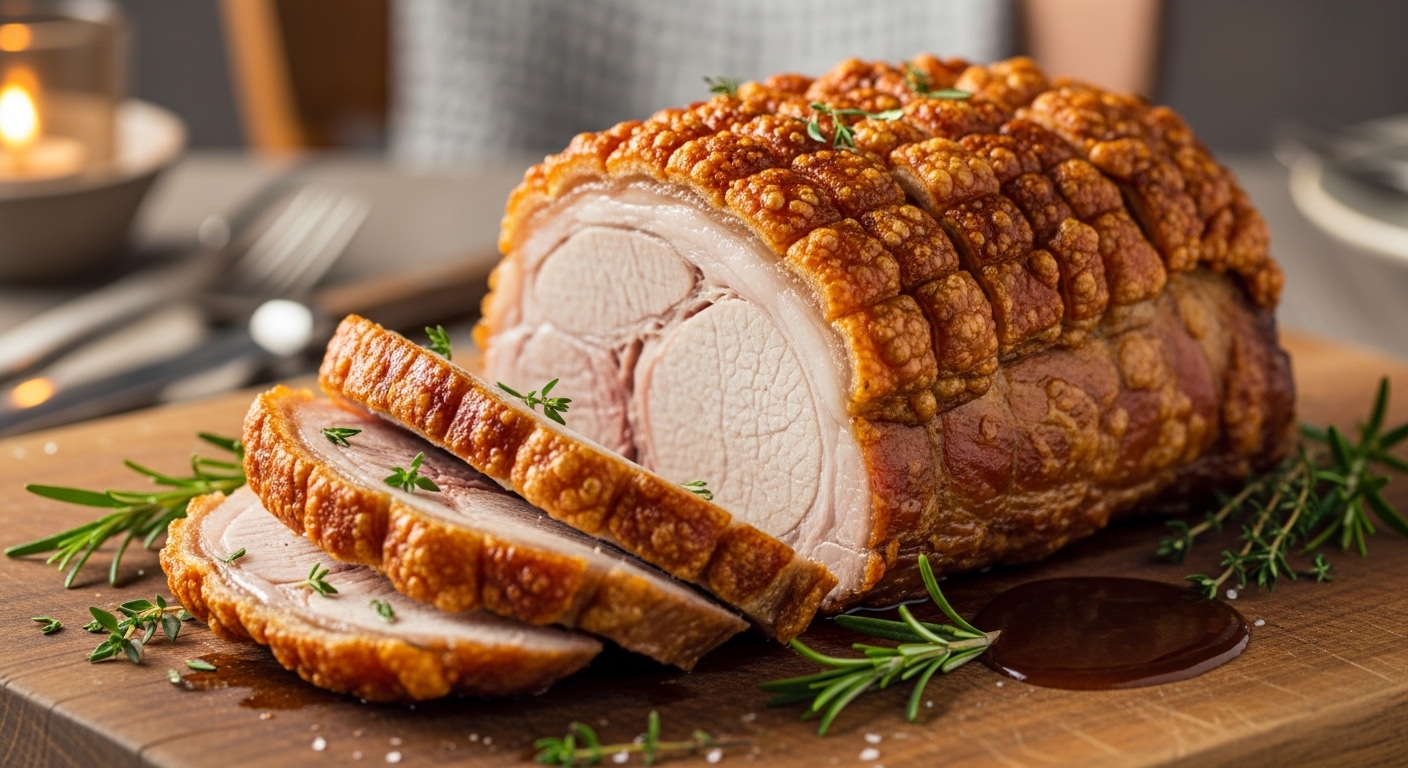
If you’ve ever dreamed of sinking your teeth into a golden-brown, crackling-topped pork roast that’s crispy on the outside and melt-in-your-mouth tender inside, then Danish pork roast is your answer. This beloved Scandinavian centerpiece dish—known locally as flæskesteg—is a holiday staple in Denmark, but its irresistible flavor and simple preparation have won hearts far beyond Copenhagen. With its perfectly seasoned skin transformed into shatteringly crisp crackling and succulent meat infused with aromatic herbs, Danish pork roast delivers comfort and elegance in every bite.
What makes this dish so special isn’t just its bold texture contrast—it’s the harmony of tradition, technique, and humble ingredients. Whether served at Christmas dinner or a Sunday family gathering, flæskesteg embodies the Danish love for quality pork, slow roasting, and communal meals. And the best part? You don’t need to be a professional chef to nail it. With the right method, even home cooks can achieve that signature crackling that Danes proudly call “svær.”
Quick Recipe Summary
| Prep Time | 30 minutes |
| Cook Time | 2–2.5 hours |
| Total Time | 2.5–3 hours |
| Servings | 6–8 people |
| Cuisine | Danish / Scandinavian |
| Course | Main Course |
| Calories (approx.) | 480 per serving |
Ingredients for Authentic Danish Pork Roast
To make a traditional Danish pork roast with perfect crackling, you’ll need just a handful of high-quality ingredients. The secret lies in using a pork shoulder or loin roast with a thick, untrimmed layer of fat and skin—this is non-negotiable for achieving that iconic crispy crust.
- 1 whole pork shoulder or pork loin roast with skin on (4–5 lbs / 1.8–2.3 kg)
- 2 tablespoons coarse sea salt (or kosher salt)
- 1 tablespoon black peppercorns, lightly crushed
- 6–8 whole cloves
- 3–4 bay leaves
- 1 large onion, quartered
- 2–3 sprigs of fresh thyme
- 1 cup water or pork stock (for roasting pan)
Note: Always choose a cut labeled “with rind” or “skin-on”—this is essential for crackling. Avoid pre-scored or pre-salted roasts unless specified by your butcher.
Step-by-Step Cooking Instructions
1. Prepare the Pork Roast
Start by patting the pork roast completely dry with paper towels—moisture is the enemy of crackling. Using a sharp knife, score the skin in parallel lines about 1 cm apart, cutting through the skin and fat but not into the meat. This allows the fat to render and the skin to puff up.
2. Season Generously
Rub the entire roast with coarse salt, making sure to work it into the scored cuts. Sprinkle crushed peppercorns evenly over the skin and fat. Insert whole cloves and bay leaves into the deeper cuts—this infuses the meat with subtle warmth and aroma during roasting.
3. Let It Rest (Optional but Recommended)
For best results, place the seasoned roast on a wire rack in the fridge, uncovered, for at least 4 hours—or ideally overnight. This dries out the skin further, ensuring maximum crispiness.
4. Preheat and Roast
Preheat your oven to 425°F (220°C). Place the onion quarters and thyme sprigs in a roasting pan, then set the pork on top, skin-side up. Pour water or stock into the bottom of the pan—this prevents burning and adds moisture.
Roast at high heat for 20 minutes to jumpstart crackling formation. Then, reduce the temperature to 325°F (160°C) and continue roasting for about 20 minutes per pound (450g). For a 5-pound roast, this means roughly 1 hour 40 minutes after the initial blast.
5. Check for Doneness and Crispness
The internal temperature should reach 145°F (63°C) for safe consumption, but many Danes prefer it closer to 160°F (71°C) for optimal tenderness. The real test? The crackling should be golden, bubbly, and sound hollow when tapped.
6. Rest Before Slicing
Remove the roast from the oven and let it rest for 15–20 minutes. This allows juices to redistribute, keeping the meat moist. Slice against the grain into thick medallions, ensuring each piece has a generous portion of crackling.
Chef Tips for Perfect Danish Pork Roast
- Dry is key: Never skip the fridge-drying step—it’s the #1 factor in achieving crackling.
- Score carefully: Cut only through the skin and fat, not the meat. Too deep = dry pork.
- Use a meat thermometer: Avoid overcooking by monitoring internal temp.
- Baste with pan juices: Halfway through roasting, spoon rendered fat over the meat for extra flavor.
- Crackling rescue: If the skin isn’t crispy enough, turn the oven back to 450°F (230°C) for 5–10 minutes at the end.
Common Mistakes to Avoid
- Buying skinless pork: Without the rind, you can’t make authentic crackling.
- Skipping the salt rub: Salt draws out moisture and seasons the skin from within.
- Opening the oven too often: This drops temperature and prevents even crisping.
- Overcrowding the pan: Use a rack so air circulates around the roast.
- Slicing too soon: Resting is crucial—cutting early leads to dry meat.
Ingredient Substitutions & Variations
While traditional flæskesteg relies on simplicity, you can adapt it to suit dietary needs or preferences:
- Herb swap: Replace thyme with rosemary or sage for a different aromatic profile.
- Gluten-free: This recipe is naturally gluten-free—just ensure your broth is certified.
- Low-sodium option: Use half the salt and add smoked paprika for depth.
- Indian-inspired twist: Rub with garam masala, turmeric, and ginger before roasting for a fusion flavor (serve with mango chutney!).
- Vegan alternative: While not pork, try a jackfruit or seitan roast with similar scoring and spice blend for a plant-based homage.
Serving Suggestions
Danish pork roast shines when paired with classic accompaniments that balance its richness:
- Red cabbage (rødkål): Braised with apples, vinegar, and cloves.
- Caramelized potatoes (brunede kartofler): Small boiled potatoes glazed in butter and sugar.
- Boiled potatoes: Simple, buttery, and essential.
- Apple compote or lingonberry jam: Adds sweet-tart contrast to the savory meat.
- Gravy: Made from pan drippings, flour, and stock—rich and deeply flavorful.
Serve family-style on a large platter, with crackling prominently displayed. A crisp Danish lager or dry cider makes an excellent beverage pairing.
Storage & Reheating Instructions
Store leftover Danish pork roast in an airtight container in the refrigerator for up to 4 days. For longer storage, freeze sliced meat (without crackling, which loses texture) for up to 2 months.
To reheat: Place slices in a covered dish with a splash of broth or water. Warm in a 300°F (150°C) oven for 15–20 minutes. For crackling, briefly broil for 2–3 minutes until crisp again.
Nutrition Facts (Approximate per Serving)
- Calories: 480
- Protein: 42g
- Fat: 32g (Saturated: 12g)
- Carbohydrates: 2g
- Sodium: 850mg
- Cholesterol: 135mg
Note: Values based on a 6-oz (170g) serving with skin. Adjust based on portion size and side dishes.
Frequently Asked Questions (FAQs)
Can I make Danish pork roast without scoring the skin?
No—scoring is essential. It allows fat to render evenly and creates the surface area needed for crackling to form. Skip it, and you’ll end up with chewy skin, not crispy goodness.
What’s the difference between flæskesteg and other pork roasts?
Flæskesteg specifically refers to a Danish-style roast with emphasis on the crispy crackling (svær), achieved through dry-brining, high-heat starts, and careful scoring. Other roasts may focus more on marinades or slow-cooking without the crackling element.
Can I use a boneless pork loin for this recipe?
Technically yes, but traditional flæskesteg uses a bone-in cut with ample fat and skin. Boneless loins often have less fat, increasing the risk of dryness. If using boneless, baste frequently and monitor temperature closely.
Why is my crackling not crispy?
Common culprits include insufficient drying (skip the fridge step!), scoring too shallow, or oven temperature dropping due to frequent opening. Ensure skin is bone-dry before roasting and maintain consistent heat.
Is Danish pork roast healthy?
In moderation, yes. It’s high in protein and rich in B vitamins, but also contains saturated fat due to the skin and fat cap. Balance it with fiber-rich sides like red cabbage and limit portion sizes for a healthier meal.
Key Takeaways
- Danish pork roast (flæskesteg) is defined by its ultra-crispy crackling and juicy, herb-infused meat.
- Success hinges on dry skin, proper scoring, and a two-stage roasting process.
- Traditional sides include red cabbage, caramelized potatoes, and lingonberry jam.
- Resting the meat and using a meat thermometer prevent dryness.
- With simple ingredients and patience, anyone can master this iconic dish at home.
Final Thoughts: Why You Should Try This Recipe Today
Danish pork roast isn’t just a meal—it’s an experience. From the sizzle of fat hitting the pan to the satisfying crunch of perfectly rendered crackling, every step builds anticipation for that first bite. It’s a dish that brings people together, honors tradition, and proves that sometimes, the simplest recipes yield the most extraordinary results.
Whether you’re hosting a festive dinner or craving a comforting Sunday roast, flæskesteg delivers unmatched flavor with minimal fuss. So grab that skin-on pork shoulder, score it like a pro, and let your oven work its magic. Once you taste that golden crackling giving way to tender, aromatic meat, you’ll understand why Danes guard this recipe like a national treasure—and why it deserves a permanent spot in your culinary repertoire.
Ready to impress your family with a dish that’s equal parts rustic and refined? Your Danish pork roast adventure starts now.
Leave a Reply