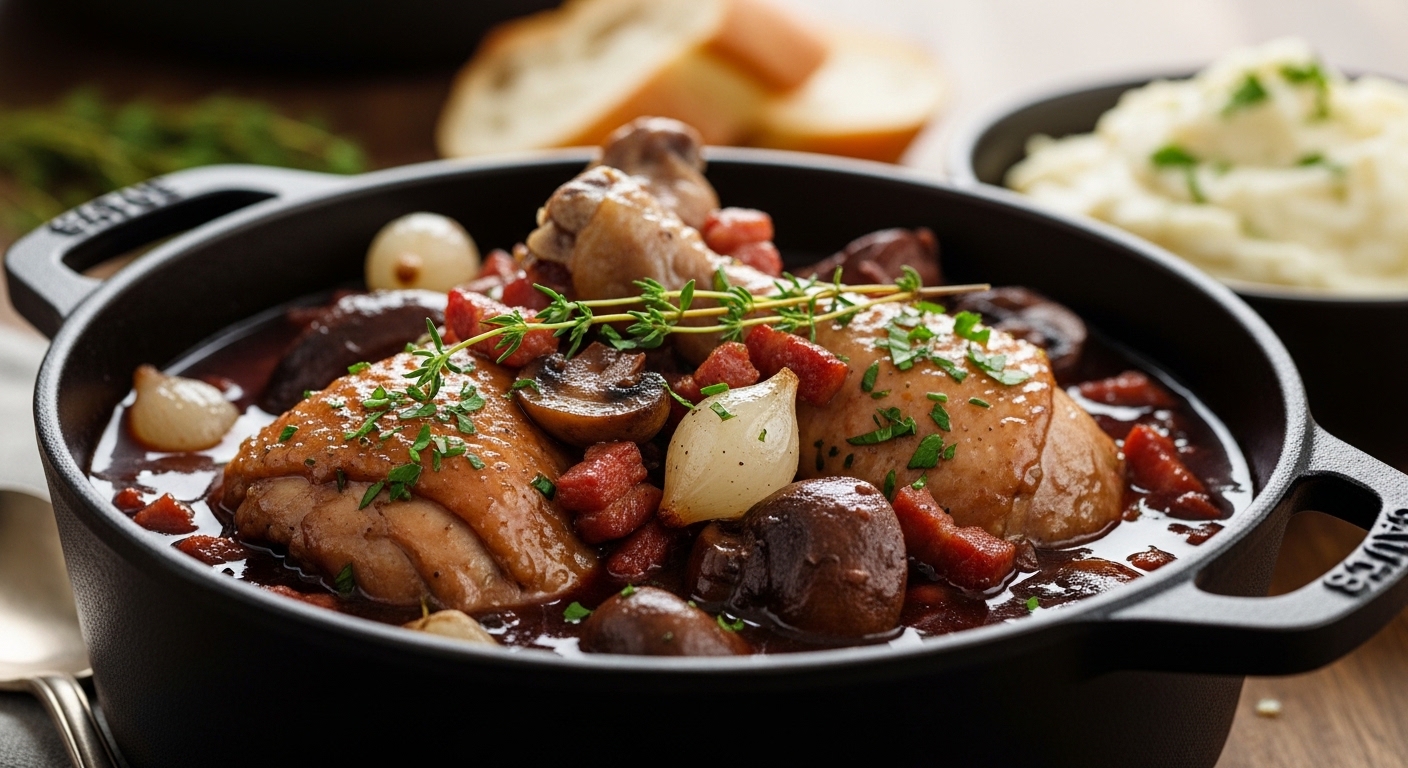
Imagine tender chicken braised slowly in rich red wine, infused with garlic, herbs, and mushrooms—this is Coq au Vin, France’s most iconic rustic dish. Born in the countryside of Burgundy, this classic French recipe transforms humble ingredients into a deeply flavorful, soul-warming meal that’s as elegant as it is comforting. Whether you’re cooking for a special dinner or craving a hearty weeknight dish, Coq au Vin delivers restaurant-quality results right in your kitchen. Its velvety sauce, aromatic depth, and melt-in-your-mouth texture make it a favorite among home cooks and professional chefs alike.
What Is Coq au Vin?
Coq au Vin literally means “rooster in wine” in French, and it’s a traditional braised chicken dish that has been cherished for centuries. Originally created to tenderize tough old roosters using slow cooking in wine, the dish has evolved into a refined yet approachable recipe using chicken—typically bone-in, skin-on thighs and drumsticks for maximum flavor and juiciness.
The magic of Coq au Vin lies in its slow braise. The chicken simmers gently in a mixture of red wine (traditionally Burgundy), chicken stock, onions, carrots, garlic, and herbs like thyme and bay leaves. Over time, the wine reduces into a luxurious, slightly tangy sauce that clings to every bite. Mushrooms and pearl onions are often added toward the end, giving the dish texture and balance.
Quick Recipe Summary
| Prep Time | 20 minutes |
| Cook Time | 1 hour 15 minutes |
| Total Time | 1 hour 35 minutes |
| Servings | 4 |
| Cuisine | French |
| Course | Main Course |
| Calories (approx.) | 480 per serving |
Ingredients for Coq au Vin
This recipe serves 4 and uses simple, high-quality ingredients. For best results, choose a dry red wine you’d enjoy drinking—Burgundy, Pinot Noir, or Cabernet Sauvignon work beautifully.
- 2 lbs (about 1 kg) bone-in, skin-on chicken thighs and drumsticks (6–8 pieces)
- 6 slices thick-cut bacon, chopped
- 2 tbsp olive oil (if needed)
- 1 large yellow onion, finely chopped
- 2 medium carrots, peeled and sliced into ½-inch rounds
- 3 garlic cloves, minced
- 2 tbsp tomato paste
- 3 cups (720 ml) dry red wine (preferably Burgundy or Pinot Noir)
- 1½ cups (360 ml) chicken stock (low-sodium preferred)
- 2 tbsp all-purpose flour
- 2 sprigs fresh thyme
- 2 bay leaves
- 8 oz (225 g) cremini or button mushrooms, sliced
- 12–15 pearl onions, peeled (fresh or frozen)
- 2 tbsp unsalted butter
- 2 tbsp fresh parsley, chopped (for garnish)
- Salt and freshly ground black pepper, to taste
Step-by-Step Cooking Instructions
1. Prepare the Chicken and Bacon
Pat the chicken pieces dry with paper towels and season generously with salt and pepper. In a large Dutch oven or heavy-bottomed pot, cook the chopped bacon over medium heat until crispy, about 6–8 minutes. Remove the bacon with a slotted spoon and set aside, leaving the fat in the pot.
2. Sear the Chicken
Increase heat to medium-high. Working in batches to avoid overcrowding, sear the chicken skin-side down until golden brown, about 5–6 minutes per side. Transfer seared chicken to a plate and set aside. If the pan looks dry, add a tablespoon of olive oil between batches.
3. Sauté the Aromatics
In the same pot with the bacon fat, add the chopped onion and carrots. Sauté for 5–6 minutes until softened. Add the minced garlic and cook for another minute until fragrant. Stir in the tomato paste and cook for 1–2 minutes to deepen the flavor.
4. Deglaze and Build the Braise
Pour in the red wine, scraping the bottom of the pot to release any browned bits (this adds incredible depth). Bring to a gentle simmer and let it reduce by about one-third, roughly 8–10 minutes. This concentrates the wine’s flavor and removes any harsh alcohol taste.
5. Thicken the Sauce
In a small bowl, whisk the flour with 2–3 tablespoons of the hot wine liquid to make a smooth paste. Stir this slurry back into the pot. This will help thicken the sauce as it cooks.
6. Add Liquids and Herbs
Pour in the chicken stock, then return the seared chicken and any accumulated juices to the pot. Add the thyme sprigs, bay leaves, and reserved crispy bacon. Bring to a gentle simmer, then reduce heat to low. Cover and braise for 40 minutes, turning the chicken once halfway through.
7. Cook the Vegetables
In a separate skillet, melt 1 tablespoon of butter over medium heat. Add the pearl onions and mushrooms. Sauté for 8–10 minutes until golden and tender. Season with a pinch of salt and pepper. Set aside.
8. Finish the Dish
After the chicken has braised, remove it from the pot and set aside. Stir the sautéed mushrooms and onions into the sauce. Simmer uncovered for 10–15 minutes to reduce and thicken the sauce to your liking. Stir in the remaining 1 tablespoon of butter for a glossy finish.
9. Serve
Return the chicken to the pot to warm through. Garnish with fresh parsley and serve immediately.
Chef Tips for Perfect Coq au Vin
- Use a good wine: Don’t cook with wine you wouldn’t drink. A fruity Pinot Noir or earthy Burgundy enhances the dish without overpowering it.
- Don’t skip the sear: Browning the chicken builds a deep, caramelized flavor base. Pat the chicken dry first for a better crust.
- Flour slurry trick: Mixing flour with liquid before adding prevents lumps and ensures a smooth sauce.
- Low and slow: Keep the heat low during braising. Boiling can make the chicken tough.
- Rest before serving: Let the dish rest 5–10 minutes off the heat. This allows flavors to meld and the sauce to thicken slightly.
Common Mistakes to Avoid
- Overcooking the chicken: Even with bone-in pieces, chicken can dry out if braised too long. Stick to the 40-minute guideline.
- Using sweet wine: Avoid cooking wines or sweet varieties. They’ll make the dish cloying and unbalanced.
- Skipping the flour: The flour helps thicken the sauce naturally. Without it, the liquid may remain too thin.
- Adding vegetables too early: Mushrooms and pearl onions should be sautéed separately and added near the end to retain texture.
Ingredient Substitutions & Variations
Want to adapt this recipe? Here are some smart swaps:
- Wine alternative: No wine? Use 2 cups chicken stock + 1 cup grape juice + 1 tbsp red wine vinegar for a similar tang.
- Vegetarian Coq au Vin: Replace chicken with hearty mushrooms, eggplant, and chickpeas. Braise in the same wine-herb mixture.
- White Coq au Vin: Swap red wine for dry white wine (like Chardonnay) and use chicken breast for a lighter version.
- Gluten-free: Use cornstarch instead of flour. Mix 1 tbsp cornstarch with 2 tbsp cold water and stir in during step 5.
- Indian twist: Add 1 tsp garam masala and a pinch of turmeric during the sauté. Serve with basmati rice instead of potatoes.
Serving Suggestions
Coq au Vin is rich and satisfying, so pair it with simple, absorbent sides:
- Buttery mashed potatoes or creamy polenta
- Crusty French baguette for dipping
- Steamed green beans or glazed carrots
- A crisp green salad with vinaigrette
For a complete French experience, serve with a glass of the same red wine used in the recipe.
Storage & Reheating Instructions
This dish tastes even better the next day! Store leftovers in an airtight container in the refrigerator for up to 4 days. The flavors deepen overnight.
To reheat, gently warm on the stovetop over low heat, adding a splash of chicken stock or water if the sauce has thickened too much. Avoid high heat to prevent the chicken from drying out.
Coq au Vin also freezes well for up to 3 months. Thaw overnight in the fridge before reheating.
Nutrition Facts (Approximate per Serving)
- Calories: 480
- Total Fat: 24g
- Saturated Fat: 8g
- Cholesterol: 165mg
- Sodium: 620mg (varies with broth and bacon)
- Total Carbohydrates: 18g
- Dietary Fiber: 3g
- Sugars: 6g
- Protein: 38g
Key Takeaways
- Coq au Vin is a classic French braised chicken dish cooked in red wine, herbs, and vegetables.
- It requires simple ingredients but delivers complex, restaurant-quality flavor.
- Searing the chicken and deglazing the pan are crucial for depth of flavor.
- The dish improves with time—perfect for meal prep or make-ahead dinners.
- Customize with wine swaps, vegetarian options, or global twists.
FAQ About Coq au Vin
Can I make Coq au Vin without wine?
Yes! Use a mix of chicken stock, grape juice, and red wine vinegar (2:1:0.5 ratio) to mimic the acidity and depth of wine. The flavor will be slightly different but still delicious.
What’s the best cut of chicken for Coq au Vin?
Bone-in, skin-on thighs and drumsticks are ideal. They stay juicy during long cooking and add richness to the sauce. Avoid boneless cuts, which can dry out.
Can I use a slow cooker?
Absolutely. After searing the chicken and sautéing aromatics, transfer everything to a slow cooker. Cook on low for 6–7 hours or high for 3–4 hours. Add mushrooms and onions in the last hour.
Why is my sauce too thin?
This usually happens if the wine wasn’t reduced enough or the flour wasn’t properly incorporated. Simmer uncovered to thicken, or stir in a cornstarch slurry (1 tsp cornstarch + 1 tbsp water).
Is Coq au Vin gluten-free?
The traditional recipe uses flour, but you can make it gluten-free by substituting cornstarch or omitting the thickener entirely and reducing the sauce longer.
Conclusion
Coq au Vin is more than just a recipe—it’s a celebration of French culinary tradition, patience, and flavor. With its tender chicken, velvety wine sauce, and aromatic herbs, it’s a dish that turns any dinner into a special occasion. Whether you’re cooking for guests or treating yourself, this classic is worth mastering. So grab a bottle of red, fire up the stove, and discover why Coq au Vin has stood the test of time. Bon appétit!