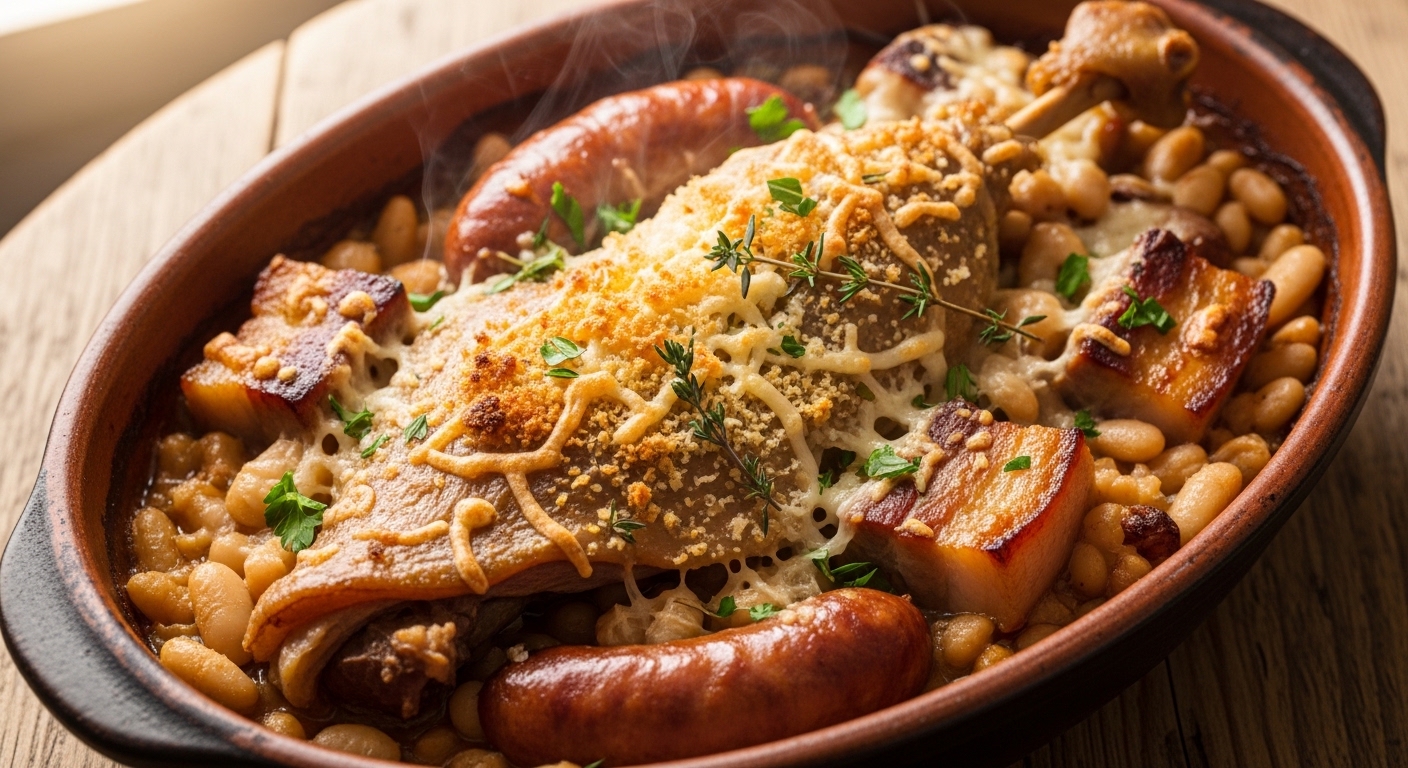
Imagine a dish so rich, so deeply savory, and so satisfying that one spoonful feels like a warm embrace on a cold winter night. That’s cassoulet—France’s legendary slow-cooked bean stew that’s been warming hearts (and stomachs) for centuries. Originating from the Languedoc region in southern France, cassoulet is more than just a meal; it’s a culinary tradition built on humble ingredients transformed into something extraordinary through patience and care.
At its core, cassoulet combines white beans—typically haricots tarbais or Great Northern beans—with layers of meat like duck confit, pork sausage, and sometimes lamb or mutton. Slow-simmered with aromatic herbs, tomatoes, and stock, it develops a thick, velvety texture and a flavor profile that’s earthy, smoky, and deeply comforting. Whether you’re a seasoned cook or a curious beginner, mastering this rustic French classic is a rewarding journey into the soul of Provençal cuisine.
Quick Recipe Summary
| Prep Time | 30 minutes |
| Cook Time | 3–4 hours (mostly hands-off) |
| Total Time | 4–5 hours |
| Servings | 6–8 |
| Cuisine | French (Languedoc) |
| Course | Main Course |
| Calories (approx.) | 520 per serving |
What Makes Cassoulet So Special?
Cassoulet isn’t just a bean stew—it’s a celebration of slow food, regional ingredients, and French culinary heritage. Unlike quick weeknight meals, cassoulet demands time, but the result is a deeply layered dish where every bite tells a story. The beans absorb the rich flavors of rendered duck fat, garlic, and herbs, while the meat becomes impossibly tender after hours of gentle cooking.
Traditionally, cassoulet is baked in a cassole—a round, earthenware pot with sloping sides that helps form a golden, crusty top. This crust is broken and stirred back in multiple times during baking, creating a signature texture that’s both creamy and slightly crispy. It’s this ritual that elevates cassoulet from simple comfort food to a dish worthy of special occasions.
Complete Ingredients List
For the best authentic cassoulet, use high-quality, traditional ingredients. Here’s what you’ll need:
- 1 lb (450g) dried white beans (haricots tarbais, Great Northern, or cannellini)
- 1 whole duck confit (about 12–16 oz / 340–450g), skin on
- 1 lb (450g) pork shoulder or belly, cut into chunks
- 8 oz (225g) Toulouse sausage or garlic pork sausage, sliced
- 1 large onion, finely chopped
- 4 cloves garlic, minced
- 2 medium carrots, diced
- 2 celery stalks, diced
- 1 can (14 oz / 400g) diced tomatoes
- 4 cups (1L) chicken or duck stock
- 1 cup (240ml) dry white wine (optional but recommended)
- 2 tbsp tomato paste
- 2 sprigs fresh thyme
- 1 bay leaf
- 1 tsp fresh rosemary, chopped
- Salt and freshly ground black pepper to taste
- 2 tbsp duck fat or olive oil
- 1 cup (100g) fresh breadcrumbs (for topping)
Step-by-Step Cooking Instructions
Step 1: Soak the Beans
Place the dried beans in a large bowl and cover with cold water by at least 3 inches. Soak overnight (8–12 hours). Drain and rinse before using. This ensures even cooking and a creamy texture.
Step 2: Brown the Meats
In a large Dutch oven or heavy-bottomed pot, heat duck fat over medium heat. Add the pork chunks and brown on all sides (about 5–6 minutes). Remove and set aside. In the same pot, brown the sausage slices until golden. Remove and set aside with the pork.
Step 3: Sauté the Aromatics
Add the onion, garlic, carrots, and celery to the pot. Sauté for 6–8 minutes until softened. Stir in the tomato paste and cook for 1 minute to deepen the flavor.
Step 4: Simmer the Base
Add the soaked beans, diced tomatoes, white wine (if using), stock, thyme, bay leaf, and rosemary. Return the browned pork and sausage to the pot. Bring to a gentle boil, then reduce heat to low. Cover and simmer for 1.5–2 hours, stirring occasionally, until the beans are tender but not mushy.
Step 5: Add the Duck Confit
Gently place the duck confit (meat and skin) into the pot. Continue simmering uncovered for another 30–45 minutes to allow the flavors to meld and the liquid to reduce slightly.
Step 6: Bake with a Crust
Preheat your oven to 325°F (160°C). Transfer the cassoulet to a cassole or oven-safe baking dish. Sprinkle the top with breadcrumbs. Bake for 1 hour. Every 15–20 minutes, break the forming crust with a spoon and stir it back in. This creates the signature layered texture.
Step 7: Rest and Serve
Let the cassoulet rest for 10–15 minutes before serving. The flavors deepen as it cools slightly, and the texture becomes even creamier.
Chef Tips for the Best Cassoulet
- Use duck confit: Authentic cassoulet relies on duck confit for its rich, unctuous flavor. If unavailable, substitute with roasted duck legs or high-quality duck sausage.
- Don’t rush the soak: Skipping the overnight soak can lead to unevenly cooked beans. If short on time, use the quick-soak method: boil beans for 2 minutes, then let sit for 1 hour.
- Layer the meats: For depth, use a combination of pork, sausage, and duck. Some versions include lamb—feel free to experiment.
- Crust is key: The golden crust that forms during baking is essential. Don’t skip the breadcrumb topping or the stirring process.
- Cook low and slow: Cassoulet improves with time. A long, gentle simmer allows flavors to develop fully.
Common Mistakes to Avoid
- Using canned beans: While convenient, canned beans lack the texture and absorbency needed for authentic cassoulet. Stick to dried beans.
- Overcooking the beans: Simmer until tender but still intact. Mushy beans ruin the dish’s texture.
- Skipping the crust: The crust adds complexity. Don’t skip the breadcrumbs or the stirring step.
- Using low-quality stock: Homemade or high-quality store-bought stock makes a big difference in flavor.
- Not salting properly: Season in layers—during browning, simmering, and before baking.
Ingredient Substitutions & Variations
While traditional cassoulet is meat-heavy, there are ways to adapt it:
- Vegetarian Cassoulet: Replace meats with smoked tofu, mushrooms, and lentils. Use vegetable stock and add a splash of liquid smoke for depth.
- Healthier Version: Use leaner cuts of pork, reduce duck fat, and add extra vegetables like leeks or zucchini.
- Indian-Inspired Twist: Add garam masala, turmeric, and ginger for a spiced variation. Serve with naan instead of crusty bread.
- Quick Cassoulet: Use pre-cooked beans and pre-roasted meats. Reduce simmer time to 1 hour.
Serving Suggestions
Cassoulet is a complete meal, but it pairs beautifully with simple sides:
- A crisp green salad with vinaigrette
- Crusty French bread for soaking up the sauce
- A glass of dry red wine like Côtes du Rhône or Syrah
- Roasted root vegetables on the side
Storage & Reheating Instructions
Cassoulet actually tastes better the next day—flavors deepen overnight.
- Refrigerator: Store in an airtight container for up to 4 days.
- Freezer: Freeze for up to 3 months. Thaw overnight in the fridge before reheating.
- Reheating: Warm gently on the stovetop over low heat, adding a splash of stock if too thick. Alternatively, reheat in a 350°F (175°C) oven covered with foil.
Nutrition Facts (Approximate per Serving)
- Calories: 520
- Total Fat: 28g
- Saturated Fat: 9g
- Cholesterol: 65mg
- Sodium: 890mg
- Total Carbohydrates: 42g
- Dietary Fiber: 12g
- Sugars: 6g
- Protein: 28g
Key Takeaways
- Cassoulet is a slow-cooked French bean stew with duck, pork, and sausage.
- Authentic versions use dried white beans, duck confit, and a breadcrumb crust.
- The dish improves with time—make it a day ahead for best results.
- Perfect for cold weather, special dinners, or impressing guests.
- High in protein and fiber, but rich in fat—enjoy in moderation.
FAQs About Cassoulet
What beans are best for cassoulet?
Traditional cassoulet uses haricots tarbais, but Great Northern or cannellini beans work well as substitutes. Avoid kidney beans—they break down too easily.
Can I make cassoulet without duck?
Yes. Substitute duck confit with roasted chicken thighs, duck sausage, or even smoked turkey for a lighter version.
How long does cassoulet last?
Stored properly, it keeps in the fridge for 4 days or in the freezer for 3 months. Reheat gently to preserve texture.
Is cassoulet gluten-free?
Not traditionally. The breadcrumbs contain gluten. Use gluten-free breadcrumbs or omit them for a GF version.
Can I make cassoulet in a slow cooker?
Yes! Brown meats and sauté aromatics first, then transfer everything to a slow cooker. Cook on low for 6–8 hours. Finish with breadcrumbs under the broiler.
Final Thoughts: Why You Should Make Cassoulet Tonight
Cassoulet is more than a recipe—it’s an experience. It teaches patience, rewards attention, and delivers a meal that’s both rustic and refined. Whether you’re cooking for family, hosting dinner, or simply craving something deeply satisfying, this French classic delivers every time.
Don’t be intimidated by the long cook time. Most of it is hands-off, and the aroma filling your kitchen will be worth every minute. Once you taste that first spoonful—creamy beans, tender meat, and that golden crust—you’ll understand why cassoulet has been a French favorite for generations.
So gather your ingredients, light a candle, and let the slow magic of cassoulet transform your evening. Bon appétit!
Leave a Reply