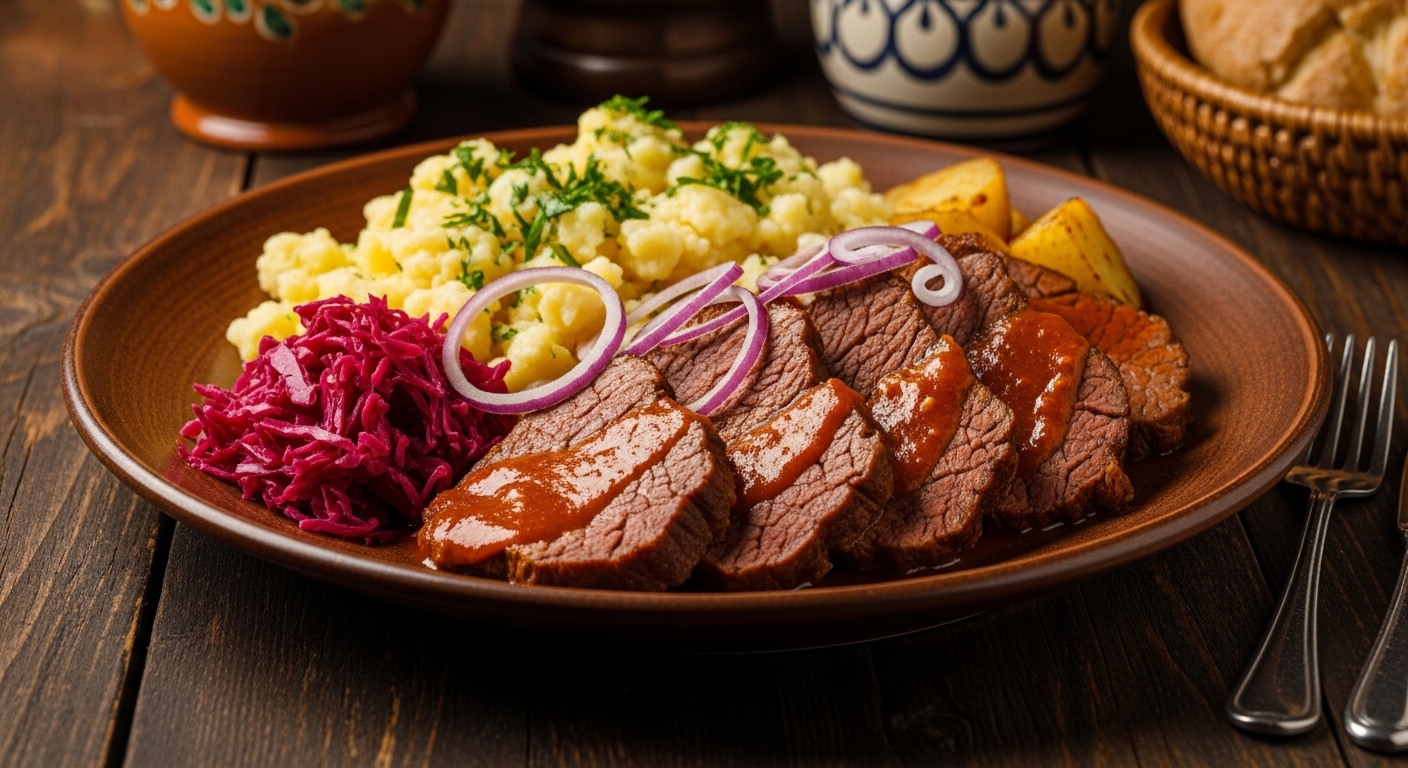
Budapest Beef Plate: A Hearty, Flavor-Packed Hungarian Classic
If you’re craving a rich, savory dish with deep cultural roots and bold flavors, the Budapest Beef Plate is exactly what you need. This traditional Hungarian stew—often called budai sertésleves or Budapest-style beef stew—is beloved across Central Europe for its tender meat, aromatic spices, and comforting, slow-cooked gravy. Originating in the heart of Hungary’s capital city, this recipe blends paprika, onions, carrots, and beef in a way that feels both rustic and refined. Whether you’re preparing it for a cozy family dinner or impressing guests at a gathering, the Budapest Beef Plate delivers warmth, depth, and authentic taste in every bite.
Why the Budapest Beef Plate Stands Out
The magic of the Budapest Beef Plate lies in its simplicity and balance. Unlike many stews that rely on heavy cream or complicated spice blends, this version uses smoked paprika (known as paprika fűszere), bay leaves, garlic, and a touch of vinegar to create a smoky, slightly sweet, and tangy profile. The beef simmers slowly until it falls apart, absorbing all the seasonings while the vegetables soften into a luscious sauce. It’s not just a meal—it’s an experience rooted in Hungarian culinary tradition.
- Authentic Hungarian flavors with a signature paprika kick
- Slow-cooked perfection for tender, juicy beef
- Comfort food at its finest—ideal for cold evenings
- Highly customizable with optional sides and variations
Quick Recipe Summary Table
| Prep Time | Cook Time | Total Time | Servings | Cuisine | Course | Calories (approx.) |
|---|---|---|---|---|---|---|
| 20 minutes | 2 hours 30 minutes | 2 hours 50 minutes | 6 | Hungarian | Main Course / Stew | 420 per serving |
Ingredients You’ll Need
Here’s everything you’ll need to make an authentic Budapest Beef Plate at home. All ingredients are essential for capturing the true flavor of this classic dish.
For the Stew:
- 2 lbs (900g) beef chuck, cut into 1.5-inch cubes
- 3 tbsp Hungarian sweet paprika (smoked paprika adds depth)
- 2 large onions, finely chopped
- 4 cloves garlic, minced
- 2 medium carrots, sliced into rounds
- 2 celery stalks, diced
- 4 cups beef broth (preferably homemade or low-sodium)
- 1 cup red wine (optional, but recommended for richness)
- 2 tbsp tomato paste
- 1 tbsp apple cider vinegar or white wine vinegar
- 2 bay leaves
- 1 tsp caraway seeds (a Hungarian staple)
- Salt and freshly ground black pepper, to taste
- 2 tbsp vegetable oil or lard (for authenticity)
For Serving (Optional):
- Fresh parsley, chopped
- Sour cream or creme fraiche
- Sliced pickles or gherkins
- Russet potatoes, boiled or baked
Step-by-Step Cooking Instructions
Follow these simple steps to create a rich, flavorful Budapest Beef Plate that’s sure to become a family favorite.
- Season and Sear the Beef: Pat the beef cubes dry and season generously with salt and pepper. Heat oil in a large Dutch oven or heavy pot over medium-high heat. Sear the beef in batches until browned on all sides—this builds flavor. Remove and set aside.
- Sauté the Aromatics: In the same pot, add onions and cook until soft and golden (about 5–7 minutes). Add garlic and cook for another minute. Stir in paprika and cook for 30 seconds—just enough to toast it without burning.
- Deglaze and Build the Base: Pour in the red wine (if using) and scrape up any browned bits from the bottom of the pot. Add tomato paste, stirring well. Then add broth, vinegar, bay leaves, and caraway seeds. Bring to a gentle simmer.
- Return Beef and Simmer: Return the seared beef to the pot, along with any juices. Cover and reduce heat to low. Let it simmer gently for 2 to 2.5 hours, stirring occasionally, until the beef is fork-tender.
- Add Vegetables: During the last 30–40 minutes of cooking, add carrots and celery. They should remain slightly firm—no mush!
- Final Adjustments: Taste and adjust seasoning. If the stew is too thin, let it reduce uncovered for 10–15 minutes. Remove bay leaves before serving.
- Serve Hot: Ladle into bowls, garnish with fresh parsley, a dollop of sour cream, and a few pickles if desired. Serve with boiled potatoes or crusty bread.
Chef Tips for Perfect Results
- Use high-quality paprika: Hungarian paprika comes in mild, sweet, and smoked varieties. For this dish, use a mix of sweet and smoked paprika for complexity.
- Don’t skip searing: Browning the beef creates fond (the tasty caramelized bits), which forms the base of your stew’s flavor.
- Low and slow is key: Keep the heat low to prevent boiling, which can toughen the meat. A gentle simmer ensures tender beef.
- Let it rest before serving: Allow the stew to sit for 10 minutes after cooking. This helps the flavors meld beautifully.
Common Mistakes to Avoid
- Using the wrong cut of beef: Avoid lean cuts like sirloin—chuck or brisket work best because they have marbling and fat, which keeps the meat tender during long cooking.
- Burning the paprika: Paprika burns easily. Toast it briefly in the pan with onions, but don’t let it darken beyond golden.
- Overcooking the vegetables: Add them late in the process so they retain texture.
- Skipping the acid: Vinegar or wine balances the richness and brightens the dish. Without it, the stew can feel heavy.
Ingredient Substitutions & Variations
Want to adapt the recipe? Here are some smart swaps and creative twists:
- Gluten-free: This recipe is naturally gluten-free.
- Lactose-free: Skip sour cream or use coconut yogurt.
- Vegan version: Replace beef with king oyster mushrooms or lentils; use vegetable broth. Add smoked paprika for depth.
- Indian twist: Add turmeric, cumin, and coriander for a curry-inspired Budapest Beef Plate.
- Healthier option: Use leaner beef and reduce oil. Add extra vegetables like parsnips or turnips.
- Spicier version: Add a pinch of cayenne or chili flakes alongside the paprika.
Serving Suggestions
The Budapest Beef Plate shines when served with complementary sides that echo its hearty nature:
- Boiled potatoes: A classic Hungarian pairing—simple, starchy, and perfect for soaking up the sauce.
- Crusty rye bread: Ideal for mopping up the gravy.
- Pickled vegetables: Gherkins, beets, or sauerkraut cut through the richness.
- Chilled salad: Serve with a fresh cucumber and tomato salad for contrast.
- On the side: A glass of red wine or lager beer complements the flavors perfectly.
Storage & Reheating Instructions
This stew tastes even better the next day as the flavors deepen. Here’s how to store and reheat it properly:
- Refrigerate: Store in an airtight container for up to 4 days.
- Freeze: Freeze for up to 3 months. Thaw overnight in the fridge before reheating.
- Reheat gently: Warm on the stove over low heat, adding a splash of broth if too thick. Never microwave straight from frozen—thaw first.
Nutrition Facts (Approximate Per Serving)
Each serving of Budapest Beef Plate provides a balanced mix of protein, fat, and carbohydrates—perfect for a satisfying meal.
- Calories: 420
- Protein: 38g
- Fat: 22g (mostly from beef and oil)
- Carbohydrates: 12g
- Fiber: 3g
- Sugar: 4g
- Sodium: 680mg (adjust with low-sodium broth)
FAQs About Budapest Beef Plate
1. Is Budapest Beef Plate spicy?
It has a mild to moderate heat, depending on the paprika used. Hungarian paprika varies from sweet to smoked and spicy. For a milder version, stick to sweet paprika. To reduce heat, omit smoked paprika and add a pinch of sugar to balance the acidity.
2. Can I make this in a slow cooker?
Yes! After searing the beef and sautéing the onions, transfer everything to a slow cooker. Cook on low for 7–8 hours or high for 4–5 hours. Add vegetables in the last 45 minutes.
3. What’s the difference between Budapest Beef Plate and goulash?
While both are Hungarian stews, goulash is typically thinner, with more broth and less meat, often served with noodles. The Budapest Beef Plate is thicker, meatier, and cooked longer, making it a heartier main course.
4. Can I use a different type of meat?
Traditional recipes call for beef chuck, but you can substitute with lamb, pork shoulder, or even venison. Just adjust cooking time—lamb may need less time.
5. Why do Hungarians eat this with sour cream?
Sour cream cools down the dish and adds richness, balancing the acidity from vinegar and tomatoes. It’s a classic pairing that enhances every flavor.
Key Takeaways
- The Budapest Beef Plate is a deeply flavorful Hungarian stew made with beef, paprika, onions, and slow-cooked to perfection.
- Key ingredients include Hungarian paprika, caraway seeds, tomato paste, and a splash of vinegar for balance.
- Serve with boiled potatoes, rye bread, and a dollop of sour cream for an authentic experience.
- The dish is highly adaptable—vegan, gluten-free, or spicier versions are possible with simple swaps.
- Best enjoyed warm, preferably the day after cooking, when flavors have melded.
Conclusion: Bring the Heart of Hungary to Your Table
The Budapest Beef Plate isn’t just a recipe—it’s a celebration of Hungarian comfort food. With its bold paprika, tender meat, and soul-warming broth, it’s a dish that connects you to centuries of culinary tradition. Whether you’re cooking for one or feeding a crowd, this stew delivers warmth, flavor, and satisfaction in every spoonful.
So grab your Dutch oven, fire up that paprika, and let the slow simmer begin. Trust us—once you taste the first bite of this rich, aromatic stew, you’ll understand why Hungarians call it one of their most cherished meals. Now go ahead—make your own Budapest Beef Plate. Your taste buds will thank you.