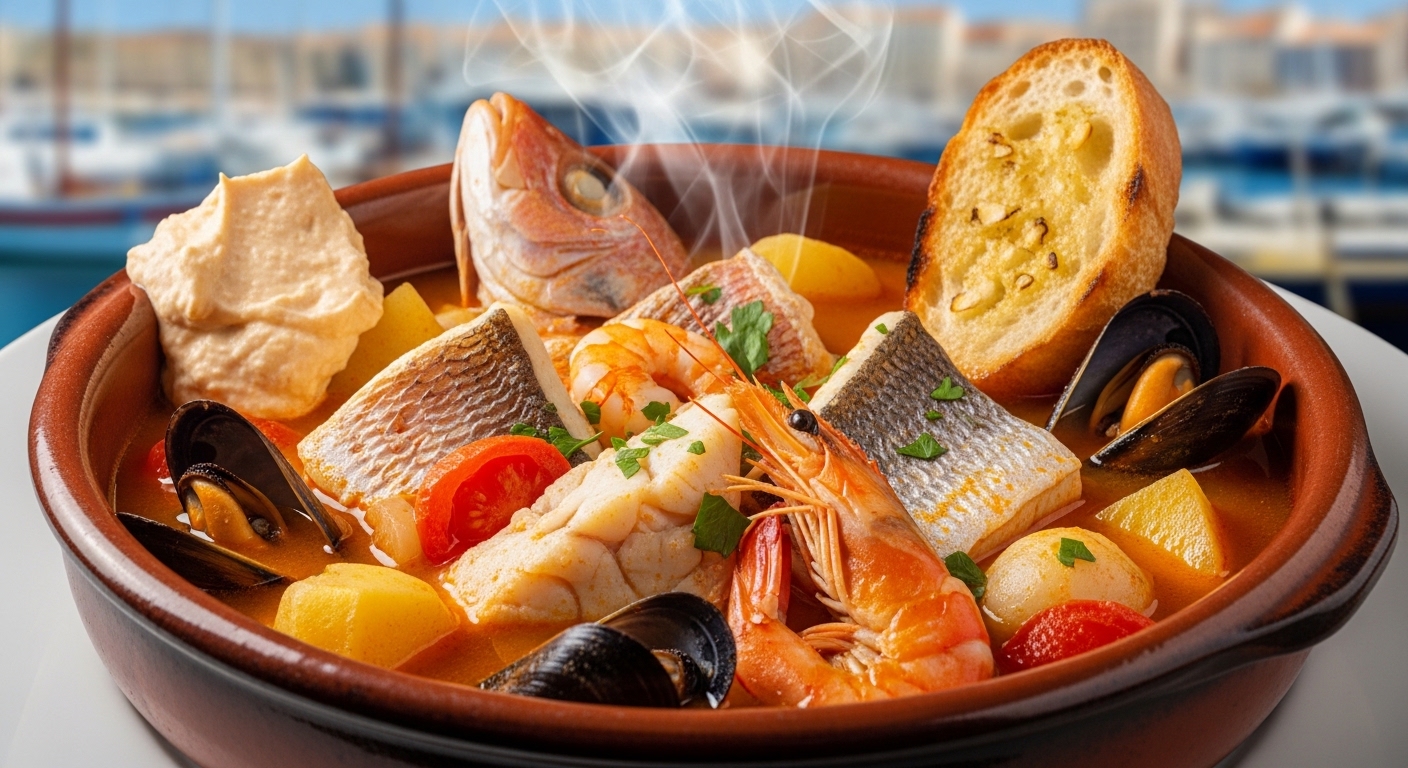
If you’ve ever dreamed of tasting the Mediterranean in one unforgettable dish, bouillabaisse is your answer. This iconic fish stew hails from the sun-drenched port city of Marseille, France, and isn’t just a meal—it’s a maritime tradition steeped in history, flavor, and local pride. Born from the humble catch of fishermen who couldn’t sell their less desirable fish, bouillabaisse has evolved into a celebrated culinary masterpiece that balances robust seafood, aromatic herbs, and a rich, saffron-kissed broth. Loved for its depth, complexity, and soul-warming richness, it’s more than soup—it’s a story in every spoonful.
What Is Bouillabaisse?
Bouillabaisse is a traditional Provençal fish stew originating from Marseille. Unlike generic seafood soups, authentic bouillabaisse uses at least four types of local rockfish (like scorpionfish, sea robin, and monkfish), along with shellfish such as mussels or crabs. The broth is infused with saffron, orange zest, garlic, tomatoes, and herbs like fennel and thyme, creating a golden-hued, fragrant base that’s both briny and herbal. Served traditionally with rouille—a garlicky, saffron-spiked mayonnaise—and crusty bread, it’s a dish that demands attention and respect.
Quick Recipe Summary
| Prep Time | 30 minutes |
| Cook Time | 45 minutes |
| Total Time | 1 hour 15 minutes |
| Servings | 4–6 |
| Cuisine | French (Provençal) |
| Course | Main Course |
| Calories (approx.) | 420 per serving |
Ingredients You’ll Need
For the most authentic bouillabaisse, use fresh, high-quality seafood and aromatic herbs. Here’s what you’ll need:
- 1.5 kg (3.3 lbs) mixed firm white fish (scorpionfish, monkfish, sea robin, or substitute with cod, halibut, or snapper)
- 500 g (1 lb) mussels, scrubbed and debearded
- 500 g (1 lb) clams, cleaned
- 300 g (10 oz) squid, cleaned and sliced
- 2 tbsp olive oil
- 1 large onion, finely chopped
- 2 leeks (white part only), sliced
- 3 garlic cloves, minced
- 1 fennel bulb, thinly sliced (reserve fronds for garnish)
- 2 ripe tomatoes, peeled and chopped (or 1 can crushed tomatoes)
- 1 strip of orange zest (no pith)
- 1 tsp saffron threads, soaked in 2 tbsp warm water
- 1 bay leaf
- 1 tsp dried thyme
- 1 tsp fennel seeds, lightly crushed
- 1.5 liters (6 cups) fish stock (preferably homemade)
- 200 ml (3/4 cup) dry white wine
- Salt and freshly ground black pepper to taste
- Crusty bread, for serving
For the Rouille (Traditional Garlic Mayonnaise)
- 2 garlic cloves
- 1 roasted red pepper (from a jar or fresh)
- 1 egg yolk
- 100 ml (1/3 cup) olive oil
- 1/2 tsp saffron (optional, for color)
- Pinch of cayenne pepper
- Salt to taste
Step-by-Step Cooking Instructions
1. Prepare the Seafood
Clean and cut the fish into large chunks. Scrub mussels and clams under cold water; discard any that are open and don’t close when tapped. Slice squid into rings and tentacles. Set all seafood aside.
2. Sauté the Aromatics
In a large, heavy-bottomed pot, heat olive oil over medium heat. Add onion, leeks, and fennel. Sauté for 8–10 minutes until soft and fragrant—don’t let them brown. Stir in garlic and cook for another minute.
3. Build the Broth Base
Add chopped tomatoes, orange zest, saffron (with its soaking water), bay leaf, thyme, and fennel seeds. Cook for 5 minutes, stirring occasionally, until tomatoes break down. Pour in white wine and let it simmer for 3 minutes to reduce slightly.
4. Add Stock and Simmer
Pour in the fish stock and bring to a gentle boil. Reduce heat to low and let the broth simmer uncovered for 20 minutes to develop deep flavor. Season with salt and pepper.
5. Cook the Fish and Shellfish
Add the firmest fish pieces first (like monkfish or scorpionfish) and simmer for 5 minutes. Then add softer fish, squid, mussels, and clams. Cover and cook for another 6–8 minutes, or until mussels and clams open (discard any that remain closed).
6. Make the Rouille
While the stew simmers, prepare the rouille. In a food processor, blend garlic, roasted red pepper, egg yolk, and saffron until smooth. With the motor running, slowly drizzle in olive oil until emulsified. Stir in cayenne and salt. Chill until ready to serve.
7. Serve with Style
Ladle the hot bouillabaisse into deep bowls, ensuring each serving gets a mix of fish and shellfish. Top with reserved fennel fronds. Serve immediately with slices of crusty bread spread with rouille.
Chef Tips for the Best Bouillabaisse
- Use rockfish when possible: Authentic bouillabaisse relies on bony, gelatin-rich fish that add body to the broth. If unavailable, a mix of cod, halibut, and snapper works well.
- Don’t rush the broth: Simmering the base for 20 minutes allows flavors to meld and deepen.
- Keep seafood fresh: Buy seafood the day you plan to cook. Freshness is key to avoiding a fishy taste.
- Toast the bread lightly: Warm, slightly crisp bread holds up better against the rich broth and absorbs the rouille beautifully.
- Serve in two courses (traditional style): In Marseille, the broth is sometimes served first with rouille and bread, followed by the fish. Try it for a true experience.
Common Mistakes to Avoid
- Overcooking the seafood: Fish becomes rubbery if boiled too long. Add delicate pieces last and monitor cooking time closely.
- Skipping the saffron: It’s not just for color—it adds a distinct floral note essential to bouillabaisse.
- Using low-quality stock: Homemade fish stock makes a huge difference. If using store-bought, choose a low-sodium, natural variety.
- Omitting the rouille: This garlicky, spicy condiment is non-negotiable in traditional bouillabaisse. Don’t skip it!
Ingredient Substitutions & Variations
Can’t find scorpionfish or sea robin? No problem. Here are smart swaps:
- Fish: Use a mix of cod, halibut, snapper, or even salmon (though not traditional).
- Shellfish: Swap mussels for shrimp or lobster tails if preferred.
- Vegan Bouillabaisse: Replace fish with king oyster mushrooms, artichoke hearts, and seaweed. Use vegetable stock and add kombu for umami. Serve with vegan rouille (made with aquafaba).
- Healthier Version: Reduce oil in rouille, use low-fat mayo, or skip it entirely. Serve with whole-grain bread.
- Indian-Style Twist: Add turmeric, ginger, and coconut milk for a creamy, spiced variation inspired by coastal Indian curries.
Serving Suggestions
Bouillabaisse shines as a centerpiece dish. Serve it in wide, shallow bowls to showcase the colorful seafood. Accompany with:
- Warm baguette slices, toasted and rubbed with garlic
- A dollop of rouille on each bread slice
- A crisp green salad with lemon vinaigrette
- A glass of Provençal rosé or dry white wine like Picpoul de Pinet
Storage & Reheating Instructions
Bouillabaisse tastes even better the next day as flavors deepen. Store leftovers in an airtight container in the refrigerator for up to 3 days.
- Reheating: Gently warm on the stovetop over low heat, stirring occasionally. Add a splash of fish stock if the broth thickens.
- Freezing: Not recommended for the seafood, as it becomes tough. However, the broth (without fish) can be frozen for up to 2 months. Reheat and add fresh seafood when ready to serve.
Nutrition Facts (Approximate per Serving)
- Calories: 420
- Protein: 38g
- Fat: 18g (Saturated: 3g)
- Carbohydrates: 18g
- Fiber: 3g
- Sugar: 6g
- Sodium: 850mg (adjust based on stock used)
Key Takeaways
- Bouillabaisse is a traditional French fish stew from Marseille, made with multiple types of fish, shellfish, and a saffron-infused broth.
- Authentic versions include rockfish and are served with rouille and crusty bread.
- The dish requires careful layering of ingredients to preserve texture and flavor.
- While traditional, it can be adapted for dietary preferences, including vegan and healthier versions.
- Best enjoyed fresh, but leftovers improve in flavor when reheated gently.
FAQ
Can I make bouillabaisse without shellfish?
Yes! While shellfish add brininess, you can omit them or replace with extra fish or squid. Just ensure the broth remains rich and flavorful.
Is bouillabaisse the same as cioppino?
No. While both are seafood stews, cioppino is Italian-American (from San Francisco) and typically uses tomato-based broth. Bouillabaisse is French, lighter in tomato, and emphasizes saffron and fennel.
Can I use frozen fish?
Yes, but thaw it completely in the refrigerator before cooking. Avoid refreezing. Fresh fish yields the best texture and flavor.
How do I know if my mussels are fresh?
Fresh mussels should be closed or close when tapped. Discard any that are open and don’t respond, or have cracked shells.
Can I make bouillabaisse ahead of time?
Absolutely. Prepare the broth and seafood separately. Reheat broth gently and add seafood just before serving to prevent overcooking.
Conclusion: Dive Into the Tradition
Bouillabaisse isn’t just a recipe—it’s a celebration of the sea, a tribute to Marseille’s fishing heritage, and a dish that brings people together. Whether you’re cooking for a special occasion or treating yourself to a taste of the Mediterranean, this stew delivers bold flavors, comforting warmth, and a touch of French elegance. Don’t be intimidated by its reputation—with the right ingredients and a little patience, you can master this classic. So grab your pot, gather your seafood, and let the aroma of saffron and fennel fill your kitchen. Your bouillabaisse journey starts now.
Leave a Reply