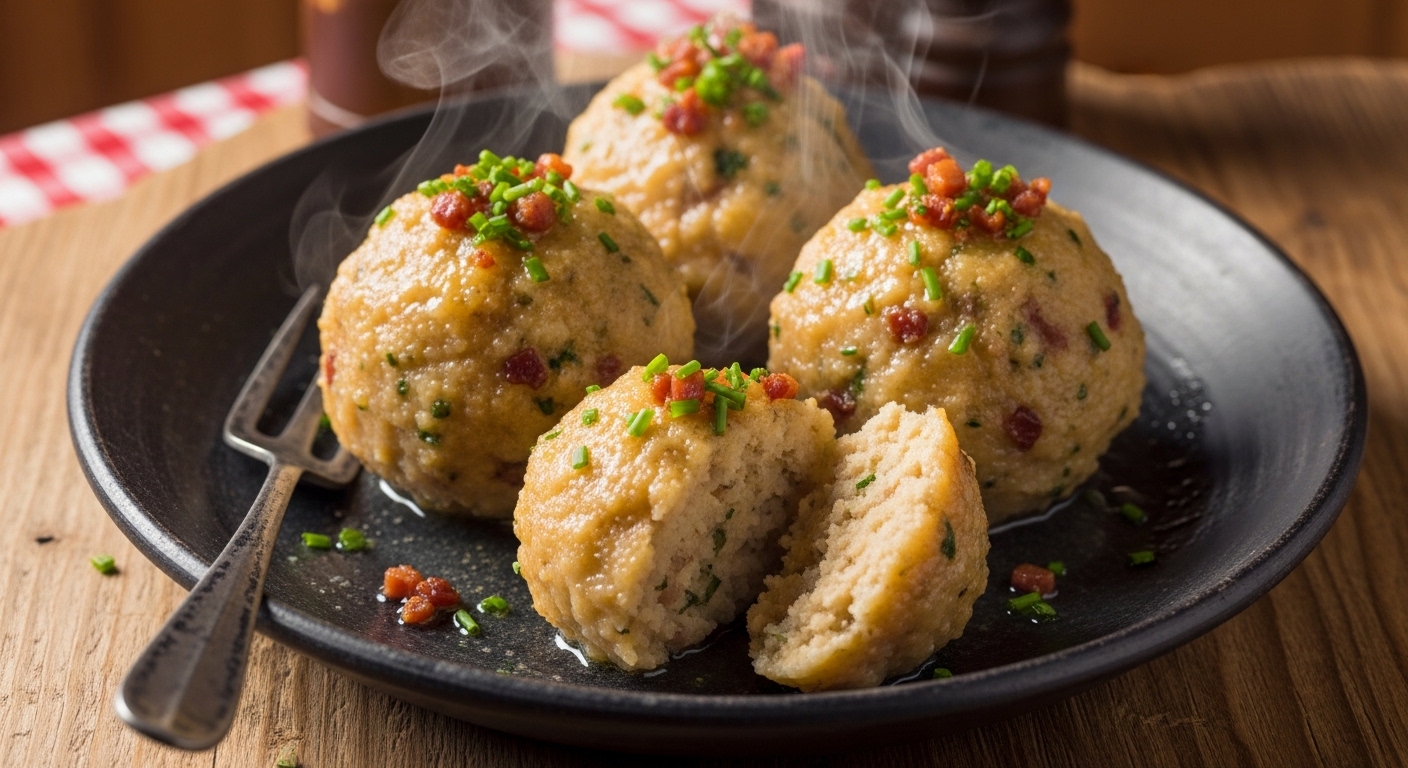
There’s something deeply comforting about a warm, savory dumpling nestled in rich gravy—especially when it carries the rustic charm of the Austrian Alps. Enter the Tyrolean dumpling plate, a traditional dish from Tyrol, Austria, where hearty mountain fare meets bold flavors. Whether you’re curling up after a snowy hike or seeking a soul-warming meal on a chilly evening, this dish delivers both warmth and authenticity in every bite.
Made with simple ingredients like bread, eggs, milk, and herbs, Tyrolean dumplings are soft, pillowy morsels that absorb the flavors of a slow-cooked pork and cabbage stew. The result? A one-pot wonder that’s more than just food—it’s a taste of alpine tradition.
Quick Recipe Summary Table
- Prep Time: 20 minutes
- Cook Time: 45 minutes
- Total Time: 1 hour 5 minutes
- Servings: 6
- Cuisine: Austrian, Tyrolean
- Course: Main Dish
- Calories (approx.): 480 per serving
What Makes Tyrolean Dumpling Plate Special?
The magic of the Tyrolean dumpling plate lies in its balance—rich meat, tangy cabbage, and earthy dumplings all harmonizing over a long, gentle simmer. Unlike many dumpling recipes that rely on heavy doughs or complex techniques, Tyrolean dumplings are light, airy, and deeply satisfying. They’re not just a side dish; they’re the star.
In Tyrol, meals are meant to nourish both body and spirit. This dish reflects that philosophy: humble ingredients transformed through patience and care. Traditionally served during family gatherings or winter festivals, it’s a symbol of comfort, community, and Alpine pride.
Ingredients You’ll Need
For the Dumplings:
- 4 cups stale rye bread or sourdough bread, torn into small pieces (about 1 inch)
- 2 large eggs
- 1 cup whole milk
- 1 small onion, finely chopped
- 1 tablespoon fresh parsley, chopped
- 1 teaspoon caraway seeds (optional but traditional)
- Salt and freshly ground black pepper, to taste
For the Stew:
- 2 tablespoons unsalted butter
- 1 pound pork shoulder or bacon, diced
- 1 medium onion, sliced
- 2 cloves garlic, minced
- 2 cups cabbage, finely shredded
- 4 cups low-sodium beef or chicken broth
- 1 bay leaf
- 1 teaspoon juniper berries (crushed)
- 1 tablespoon apple cider vinegar
- Salt and pepper, to taste
Step-by-Step Cooking Instructions
- Prepare the Dumpling Mixture: In a large bowl, combine the torn bread, eggs, milk, onion, parsley, caraway seeds, salt, and pepper. Stir gently until the mixture holds together but isn’t sticky. Let it rest for 10 minutes to absorb moisture.
- Shape the Dumplings: Wet your hands slightly and form the mixture into small oval or round dumplings (about 2–3 inches in diameter). Set aside on a floured surface.
- Cook the Pork and Onions: In a large Dutch oven or heavy pot, melt the butter over medium heat. Add the diced pork and cook until lightly browned. Stir in the sliced onion and garlic, cooking for another 5 minutes until softened.
- Add Cabbage and Seasonings: Toss in the shredded cabbage, bay leaf, crushed juniper berries, and apple cider vinegar. Cook for 5–7 minutes until the cabbage softens slightly.
- Simmer the Stew: Pour in the broth, bring to a gentle boil, then reduce heat to low. Cover and let simmer for 20 minutes.
- Drop in the Dumplings: Carefully add the dumplings to the stew. Cover again and simmer for 20–25 minutes, or until the dumplings are cooked through and the stew has thickened.
- Final Adjustments: Remove the bay leaf. Taste and adjust seasoning with salt and pepper. Serve hot, garnished with extra parsley if desired.
Chef Tips for Perfect Tyrolean Dumplings
- Use Stale Bread: Fresh bread absorbs too much liquid and becomes gummy. Stale bread is ideal—its dry texture helps create light, fluffy dumplings.
- Don’t Overmix: Handle the dumpling dough gently. Overworking develops gluten, making the dumplings dense.
- Simmer Gently: High heat causes dumplings to break apart. Keep the stew at a low simmer to preserve their shape.
- Test Doneness: Insert a toothpick into a dumpling. If it comes out clean, they’re ready.
Common Mistakes to Avoid
- Using Too Much Liquid: Adding more milk or broth than called for makes the dumplings soggy.
- Skipping the Resting Time: Allowing the bread mixture to sit helps rehydrate evenly without turning mushy.
- Rushing the Simmer: Patience is key. Rushing the cooking process results in undercooked dumplings or tough meat.
Substitutions & Variations
- Bread Swap: If rye isn’t available, use white sandwich bread or even leftover dinner rolls.
- Vegetarian Version: Replace pork with smoked tofu or mushrooms, and use vegetable broth.
- Gluten-Free Option: Use certified gluten-free bread and ensure all other ingredients are GF.
- Alpine Twist: Add sauerkraut instead of fresh cabbage for extra tang.
- Modern Fusion: Try adding potatoes or carrots to the stew for added depth.
Serving Suggestions
Serve the Tyrolean dumpling plate directly from the pot, spooning generous portions of stew over each dumpling. Pair with a crisp Sauvignon Blanc or a dark lager to complement the richness. For a festive touch, garnish with a sprinkle of chives or a dollop of crème fraîche.
This dish shines best as a centerpiece meal—ideal for Sunday dinners or special occasions. Leftovers reheat beautifully, often even improving in flavor the next day as the dumplings soak up more of the stew’s essence.
Storage & Reheating Instructions
- Refrigeration: Store leftovers in an airtight container for up to 4 days.
- Freezing: Cool completely, then freeze in portions for up to 3 months. Thaw overnight in the fridge before reheating.
- Reheating: Warm on the stovetop over low heat, adding a splash of broth or water if needed to revive moisture. Avoid microwaving, which can make dumplings rubbery.
Nutrition Facts (Approximate Per Serving)
- Calories: 480
- Protein: 22g
- Carbohydrates: 45g
- Fat: 24g
- Fiber: 4g
- Sugar: 6g
- Sodium: 780mg
Healthier Version (Optional)
Reduce calorie content by using lean ground pork or turkey instead of bacon, swapping half the butter for olive oil, and increasing cabbage volume for fiber and volume. For a lighter dumpling mix, substitute half the bread with cooked quinoa or mashed cauliflower.
Indian-Inspired Twist
Infuse the stew with Indian spices: add turmeric, cumin, coriander, and a pinch of garam masala to the onions and garlic. Serve with basmati rice or naan bread alongside. The caraway seeds still play well here—they echo the warmth of Indian whole spices.
Beginner-Friendly Notes
If you’re new to making dumplings from scratch, don’t worry! This recipe is forgiving. Just remember: less handling, gentle shaping, and low-and-slow cooking. Watching the dumplings float to the top is a great sign they’re done!
Key Takeaways
- The Tyrolean dumpling plate combines tender pork, sautéed cabbage, and soft bread dumplings in a rich, aromatic stew.
- Stale rye bread is essential for light, fluffy dumplings—fresh bread won’t work as well.
- Simmering slowly preserves the integrity of the dumplings and deepens the stew’s flavor.
- Customize with substitutions for dietary needs or personal taste—this dish adapts beautifully.
- Perfect for cozy nights, family meals, or bringing a piece of Austria to your table.
FAQs About Tyrolean Dumpling Plate
1. Can I make Tyrolean dumplings ahead of time?
Yes! Prepare the dumpling dough up to a day in advance and store it covered in the fridge. Bring to room temperature before shaping. However, drop them into the stew just before serving for best texture.
2. Why do my dumplings fall apart while cooking?
This usually happens if the dough is too wet or if the stew is boiling too vigorously. Make sure the bread isn’t soggy, handle the dough gently, and keep the stew at a gentle simmer—not a rolling boil.
3. Is caraway seed necessary?
No, but it’s traditional in Tyrolean cuisine and adds a distinctive, slightly peppery note that complements the pork and cabbage. If you can’t find it, omit it—your dish will still be delicious.
4. What’s the difference between Tyrolean and Bavarian dumplings?
While both regions share culinary roots, Tyrolean dumplings typically use bread soaked in milk and eggs, whereas Bavarian versions often include raw egg yolks and may have a denser texture. Regional ingredients like juniper berries also set Tyrolean stew apart.
5. Can I use store-bought dumpling mix?
Absolutely! Many specialty European markets sell pre-made Tyrolean or German-style dumpling mixes. Follow package instructions for the quickest path to authenticity.
Conclusion: Bring Alpine Comfort Home
The Tyrolean dumpling plate isn’t just a recipe—it’s an experience. It connects us to centuries-old traditions, the quiet beauty of the mountains, and the joy of shared meals. Whether you’re cooking for one or feeding a crowd, this dish delivers warmth, flavor, and a sense of place.
So roll up your sleeves, gather your ingredients, and let the slow simmer of the stew pull you into a world where every spoonful tells a story. Your taste buds—and your heart—will thank you.
Ready to try? Start today. And don’t forget to share your results with #TyroleanDumplingMagic!
Leave a Reply