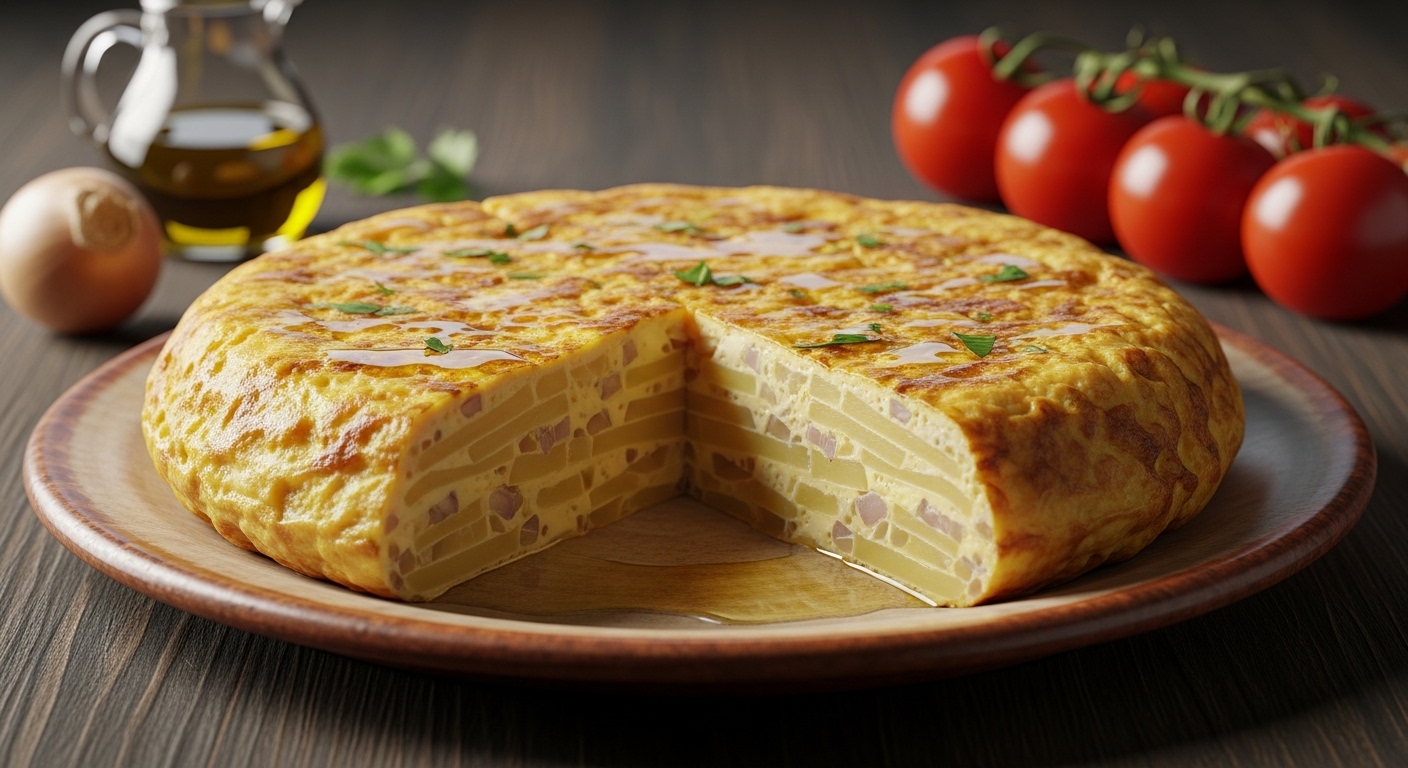
There’s something deeply comforting about a well-made Tortilla Española Plate—a dish that embodies the soul of Spain with its rustic simplicity and rich, earthy flavors. This iconic Spanish omelet, known in English as the Spanish omelette or potato omelet, is more than just food; it’s a cultural staple enjoyed across homes, tapas bars, and family gatherings. With golden-brown edges, creamy yellow center, and tender potatoes nestled within a soft egg matrix, the Tortilla Espanola Plate delivers a satisfying bite that’s both humble and extraordinary.
What makes this dish truly special isn’t just its ingredients—it’s the balance of textures and the quiet elegance of its preparation. Whether you’re serving it at brunch, lunch, or as part of a mezze spread, the Tortilla Espanola Plate never fails to impress. And today, we’re going to show you how to recreate this beloved classic with authentic techniques, chef-tested tips, and easy substitutions so even beginners can master it at home.
Why Everyone Loves the Tortilla Espanola Plate
The Tortilla Espanola Plate has earned its place in kitchens worldwide for several reasons:
- Flavorful Simplicity: It uses only four core ingredients—potatoes, onions, eggs, and olive oil—but when prepared correctly, each component shines.
- Perfect Texture Contrast: A crispy exterior gives way to a silky, custard-like interior, creating a mouthwatering sensory experience.
- Versatility: Served hot or cold, on its own or with accompaniments like tomato sauce, pickles, or a fresh salad.
- Cultural Heritage: Originating from Spain, particularly Catalonia and Andalusia, this dish reflects centuries of culinary tradition and regional pride.
Whether you’ve tasted it in a bustling Barcelona market or are discovering it for the first time, the Tortilla Espanola Plate offers a taste of Mediterranean warmth that resonates with every forkful.
Quick Recipe Summary Table
| Metric | Details |
|---|---|
| Prep Time | 15 minutes |
| Cook Time | 30–40 minutes |
| Total Time | 45–55 minutes |
| Servings | 4 |
| Cuisine | Spanish |
| Course | Lunch, Brunch, Appetizer |
| Calories (approx.) | 320 per serving |
Ingredients You’ll Need
Here’s everything you need to make an authentic, restaurant-quality Tortilla Espanola Plate:
- 2 large russet or Yukon gold potatoes (~600g / 1.3 lbs), peeled and thinly sliced
- 1 medium onion, finely diced
- 6 large eggs
- ½ cup extra-virgin olive oil (essential for authenticity)
- Salt, to taste
- Freshly ground black pepper, optional
For serving (optional):
- Tomato salsa verde or red piquillo sauce
- Mixed green salad
- Pickled red onions or olives
Step-by-Step Cooking Instructions
Follow these clear, beginner-friendly steps to create your perfect Tortilla Espanola Plate:
1. Cook the Potatoes and Onions
In a large skillet (preferably non-stick or cast iron), heat half of the olive oil over medium heat. Add the sliced potatoes and onions. Season generously with salt. Cover and cook for 15–20 minutes, stirring occasionally, until potatoes are tender but not mushy. Drain excess oil using a slotted spoon and transfer the mixture to a bowl.
2. Whisk the Eggs
In a separate bowl, whisk the eggs thoroughly. Add a pinch of salt and a dash of black pepper if desired. Pour the egg mixture over the cooled potato-onion blend and stir gently to combine. Let it rest for 5 minutes to allow flavors to meld.
3. Fry the Filling
Return the skillet to medium-low heat and add the remaining olive oil. Carefully pour in the potato-and-egg mixture. Spread evenly into a thick layer. Cook uncovered for 8–10 minutes until the bottom sets and turns golden brown.
4. Flip the Tortilla
This is the trickiest step! Place a large plate over the skillet and carefully invert the pan so the tortilla lands on the plate. Slide it back into the hot oil, uncooked side down. Cook for another 6–8 minutes until golden and set.
5. Serve Immediately or Rest
Slide the finished Tortilla Espanola Plate onto a serving platter. Let it cool slightly before slicing into wedges. For best results, serve warm but not hot—ideal for room temperature enjoyment.
Chef Tips for Success
To elevate your Tortilla Espanola Plate from good to exceptional:
- Use cold potatoes: Allow cooked potatoes to cool completely before mixing with eggs. This prevents them from breaking apart.
- Don’t overcrowd the pan: Use a wide, shallow skillet (at least 12 inches) to ensure even cooking and proper browning.
- Low and slow is key: Medium-low heat prevents burning and helps develop that signature creamy interior.
- Practice flipping: If you’re nervous about flipping, use two plates or a pizza peel for stability.
- Season well: Salt during both potato cooking and egg stage enhances flavor without overwhelming.
Common Mistakes to Avoid
Even experienced cooks stumble sometimes. Here’s what NOT to do:
- Skipping peeling: While some recipes leave skins on, peeling ensures a smoother texture and avoids unwanted grit.
- Overmixing the batter: Too much stirring breaks up the potatoes and results in a dense, unappealing consistency.
- Rushing the flip: A flimsy or undercooked bottom will tear during inversion. Patience pays off!
- Using too little oil: Authentic Spanish versions rely on generous olive oil—don’t skimp.
- Serving while piping hot: Best enjoyed at room temperature, just like traditional tapas.
Ingredient Substitutions & Variations
Want to customize your Tortilla Espanola Plate? Try these swaps and twists:
Substitutions:
- Vegetables: Swap potatoes for sweet potatoes or add zucchini slices for a veggie-forward version.
- Eggs: Replace one egg with chickpea flour for a vegan-friendly option (results in a firmer texture).
- Olive Oil: Not available? Use avocado oil for high-heat stability.
Variations:
- Vegetarian/Vegan: Omit eggs entirely and bind with ¾ cup chickpea flour, 1 cup water, and spices. Pan-fry like pancakes.
- Indian-Inspired: Add turmeric for color, cumin for warmth, and top with yogurt raita.
- Smoky Version: Include smoked paprika in the egg mixture or add diced chorizo (non-vegetarian twist).
- Mini Portions: Make individual mini tortillas in ramekins for elegant appetizers.
Serving Suggestions
Pair your Tortilla Espanola Plate beautifully:
- Classic Tapas Style: Serve with a drizzle of aioli, cherry tomatoes, and a glass of crisp Albariño wine.
- With Salad: Accompany with arugula dressed in lemon vinaigrette to cut through richness.
- Breakfast Twist: Top with fried egg or avocado slices for a hearty morning meal.
- Picnic Ready: Wrap slices in parchment paper for easy transport and enjoy cold.
Storage & Reheating Tips
Storing:
Wrap tightly in plastic wrap or store in an airtight container. Keeps well in the fridge for up to 4 days.
Reheating:
Avoid the microwave—it makes eggs rubbery. Instead, reheat gently in a non-stick skillet over low heat with a splash of water or olive oil to prevent drying.
Nutrition Facts (Approximate Per Serving)
- Calories: 320
- Total Fat: 22g (Saturated: 4g)
- Carbohydrates: 22g (Fiber: 2g, Sugar: 2g)
- Protein: 10g
- Sodium: 480mg
- Potassium: 520mg
*Values based on standard recipe; may vary with substitutions.*
Healthier Version Option
Want a lighter take? Try this modified approach:
- Reduce oil to ⅓ cup total.
- Use only 1½ potatoes and increase eggs to 8 for more protein.
- Bake instead of fry: Pour mixture into a greased baking dish, bake at 375°F (190°C) for 30–35 minutes.
This baked version cuts calories by ~40% while maintaining texture and flavor.
Key Takeaways
– The Tortilla Espanola Plate is a simple yet sophisticated dish rooted in Spanish tradition.
– Proper technique—especially flipping—is crucial for success.
– Customize with veggies, herbs, or sauces to suit your taste.
– Best served at room temperature, either warm or chilled.
– Can be stored and reheated with care for future enjoyment.
Frequently Asked Questions (FAQs)
Q: Is Tortilla Espanola the same as Spanish tortilla?
A: Yes! “Tortilla Espanola” is the literal Spanish name for what English speakers call the “Spanish omelette” or “Spanish potato omelet.” It refers specifically to the potato-and-egg dish.
Q: Why does my tortilla fall apart when I slice it?
A: This usually happens if it’s undercooked or overmixed. Ensure it’s fully set before slicing, and use a sharp knife dipped in warm water for clean cuts.
Q: Can I make this ahead of time?
A: Absolutely! It travels well. Store in the fridge and reheat gently in a skillet. It tastes just as good cold too—perfect for picnics.
Q: What’s the difference between Tortilla Espanola and Tortilla de Patata?
A: They’re the same dish! “Tortilla de patata” means “potato tortilla” in Spanish. Both terms describe the same iconic recipe.
Q: Do I have to use russet potatoes?
A: Not necessarily. Yukon Golds work great too—they’re starchy but sweeter. Avoid waxy potatoes like red-skinned ones, which don’t soften properly.
Conclusion
Making a Tortilla Espanola Plate might seem intimidating at first—especially that flip—but once you master it, you’ll find yourself reaching for this recipe again and again. It’s a dish that brings people together, whether it’s breakfast with friends or a quiet dinner at home. With just four ingredients and a few simple steps, you can bring a taste of Spain to your table.
So roll up your sleeves, fire up that skillet, and prepare to impress with a plate that’s as beautiful as it is delicious. Your kitchen deserves this moment. Now go ahead—try it tonight!
Leave a Reply