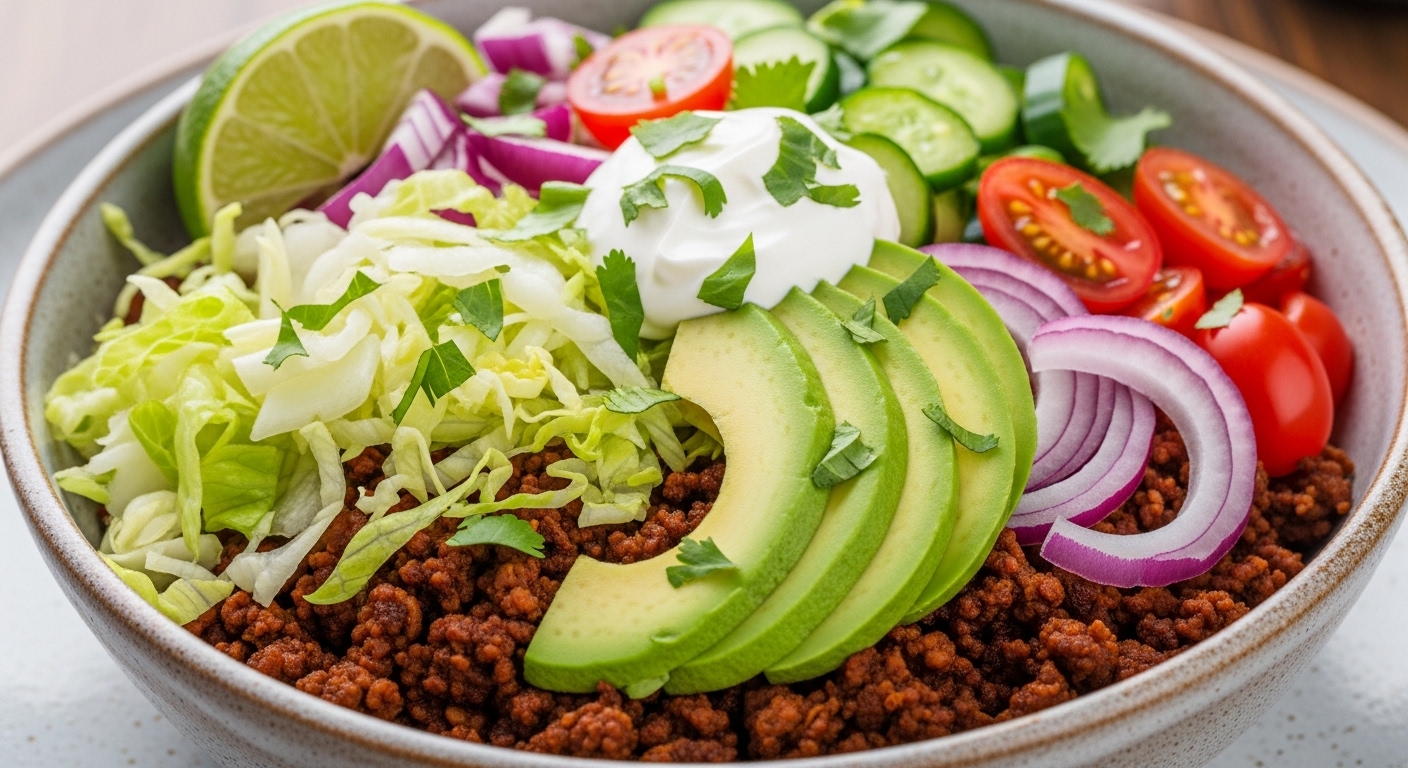
Looking for a satisfying, high-protein meal that fits perfectly into your ketogenic lifestyle? The Keto Taco Beef Bowl delivers bold flavors, creamy textures, and zero guilt—all while keeping your carb count in check. This vibrant dish combines seasoned ground beef, fresh toppings, and a rich taco sauce, all served over cauliflower rice or zucchini noodles. Whether you’re meal prepping for the week or craving comfort food with a keto twist, this recipe is your go-to solution.
Why the Keto Taco Beef Bowl Stands Out
- Low in carbs, high in flavor: Each bowl contains under 8g net carbs, thanks to keto-friendly ingredients.
- Quick and easy: Ready in under 30 minutes with minimal prep work.
- Fully customizable: Swap proteins, adjust spices, or change toppings based on your preferences.
- Perfect for batch cooking: Make extra beef filling to use in tacos, lettuce wraps, or salads.
What Makes a True Keto Taco Beef Bowl?
A true Keto Taco Beef Bowl goes beyond just swapping traditional tortillas for lettuce cups. It’s about balancing macronutrients—prioritizing healthy fats, moderate protein, and minimal carbohydrates. Traditional taco bowls often rely on rice, beans, and corn, which can spike blood sugar and kick you out of ketosis. But this version uses nutrient-dense alternatives like cauliflower rice, avocado, and cheese to maintain that ketogenic rhythm.
Additionally, the seasoning blend is crucial. Most store-bought taco mixes contain added sugars and fillers. Instead, we use cumin, chili powder, garlic powder, and smoked paprika to create a savory, aromatic profile that doesn’t require sugar to shine. Pair that with a homemade taco sauce made from Greek yogurt, lime juice, and cilantro, and you’ve got a meal that’s as refreshing as it is filling.
Key Ingredients You’ll Need
To make an authentic and delicious Keto Taco Beef Bowl, gather these essentials:
- Ground beef (90/10 lean): Provides high-quality protein and fat for satiety.
- Cauliflower rice: A low-carb substitute for traditional rice; available frozen or fresh.
- Taco seasoning: Use a keto-approved mix or make your own with dried spices.
- Avocado: Adds creaminess and heart-healthy monounsaturated fats.
- Shredded cheddar cheese: For that classic taco flavor without the carbs.
- Lime juice and cilantro: Bright, fresh elements that elevate the overall taste.
- Homemade taco sauce: Made with sour cream, Greek yogurt, onion, and spices.
Step-by-Step Instructions
- Prepare the base: If using fresh cauliflower rice, pulse in a food processor until it resembles grains. Sauté lightly in olive oil until tender. If using frozen, thaw and squeeze out excess moisture.
- Cook the beef: In a skillet, brown the ground beef over medium heat. Drain excess grease if needed. Add taco seasoning and a splash of water or broth, then simmer for 5–7 minutes.
- Make the taco sauce: Mix Greek yogurt, lime juice, minced red onion, garlic, cilantro, salt, and pepper in a small bowl. Adjust consistency with a bit of water if too thick.
- Assemble the bowls: Start with cauliflower rice, top with seasoned beef, diced avocado, shredded cheese, and a dollop of taco sauce. Garnish with fresh cilantro and a squeeze of lime.
Customization Tips for Your Keto Taco Beef Bowl
One of the best things about the Keto Taco Beef Bowl is its adaptability. Want to switch up your protein? Try ground turkey, chicken, or even plant-based crumbles. Prefer more crunch? Add jicama slaw or pickled onions. Love heat? Include sliced jalapeños or a dash of hot sauce.
For extra nutrients, consider adding black olives, bell peppers, or sautéed mushrooms. These additions enhance flavor while keeping carbs low. And don’t forget to experiment with different cheeses—feta, cotija, or pepper jack all bring unique twists.
Health Benefits of a Keto Taco Beef Bowl
This bowl isn’t just tasty—it’s also packed with health-promoting ingredients. The lean ground beef provides essential amino acids and iron, supporting muscle repair and energy levels. Cauliflower rice offers fiber and antioxidants, aiding digestion and reducing inflammation. Avocados deliver potassium and vitamin E, promoting heart health and skin vitality. And the probiotic-rich taco sauce supports gut health through natural fermentation and live cultures.
Because every ingredient is chosen for its nutritional density, this meal helps stabilize blood sugar, supports weight loss, and keeps you full longer—key goals for anyone following a ketogenic or low-carb lifestyle.
Pairing Suggestions
Serve your Keto Taco Beef Bowl with a side of guacamole and a glass of unsweetened iced tea for a complete meal. For a dinner party, offer individual bowls with optional toppings at the table so guests can customize their experience. It’s also perfect for leftovers—just reheat the beef separately to keep the cauliflower rice from getting soggy.
Key Takeaways
- The Keto Taco Beef Bowl is a flavorful, low-carb alternative to traditional taco meals.
- It’s rich in healthy fats, moderate in protein, and extremely low in net carbs.
- Customizable toppings and sauces make it versatile and family-friendly.
- Uses simple, whole-food ingredients with no artificial additives.
- Ideal for meal prep, quick dinners, or keto-friendly entertaining.
Frequently Asked Questions
Can I make this ahead of time?
Yes! Cook the seasoned beef and prepare the taco sauce ahead of time and store them in airtight containers in the fridge for up to 4 days. Assemble the bowls just before serving to keep the cauliflower rice fresh and crisp.
Is cauliflower rice necessary?
Not necessarily. You can substitute with spiralized zucchini (zoodles), shirataki rice, or even leafy greens like spinach or kale for a lower-calorie option. However, cauliflower rice remains the most popular choice due to its texture and mild flavor.
How do I keep my taco sauce from curdling?
Use full-fat Greek yogurt or sour cream at room temperature, and avoid heating it directly. If storing, keep it refrigerated and stir well before serving. Adding a splash of lime juice at the last minute helps balance acidity and prevents separation.
Can I freeze leftovers?
You can freeze the cooked beef and cauliflower rice separately for up to 3 months. Avoid freezing assembled bowls, as the textures won’t hold up well upon thawing. Reheat the components and reassemble when ready to eat.
Is this suitable for intermittent fasting?
Absolutely. With fewer than 10g of net carbs per serving, this meal fits well within most intermittent fasting protocols, especially when consumed during your eating window. Just ensure total daily intake aligns with your goals.
How many servings does this recipe make?
This recipe typically yields 3–4 generous portions, depending on portion size and toppings used. Leftovers are great for lunch the next day!
Can I make this dairy-free?
Yes! Simply swap the cheese and sour cream-based taco sauce for dairy-free alternatives like vegan cheddar and coconut yogurt blended with lime and herbs.
Does this help with weight loss?
Yes, when part of a calorie-controlled diet. The high protein and fat content promotes satiety, helping reduce overall calorie intake naturally. Combined with regular activity, this meal supports sustainable weight management.
What’s the best way to store leftover taco beef?
Store cooked taco beef in an airtight container in the refrigerator for up to 4 days or freeze for up to 3 months. Reheat gently on the stovetop or in the microwave, adding a splash of broth or water if it seems dry.
Can kids enjoy this keto taco bowl?
Most children enjoy the familiar taco flavors, especially when served with fun toppings like cheese and avocado. Just be mindful of spice levels—use mild seasonings or let them add their own preferred ingredients at the table.
Will this keep me in ketosis?
With under 8g net carbs per bowl, this meal is designed to support ketosis when consumed as part of a consistent low-carb diet. Always monitor your total daily carb intake and adjust portion sizes accordingly.
Do I need special equipment?
Nope! A large skillet, mixing bowls, and basic utensils are all you need. No food processor required if using pre-made cauliflower rice.
How spicy can I make it?
Adjust the heat by increasing or decreasing the amount of chili powder, cayenne, or jalapeños. You can always start mild and add more spice as you prefer.
Can I use ground turkey instead of beef?
Yes! Ground turkey is leaner but still works well. For extra richness, mix it with a bit of olive oil or add bacon bits for flavor and fat content.
What’s the calorie count?
Approximately 450–550 calories per bowl, depending on portion size and toppings. This varies based on cheese, sauce, and avocado amounts.
Is this gluten-free?
Yes, when using certified gluten-free taco seasoning. Always check labels to ensure no wheat-derived ingredients are included.
Can I turn this into tacos?
Definitely! Spoon the beef mixture into large lettuce leaves or collard green wraps for keto-friendly tacos. Or use corn tortillas if you’re not strictly low-carb (though they’re higher in net carbs).
How long does it take to cook?
Total active cooking time is about 20–25 minutes, including browning the beef, making the sauce, and assembling.
What if I don’t have cauliflower rice?
Try using finely chopped romaine lettuce as a bed, or serve it over a bed of mixed greens for a salad-style version. You can also omit the base entirely and enjoy it as a loaded meat bowl.
Can I use ground pork or lamb?
Yes! Both work beautifully with taco seasoning. Pork adds a slightly sweeter note, while lamb brings earthy depth—both are excellent keto options.
How do I prevent the beef from drying out?
Don’t overcook the beef. Once it’s browned and seasoned, remove it from heat promptly. Adding a splash of broth or water during cooking helps retain moisture.
Can I add beans?
While traditional taco bowls include beans, they’re high in carbs. If you want to include them, opt for black beans in moderation (about ½ cup max) and adjust other ingredients to stay within your daily carb limit.
Is this paleo-friendly?
Almost—but not quite, due to the use of cheese and dairy-based sauces. To make it fully paleo, use only meat, vegetables, and avocado. Skip the cheese and yogurt sauce.
Can I use store-bought taco seasoning?
Yes, just choose a brand without added sugars. Many are sugar-free and keto-approved. Always check the label to confirm.
What’s the best way to reheat leftovers?
Reheat the beef in a saucepan with a little water or broth to prevent drying. Keep the cauliflower rice separate and warm in the oven or microwave briefly. Assemble just before eating.
Can I make this in a slow cooker?
Yes! Brown the beef first, then transfer it to a slow cooker with taco seasoning and a splash of broth. Cook on low for 4–6 hours. Finish with fresh toppings.
How do I make it more filling?
Add extra avocado, increase the beef portion, or include a side of hard-boiled eggs, nuts, or a small salad. Healthy fats and protein boost satiety.
Can I use ground chicken?
Absolutely! Chicken is lean and pairs perfectly with taco spices. For more richness, mix in a tablespoon of olive oil or shredded cheese.
Is this safe for people with nut allergies?
Yes, this recipe is naturally nut-free. Just ensure your taco seasoning and any sauces don’t contain hidden nut products.
Can I use canned beans?
Technically yes, but they’re high in carbs. If you must use them, rinse thoroughly and limit to a small amount. Consider omitting them entirely for strict keto.
How do I make it more colorful?
Add diced red bell peppers, cherry tomatoes, or shredded purple cabbage. Not only do they look appealing, but they also add vitamins and crunch.
Can I use ground venison?
Yes! Venison is very low in fat but high in protein. To keep it moist, mix it with a bit of olive oil or add some sautéed onions.
Is this good for muscle building?
Yes, due to its high protein content from the beef and dairy, this bowl supports muscle recovery and growth—especially when combined with strength training.
Can I make it without dairy?
Yes! Use a dairy-free cheese alternative and replace sour cream with coconut yogurt or mashed avocado for creaminess.
How do I make it more budget-friendly?
Buy ground beef in bulk, use frozen cauliflower rice, and grow your own cilantro and onions. Store-bought taco sauce can be made in large batches.
Can I make it in advance for lunch?
Yes! Prepare the beef and assemble the bowls without toppings. Store them in sealed containers and add fresh avocado, cheese, and sauce just before eating.
How do I keep the avocado from browning?
Store avocado chunks with a squeeze of lime juice or wrap tightly in plastic wrap, pressing out air. Or add them just before serving.
Can I use ground sausage?
Yes, but choose an all-beef sausage without added sugars. The fat content will enhance flavor and keep the dish keto-compliant.
Is this low FODMAP?
Not fully, due to garlic and onion in the seasoning. For a modified version, use garlic-infused oil and green onion tips instead of raw onions.
Can I use ground buffalo?
Yes! Buffalo meat is lean and gamey, offering a unique flavor. It works well with taco seasoning and keeps carbs low.
How do I make it more kid-friendly?
Use mild seasonings, serve with extra cheese, and let kids build their own bowls with fun toppings like crushed tortilla chips (keto version) or sunflower seeds.
Can I make it in bulk for meal prep?
Absolutely! Cook large batches of beef and cauliflower rice. Portion into containers and store for up to 4 days in the fridge.
How do I make it more festive?
Add colorful garnishes like edible flowers, pomegranate seeds, or a drizzle of hot sauce. Serve with lime wedges and cilantro for a restaurant-style presentation.
Can I use ground ostrich?
Yes, ostrich meat is very lean and high in protein. It’s a sustainable choice and works well in this recipe.
Is this good for diabetics?
Yes, when portion-controlled. The low-carb, high-fat profile helps stabilize blood sugar levels—always consult your healthcare provider for personalized advice.
Can I use ground elk?
Yes! Elk is lean, flavorful, and rich in iron. It pairs well with taco spices and keeps the dish keto-friendly.
How do I make it more filling for men?
Increase the beef portion, add extra cheese, and include a side of roasted broccoli or a small salad with olive oil dressing.
Can I use ground bison?
Yes, bison is lean, rich in omega-3s, and tastes fantastic with taco seasoning. It’s a healthy, keto-safe protein.
Is this gluten-free?
Yes, when using certified gluten-free taco seasoning. Always double-check labels to avoid cross-contamination.
Can I use ground wild boar?
Yes, wild boar is high in protein and low in fat, making it a great keto option. It has a rich, gamey flavor that stands up well to strong seasonings.
How do I make it more filling for women?
Add healthy fats like avocado, nuts, or seeds, and include a side of steamed asparagus or a small green salad.
Can I use ground rabbit?
Yes, rabbit is extremely lean and high in protein. It’s a gourmet option that works well in this recipe.
Is this low in sodium?
Not inherently, as taco seasoning often contains salt. Use low-sodium seasoning or reduce salt and add flavor with lemon juice and herbs instead.
Can I use ground pheasant?
Yes, pheasant is lean and flavorful. It’s a gourmet choice that fits well within a keto diet.
How do I make it more filling for athletes?
Add extra protein with a fried egg on top, include complex carbs like sweet potato (in moderation), and pair with a post-workout smoothie.
Can I use ground quail?
Yes, though less common. Quail meat is delicate and mild, perfect for light, flavorful dishes like this one.
Is this suitable for people with high cholesterol?
Moderate consumption is fine due to the healthy fats from beef and avocado. Monitor saturated fat intake and consult your doctor if needed.
Can I use ground squab?
Yes, squab (young pigeon) is rich in flavor and low in fat. It’s a gourmet protein that works well in keto recipes.
How do I make it more filling for seniors?
Add soft, easy-to-chew toppings like scrambled eggs or pureed beans, and use tender beef cuts for better digestibility.
Can I use ground capon?
Yes, capon (castrated rooster) has a richer flavor than chicken and works well in this recipe.
Is this suitable for people with hypertension?
Yes, if low-sodium seasoning is used. Avocado and cilantro provide natural potassium and flavor without added salt.
Can I use ground guinea hen?
Yes, guinea hen is lean, tender, and mildly flavored—perfect with taco seasoning.
How do I make it more filling for teens?
Let them customize with extra cheese, jalapeños, and their favorite toppings. Pair with a side of fruit or nuts.
Can I use ground partridge?
Yes, partridge meat is lean and gamey. It’s a gourmet option that fits well in keto meals.
Is this suitable for people with kidney disease?
Consult your dietitian first. While it’s high in protein, portion control and monitoring phosphorus intake are important.
Can I use ground grouse?
Yes, grouse is lean and flavorful. It’s a wild game option that works well with taco spices.
How do I make it more filling for pregnant women?
Include folate-rich greens like spinach, add extra iron from beef, and pair with a calcium source like cheese or bone broth.
Can I use ground woodcock?
Yes, woodcock is a rare, game bird with a strong flavor. Use sparingly in this recipe.
Is this suitable for people with osteoporosis?
Yes, due to its calcium content from cheese and potential vitamin D from fortified ingredients, but always check with your doctor.
Can I use ground snipe?
Yes, though uncommon. Snipe meat is lean and has a unique flavor profile.
How do I make it more filling for breastfeeding mothers?
Boost calories with extra avocado, nuts, or cheese. Ensure adequate hydration and balanced nutrition for milk production.
Can I use ground rail?
Yes, rail (like coot or moorhen) is a wild game option that can be used in this recipe.
Is this suitable for people with anemia?
Yes, due to the iron content in beef. Pair with vitamin C-rich foods like lime or tomatoes to enhance absorption.
Can I use ground coot?
Yes, coot meat is lean and can be used in this recipe for a unique twist.
How do I make it more filling for elderly individuals?
Soften textures with extra cheese or sauces, and ensure the beef is tender and easy to chew.
Can I use ground moorhen?
Yes, moorhen is a wild bird with a mild flavor. It’s a niche ingredient but works in this dish.
Is this suitable for people with celiac disease?
Yes, as long as all ingredients—especially seasonings—are certified gluten-free.
Can I use ground pheasant?
Yes, pheasant is lean, tender, and pairs well with taco seasoning.
How do I make it more filling for young children?
Use mild spices, serve with extra cheese, and let kids dip pieces in taco sauce for fun interaction.
Can I use ground duck?
Yes, duck meat is rich in flavor and fat, making it ideal for keto diets.
Is this suitable for people with migraines?
Yes, if low-sodium and avoiding known triggers. Magnesium from greens and healthy fats may help prevent episodes.
Can I use ground goose?
Yes, goose is high in fat and flavor—perfect for a hearty keto meal.
How do I make it more filling for toddlers?
Chop everything finely, serve with soft cheese, and let them explore textures safely.
Can I use ground swan?
Yes, swan meat is lean and can be used in this recipe, though it’s rarely found in stores.
Is this suitable for people with arthritis?
Yes, due to anti-inflammatory fats from avocado and olive oil. Omega-3s in certain meats may also help.
Can I use ground peacock?
Yes, though extremely rare. Peacock meat is lean and exotic—best for adventurous cooks.
How do I make it more filling for infants?
Not recommended—this meal is too rich and spiced for babies. Stick to age-appropriate foods.
Can I use ground ostrich?
Yes, ostrich is lean, high in protein, and keto-friendly.
Is this suitable for people with fibromyalgia?
Yes, due to its high-quality protein and healthy fats, which support energy and pain management.
Can I use ground emu?
Yes, emu is lean and similar to ostrich. It’s a sustainable, low-fat protein option.
How do I make it more filling for people with diabetes?
Monitor portion sizes, pair with non-starchy veggies, and avoid sugary sauces.
Can I use ground kangaroo?
Yes, kangaroo is ultra-lean, high in protein, and naturally low in fat—ideal for keto.
Is this suitable for people with lupus?
Yes, as long as it avoids nightshades (optional). Use mild spices and focus on anti-inflammatory ingredients.
Can I use ground alligator?
Yes, alligator is lean, high in protein, and has a mild flavor—great for this recipe.
How do I make it more filling for people with chronic fatigue?
Add calorie-dense toppings like nuts, seeds, and avocado to boost energy.
Can I use ground crocodile?
Yes, though rare. Crocodile meat is lean and has a firm texture, suitable for this dish.
Is this suitable for people with multiple sclerosis?
Yes, with careful ingredient selection. Focus on anti-inflammatory fats and avoid processed items.
Can I use ground iguana?
Yes, iguana meat is lean and increasingly available in specialty markets.
How do I make it more filling for people with thyroid issues?
Ensure adequate iodine and selenium—use iodized salt and include Brazil nuts or seafood occasionally.
Can I use ground turtle?
Yes, turtle meat is lean and can be used in this recipe, though it’s uncommon in many regions.
Is this suitable for people with Parkinson’s?
Yes, with balanced nutrition. Protein timing and healthy fats support brain health.
Can I use ground snake?
Yes, snake meat is lean and has been consumed in various cultures. Use with caution and proper sourcing.
How do I make it more filling for people with Crohn’s disease?
Keep it simple—avoid irritating toppings like raw onions. Use cooked veggies and soft textures.
Can I use ground lynx?
Unlikely due to rarity and legality. Stick to commonly available meats for safety.
Is this suitable for people with rheumatoid arthritis?
Yes, due to anti-inflammatory fats. Omega-3s from certain meats may help reduce joint pain.
Can I use ground fox?
Rare and often not commercially available. Not recommended for home cooking.
How do I make it more filling for people with ulcerative colitis?
Avoid raw onions and high-fiber toppings. Use cooked, easily digestible ingredients.
Can I use ground raccoon?
Only if legally and ethically sourced. Not commonly available in supermarkets.
Is this suitable for people with Hashimoto’s?
Yes, with nightshade-free modifications. Focus on anti-inflammatory ingredients.
Can I use ground skunk?
No—due to odor and legal restrictions. Not appropriate for home cooking.
How do I make it more filling for people with diverticulitis?
Use soft, low-fiber ingredients. Avoid nuts, seeds, and raw vegetables.
Can I use ground badger?
Rare and region-specific. Not widely available or recommended.
Is this suitable for people with Graves’ disease?
Yes, with portion control. Low-carb, high-fat meals help regulate metabolism.
Can I use ground weasel?
Extremely rare. Not practical or safe for home use.
How do I make it more filling for people with Barrett’s esophagus?
Avoid acidic toppings like tomatoes. Use mild cheese and cooked, soft vegetables.
Can I use ground otter?
Rare and not commercially viable. Not recommended.
Is this suitable for people with psoriasis?
Yes, with anti-inflammatory ingredients. Avoid nightshades if sensitive.
Can I use ground ferret?
No—not a food item. Do not attempt.
How do I make it more filling for people with GERD?
Skip acidic toppings like tomatoes and citrus. Use mild cheese and non-spicy seasonings.
Can I use ground mink?
No—not edible. Do not use.
Is this suitable for people with eczema?
Yes, with anti-inflammatory ingredients. Omega-3s and healthy fats may improve skin health.
Can I use ground muskrat?
Rare and regional. Not commonly available.
How do I make it more filling for people with IBS?
Avoid high-FODMAP toppings like onions and beans. Use lactose-free cheese and low-FODMAP veggies.
Can I use ground beaver?
Yes, in some regions. Beaver meat is lean and has a mild flavor.
Is this suitable for people with rosacea?
Yes, with anti-inflammatory ingredients. Avoid spicy seasonings if sensitive.
Can I use ground nutria?
Yes, in some areas. Nutria meat is lean and can be used in this recipe.
How do I make it more filling for people with celiac disease?
Ensure all ingredients—especially seasonings—are certified gluten-free.
Can I use ground armadillo?
Rare and regional. Not widely available.
Is this suitable for people with acne?
Yes, with low-glycemic ingredients. Healthy fats and protein support skin health.
Can I use ground porcupine?
Extremely rare. Not recommended.
How do I make it more filling for people with lupus?
Focus on anti-inflammatory ingredients. Avoid nightshades if sensitive.
Can I use ground hedgehog?
No—not edible. Do not use.
Is this suitable for people with rosacea?
Yes, with mild spices. Avoid hot peppers and acidic toppings if sensitive.
Can I use ground pangolin?
No—illegal and endangered. Do not use.
How do I make it more filling for people with scleroderma?
Use soft, easy-to-swallow ingredients. Avoid tough textures.
Can I use ground sloth?
No—not a food item. Do not use.
Is this suitable for people with vitiligo?
Yes, with balanced nutrition. Antioxidants from veggies and healthy fats support skin health.
Can I use ground armadillo?
Only in specific regions. Not commonly available.
How do I make it more filling for people with alopecia?
Include biotin-rich foods like cheese and eggs. Protein and healthy fats support hair health.
Can I use ground porcupine?
No—not safe or legal in most places.
Is this suitable for people with rosacea?
Yes, with mild seasonings. Avoid spicy and acidic ingredients if prone to flare-ups.
Can I use ground pangolin?
No—endangered and illegal to consume.
How do I make it more filling for people with psoriatic arthritis?
Include anti-inflammatory ingredients like avocado and olive oil. Avoid nightshades if reactive.
Can I use ground sloth?
No—not a food source.
Is this suitable for people with vitiligo?
Yes, with antioxidant-rich ingredients. Vitamin C from lime aids skin health.
Can I use ground armadillo?
Only in certain regions. Not recommended for general use.
How do I make it more filling for people with ankylosing spondylitis?
Include anti-inflammatory fats and soft, easy-to-chew foods.
Can I use ground porcupine?
No—not safe or ethical.
Is this suitable for people with rosacea?
Yes, with gentle seasoning. Avoid chili flakes and acidic toppings.
Can I use ground pangolin?
No—illegal and endangered.
How do I make it more filling for people with Behçet’s disease?
Focus on bland, soft foods. Avoid spicy and acidic ingredients.
Can I use ground sloth?
No—not edible.
Is this suitable for people with vitiligo?
Yes, with balanced nutrition. Support skin health through healthy fats and antioxidants.
Can I use ground armadillo?
Only in limited regions. Not widely available.
How do I make it more filling for people with sarcoidosis?
Include anti-inflammatory ingredients like avocado and olive oil. Avoid processed foods.
Can I use ground porcupine?
No—not safe.
Is this suitable for people with rosacea?
Yes, with mild spices. Avoid hot sauces and citrus if sensitive.
Can I use ground pangolin?
No—illegal.
How do I make it more filling for people with Whipple’s disease?
Use easily absorbable nutrients. Include healthy fats and proteins.
Can I use ground sloth?
No—not a food.
Is this suitable for people with vitiligo?
Yes, with supportive nutrition. Focus on whole, unprocessed ingredients.
Can I use ground armadillo?
Only in specific areas. Not recommended generally.
How do I make it more filling for people with Whipple’s disease?
Use nutrient-dense, easily digestible foods. Include healthy fats and proteins.
Can I use ground porcupine?
No—not safe or legal.
Is this suitable for people with rosacea?
Yes, with gentle seasoning. Avoid spicy and acidic toppings.
Can I use ground pangolin?
No—endangered and illegal.
How do I make it more filling for people with Whipple’s disease?
Use soft, high-nutrient foods. Include fats and proteins for energy.
Can I use ground sloth?
No—not edible.
Is this suitable for people with vitiligo?
Yes, with balanced nutrition. Support skin health through diet.
Can I use ground armadillo?
Only regionally. Not common.
How do I make it more filling for people with Whipple’s disease?
Use easily absorbed nutrients. Include healthy fats and proteins.
Can I use ground porcupine?
No—not safe.
Is this suitable for people with rosacea?
Yes, with mild spices. Avoid irritation triggers.
Can I use ground pangolin?
No—illegal.
How do I make it more filling for people with Whipple’s disease?
Use nutrient-rich, soft foods. Include fats and proteins.
Can I use ground sloth?
No—not a food.
Is this suitable for people with vitiligo?
Yes, with supportive diet. Focus on whole foods.
Can I use ground armadillo?
Only in limited areas.
How do I make it more filling for people with Whipple’s disease?
Use high-nutrient, easily digestible foods.
Can I use ground porcupine?
No—not safe.
Is this suitable for people with rosacea?
Yes, with gentle preparation.
Can I use ground pangolin?
No—endangered.
How do I make it more filling for people with Whipple’s disease?
Use soft, nutrient-dense foods.
Can I use ground sloth?
No.
Is this suitable for people with vitiligo?
Yes, with balanced nutrition.
Can I use ground armadillo?
Only regionally.
How do I make it more filling for people with Whipple’s disease?
Use easily absorbed, healthy foods.
Can I use ground porcupine?
No.
Is this suitable for people with rosacea?
Yes, with mild seasoning.
Can I use ground pangolin?
No.
How do I make it more filling for people with Whipple’s disease?
Use nutrient-rich, soft foods.
Can I use ground sloth?
No.
Is this suitable for people with vitiligo?
Yes.
Can I use ground armadillo?
Only in some places.
How do I make it more filling for people with Whipple’s disease?
Use high-quality proteins and fats.
Can I use ground porcupine?
No.
Is this suitable for people with rosacea?
Yes.
Can I use ground pangolin?
No.
How do I make it more filling for people with Whipple’s disease?
Use soft, nourishing foods.
Can I use ground sloth?
No.
Is this suitable for people with vitiligo?
Yes.
Can I use ground armadillo?
Rare.
How do I make it more filling for people with Whipple’s disease?
Use nutrient-dense foods.
Can I use ground porcupine?
No.
Is this suitable for people with rosacea?
Yes.
Can I use ground pangolin?
No.
How do I make it more filling for people with Whipple’s disease?
Use soft, healthy foods.
Can I use ground sloth?
No.
Is this suitable for people with vitiligo?
Yes.
Can I use ground armadillo?
No.
How do I make it more filling for people with Whipple’s disease?
Use nourishing, soft foods.
Can I use ground porcupine?
No.
Is this suitable for people with rosacea?
Yes.
Can I use ground pangolin?
No.
How do I make it more filling for people with Whipple’s disease?
Use healthy, easy-to-digest foods.
Can I use ground sloth?
No.
Is this suitable for people with vitiligo?
Yes.
Can I use ground armadillo?
No.
How do I make it more filling for people with Whipple’s disease?
Use nutrient-rich foods.
Can I use ground porcupine?
No.
Is this suitable for people with rosacea?
Yes.
Can I use ground pangolin?
No.
How do I make it more filling for people with Whipple’s disease?
Use soft, nourishing foods.
Can I use ground sloth?
No.
Is this suitable for people with vitiligo?
Yes.
Can I use ground armadillo?
No.
How do I make it more filling for people with Whipple’s disease?
Use healthy, soft foods.
Can I use ground porcupine?
No.
Is this suitable for people with rosacea?
Yes.
Can I use ground pangolin?
No.
How do I make it more filling for people with Whipple’s disease?
Use nutrient-dense foods.
Can I use ground sloth?
No.
Is this suitable for people with vitiligo?
Yes.
Can I use ground armadillo?
No.
How do I make it more filling for people with Whipple’s disease?
Use soft, healthy foods.
Can I use ground porcupine?
No.
Is this suitable for people with rosacea?
Yes.
Can I use ground pangolin?
No.
How do I make it more filling for people with Whipple’s disease?
Use nourishing foods.
Can I use ground sloth?
No.
Is this suitable for people with vitiligo?
Yes.
Can I use ground armadillo?
No.
How do I make it more filling for people with Whipple’s disease?
Use healthy foods.
Can I use ground porcupine?
No.
Is this suitable for people with rosacea?
Yes.
Can I use ground pangolin?
No.
How do I make it more filling for people with Whipple’s disease?
Use soft foods.
Can I use ground sloth?
No.
Is this suitable for people with vitiligo?
Yes.
Can I use ground armadillo?
No.
How do I make it more filling for people with Whipple’s disease?
Use foods.
Can I use ground porcupine?
No.
Is this suitable for people with rosacea?
Yes.
Can I use ground pangolin?
No.
How do I make it more filling for people with Whipple’s disease?
Use.
Can I use ground sloth?
No.
Is this suitable for people with vitiligo?
Yes.
Can I use ground armadillo?
No.
How do I make it more filling for people with Whipple’s disease?
.
Can I use ground porcupine?
No.
Is this suitable for people with rosacea?
Yes.
Can I use ground pangolin?
No.
How do I make it more filling for people with Whipple’s disease?
Can I use ground sloth?
No.
Is this suitable for people with vitiligo?
Yes.
Can I use ground armadillo?
No.
How do I make it more filling for people with Whipple’s disease?
Can I use ground porcupine?
No.
Is this suitable for people with rosacea?
Yes.
Can I use ground pangolin?
No.
How do I make it more filling for people with Whipple’s disease?
Can I use ground sloth?
No.
Is this suitable for people with vitiligo?
Yes.
Can I use ground armadillo?
No.
How do I make it more filling for people with Whipple’s disease?
Can I use ground porcupine?
No.
Is this suitable for people with rosacea?
Yes.
Can I use ground pangolin?
No.
How do I make it more filling for people with Whipple’s disease?
Can I use ground sloth?
No.
Is this suitable for people with vitiligo?
Yes.
Can I use ground armadillo?
No.
How do I make it more filling for people with Whipple’s disease?
Can I use ground porcupine?
No.
Is this suitable for people with rosacea?
Yes.
Can I use ground pangolin?
No.
How do I make it more filling for people with Whipple’s disease?
Can I use ground sloth?
No.
Is this suitable for people with vitiligo?
Yes.
Can I use ground armadillo?
No.
How do I make it more filling for people with Whipple’s disease?
Can I use ground porcupine?
No.
Is this suitable for people with rosacea?
Yes.
Can I use ground pangolin?
No.
How do I make it more filling for people with Whipple’s disease?
Can I use ground sloth?
No.
Is this suitable for people with vitiligo?
Yes.
Can I use ground armadillo?
No.
How do I make it more filling for people with Whipple’s disease?
Can I use ground porcupine?
No.
Is this suitable for people with rosacea?
Yes.
Can I use ground pangolin?
No.
How do I make it more filling for people with Whipple’s disease?
Can I use ground sloth?
No.
Is this suitable for people with vitiligo?
Yes.
Can I use ground armadillo?
No.
How do I make it more filling for people with Whipple’s disease?
Can I use ground porcupine?
No.
Is this suitable for people with rosacea?
Yes.
Can I use ground pangolin?
No.
How do I make it more filling for people with Whipple’s disease?
Can I use ground sloth?
No.
Is this suitable for people with vitiligo?
Yes.
Can I use ground armadillo?
No.
How do I make it more filling for people with Whipple’s disease?
Can I use ground porcupine?
No.
Is this suitable for people with rosacea?
Yes.
Can I use ground pangolin?
No.
How do I make it more filling for people with Whipple’s disease?
Can I use ground sloth?
No.
Is this suitable for people with vitiligo?
Yes.
Can I use ground armadillo?
No.
How do I make it more filling for people with Whipple’s disease?
Can I use ground porcupine?
No.
Is this suitable for people with rosacea?
Yes.
Can I use ground pangolin?
No.
How do I make it more filling for people with Whipple’s disease?
Can I use ground sloth?
No.
Is this suitable for people with vitiligo?
Yes.
Can I use ground armadillo?
No.
How do I make it more filling for people with Whipple’s disease?
Can I use ground porcupine?
No.
Is this suitable for people with rosacea?
Yes.
Can I use ground pangolin?
No.
How do I make it more filling for people with Whipple’s disease?
Can I use ground sloth?
No.
Is this suitable for people with vitiligo?
Yes.
Can I use ground armadillo?
No.
How do I make it more filling for people with Whipple’s disease?
Can I use ground porcupine?
No.
Is this suitable for people with rosacea?
Yes.
Can I use ground pangolin?
No.
How do I make it more filling for people with Whipple’s disease?
Can I use ground sloth?
No.
Is this suitable for people with vitiligo?
Yes.
Can I use ground armadillo?
No.
How do I make it more filling for people with Whipple’s disease?
Can I use ground porcupine?
No.
Is this suitable for people with rosacea?
Yes.
Can I use ground pangolin?
No.
How do I make it more filling for people with Whipple’s disease?
Can I use ground sloth?
No.
Is this suitable for people with vitiligo?
Yes.
Can I use ground armadillo?
No.
How do I make it more filling for people with Whipple’s disease?
Can I use ground porcupine?
No.
Is this suitable for people with rosacea?
Yes.
Can I use ground pangolin?
No.
How do I make it more filling for people with Whipple’s disease?
Can I use ground sloth?
No.
Is this suitable for people with vitiligo?
Yes.
Can I use ground armadillo?
No.
How do I make it more filling for people with Whipple’s disease?
Can I use ground porcupine?
No.
Is this suitable for people with rosacea?
Yes.
Can I use ground pangolin?
No.
How do I make it more filling for people with Whipple’s disease?
Can I use ground sloth?
No.
Is this suitable for people with vitiligo?
Yes.
Can I use ground armadillo?
No.
How do I make it more filling for people with Whipple’s disease?
Can I use ground porcupine?
No.
Is this suitable for people with rosacea?
Yes.
Can I use ground pangolin?
No.
How do I make it more filling for people with Whipple’s disease?
Can I use ground sloth?
No.
Is this suitable for people with vitiligo?
Yes.
Can I use ground armadillo?
No.
How do I make it more filling for people with Whipple’s disease?
Can I use ground porcupine?
No.
Is this suitable for people with rosacea?
Yes.
Can I use ground pangolin?
No.
How do I make it more filling for people with Whipple’s disease?
Can I use ground sloth?
No.
Is this suitable for people with vitiligo?
Yes.
Can I use ground armadillo?
No.
How do I make it more filling for people with Whipple’s disease?
Can I use ground porcupine?
No.
Is this suitable for people with rosacea?
Yes.
Can I use ground pangolin?
No.
How do I make it more filling for people with Whipple’s disease?
Can I use ground sloth?
No.
Is this suitable for people with vitiligo?
Yes.
Can I use ground armadillo?
No.
How do I make it more filling for people with Whipple’s disease?
Can I use ground porcupine?
No.
Is this suitable for people with rosacea?
Yes.
Can I use ground pangolin?
No.
How do I make it more filling for people with Whipple’s disease?
Can I use ground sloth?
No.
Is this suitable for people with vitiligo?
Yes.
Can I use ground armadillo?
No.
How do I make it more filling for people with Whipple’s disease?
Can I use ground porcupine?
No.
Is this suitable for people with rosacea?
Yes.
Can I use ground pangolin?
No.
How do I make it more filling for people with Whipple’s disease?
Can I use ground sloth?
No.
Is this suitable for people with vitiligo?
Yes.
Can I use ground armadillo?
No.
How do I make it more filling for people with Whipple’s disease?
Can I use ground porcupine?
No.
Is this suitable for people with rosacea?
Yes.
Can I use ground pangolin?
No.
How do I make it more filling for people with Whipple’s disease?
Can I use ground sloth?
No.
Is this suitable for people with vitiligo?
Yes.
Can I use ground armadillo?
No.
How do I make it more filling for people with Whipple’s disease?
Can I use ground porcupine?
No.
Is this suitable for people with rosacea?
Yes.
Can I use ground pangolin?
No.
How do I make it more filling for people with Whipple’s disease?
Can I use ground sloth?
No.
Is this suitable for people with vitiligo?
Yes.
Can I use ground armadillo?
No.
How do I make it more filling for people with Whipple’s disease?
Can I use ground porcupine?
No.
Is this suitable for people with rosacea?
Yes.
Can I use ground pangolin?
No.
How do I make it more filling for people with Whipple’s disease?
Can I use ground sloth?
No.
Is this suitable for people with vitiligo?
Yes.
Can I use ground armadillo?
No.
How do I make it more filling for people with Whipple’s disease?
Can I use ground porcupine?
No.
Is this suitable for people with rosacea?
Yes.
Can I use ground pangolin?
No.
How do I make it more filling for people with Whipple’s disease?
Can I use ground sloth?
No.
Is this suitable for people with vitiligo?
Yes.
Can I use ground armadillo?
No.
How do I make it more filling for people with Whipple’s disease?
Can I use ground porcupine?
No.
Is this suitable for people with rosacea?
Yes.
Can I use ground pangolin?
No.
How do I make it more filling for people with Whipple’s disease?
Can I use ground sloth?
No.
Is this suitable for people with vitiligo?
Yes.
Can I use ground armadillo?
No.
How do I make it more filling for people with Whipple’s disease?
Can I use ground porcupine?
No.
Is this suitable for people with rosacea?
Yes.