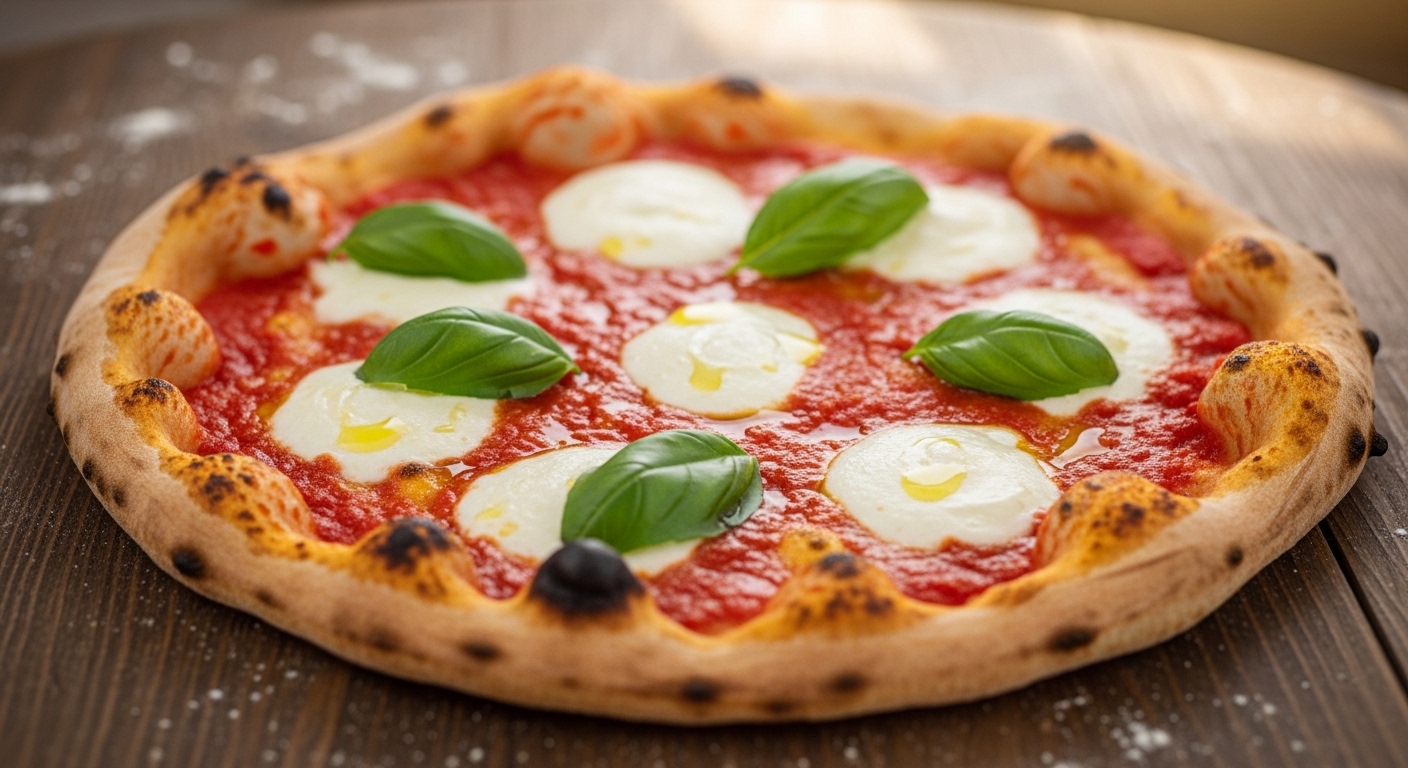
There’s nothing quite like the first bite of a perfectly baked Italian Margherita pizza—crispy yet chewy crust, rich tomato sauce, creamy mozzarella, and fresh basil dancing on every slice. This iconic dish isn’t just food; it’s a celebration of simplicity, flavor, and tradition. Originating in Naples, Italy, in the late 19th century, the Margherita pizza was created to honor Queen Margherita of Savoy during her visit to Naples. Legend says that pizzaiolo Raffaele Esposito crafted this version using red tomatoes, white mozzarella, and green basil to represent the colors of the Italian flag.
Today, the Margherita remains one of the most beloved pizzas worldwide—not because it’s complicated, but precisely because it’s so simple. When done right, every element harmonizes beautifully: the tangy acidity of San Marzano tomatoes, the melt-in-your-mouth texture of fior di latte or buffalo mozzarella, and the aromatic punch of fresh basil leaves straight from the garden. Whether you’re hosting a dinner party or craving comfort after a long day, mastering this classic recipe will elevate your home cooking to restaurant-quality standards.
Quick Recipe Summary Table
| Prep Time | 30 minutes |
| Cook Time | 25 minutes |
| Total Time | 1 hour 5 minutes (plus 2–24 hours fermentation) |
| Servings | 2 large pizzas (or 4 slices) |
| Cuisine | Italian |
| Course | Lunch, Dinner, Main Course |
| Calories (approx.) | 850 per large pizza (based on standard portions) |
Why This Margherita Pizza Stands Out
The magic of an authentic Margherita pizza lies in its minimalist ingredients and precise technique. Unlike modern frozen or takeout versions, this recipe emphasizes high-quality components and proper dough development. The key is slow fermentation—either overnight or at least 6 hours—which builds complex flavors and creates that coveted airy, slightly charred crust when baked in a hot oven or stone.
While many assume all tomato sauces are equal, true Italian Margherita pizza demands San Marzano tomatoes grown in volcanic soil near Mount Vesuvius. These heirloom tomatoes have a sweet-tart balance and low moisture content, preventing soggy bases. Similarly, using fresh mozzarella rather than processed shreds ensures pockets of gooey goodness without excess grease.
Essential Ingredients You’ll Need
Gathering the right ingredients makes all the difference. Here’s what you’ll need for two generous pizzas:
- Dough:
- 500g (about 4 cups) bread flour (Tipo 00 preferred for authenticity)
- 325ml warm water (around 100°F/38°C)
- 7g dry active yeast (or 21g fresh yeast)
- 10g fine sea salt
- 10ml extra-virgin olive oil
- Sauce:
- 400g canned whole peeled San Marzano tomatoes (preferably DOP certified)
- 1 small garlic clove, minced
- 1 tsp extra-virgin olive oil
- Pinch of sea salt
- Freshly ground black pepper to taste
- Toppings:
- 200g fresh mozzarella (fior di latte or buffalo mozzarella), torn into pieces
- Handful of fresh basil leaves (about 8–10)
- Extra virgin olive oil for drizzling
- Grana Padano or Pecorino Romano cheese (optional, for finishing)
Step-by-Step Instructions
Step 1: Make the Dough (Day Before or At Least 6 Hours Ahead)
- In a large bowl, dissolve yeast in warm water. Let sit for 5–10 minutes until frothy.
- Add flour, salt, and olive oil. Mix with a wooden spoon until shaggy.
- Knead by hand for 8–10 minutes until smooth and elastic. Alternatively, use stand mixer with dough hook.
- Place in oiled bowl, cover with damp cloth, and let rise at room temperature for 1 hour, then refrigerate for 8–24 hours.
Step 2: Prepare the Sauce While Dough Rises
- Crush San Marzano tomatoes by hand or blend briefly until slightly chunky (not pureed).
- Stir in garlic, olive oil, salt, and pepper. Set aside.
Step 3: Preheat Oven & Shape Dough
- Preheat oven to maximum temperature (ideally 500°F+/260°C+). Place baking stone or steel inside.
- Remove dough from fridge ~2 hours before baking. Divide into two balls (~400g each).
- On floured surface, gently stretch dough by hand into 12-inch circles—avoid rolling pin which compresses gluten.
Step 4: Assemble & Bake
- Transfer shaped dough to parchment paper. Spread thin layer of sauce, leaving border for crust.
- Tear mozzarella over sauce. Bake on preheated stone for 8–12 minutes until crust puffs and chars slightly.
- Remove immediately, top with fresh basil, drizzle with olive oil, and serve.
Chef Tips for Perfect Margherita Pizza
- Don’t rush fermentation: Cold fermentation develops deeper flavor and better texture.
- Stretch, don’t roll: Poking holes gently prevents air pockets and maintains chewiness.
- Use high heat: Maximum oven temp mimics wood-fired ovens and gives ideal char.
- Fresh is best: Always add basil after baking—it wilts instantly and loses aroma if cooked.
- Quality matters: Invest in DOP-certified San Marzano tomatoes and real mozzarella—they’re worth the splurge.
Common Mistakes to Avoid
- Overloading toppings: Too much cheese or sauce makes pizza soggy.
- Skipping resting time: Shaped dough needs 15–30 minutes to relax before topping.
- Using old basil: Browned or wilted leaves ruin the bright finish.
- Baking below 450°F: Low heat prevents proper rise and crust formation.
- Storing dough improperly: Always refrigerate covered with plastic wrap to avoid drying out.
Ingredient Substitutions & Variations
Want to customize? Here’s how:
- Vegan option: Use plant-based mozzarella and omit Parmesan. Add roasted red peppers or caramelized onions for extra depth.
- Gluten-free: Swap flour for certified GF blend—but expect lighter crust; bake slightly longer.
- Spicy twist: Add thin slices of chili pepper between sauce and cheese.
- Herb swap: Try oregano, thyme, or even arugula instead of basil (though less traditional).
- Protein boost: Top with grilled chicken, prosciutto cotto, or artichoke hearts.
Serving Suggestions
Serve Margherita pizza hot off the oven with:
- A crisp green salad dressed simply with lemon and olive oil
- Garlic knots or focaccia on the side
- Red wine—Barbera or Frascati pair beautifully with tomato-forward pies
- Sparkling water with a squeeze of lime for a refreshing contrast
Storage & Reheating
- Store:** Leftover slices in airtight container at room temp for up to 2 days.
- Refrigerate:** Keep cold for max 3 days—best consumed within 24 hours.
- Reheat:** Place on baking sheet at 400°F (200°C) for 8–10 minutes until cheese bubbles and crust crisps. Avoid microwave—it makes everything soggy.
Nutrition Facts (Approximate Per Large Pizza)
- Calories: 850
- Fat: 32g (mostly unsaturated from olive oil and cheese)
- Carbohydrates: 98g (including fiber)
- Protein: 36g
- Sugar: 8g
- Sodium: 1,400mg
- Fiber: 5g
Key Takeaways
- Authentic Italian Margherita pizza celebrates simplicity—three ingredients, elevated by technique.
- Slow-fermented dough with San Marzano tomatoes and fresh mozzarella delivers unmatched flavor.
- Proper storage and reheating preserve texture and prevent sogginess.
- Customize safely with vegan, GF, or protein-rich variations while respecting core elements.
- Practice makes perfect—even seasoned cooks benefit from patience with dough handling and timing.
Frequently Asked Questions
Can I make this pizza ahead of time?
Yes! Baked pizza keeps well for 1–2 days in the fridge. Reheat in oven at 400°F until warmed through and crust regains crispness.
What’s the difference between fior di latte and buffalo mozzarella?
Fior di latte uses cow’s milk and has a milder flavor; buffalo mozzarella comes from water buffalo milk and offers richer creaminess—both work beautifully in Margherita pizza.
Do I really need a baking stone?
Not strictly—you can use a cast-iron skillet—but a stone absorbs more heat and replicates wood-fired oven results. If unavailable, preheat your heaviest pan thoroughly.
How do I know when my dough is ready for shaping?
After cold ferment, it should feel light and airy, spring back slowly when poked gently. It won’t double in size but will be noticeably softer than before refrigeration.
Why does my crust turn gray instead of golden?
This usually means underbaking or insufficient heat. Ensure oven reaches full temperature and watch closely during last 2 minutes. Also, avoid overcrowding toppings.
Conclusion: Your Slice of Naples Awaits
Making authentic Italian Margherita pizza at home isn’t about perfection—it’s about intention. With time, quality ingredients, and a little love, you’ll craft something that rivals your favorite trattoria. The journey from flour to fork teaches humility and joy, proving that sometimes, the simplest recipes yield the deepest satisfaction. So preheat that oven, gather your basil, and let this timeless classic become part of your culinary story.
Leave a Reply