Tarragon Chicken Plate: A Flavorful Journey to Culinary Perfection
Imagine a dish that marries the tender juiciness of perfectly cooked chicken with the delicate, anise-like aroma of fresh tarragon—this is the magic of a tarragon chicken plate. Whether you’re hosting a dinner party or craving comfort food at home, this recipe delivers rich flavors in every bite. With its French-inspired roots and herbaceous elegance, the tarragon chicken plate has become a beloved favorite among food lovers worldwide.
This dish isn’t just about taste; it’s about balance. The subtle sweetness of tarragon complements the savory depth of chicken, creating a harmonious blend that pairs beautifully with creamy sauces, roasted vegetables, or golden potatoes. In this article, we’ll walk you through everything you need to know—from choosing the right ingredients to mastering the technique—so you can serve up restaurant-quality meals from your own kitchen.
Quick Recipe Overview
- Prep Time: 20 minutes
- Cook Time: 35 minutes
- Total Time: 55 minutes
- Servings: 4
- Cuisine: French-American Fusion
- Course: Main Course
- Calories (approx.): 420 per serving
What Makes Tarragon Chicken Plate So Irresistible?
The charm of the tarragon chicken plate lies in its simplicity and sophistication. Unlike heavy cream-based dishes, this version uses bright, fresh herbs and light butter emulsions to elevate the flavor without overwhelming the palate. The key is balancing the earthy warmth of chicken with the slightly licorice-like notes of tarragon—a classic pairing that dates back centuries in European cuisine.
Whether you’re preparing it for a weeknight meal or impressing guests, this dish offers versatility. It’s low-carb-friendly when served with zucchini noodles, indulgent with mashed potatoes, or light alongside a crisp green salad. Plus, the aromatic profile makes it ideal for spring and summer dining—think garden-fresh ingredients and vibrant colors.
Essential Ingredients for the Perfect Tarragon Chicken Plate
To achieve authentic results, quality matters. Here’s what you’ll need:
For the Chicken:
- 4 boneless, skinless chicken breasts (about 6 oz each)
- ½ teaspoon salt
- ¼ teaspoon black pepper
- 1 tablespoon olive oil
- 2 tablespoons unsalted butter
For the Tarragon Cream Sauce:
- 2 tablespoons unsalted butter
- 2 shallots, finely minced
- ½ cup dry white wine (optional but recommended)
- 1 cup low-sodium chicken broth
- 1 tablespoon Dijon mustard
- 1 teaspoon fresh tarragon, chopped (plus extra for garnish)
- ¼ cup heavy cream
- Pinch of nutmeg (optional)
Optional Side Suggestions:
- Steamed asparagus or roasted Brussels sprouts
- Mashed cauliflower or garlic mashed potatoes
- Crusty baguette slices for dipping
Step-by-Step Cooking Instructions
1. Prepare the Chicken
Start by patting the chicken breasts dry with paper towels. Season both sides evenly with salt and pepper. Heat olive oil in a large skillet over medium-high heat. Once shimmering, add the chicken breasts and sear for 5–6 minutes per side until golden brown and internal temperature reaches 165°F (74°C). Transfer to a plate and cover loosely with foil to keep warm.
2. Make the Sauce Base
In the same skillet (don’t clean it!), melt 2 tablespoons of butter over medium heat. Add the minced shallots and cook for 2–3 minutes until translucent. If using wine, deglaze the pan by pouring it in and scraping up any browned bits. Let it reduce by half before adding the chicken broth and bringing to a simmer.
3. Finish the Tarragon Cream Sauce
Whisk in the Dijon mustard, fresh tarragon, and heavy cream. Simmer gently for 4–5 minutes until slightly thickened. Taste and adjust seasoning—add a pinch of nutmeg if desired for warmth. Remove from heat.
4. Reheat and Serve
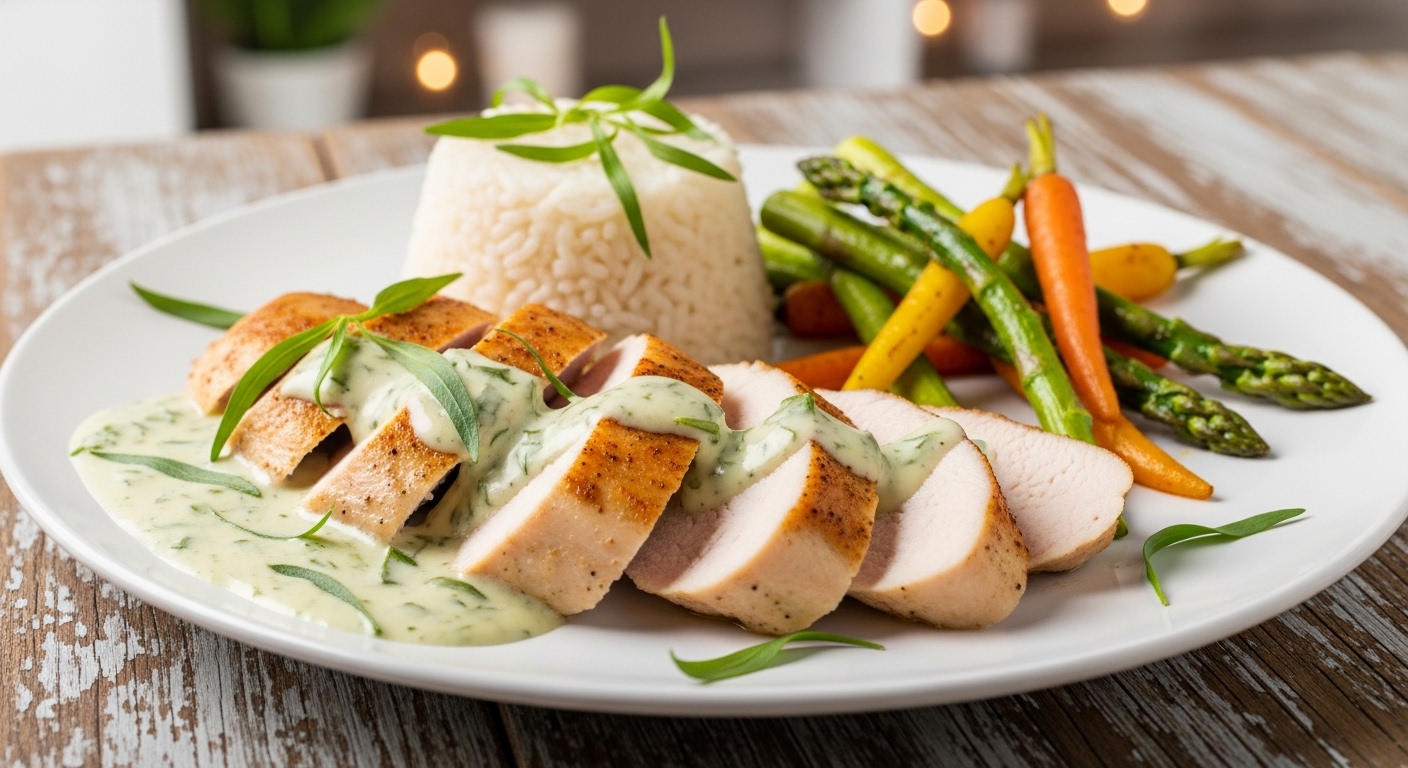
Return the chicken to the skillet, spooning sauce over the top. Cook for another minute to heat through. Garnish with additional fresh tarragon and serve immediately with your choice of sides.
Chef Tips for Restaurant-Quality Results
- Don’t Overcook the Chicken: Use a meat thermometer to avoid dryness. Ideal internal temp is 160°F (71°C) in the thickest part—it will rise to 165°F while resting.
- Fresh vs. Dried Tarragon: Fresh tarragon provides a more vibrant flavor. Dried works in a pinch but lacks brightness.
- Shallot Hack: Finely mince shallots with a sharp knife—they’ll caramelize faster and add sweetness without overpowering the dish.
- Sauce Consistency: For a lighter version, substitute half-and-half for cream and reduce the cooking time slightly.
Common Mistakes to Avoid
- Skipping the Resting Step: Letting the chicken rest ensures juices redistribute, preventing dryness.
- Using Too Much Salt Early: Adding salt too soon draws out moisture. Season at the end if needed.
- Burning the Shallots: Medium heat is key—low burns them slowly; high scorches them quickly.
Ingredient Substitutions & Variations
Want to adapt this dish? Here are smart swaps:
- Vegan Version: Use king oyster mushrooms instead of chicken and coconut milk instead of cream.
- Lighter Option: Replace heavy cream with Greek yogurt and skip the wine.
- Spicy Twist: Add ½ teaspoon red pepper flakes during sautéing.
- Herb Swap: Basil or parsley can replace tarragon for a milder flavor.
- Wine-Free: Skip the wine and add an extra splash of broth for acidity.
Serving Suggestions That Wow
The tarragon chicken plate shines best when paired thoughtfully. Serve with:
- Risotto: Creamy arborio rice soaks up the sauce beautifully.
- Roasted Root Vegetables: Carrots, parsnips, and sweet potatoes add earthiness.
- Green Beans Almondine: Crisp beans cut through the richness.
- Sparkling Wine: A chilled Sauvignon Blanc enhances the herbal notes.
Storage & Reheating Guide
- Refrigeration: Store leftover chicken and sauce separately for up to 3 days.
- Freezing: Uncooked chicken can be frozen for up to 3 months. Cooked dish lasts only 1 month.
- Reheating: Warm gently in a saucepan over low heat, adding a splash of broth or cream to restore moisture. Avoid microwave reheating—it dries out the chicken.
Nutrition Facts (Approximate Per Serving)
- Calories: 420
- Protein: 38g
- Fat: 22g
- Carbohydrates: 8g
- Fiber: 1g
- Sugar: 2g
- Sodium: 520mg
Frequently Asked Questions
Can I use dried tarragon instead of fresh?
Yes, but use half the amount—dried herbs are more concentrated. Fresh tarragon offers a brighter, cleaner flavor.
How do I prevent my chicken from drying out?
Pound the chicken breasts to uniform thickness before cooking. This ensures even cooking and juiciness. Also, avoid flipping too often.
Is this dish gluten-free?
Yes! As written, it’s naturally gluten-free. Just ensure your chicken broth and mustard are certified GF.
Can I make this ahead of time?
You can cook the chicken and prepare the sauce up to 24 hours ahead. Reheat gently on the stove, adding cream if the sauce thickens too much.
What’s the difference between French tarragon and Russian tarragon?
French tarragon (Artemisia dracunculus var. sativa) is the variety used in cooking—it has no seeds and a refined anise flavor. Russian tarragon contains seeds and tastes harsher, making it less desirable for recipes.
Key Takeaways
- The tarragon chicken plate combines simple ingredients with sophisticated flavor—perfect for home cooks aiming for elegance.
- Fresh tarragon and proper doneness are critical to success.
- With slight tweaks, this dish can suit vegan, low-carb, or spicy preferences.
- Leftovers stay delicious for up to 3 days—ideal for meal prep!
Conclusion: Your Kitchen Is Ready for Magic
A well-executed tarragon chicken plate isn’t just a meal—it’s an experience. From the first sizzle of chicken in the pan to the final sprinkle of herb, every moment builds toward something extraordinary. Whether you’re celebrating a milestone or simply treating yourself, this recipe proves that great food starts with confidence, care, and a little love.
So go ahead—grab that bunch of fresh tarragon, fire up your stovetop, and create a dish that turns ordinary dinners into unforgettable memories. Your guests (and your taste buds) will thank you.