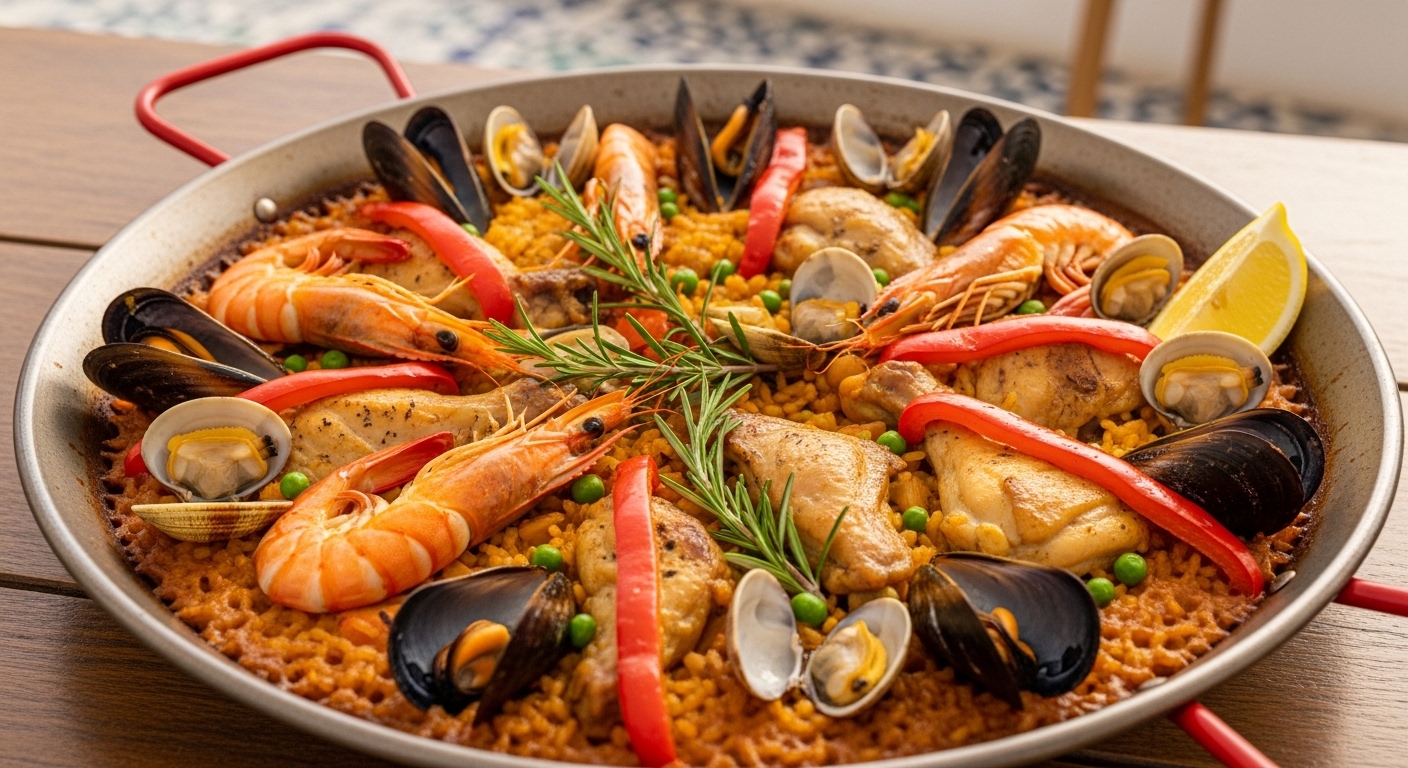
There’s something magical about a perfectly cooked paella—its golden saffron-infused rice, smoky chorizo, tender chicken, and vibrant vegetables all simmering together in one pan. Originating from the sun-drenched fields of Valencia, Spanish Paella is more than just a meal; it’s a celebration of flavor, tradition, and communal dining. Whether you’re hosting a dinner party or craving a taste of Spain, this dish brings bold, authentic flavors straight to your kitchen. But what makes Spanish Paella so special, and how can you recreate that restaurant-quality version at home?
What Is Spanish Paella?
Spanish Paella is a traditional Valencian rice dish that dates back centuries, originally prepared by farmers and laborers over open fires using locally sourced ingredients like rabbit, chicken, beans, and seasonal vegetables. Today, it’s celebrated across Spain and the world as a symbol of Spanish cuisine. The key to its distinct taste lies in **safran**, which gives the rice its signature golden hue and subtle floral aroma, along with the use of **bomba or calasparra rice**—a short-grain variety that absorbs broth beautifully without turning mushy.
Unlike other rice dishes, paella is not stirred constantly. Instead, it’s left to cook slowly over low heat, allowing the rice to develop a delicious crust at the bottom called *socarrat*—a prized texture that adds depth and complexity.
Quick Recipe Summary
- Prep Time: 20 minutes
- Cook Time: 35 minutes
- Total Time: 55 minutes
- Servings: 4
- Cuisine: Spanish
- Course: Main Course
- Calories (approx.): 580 per serving
Essential Ingredients for Authentic Spanish Paella
To achieve an unforgettable Spanish Paella, you’ll need these high-quality ingredients:
For the Broth and Base:
- 6 cups (1.5 liters) of homemade or store-bought chicken or vegetable broth
- 2 tablespoons extra-virgin olive oil
- 1 large onion, finely chopped
- 4 garlic cloves, minced
- 1 red bell pepper, diced
- 1 teaspoon smoked paprika (pimentón)
- 1 pinch of saffron threads (about ¼ teaspoon), soaked in ¼ cup warm water
- 1½ cups (300g) bomba or calasparra rice
For the Protein and Vegetables:
- 1 lb (450g) chicken thighs, bone-in and skin-on, cut into pieces
- 8-10 fresh green beans, trimmed and halved
- 1 cup (150g) frozen broad beans (fava beans), thawed if frozen
- 1 ripe tomato, grated or finely chopped
- Optional: 4-6 small squid rings or shrimp (for seafood variation)
- Optional: 200g chorizo sausage, sliced (use Spanish-style, not Mexican)
Step-by-Step Cooking Instructions
Follow these simple steps to create a restaurant-worthy Spanish Paella:
- Prepare the Pan: Heat a large, shallow paella pan (or a wide, flat skillet) over medium heat. Add olive oil and let it warm gently.
- Sauté the Aromatics: Add chopped onion and red bell pepper. Cook for 5–7 minutes until soft but not browned. Stir in minced garlic and smoked paprika; cook for another minute.
- Add Tomato and Saffron: Stir in the grated tomato and cook until it releases its juices and thickens slightly. Pour in the saffron-soaked water and mix well.
- Toast the Rice: Add the rice and stir for 1–2 minutes until grains are coated and slightly translucent.
- Simmer with Broth: Pour in the hot broth gradually, stirring once. Bring to a gentle boil, then reduce heat to low. Do not stir again after this point.
- Add Proteins and Vegetables: Arrange chicken pieces on top. Scatter green beans, fava beans, and chorizo (if using) evenly across the pan. For seafood versions, add squid and shrimp in the last 10 minutes.
- Finish Cooking: Simmer uncovered for 20–25 minutes, rotating the pan occasionally for even heat distribution. The rice should be al dente with a slight bite.
- Rest and Serve: Remove from heat and let sit for 5 minutes. Garnish with lemon wedges and fresh parsley. Serve directly from the pan.
Chef Tips for Perfect Spanish Paella
– Use the Right Pan: An authentic paellera is wide and shallow, allowing even cooking and easy access to the socarrat.
– Don’t Stir After Adding Broth: This helps form the coveted crispy layer at the bottom.
– Keep Heat Low:** High heat causes uneven cooking; maintain a gentle simmer throughout.
– Fresh Saffron Is Key:** Crush threads slightly before soaking to release maximum flavor.
– Rotate the Pan:** Use oven mitts to rotate the pan every few minutes for consistent browning.
Common Mistakes to Avoid
- Using Regular Long-Grain Rice: It won’t absorb liquid properly and becomes mushy.
- Overcooking the Chicken: Add chicken early but check doneness—it should be juicy, not dry.
- Adding Salt Too Early: It can toughen proteins and over-season the rice.
- Stirring Constantly: This prevents socarrat formation and alters texture.
- Using Tap Water:** Always use filtered or bottled water to avoid chlorine affecting flavor.
Ingredient Substitutions and Variations
Want to customize your paella? Here are some great swaps:
– Rice: Calasparra rice works best, but Arborio can be used in a pinch.
– Protein: Swap chicken for rabbit (traditional), or go vegetarian with artichokes, mushrooms, and peas.
– Seafood Paella: Use mussels, clams, shrimp, and squid—skip the meat entirely.
– Vegan Option: Replace animal products with smoked tofu, jackfruit, and vegetable broth.
– Spice Level: Add a pinch of cayenne or smoked paprika for extra kick.
Serving Suggestions
Serve Spanish Paella family-style in the center of the table. Accompany it with:
– A crisp white wine like Albarino or Verdejo
– Fresh salad with lemon vinaigrette
– Olives, manchego cheese, and crusty bread
– A glass of sangria or limoncello for dessert
Garnish with lemon slices and fresh parsley for a vibrant finish.
Storage and Reheating
– Refrigerate: Store leftovers in an airtight container for up to 3 days.
– Reheat Safely: Warm in a skillet over low heat with a splash of broth to restore moisture. Avoid microwaving unless covered tightly.
– Freeze Option: Not ideal due to rice texture, but possible for up to 1 month. Thaw overnight and reheat gently.
Nutrition Facts (Approximate per Serving)
- Calories: 580
- Protein: 32g
- Carbohydrates: 58g
- Fat: 28g
- Fiber: 3g
- Sodium: 890mg
Note: Values vary based on added ingredients like chorizo and broth.
Key Takeaways
– Spanish Paella is a rustic, communal dish rooted in Valencia’s agricultural traditions.
– The secret to success lies in bomba rice, saffron, low-and-slow cooking, and avoiding constant stirring.
– Customize with proteins and vegetables based on preference—chicken, seafood, or vegetarian options all shine.
– Proper technique ensures the perfect socarrat and rich, layered flavors.
FAQs About Spanish Paella
Q: Can I make paella ahead of time?
A: While best served fresh, you can prepare components (like broth or marinate chicken) a day in advance. However, do not assemble and cook ahead—rice becomes soggy when reheated.
Q: What is socarrat?
A: Socarrat refers to the slightly crispy, caramelized layer of rice at the bottom of the pan. It’s considered the most prized part of paella for its intense flavor.
Q: Is Spanish Paella spicy?
A: Not traditionally. However, smoked paprika (pimentón) adds a mild smokiness. You can increase heat with chili flakes if desired.
Q: Can I use a regular frying pan instead of a paella pan?
A: Yes, but a wide, shallow pan allows better heat distribution and mimics the traditional shape. Avoid deep pots.
Q: How do I know when the paella is done?
A: The rice should be tender with a slight bite. There should be about 1–2 tablespoons of liquid left in the pan. If not, add a little broth and cook 2–3 more minutes.
Conclusion: Bring the Sun of Spain to Your Table
Spanish Paella isn’t just a dish—it’s an experience. With its vibrant colors, aromatic saffron, and symphony of textures, it invites you to slow down and savor each bite. Whether you’re cooking for loved ones or treating yourself to a gourmet night in, mastering this iconic recipe is within reach.
Don’t be intimidated by the reputation—this dish is surprisingly forgiving once you understand the basics. Start with our beginner-friendly guide, embrace the process, and soon you’ll be serving up restaurant-quality paella that impresses every time.
So grab your paella pan, light the burner, and let the magic of Spanish cuisine unfold. ¡Buen provecho!
Leave a Reply