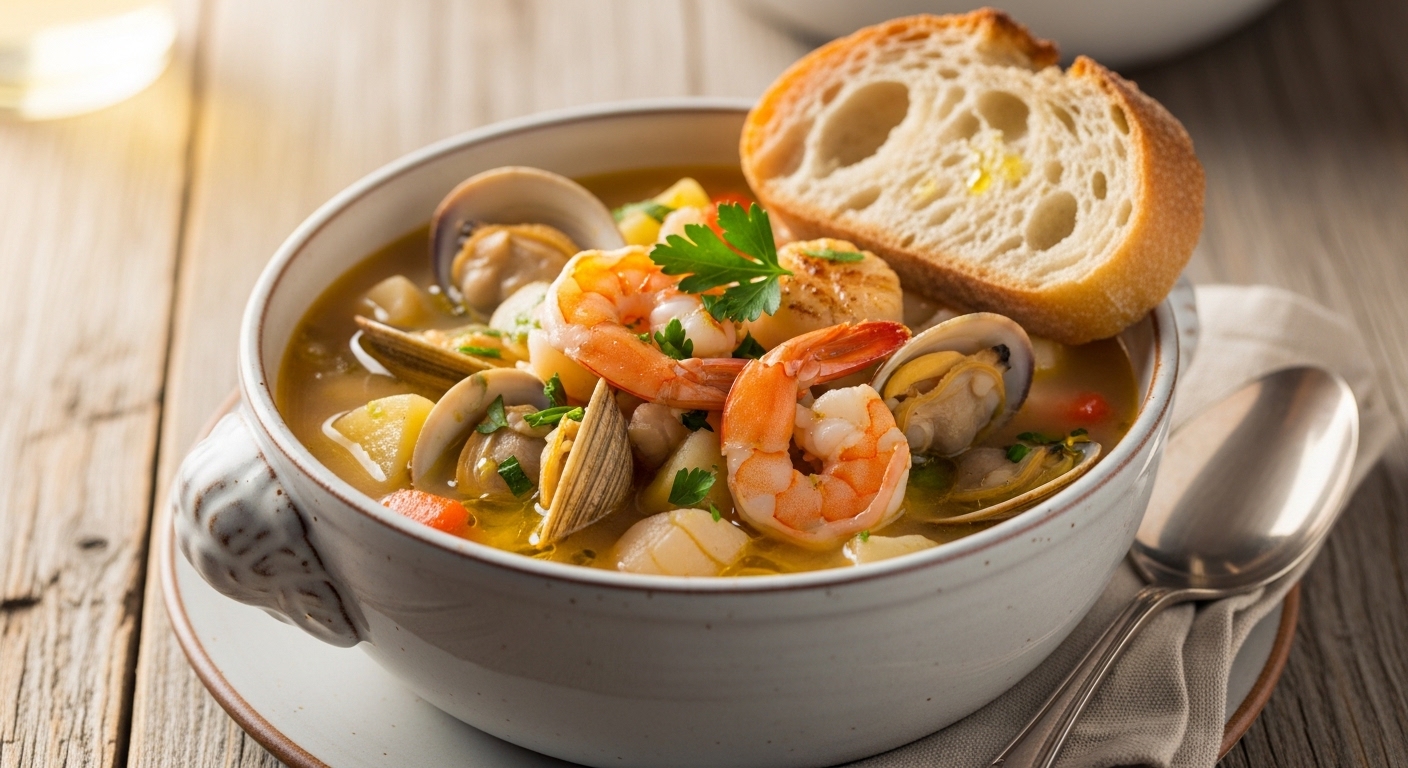
Imagine sinking your spoon into a velvety, golden chowder thickened with potatoes and celery, bursting with plump shrimp, tender scallops, and flaky fish—all simmered in a rich, aromatic broth. That’s the magic of a **seafood chowder plate**—a comforting yet elegant dish that brings coastal flavors straight to your table. Originating from the cold waters of New England, this creamy seafood stew has long been a favorite among home cooks and professional chefs alike for its balance of richness, texture, and oceanic freshness.
Whether you’re hosting a cozy dinner party or craving something warm and satisfying on a rainy evening, the **seafood chowder plate** delivers on every front. It’s not just about the ingredients—it’s the harmony of cream, butter, onions, garlic, and herbs that elevates each bite into pure comfort. And when served over crusty bread or alongside a crisp salad, it becomes a complete meal worth savoring.
Below, we’ll walk you through an authentic, restaurant-quality recipe that’s perfect for beginners but impressive enough to serve guests. From ingredient selection to timing and serving tips, you’ll learn how to create a **seafood chowder plate** that feels both luxurious and homely.
Quick Recipe Summary Table
- Prep Time: 20 minutes
- Cook Time: 35 minutes
- Total Time: 55 minutes
- Servings: 4
- Cuisine: American (New England-style)
- Course: Main Course / Soup
- Calories (approx.): 480 per serving
Ingredients for the Perfect Seafood Chowder Plate
For a rich and flavorful **seafood chowder plate**, gather these high-quality ingredients:
Dairy & Thickeners
- 4 tablespoons unsalted butter
- 1 cup heavy cream
- 2 large russet potatoes (peeled and diced into ½-inch cubes)
- 1 small onion (finely chopped)
- 2 celery stalks (diced)
- 3 garlic cloves (minced)
- ½ teaspoon dried thyme
- ¼ teaspoon paprika
- Salt and freshly ground black pepper (to taste)
Seafood Components
- 1 pound mixed seafood (shrimp, scallops, cod, or halibut—about 1 lb total)
- ½ pound jumbo shrimp (peeled and deveined, tails optional)
- ½ pound sea scallops (tough membranes removed)
- ½ pound white fish fillets (cut into chunks)
- 1 tablespoon lemon juice
- Zest of 1 lemon
Aromatics & Garnish
- 2 cups low-sodium chicken or seafood stock
- 1 bay leaf
- Fresh parsley (chopped, for garnish)
- Crusty bread or oyster crackers (for serving)
Step-by-Step Cooking Instructions
Follow these simple steps to prepare your own **seafood chowder plate** at home:
- Melt the Butter: In a large pot or Dutch oven, melt the butter over medium heat. Add the chopped onion and celery. Sauté for 5–7 minutes until softened and fragrant.
- Add Garlic and Spices: Stir in the minced garlic, thyme, and paprika. Cook for another minute until the aroma blooms.
- Build the Base: Add the diced potatoes and stir to coat with the aromatics. Pour in the stock and bay leaf. Bring to a gentle boil, then reduce heat and simmer uncovered for 15–20 minutes, or until potatoes are tender.
- Blend for Creaminess: Using an immersion blender, partially blend about one-third of the soup to thicken the base slightly. This creates a smoother mouthfeel without turning it into a puree.
- Add Dairy and Seasoning: Stir in the heavy cream, salt, and pepper. Simmer gently for 5 more minutes—do not let it boil vigorously, or the cream may curdle.
- Incorporate Seafood: Gently add the shrimp, scallops, and fish chunks. Cover and cook for 5–7 minutes until seafood turns opaque and cooked through. Avoid overcooking—seafood can become rubbery.
- Finish with Citrus: Stir in lemon juice and zest. Taste and adjust seasoning if needed.
- Garnish and Serve: Ladle into bowls, sprinkle with fresh parsley, and serve immediately with crusty bread or oyster crackers.
Chef Tips for Best Results
To elevate your **seafood chowder plate** like a pro, keep these expert tips in mind:
- Use Fresh Seafood: Always choose seafood that smells clean, not fishy. Fresh scallops should be firm and milky-white; shrimp should have a sweet ocean scent.
- Don’t Overblend: A little blending gives creaminess without losing texture. Leave some potato pieces whole for visual appeal and bite.
- Layer Flavor: Sauté onions slowly to develop sweetness—this is key to avoiding a raw flavor in the final dish.
- Time Your Seafood: Add delicate items like scallops last to prevent toughness. Cod and fish chunks can go in earlier since they’re firmer.
- Adjust Consistency: If the chowder is too thick, thin it with a splash of stock or cream. Too thin? Simmer longer to reduce.
Common Mistakes to Avoid
Even experienced cooks can stumble when making **seafood chowder plate**. Here’s what to watch out for:
- Overcooking Seafood: This is the #1 enemy. Once seafood turns pink or opaque, it’s done. Remove from heat immediately.
- Using Cold Cream Directly: Adding cold cream to hot liquid can cause separation. Warm the cream slightly before adding, or stir constantly after adding.
- Skipping the Mirepoix: Onion, celery, and garlic form the flavor foundation. Skipping them makes the chowder taste flat.
- Too Much Salt Early: Salt can toughen proteins. Add gradually and taste frequently.
- Not Peeling Shrimp: While optional, leaving tails on adds elegance and helps hold shape during cooking.
Ingredient Substitutions and Variations
Want to customize your **seafood chowder plate**? Try these swaps:
Vegetarian Version
Replace seafood with artichoke hearts, mushrooms, and smoked paprika for a smoky, umami-rich alternative. Use vegetable stock instead of chicken stock.
Vegan Option
Substitute butter with olive oil or vegan butter, and use coconut milk or cashew cream instead of dairy. Ensure your stock is plant-based.
Indian-Inspired Twist
Add turmeric, cumin, coriander, and a pinch of red chili flakes. Include chickpeas or paneer for protein. Serve with naan or rice.
Healthier Light Version
Use half-and-half or whole milk instead of heavy cream, and trim visible fat from seafood. Increase vegetables like carrots and leeks for fiber.
Gluten-Free Friendly
Ensure all packaged stocks and thickeners are certified gluten-free. Serve with gluten-free bread or crackers.
Serving Suggestions
A great **seafood chowder plate** deserves thoughtful presentation:
- Bread Pairings: Serve with warm sourdough baguette slices, cornbread, or oyster crackers on the side.
- Salad Complement: A simple arugula salad with lemon vinaigrette balances the richness.
- Wine Match: A crisp Sauvignon Blanc or Pinot Grigio enhances the citrus notes in the chowder.
- Toppings: Add a dollop of crème fraîche, a sprinkle of chives, or a few drops of truffle oil for luxury.
Storage and Reheating Instructions
Leftover **seafood chowder plate** tastes best the next day—but here’s how to preserve its quality:
- Refrigeration: Store in an airtight container for up to 3 days. The cream may separate slightly—just stir well before reheating.
- Freezing: Not recommended for full chowder (cream separates), but you can freeze the broth base without seafood for up to 3 months. Add fresh seafood when reheating.
- Reheating: Warm gently on the stove over low heat, stirring occasionally. Add a splash of cream or stock if too thick. Do not microwave in portions—it can overcook the seafood.
Nutrition Facts (Approximate Per Serving)
- Calories: 480 kcal
- Protein: 28g
- Fat: 32g
- Carbohydrates: 22g
- Fiber: 2g
- Sugar: 4g
- Sodium: 680mg
- Cholesterol: 190mg
*Values based on average ingredients. Adjustments may vary.*
FAQ Section
1. Can I make seafood chowder ahead of time?
Yes! You can prepare the broth base up to 2 days ahead. Just add fresh seafood and cream right before serving to maintain texture and flavor.
2. What’s the difference between clam chowder and seafood chowder?
Clam chowder uses clams as the primary seafood and often includes bacon or salt pork. Seafood chowder is broader, featuring a mix of shellfish and white fish in a cream-based broth.
3. How do I know when the seafood is fully cooked?
Shrimp turns bright pink and curls; scallops turn opaque and firm; fish chunks lose their translucent edges and flake easily with a fork.
4. Can I use frozen seafood?
Yes, but thaw it completely in the fridge before using. Pat dry to prevent excess water from diluting the chowder.
5. Is seafood chowder healthy?
It’s rich in protein and omega-3 fatty acids from the seafood, but also high in saturated fat due to cream and butter. Moderation and portion control help balance enjoyment with nutrition.
Conclusion: Your Next Favorite Comfort Dish Awaits
There’s something deeply satisfying about a bowl of **seafood chowder plate**—its warmth, its depth of flavor, and the way it brings people together. Whether you’re new to cooking or a seasoned chef, this recipe offers a reliable path to creating a dish that feels both special and effortless.
With the right ingredients and a little attention to timing, you’ll find yourself reaching for this recipe again and again. So grab your pot, gather your freshest catch, and let the aroma of simmering onions and garlic fill your kitchen. Your taste buds will thank you—and so will your guests.
Now, roll up your sleeves and start cooking. The sea is calling, and your table is ready.