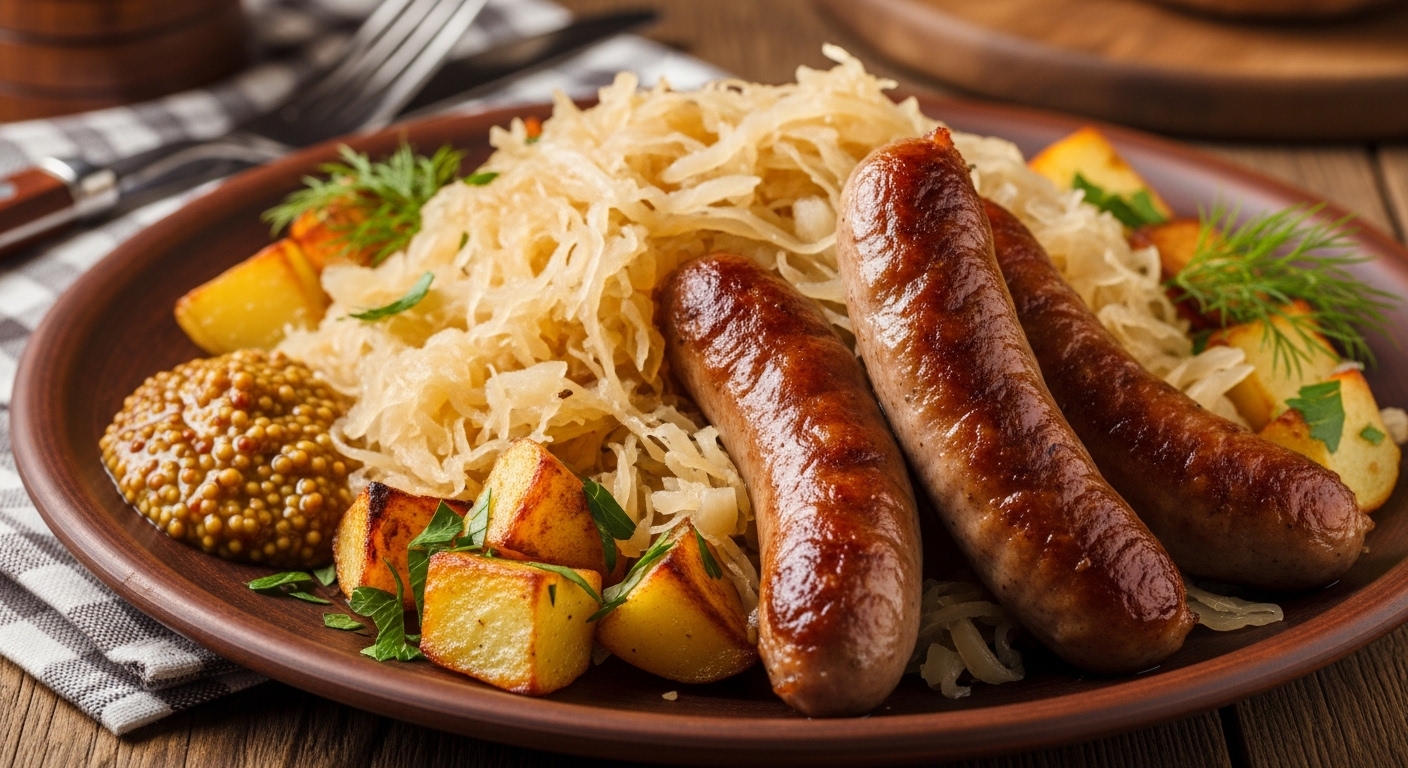
Sausage Sauerkraut Plate: A Hearty, Comforting Classic with Rich Flavor and Cultural Roots
Imagine a warm, savory dish that brings together the bold, smoky notes of seasoned sausage with the tangy crunch of fermented cabbage—this is the essence of a Sausage Sauerkraut Plate. Originating from Central and Eastern European cuisines, particularly Germany and Poland, this dish has long been a staple at family gatherings, festive tables, and rustic taverns. It’s more than just a meal—it’s a celebration of tradition, flavor layering, and hearty nourishment. Whether you’re craving something comforting on a chilly evening or exploring global comfort foods, the Sausage Sauerkraut Plate delivers rich taste, satisfying textures, and deep cultural significance in every bite.
This dish is beloved for its balance of protein, acidity, and umami depth. The sausage provides a juicy, spiced backbone, while the sauerkraut adds brightness and digestive benefits thanks to its probiotic content. Often served with sides like mustard, pickles, or crusty bread, it’s a complete, self-contained meal that’s both nostalgic and deeply flavorful. In this comprehensive guide, we’ll walk you through an authentic recipe, share pro tips, explore variations, and answer all your burning questions about making the perfect Sausage Sauerkraut Plate at home.
Quick Recipe Summary Table
| Prep Time | Cook Time | Total Time | Servings | Cuisine | Course | Calories (approx.) |
|---|---|---|---|---|---|---|
| 15 minutes | 45 minutes | 1 hour | 4 | German / Eastern European | Main Course | 520 per serving |
Key Takeaways
- The Sausage Sauerkraut Plate combines smoked sausage and fermented cabbage for a rich, tangy, and savory profile.
- It’s traditionally slow-cooked to blend flavors, enhancing tenderness and depth.
- Perfect for weeknight dinners or special occasions, it’s adaptable to dietary preferences.
- Pair with mustard, sauerkraut relish, or rye bread for an authentic experience.
- Can be made in a Dutch oven, slow cooker, or stovetop for convenience.
Why This Dish Stands Out
The magic of the Sausage Sauerkraut Plate lies in its simplicity and complexity. On the surface, it appears straightforward—just sausage and cabbage—but when cooked together, they create a symphony of flavors. The natural sugars in the cabbage caramelize slightly during cooking, mellowing the acidity while adding sweetness. At the same time, the sausage infuses the braising liquid with its signature spice—often garlic, fennel, or paprika—creating layers of taste that unfold with each spoonful.
Historically, this dish was born out of practicality. Sauerkraut was a preserved food source rich in vitamins and easy to store, especially during long winters. Paired with cured meats like sausage, it became a reliable, nutritious meal for farmers, laborers, and soldiers. Today, it’s embraced not only for its historical roots but also for its comforting warmth and ability to bring people together.
Ingredients You’ll Need
To make an authentic and delicious Sausage Sauerkraut Plate, gather these ingredients:
Main Components
- 1 lb (450g) smoked sausage – such as kielbasa, bratwurst, or andouille (preferably skin-on for extra flavor)
- 2 cups (about 300g) sauerkraut – preferably pre-packaged or homemade, drained and rinsed to reduce excess salt
- 1 medium onion – finely chopped (about 1 cup)
- 2 cloves garlic – minced
- 1 medium apple – diced (optional, adds sweetness and balance)
- 1/2 cup (120ml) dry white wine – or chicken broth for non-alcoholic version
- 1/4 cup (60ml) apple cider vinegar – enhances tang and helps tenderize sausage
- 2 tbsp tomato paste – adds richness and depth
- 1 tsp caraway seeds – optional but traditional for authentic flavor
- 1 bay leaf – for aromatic complexity
- 2 tbsp butter or oil – for sautéing
- Salt and freshly ground black pepper – to taste
Optional Garnishes & Sides
- Fresh parsley or chives for garnish
- Dijon or spicy brown mustard
- Sliced pickles or cornichons
- Crusty rye bread or pretzel rolls
Step-by-Step Cooking Instructions
Step 1: Prepare the Sausage
Slice the smoked sausage into 1-inch thick rounds. If using a longer sausage like kielbasa, cut crosswise so each piece can cook evenly. Set aside. This step ensures even browning and easier portioning.
Step 2: Sauté the Aromatics
In a large Dutch oven or heavy-bottomed pot, heat the butter or oil over medium heat. Add the chopped onion and sauté for 4–5 minutes until soft and translucent. Stir in the minced garlic and cook for another 30 seconds until fragrant. This forms the flavor base of your dish.
Step 3: Deglaze and Build Flavor
Pour in the white wine (or broth) and apple cider vinegar. Scrape the bottom of the pot to release any browned bits—these are flavor gold! Let it simmer for 2–3 minutes to reduce slightly. Stir in the tomato paste, caraway seeds, and bay leaf. This mixture will coat the sausage beautifully and add complexity.
Step 4: Combine All Ingredients
Add the sliced sausage, drained sauerkraut, and diced apple (if using) to the pot. Stir gently to combine. Bring the mixture to a gentle simmer.
Step 5: Simmer Slowly
Reduce heat to low, cover the pot, and let it cook for 30–40 minutes, stirring occasionally. This slow braising process allows the flavors to meld and the sausage to become tender. The sauerkraut should remain slightly crisp yet softened, not mushy.
Step 6: Final Adjustments
Taste and adjust seasoning. Add salt or pepper if needed—keep in mind that smoked sausage and sauerkraut are already salty. Remove the bay leaf before serving. Garnish with fresh herbs if desired.
Step 7: Serve Immediately
Transfer to a serving platter and serve hot with mustard, pickles, and crusty bread on the side. Enjoy the contrast of textures and temperatures!
Chef Tips for Best Results
- Don’t rinse sauerkraut too much – rinsing removes beneficial probiotics, but if it’s very salty, rinse briefly under cold water and drain well.
- Use high-quality sausage – opt for artisanal or heritage varieties for deeper flavor.
- Simmer gently – avoid boiling vigorously, which can break down the sauerkraut and make it slimy.
- Add apples for balance – their natural sweetness cuts through the tang and richness.
- Make ahead – this dish tastes even better the next day as flavors deepen.
Common Mistakes to Avoid
- Overcooking the sauerkraut – results in a mushy texture. Aim for tender but still slightly firm.
- Skipping the deglazing step – this releases fond (browned bits) that boost flavor.
- Using low-quality sauerkraut – bland or overly processed versions lack character.
- Not adjusting salt – remember both sausage and sauerkraut are salted; taste before adding more.
Ingredient Substitutions & Variations
Substitutions
- Sausage: Use turkey or chicken sausage for a lighter option, or vegan sausage for plant-based.
- Sauerkraut: Substitute with coleslaw (though less authentic), or try sauerkraut juice (without solids) for extra tang.
- White wine: Use vegetable broth or apple cider for a non-alcoholic version.
- Onion: Replace with leeks or shallots for a milder, sweeter base.
Variations
- Indian-style Sausage Sauerkraut Plate: Add garam masala, turmeric, and green chilies. Serve with naan or rice.
- Healthier Version: Use lean sausage, reduce oil, and add carrots or potatoes for fiber.
- Vegan/Vegetarian Option: Swap sausage for smoked tofu or seitan, and use mushroom-based broth.
- Spicy Kick: Add red pepper flakes or a splash of hot sauce for heat.
- One-Pot Meal: Add diced potatoes or smoked gouda near the end for a heartier dish.
Serving Suggestions
Serve the Sausage Sauerkraut Plate family-style in a warm pot or on a rustic platter. Accompany it with:
- Mustard – Dijon, whole grain, or spicy brown mustard on the side
- Pickled vegetables – cornichons, pickled beets, or cucumber relish
- Crusty bread – rye, sourdough, or pretzel rolls for dipping
- Side salad – a simple arugula salad with lemon vinaigrette balances the richness
For a festive touch, present it with a sprig of thyme or a slice of apple on top.
Storage and Reheating Instructions
- Refrigeration: Store leftovers in an airtight container for up to 4 days.
- Freezing: Cool completely, then freeze in portions for up to 3 months. Thaw overnight in the fridge.
- Reheating: Warm gently on the stovetop with a splash of broth or water to prevent drying. Avoid microwaving unless necessary—it can make the sauerkraut soggy.
Nutrition Facts (Approximate Per Serving)
- Calories: 520
- Protein: 24g
- Fat: 38g
- Carbohydrates: 22g
- Fiber: 5g
- Sugar: 9g
- Sodium: 1,100mg (adjust based on brand and salt content)
- Probiotics: Present in sauerkraut (varies by type)
*Values may vary depending on ingredients used.*
FAQs
1. Can I make this in a slow cooker?
Yes! After sautéing the onions and garlic (optional), transfer everything to a slow cooker. Cook on low for 6–8 hours or high for 3–4 hours. Just ensure the sauerkraut doesn’t get too mushy by checking halfway through.
2. Is sauerkraut healthy?
Absolutely. Sauerkraut is rich in probiotics, which support gut health, and contains vitamin C, fiber, and antioxidants. Choose unpasteurized versions for maximum live cultures.
3. Why is my sauerkraut too sour?
Over-fermentation or high acidity in the brine can cause excessive sourness. To mellow it, rinse the sauerkraut briefly or add a sweet element like diced apple or a teaspoon of sugar while cooking.
4. Can I use regular cabbage instead of sauerkraut?
While possible, fresh cabbage lacks the fermented tang and probiotics. You can make quick-pickled cabbage by sautéing it with vinegar, sugar, and salt, but it won’t replicate the authentic flavor.
5. How do I know the sausage is done?
The sausage should reach an internal temperature of 160°F (71°C). If the skin is intact, it should be firm and golden when browned. Cut one open to check the meat—it should be opaque and no longer pink.
Conclusion: Bring Home the Tradition
The Sausage Sauerkraut Plate isn’t just a recipe—it’s a time capsule of flavor, tradition, and culinary craftsmanship. With its bold spices, tangy cabbage, and deeply savory sausage, it offers a satisfying meal that warms the body and soul. Whether you’re new to German cuisine or a seasoned fan, this dish invites you to slow down, savor the moment, and enjoy the beauty of simple, well-made food.
Now that you have the full recipe, tips, and insights, there’s no reason not to try it tonight. Gather your ingredients, fire up the stove, and let the rich aroma of simmering sausage and sauerkraut fill your kitchen. Your taste buds—and your guests—will thank you.
Ready to impress? Share your homemade Sausage Sauerkraut Plate photos in the comments below and tag us! We’d love to see your take on this timeless classic.