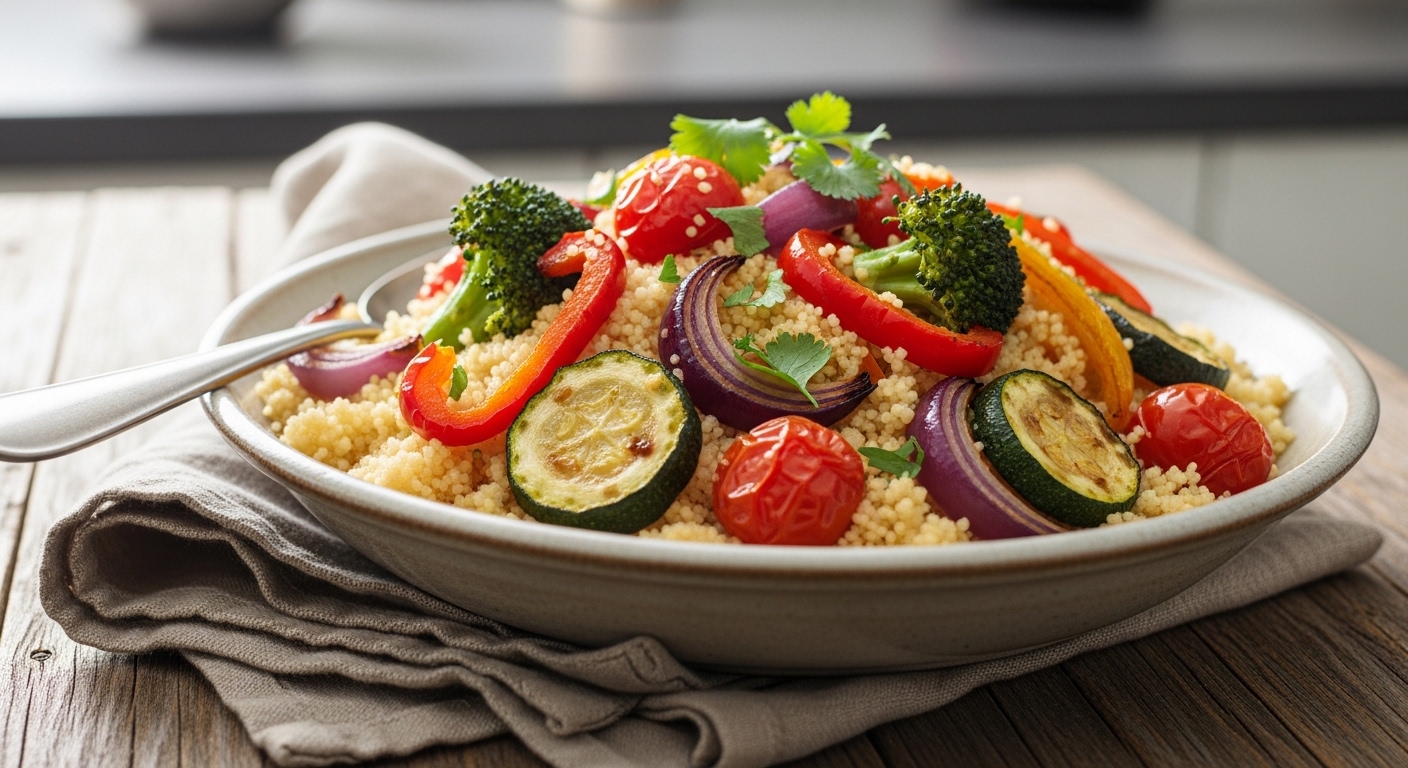
The Ultimate Comfort Food with a Mediterranean Twist
If you’re searching for a dish that’s both nutritious and bursting with flavor, roasted veg couscous is your answer. This vibrant, one-pan meal combines the wholesome goodness of whole wheat couscous with tender roasted vegetables like bell peppers, zucchini, cherry tomatoes, and carrots. Infused with aromatic spices such as cumin, paprika, and garlic, this dish delivers a satisfying crunch and rich taste in every bite.
Unlike traditional couscous recipes that rely on boiling or steaming, roasting transforms the vegetables into caramelized nuggets of sweetness while keeping the couscous light and fluffy. The result? A hearty, gluten-free-friendly (if using certified GF couscous), vegetarian delight that’s perfect for busy weeknights or elegant dinner parties alike.
Quick Recipe Summary Table
| Prep Time | 15 minutes |
|---|---|
| Cook Time | 30–35 minutes |
| Total Time | 45–50 minutes |
| Servings | 4 people |
| Cuisine | Mediterranean / North African |
| Course | Dinner, Main Course |
| Calories (approx.) | 280 per serving |
Why Roasted Veg Couscous Stands Out
Roasted veg couscous isn’t just another side dish—it’s a complete meal packed with fiber, vitamins, and plant-based protein. The slow-roasting process intensifies the natural sweetness of seasonal vegetables, while the couscous acts as a fluffy, absorbent base that soaks up all the savory juices. Whether you’re following a plant-based diet or simply looking to eat more veggies, this recipe delivers on both flavor and nutrition.
What makes this dish especially appealing is its versatility. You can customize it based on what’s in season or what you have in your fridge. Plus, it’s naturally gluten-free when using gluten-free couscous, making it accessible to more people. And because everything cooks together in one pan, cleanup is minimal—a major win for home cooks.
Essential Ingredients for Perfect Roasted Veg Couscous
- 1 cup whole wheat or gluten-free couscous – The star of the show; choose a high-quality brand for best texture.
- 1.5 cups vegetable broth – Adds depth of flavor and keeps the couscous moist.
- 2 tbsp olive oil – For roasting and binding the grains.
- 1 red bell pepper, diced
- 1 yellow bell pepper, diced
- 1 medium zucchini, sliced into half-moons
- 1 cup cherry tomatoes, halved
- 1 medium carrot, peeled and diced
- 1 small red onion, finely chopped
- 3 cloves garlic, minced
- 1 tsp ground cumin – Adds earthy warmth.
- 1 tsp smoked paprika – For a subtle smokiness.
- ½ tsp dried oregano
- Salt and black pepper – To taste
- Fresh parsley or cilantro – For garnish
- Lemon wedges – Optional, for brightness
Step-by-Step Instructions
- Preheat your oven to 400°F (200°C). Line a large baking sheet with parchment paper.
- Prepare the vegetables. In a large bowl, toss the bell peppers, zucchini, cherry tomatoes, carrot, and red onion with 1 tablespoon of olive oil, cumin, paprika, oregano, salt, and pepper. Spread evenly on the prepared baking sheet.
- Roast the vegetables. Place in the oven and roast for 20–25 minutes, stirring halfway through, until they’re tender and slightly charred at the edges.
- Prepare the couscous. In a saucepan, bring the vegetable broth to a boil. Stir in the couscous, cover, and remove from heat. Let sit for 5 minutes, then fluff with a fork.
- Combine everything. Transfer the cooked couscous to a large mixing bowl. Add the roasted vegetables, remaining olive oil, and minced garlic. Gently fold everything together.
- Garnish and serve. Top with fresh herbs and lemon wedges if desired. Serve warm.
Chef Tips for Best Results
- Use fresh herbs – Adding parsley or cilantro right before serving enhances the aroma and freshness.
- Don’t overcrowd the pan – When roasting vegetables, spread them out in a single layer to ensure even browning.
- Let couscous rest – After adding broth, letting it sit off-heat helps the grains absorb liquid perfectly without becoming mushy.
- Toast the spices – For extra depth, lightly toast the cumin and paprika in a dry pan before adding to the vegetables.
- Make it ahead – This dish tastes great chilled and can be stored in the fridge for up to 3 days.
Common Mistakes to Avoid
- Using too much liquid – Too much broth can make the couscous soggy. Stick to 1.5 cups for 1 cup of couscous.
- Overcooking the vegetables – Keep an eye on them during roasting to prevent them from turning mushy.
- Serving immediately after combining – Allow flavors to meld for 5–10 minutes before serving.
- Skipping the resting step for couscous – Rushing this causes uneven texture.
Ingredient Substitutions & Variations
Vegetable Swaps
- Replace zucchini with eggplant or mushrooms.
- Swap bell peppers with sweet potatoes or butternut squash.
- Add chickpeas or white beans for extra protein.
Flavor Variations
- Indian-style: Add turmeric, garam masala, and a pinch of cayenne for a spicy kick.
- Italian-inspired: Use basil, rosemary, and sun-dried tomatoes.
- Mexican twist: Mix in corn, black beans, and a dash of lime juice.
Dietary Adaptations
- Vegan: Ensure couscous is certified vegan (some brands use animal-derived additives).
- Gluten-free: Use certified gluten-free couscous made from semolina or corn.
- Low-carb option: Replace couscous with cauliflower rice and roast the vegetables separately.
Serving Suggestions
Roasted veg couscous pairs beautifully with grilled halloumi cheese, a dollop of tzatziki, or a sprinkle of feta. It also complements grilled chicken or falafel for a complete protein-rich meal. For a festive touch, serve it in hollowed-out bell peppers or stuffed into pita bread as a healthy wrap alternative.
Storage & Reheating Tips
- Refrigerate: Store in an airtight container for up to 3 days.
- Freeze: Not recommended due to texture changes in couscous.
- Reheat: Warm gently in a skillet over low heat with a splash of water or broth to revive moisture. Alternatively, microwave with a damp paper towel to prevent drying.
Nutrition Facts (Approximate Per Serving)
- Calories: 280
- Protein: 7g
- Carbohydrates: 52g
- Fiber: 6g
- Fat: 6g
- Sugar: 8g
- Sodium: 320mg
Key Takeaways
- Roasted veg couscous is a quick, flavorful, and nutritious one-pot meal ideal for vegetarians and health-conscious eaters.
- The combination of roasted vegetables and fluffy couscous creates a satisfying texture and rich taste.
- Customize with seasonal produce and spices to keep meals exciting throughout the year.
- It’s easy to prepare, minimally messy, and reheats well—perfect for meal prep.
- With simple swaps, this dish can be adapted to various dietary needs including vegan, gluten-free, and low-carb.
Frequently Asked Questions (FAQs)
Can I make roasted veg couscous without an oven?
Yes! You can sauté the vegetables in a large skillet with a bit of olive oil until tender-crisp, then mix with cooked couscous. While it won’t get the same caramelization, the flavors will still shine.
Is couscous healthy?
Whole wheat or pearl couscous made from durum wheat is a good source of complex carbohydrates and fiber. It’s not as nutrient-dense as whole grains like quinoa, but when paired with vegetables and legumes, it forms a balanced meal.
How do I prevent couscous from becoming sticky?
Use the correct ratio of liquid to couscous (about 1.5 cups broth per 1 cup couscous), avoid over-stirring after cooking, and let it rest covered for 5 minutes to allow steam to finish cooking it gently.
Can I add protein to this dish?
Absolutely! Add cooked lentils, chickpeas, grilled tofu, or crumbled feta to boost protein and make it more filling.
What’s the difference between couscous and bulgur?
Couscous is steamed and rolled from durum wheat semolina, resulting in smaller, smoother grains. Bulgur is parboiled, cracked wheat that’s coarser and chewier—ideal for dishes like tabbouleh.
Final Thoughts: A Dish That Tastes Like Summer in Every Bite
Roasted veg couscous is more than just a recipe—it’s an experience. With its vibrant colors, bold spices, and comforting texture, this dish brings the warmth of Mediterranean kitchens straight to your table. Whether you’re meal prepping for the week or hosting friends for dinner, it never fails to impress.
Best of all, it’s forgiving, adaptable, and delicious no matter how you tweak it. So go ahead—grab those seasonal veggies, fire up the oven, and treat yourself to something truly special. Your taste buds (and your body) will thank you.
Leave a Reply