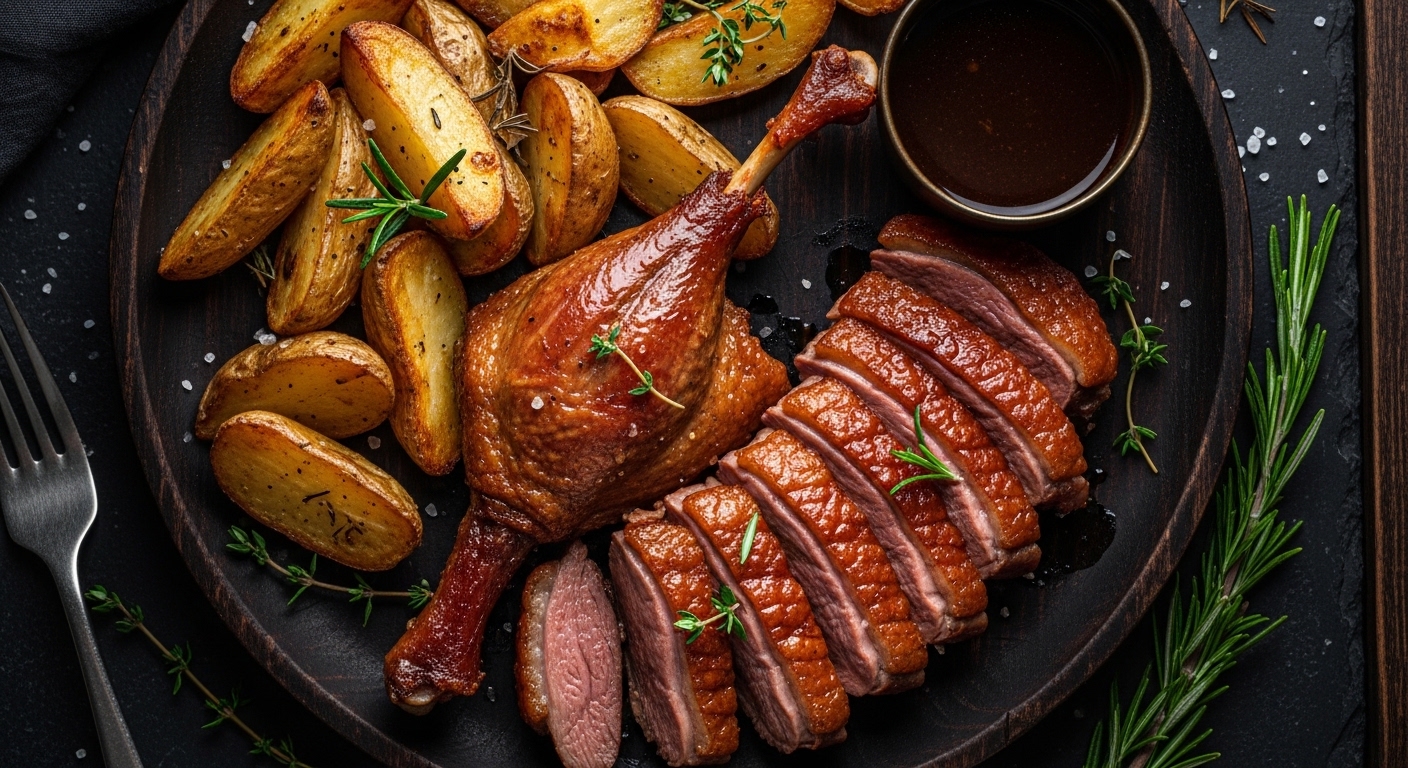
Imagine a dish where tender, succulent roast duck meets golden-brown, caramelized potatoes—each bite delivering a symphony of umami, smokiness, and earthy sweetness. That’s the magic of the roast duck potato plate. This hearty, restaurant-worthy meal blends the rich, gamey depth of slow-roasted duck with the comforting starchiness of perfectly cooked potatoes. Whether you’re hosting a dinner party or craving something indulgent at home, this dish promises to impress with minimal effort. Originating from classic European comfort cuisine—especially French and Chinese fusion styles—the roast duck potato plate is beloved for its balance of protein and carbs, rich flavors, and satisfying texture. If you’ve ever wondered how to elevate a simple potato side into a star ingredient, this is your answer.
Quick Recipe Summary
- Prep Time: 20 minutes
- Cook Time: 90 minutes
- Total Time: 1 hour 50 minutes
- Servings: 4
- Cuisine: Fusion (French-Chinese)
- Course: Main Dish
- Calories: Approximately 680 per serving
Why You’ll Love This Roast Duck Potato Plate
The allure of the roast duck potato plate lies in its layered flavors and textures. The duck, when roasted until skin crackles and meat falls off the bone, releases a deeply savory jus that infuses every corner of the dish. Paired with waxy potatoes like Yukon Gold or fingerlings, which absorb that rich drippings beautifully, the result is a cohesive, decadent meal that feels both rustic and refined. It’s perfect for special occasions but easy enough to make on a weekend night when you want something impressive yet approachable.
A Brief History & Cultural Roots
While roast duck has long been a staple in Cantonese cuisine—think Peking Duck—the concept of pairing it with potatoes comes from Western culinary traditions. French chefs often use duck fat to sauté vegetables, and when combined with the starchy texture of potatoes, the result is a luxurious one-pan masterpiece. Modern interpretations fuse these worlds, creating a plate that’s rich, aromatic, and deeply satisfying.
Ingredients You’ll Need for the Perfect Roast Duck Potato Plate
Gather fresh, quality ingredients to bring out the best in this dish. Here’s what you’ll need:
- 2 lbs (900g) duck legs (with skin on), thawed if frozen – Look for organic or pasture-raised for richer flavor
- 6 medium Yukon Gold potatoes (about 1.5 lbs / 700g), cut into 1-inch cubes
- 3 tbsp duck fat (or substitute with olive oil or butter)
- 4 garlic cloves, smashed
- 1 large onion, quartered
- 2 sprigs fresh thyme
- 1 sprig rosemary
- 1 bay leaf
- 1 cup dry white wine (optional, for deglazing)
- 1 cup chicken or duck stock
- Salt and freshly ground black pepper, to taste
- 1 tbsp soy sauce (for depth, optional but recommended)
- 1 tbsp honey or maple syrup (to balance richness)
Step-by-Step Cooking Instructions
Follow these simple steps to create a restaurant-quality roast duck potato plate at home.
- Preheat your oven to 325°F (165°C). This low-and-slow method ensures the duck becomes tender without drying out.
- Season the duck legs generously with salt and pepper. Rub them well under and over the skin for even seasoning.
- Heat duck fat in a large Dutch oven or heavy oven-safe skillet over medium-high heat. Once shimmering, sear the duck legs skin-side down for 5–6 minutes until golden and crisp. Flip and sear the other side for 2–3 minutes.
- Remove duck legs and set aside. In the same pan, add potatoes and cook for 3–4 minutes until lightly browned.
- Add garlic, onion, thyme, rosemary, and bay leaf to the pot. Sauté for 2 minutes until fragrant.
- Return duck legs to the pot, skin-side up. Pour in white wine (if using) and stock. Bring to a simmer.
- Transfer the entire pot to the preheated oven. Roast uncovered for 60–70 minutes, or until duck meat pulls easily from the bone and potatoes are fork-tender.
- Optional: Increase oven to 425°F (220°C) and broil for 3–5 minutes to crisp the duck skin further.
- Remove from oven and let rest 5–10 minutes. Skim excess fat if desired, then drizzle with honey and soy sauce before serving.
Chef’s Tips for Best Results
- Render the duck fat first: If you can’t find duck fat, render duck skin yourself by simmering duck legs in a pot for 30 minutes until fat melts and skin crisps—then use that fat for cooking.
- Cut potatoes evenly: Uniform cubes ensure even cooking. Soak them briefly in cold water to remove excess starch and prevent sticking.
- Don’t skip resting: Letting the duck rest allows juices to redistribute, keeping meat moist when carved.
- Deglaze with wine or stock: This builds a rich base flavor that coats every potato cube.
- Baste occasionally: During the last 20 minutes, spoon some of the pan juices over the duck to enhance flavor and moisture.
Common Mistakes to Avoid
- Overcrowding the pan: Cook in batches if needed to allow proper browning.
- Skipping the sear: Searing locks in flavor and creates a delicious crust on the duck.
- Using high heat too early: Low and slow roasting prevents toughness and dryness.
- Neglecting seasoning: Both duck and potatoes benefit from ample salt and pepper throughout the process.
Ingredient Substitutions & Variations
Make this dish your own with creative swaps and global twists.
- Vegetarian version: Replace duck with portobello mushrooms marinated in soy sauce and smoked paprika. Use vegetable stock and olive oil.
- Vegan option: Try jackfruit “duck” (available canned or frozen) or seitan, braised in tamari and duck fat substitute.
- Indian-inspired twist: Add garam masala, cumin, and turmeric when sautéing potatoes. Serve with naan or basmati rice.
- Healthier version: Bake instead of fry; use air fryer for crispy skin. Reduce fat by half and add more herbs.
- Lighter alternative: Swap potatoes for sweet potatoes or parsnips for a slightly sweeter, nuttier flavor profile.
Restaurant-Style Presentation Tips
Serve this dish with flair:
- Carve duck into portions and arrange on a platter with potatoes.
- Sprinkle with chopped parsley or chives for freshness.
- Drizzle with reduced pan sauce for shine and flavor.
- Pair with a crisp Sauvignon Blanc or a light red like Pinot Noir.
Storage & Reheating Instructions
This dish tastes even better the next day!
- Store: Cool completely, then refrigerate in an airtight container for up to 4 days.
- Freeze: Well-wrapped, it lasts up to 3 months. Thaw overnight in the fridge.
- Reheat: Warm gently in the oven at 350°F (175°C) for 15–20 minutes, covered with foil. Avoid microwaving—it dries out the duck.
- Revive crispness: Place reheated dish under the broiler for 2–3 minutes to re-crisp skin.
Nutrition Facts (Approximate Per Serving)
- Calories: 680
- Protein: 38g
- Fat: 42g (of which saturated fat is 14g)
- Carbohydrates: 38g (of which fiber is 4g, sugar is 6g)
- Sodium: 750mg
- Potassium: 1,200mg
*Nutritional values may vary based on ingredients used.
Frequently Asked Questions (FAQ)
1. Can I use duck breast instead of legs?
Yes, but adjust cooking time. Duck breasts take less time to render and cook—about 35–40 minutes at 325°F (165°C). Watch closely to avoid drying out.
2. What’s the difference between duck fat and butter?
Duck fat has a higher smoke point and imparts a richer, more complex flavor than butter. Butter will work in a pinch, but results may be slightly less authentic.
3. Why did my duck skin turn out soggy?
Most likely, the skin wasn’t seared properly before roasting. Always sear skin-side down first to render fat and crisp the skin. Also, avoid covering during roasting unless necessary.
4. Can I make this ahead of time?
Absolutely! Assemble everything, refrigerate, and bake just before serving. Add 10–15 extra minutes to cooking time.
5. Is this dish gluten-free?
Yes, as written, it’s naturally gluten-free. Just ensure your soy sauce is certified GF if sensitive to gluten.
Key Takeaways
- The roast duck potato plate combines tender duck and creamy potatoes in one delicious, shareable dish.
- Low-and-slow roasting ensures juicy meat and flavorful potatoes.
- Customize with substitutions for vegetarian, vegan, or lighter versions.
- Best served warm with pan sauce and fresh herbs.
- Leftovers improve in flavor and are easy to reheat.
Conclusion: Ready to Master the Roast Duck Potato Plate?
There’s something undeniably satisfying about pulling a golden-brown duck leg from the oven, watching the skin crackle under the broiler, and seeing those potatoes glisten with savory fat. The roast duck potato plate isn’t just food—it’s an experience. Rich, aromatic, and deeply comforting, it brings together the best of both worlds: the boldness of Asian-inspired duck and the soul-warming simplicity of European one-pot cooking.
Whether you’re a seasoned cook or just starting out, this recipe proves that impressive meals don’t require hours of prep or exotic ingredients. With just a few staples and a trusty Dutch oven, you can create a dish that rivals your favorite restaurant fare. So fire up the oven, grab your knife, and treat yourself to something truly special. Your taste buds—and your guests—will thank you.
Pro tip: Serve with a crisp green salad on the side to balance the richness. And don’t forget to save some pan juice for dipping—it’s liquid gold!
Leave a Reply