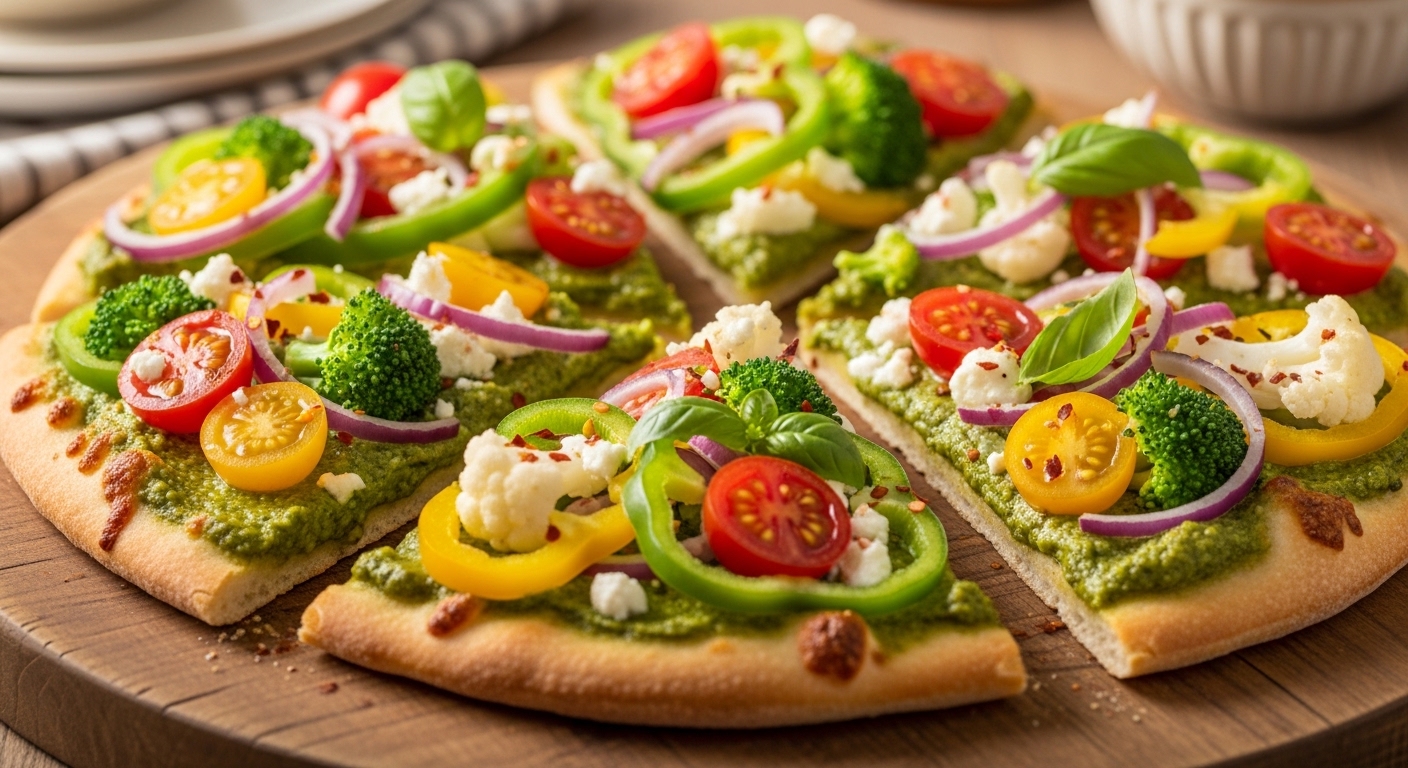
Looking for a pizza that’s vibrant, healthy, and bursting with flavor without the heavy creaminess of traditional cheese-heavy pies? Pesto veggie pizza delivers exactly that—a garden-fresh explosion on a crisp crust, topped with basil pesto, seasonal vegetables, and a light sprinkle of mozzarella. Unlike greasy pepperoni or loaded meat pizzas, this version celebrates freshness and balance, making it perfect for lunch, dinner, or even a light brunch. Originating from the sun-drenched kitchens of Italy, pesto brings a nutty, aromatic punch that transforms ordinary pizza into something extraordinary. Whether you’re meal-prepping for the week or impressing guests at your next gathering, this dish is both satisfying and Instagram-worthy.
Why Pesto Veggie Pizza Stands Out
Pesto veggie pizza isn’t just another plant-based option—it’s a celebration of color, texture, and bold flavors. The tangy, herby essence of basil pesto cuts through the richness of melted cheese, while roasted or sautéed vegetables add depth and nutrition. It’s lighter than traditional pies but far more dynamic in taste. Plus, it’s incredibly versatile—you can customize it based on what’s in season or what you have on hand.
A Brief History of Pesto
Pesto originated in Genoa, Italy, where basil was abundant and locals wanted to preserve its vibrant flavor. The original recipe combined basil, garlic, pine nuts, Parmesan, and olive oil—a simple yet powerful blend that has since spread across the globe. Today, pesto is used not only in pasta but also as a pizza base or topping, bringing a refreshing twist to familiar dishes.
Quick Recipe Overview
| Prep Time | Cook Time | Total Time | Servings | Cuisine | Course | Calories (Approx.) |
|---|---|---|---|---|---|---|
| 20 minutes | 15–20 minutes | 35–40 minutes | 4 servings | Italian-American | Lunch/Dinner | 420 kcal |
Ingredients You’ll Need
- 1 pre-made or homemade pizza dough (about 12-inch round)
- 1/2 cup basil pesto (store-bought or fresh homemade)
- 1 cup shredded mozzarella cheese (low-moisture recommended)
- 1/4 cup grated Parmesan cheese
- 1 cup assorted fresh vegetables, such as:
- 1 medium red bell pepper, sliced
- 1 cup cherry tomatoes, halved
- 1/2 small red onion, thinly sliced
- 8–10 Kalamata olives, pitted and halved
- 1 cup baby spinach or arugula (added after baking)
- 1 tablespoon olive oil
- Salt and freshly ground black pepper, to taste
- Optional garnish: fresh basil leaves, balsamic glaze
Step-by-Step Instructions
- Preheat your oven to 475°F (245°C). If using a pizza stone, place it in the oven while preheating.
- Roll out the dough on a floured surface into a 12-inch circle. Transfer to a parchment-lined baking sheet or pizza peel if using a stone.
- Spread the pesto evenly over the dough, leaving about a 1-inch border around the edges. This ensures a clean, golden crust.
- Add the vegetables—distribute bell peppers, onions, tomatoes, and olives evenly across the pesto layer.
- Drizzle with olive oil and season lightly with salt and pepper.
- Bake for 12–15 minutes, until the crust is golden and the edges are slightly crispy.
- Remove from oven and immediately sprinkle with mozzarella and Parmesan. Return to oven for 3–5 more minutes, until cheese is bubbly and slightly browned.
- Garnish with fresh spinach or arugula right before serving to keep it crisp.
- Slice and serve warm, optionally drizzled with balsamic glaze for a sweet-tangy finish.
Chef Tips for Perfect Pesto Veggie Pizza
- Use high-quality pesto: Homemade pesto made with fresh basil, garlic, and toasted pine nuts offers the best flavor. Avoid watery store brands.
- Don’t overload the pizza: Too many wet vegetables can make the crust soggy. Opt for low-moisture veggies like bell peppers and olives, and pat dry any that release excess liquid.
- Roast hardy vegetables first: For extra depth, roast bell peppers and onions in the oven at 425°F for 10 minutes before adding them to the pizza.
- Low-moisture mozzarella: This type melts better and doesn’t make the pizza soggy compared to regular block or shredded cheese.
- Fresh herbs matter: Add spinach or arugula after baking so it wilts gently with the residual heat, not turns bitter.
Common Mistakes to Avoid
- Skipping the preheat: Cold ovens lead to uneven cooking and a gummy crust.
- Using too much pesto: While delicious, excess pesto can overwhelm the other flavors and make the pizza greasy.
- Overcrowding with toppings: This traps steam and softens the crust. Stick to a balanced mix of 3–4 types of vegetables.
- Not letting cheese cool: Remove the pizza from the oven slightly early if you notice cheese overflowing during baking.
- Using stale or dense dough: Always check expiration dates and ensure dough is fresh and elastic.
Ingredient Substitutions & Variations
- Vegan version: Use vegan pesto (basil, nutritional yeast, cashews, garlic), dairy-free mozzarella, and omit Parmesan. Add sunflower seeds instead of pine nuts.
- Gluten-free: Use certified gluten-free pizza dough or cauliflower crust (pre-bake for 10 minutes before adding toppings).
- Protein boost: Add grilled zucchini, mushrooms, artichoke hearts, or marinated tofu.
- Spicy kick: Include red chili flakes in the pesto or top with pickled jalapeños.
- Herb swap: Try sun-dried tomato pesto or arugula pesto for a different flavor profile.
Serving Suggestions
Serve pesto veggie pizza hot out of the oven, paired with a side salad dressed in lemon vinaigrette to cut through the richness. A glass of chilled Sauvignon Blanc or sparkling water with lime complements the herbal notes beautifully. For a casual gathering, offer mini versions on English muffins or flatbreads as appetizers.
Storage & Reheating Instructions
Refrigerate: Leftovers can be stored in an airtight container in the fridge for up to 3 days. Place a paper towel between slices to absorb moisture.
Reheat: Preheat oven to 375°F. Place pizza on a baking sheet and reheat for 8–10 minutes until warmed through and cheese is soft. Avoid microwaving, as it makes the crust soggy.
Nutrition Facts (Per Serving)
- Calories: ~420
- Total Fat: 22g
- Saturated Fat: 6g
- Cholesterol: 30mg
- Sodium: 720mg
- Carbohydrates: 42g
- Fiber: 3g
- Sugar: 4g
- Protein: 16g
Key Takeaways
- Pesto veggie pizza is a fresh, flavorful alternative to classic cheese pizzas.
- It’s rich in antioxidants from vegetables and heart-healthy fats from olive oil and pesto.
- The recipe is highly customizable for dietary needs—vegan, gluten-free, or protein-enhanced.
- Proper prep (like preheating and balancing toppings) ensures a crispy crust and vibrant flavors.
- Leftovers reheat well and make for delicious quick lunches.
FAQs
Can I use frozen vegetables on pesto veggie pizza?
While fresh vegetables are ideal, you can use thawed frozen bell peppers or broccoli. Just pat them dry thoroughly before adding to prevent a soggy crust.
How do I make pesto from scratch?
In a food processor, combine 2 cups fresh basil leaves, 3 garlic cloves, 1/3 cup pine nuts, 1/2 cup grated Parmesan, and 1/2 cup extra-virgin olive oil. Pulse until smooth. Adjust seasoning with salt and a squeeze of lemon juice.
Is pesto veggie pizza suitable for meal prep?
Yes! Assemble the pizza up to a day ahead (without cheese), refrigerate, and bake when ready. Add cheese and spinach after baking to maintain texture.
What’s the best type of crust for this pizza?
A thin-crust or whole wheat crust works beautifully. Thin crusts cook faster and stay crisp, while whole wheat adds fiber and nutty depth.
Can I freeze pesto veggie pizza?
Yes, but only partially assembled: bake the crust with pesto and veggies, cool completely, wrap tightly, and freeze for up to 2 months. Reheat in a 375°F oven until hot.
Conclusion: Bring the Garden to Your Table
Pesto veggie pizza isn’t just a dish—it’s an experience. With every bite, you’re tasting the essence of summer, the warmth of Italian tradition, and the joy of eating with intention. Whether you’re a seasoned home chef or a beginner in the kitchen, this recipe proves that healthy and delicious can coexist. So roll out that dough, fire up the oven, and let the vibrant flavors of pesto and fresh vegetables shine. Your taste buds will thank you.
Leave a Reply