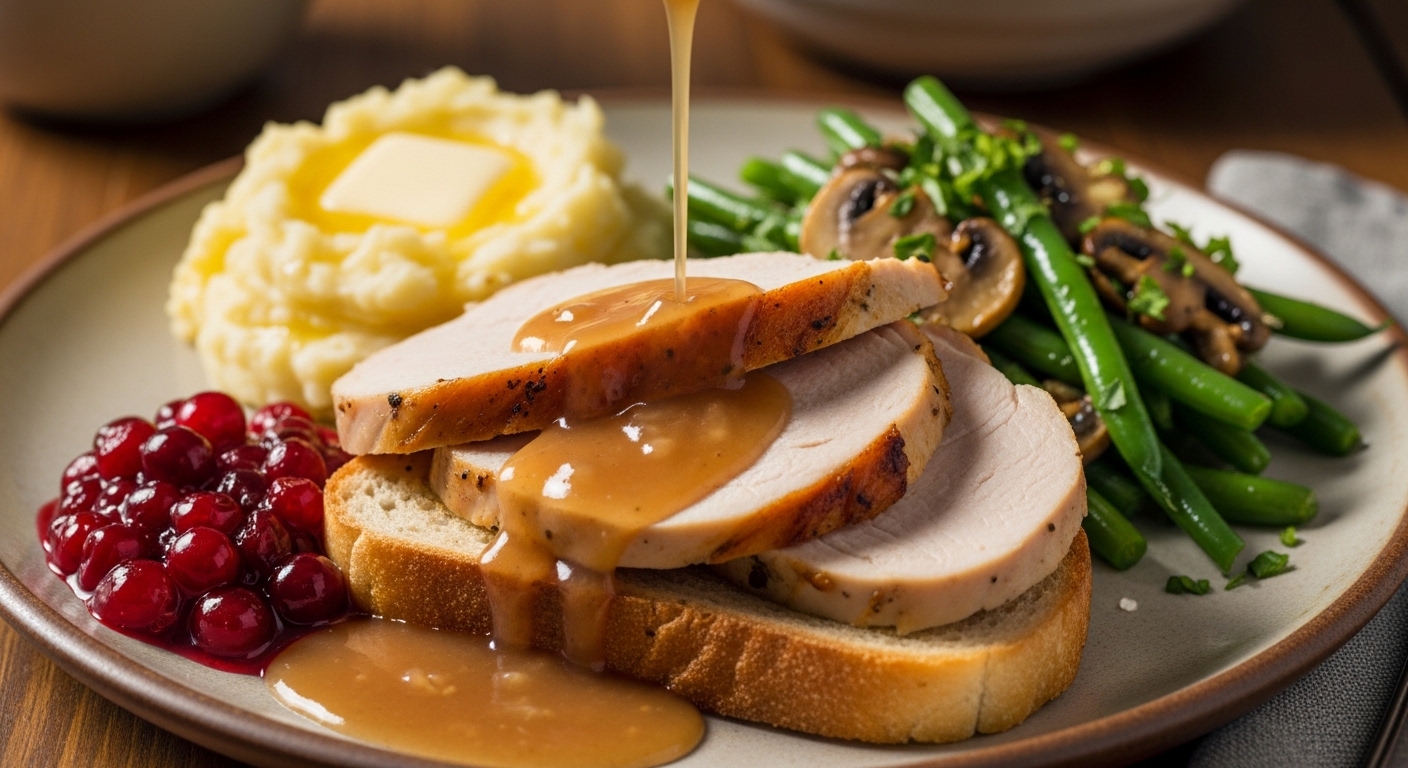
Imagine a warm, golden-brown turkey sandwich that’s not tucked into bread but laid out like a rustic canvas—crisp lettuce, tangy cranberry sauce, roasted turkey slices, and melted cheese all piled high on a toasted slice of sourdough. That’s the magic of an open faced turkey plate. This dish isn’t just a sandwich gone sideways—it’s a celebration of flavor, texture, and tradition. Originating from European comfort food traditions, especially in places like France and Germany where open-faced sandwiches (like the German “Belegte Brötchen” or French “sandwich à l’italienne”) are beloved, this version brings those hearty ideas into the American kitchen with a Thanksgiving twist.
What makes the open faced turkey plate so special is its balance. It’s savory, satisfying, and surprisingly elegant. The open face allows each ingredient to shine while creating a beautiful presentation perfect for brunch, lunch, or even a cozy family dinner. Whether you’re hosting guests or treating yourself, this recipe delivers warmth, nostalgia, and a burst of seasonal flavors that make every bite feel like a hug.
Quick Recipe Summary Table
| Prep Time | 15 minutes |
|---|---|
| Cook Time | 8–10 minutes |
| Total Time | 25 minutes |
| Servings | 4 |
| Cuisine | American / Comfort Food |
| Course | Lunch, Brunch, Dinner |
| Calories (approx.) | 520 per serving |
Why You’ll Love This Open Faced Turkey Plate
There’s something deeply comforting about a well-made open faced turkey plate. Unlike closed sandwiches that can get soggy, this style keeps everything crisp and visible. The open layout lets you see every layer—roasted turkey glistening under melted cheddar, red onion rings adding crunch, avocado slices bringing creaminess, and a drizzle of honey mustard tying it all together. It’s visual, textural, and downright delicious.
Plus, it’s incredibly versatile. Swap ingredients based on what’s in season or what you have on hand. Want more spice? Add pickled jalapeños. Craving sweetness? Stir in a spoonful of fig jam. And because it’s served on individual plates rather than one shared loaf, it feels like a gourmet experience without the fuss.
The Secret Behind a Perfect Open Faced Turkey Plate
The key lies in preparation and balance. Toasting the bread ensures it won’t become soggy when topped with moist turkey and sauces. Layering ingredients thoughtfully—from sturdy bases like avocado to light accents like arugula—creates harmony in every bite. And don’t skip the finishing touches: a sprinkle of fresh herbs or a dash of cracked pepper elevates the whole dish.
Complete Ingredients List (Serves 4)
- 4 thick slices sourdough bread (or brioche for extra richness)
- 12 oz roasted turkey breast, thinly sliced (about ¼ inch thick)
- ½ cup cranberry sauce (homemade or store-bought, chilled)
- 4 oz sharp white cheddar cheese, shredded
- 1 ripe avocado, sliced thin
- ¼ red onion, thinly sliced into rings
- 2 cups baby arugula or spring mix
- 2 tbsp Dijon mustard
- 1 tbsp honey
- 1 tsp apple cider vinegar
- Salt and freshly ground black pepper, to taste
- Olive oil spray (for grilling)
Step-by-Step Instructions
- Toast the Bread: Preheat your oven broiler or use a toaster oven. Place bread slices on a baking sheet and broil for 2–3 minutes on each side until golden and crisp. Let cool slightly.
- Make the Honey Mustard Sauce: In a small bowl, whisk together Dijon mustard, honey, apple cider vinegar, salt, and pepper until smooth. Set aside.
- Assemble Each Plate: On four serving plates, place one toasted bread slice as the base. Spread a thin layer of honey mustard sauce over each slice.
- Add Layers: Top evenly with arugula or spring mix. Arrange turkey slices neatly over the greens. Dollop small spoonfuls of cranberry sauce around the edges—this adds color and tang.
- Cheese & Avocado: Sprinkle shredded cheddar over the turkey. Add avocado slices and red onion rings on top. Finish with a generous drizzle of remaining honey mustard sauce.
- Season & Serve Immediately: Lightly season with salt and black pepper. For best results, serve right away while the cheese is still melty and the bread is crisp.
Chef Tips for Best Results
- Use room-temperature turkey: Cold turkey shrinks and becomes tough. Let sliced deli or leftover roast turkey sit at room temperature for 10 minutes before assembling.
- Don’t overload the bread: Too many wet ingredients will make the toast soggy. Keep layers balanced.
- Toast just before serving:: Grilled bread loses crispness fast. Toast only after prepping other components.
- Fresh is best: Use homemade cranberry sauce if possible—it has better texture and avoids added sugars found in some commercial brands.
Common Mistakes to Avoid
- Using soft bread: Always choose firm sourdough, ciabatta, or country loaf—they hold up under weight.
- Skipping the mustard base: Without a binding sauce, ingredients slide off and flavor suffers.
- Overcooking the cheese: If you’re broiling, keep an eye on it—cheddar burns quickly.
Ingredient Substitutions & Variations
Want to customize your open faced turkey plate? Here are smart swaps:
- Turkey alternatives: Rotisserie chicken, smoked salmon, or grilled portobello mushrooms (for vegetarian option).
- Cranberry swap: Fig jam, apricot preserves, or even a smear of pesto for herbal notes.
- Cheese options: Brie, goat cheese, or smoked gouda instead of cheddar.
- Vegan version: Use marinated tofu or tempeh instead of turkey; vegan cheese; and maple-cranberry spread.
- Indian-inspired twist: Replace cranberry with mango chutney, add pickled onions, and use naan instead of sourdough.
Healthier Version (Lower Calorie)
Cut calories without sacrificing flavor by making these swaps:
- Use whole-grain or sprouted grain bread (lower glycemic index).
- Substitute half the cheddar with ricotta or goat cheese (less fat, more protein).
- Replace mayo-based sauces with Greek yogurt-based honey mustard.
- Skip the avocado—add sliced hard-boiled egg or edamame for plant-based protein.
Serving Suggestions
Pair your open faced turkey plate with:
- A simple green salad dressed with lemon vinaigrette.
- Roasted sweet potatoes or garlic parmesan fries on the side.
- A glass of crisp Pinot Noir or sparkling water with lime.
- For brunch, add a poached egg on top of one plate for extra richness.
Storage & Reheating
This dish is best enjoyed fresh, but here’s how to preserve leftovers:
- Refrigerate unassembled: Store bread, turkey, cheese, and veggies separately in airtight containers for up to 2 days.
- Reheat wisely: If you must reheat, do so gently in a skillet over low heat with a splash of water to prevent drying. Avoid microwaving—it ruins texture.
- No go-to-freeze: The bread will become rubbery once frozen and thawed. Make ahead, then assemble just before eating.
Nutrition Facts (Approximate Per Serving)
- Calories: 520
- Protein: 32g
- Fat: 24g (Sat Fat: 9g)
- Carbohydrates: 48g (Fiber: 6g, Sugar: 10g)
- Sodium: 980mg
- Cholesterol: 75mg
Key Takeaways
- The open faced turkey plate is a visually stunning, flavor-packed alternative to traditional sandwiches.
- It combines savory turkey, sweet-tart cranberry, creamy cheese, and crisp veggies in one harmonious bite.
- Perfect for holidays, brunches, or weeknight meals—it’s easy to customize and impress guests.
- With proper layering and fresh ingredients, it stays crisp and delicious from first bite to last.
FAQs
Can I make this ahead of time?
Best assembled no more than 30 minutes before serving. If prepping components ahead, store turkey, veggies, and sauce separately. Toast bread and add cheese last minute for optimal texture.
Is this gluten-free?
Not naturally, unless you use certified gluten-free bread. Many store-bought sourdough contains wheat, so always check labels or opt for gluten-free alternatives like almond flour or rice-based breads.
Can I use leftover Thanksgiving turkey?
Absolutely! Just shred or slice it thinly. Warm it briefly in the microwave with a splash of broth if it seems dry.
What’s the difference between open-faced and regular turkey sandwiches?
The main difference is presentation and structure. Open-faced sandwiches are laid out flat on a single slice of bread, allowing each ingredient to be visible and accessible. Regular sandwiches enclose filling between two slices, which can mute flavors and lead to sogginess.
How do I keep the bread from getting soggy?
Toasting the bread first creates a barrier. Also, avoid adding wet ingredients (like tomato slices) directly on top—place them on the side or lightly pat dry. Use a binding sauce like mustard to help anchor everything.
Conclusion: Your New Favorite Comfort Dish Awaits
The open faced turkey plate isn’t just another sandwich variation—it’s a reinvention of comfort food. With its bold flavors, beautiful presentation, and endless customization options, it’s bound to become a staple in your kitchen. Whether you’re feeding a crowd or enjoying a quiet solo meal, this dish delivers both satisfaction and style.
So next time you’re craving something warm, nostalgic, and full of flavor, reach for that slice of toasted bread and let the layers tell a story. Trust us—once you try this version, you’ll never look at a turkey sandwich the same way again. Now go ahead: build your plate, take a bite, and savor the moment.
Leave a Reply