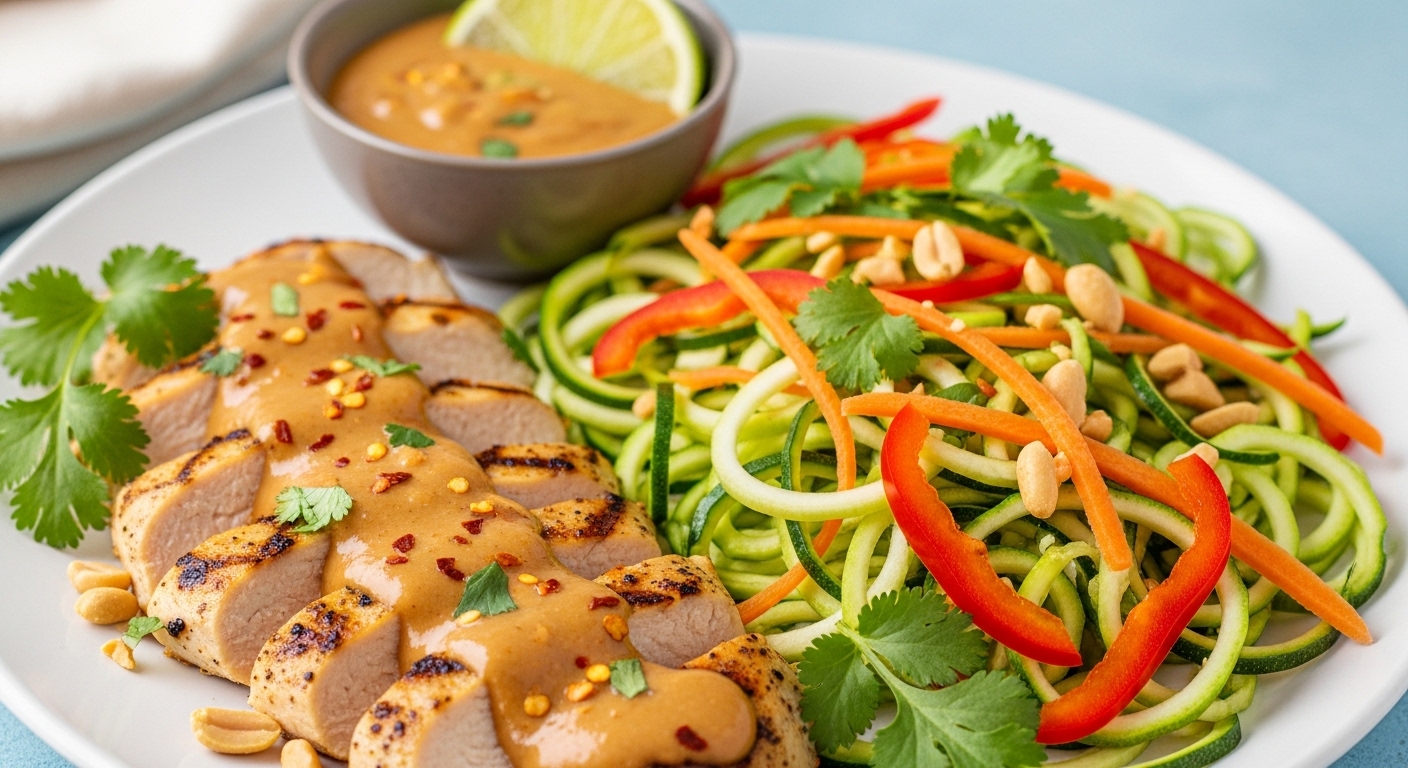
Are you craving the bold, aromatic flavors of Thai cuisine but want to stick to your keto lifestyle? Look no further than Keto Thai Peanut Chicken, a delicious and satisfying dish that combines creamy peanut sauce with tender chicken—all while keeping net carbs low. This recipe is perfect for anyone seeking a quick, flavorful meal that fits seamlessly into a ketogenic diet.
The appeal of Keto Thai Peanut Chicken lies in its harmonious blend of sweet, savory, and nutty notes, all without the sugar-laden ingredients typical of traditional versions. With zesty lime, fresh cilantro, crunchy vegetables, and a rich peanut glaze, this dish delivers restaurant-quality taste right in your kitchen—without compromising your macros.
Why Keto Thai Peanut Chicken Works for Low-Carb Eaters
Traditional Thai peanut chicken often relies on rice noodles or high-carb sauces thickened with cornstarch and loaded with sugar. By adapting this classic, we replace those elements with keto-friendly alternatives like cauliflower rice, almond flour-based thickening agents, and natural sweeteners such as erythritol or monk fruit. The result? A dish that satisfies cravings while supporting ketosis.
Chicken breast is an excellent protein source for keto eaters—lean, versatile, and quick-cooking. When paired with healthy fats from coconut milk and peanuts, it creates a balanced meal rich in protein and good fats, with minimal carbohydrates.
Key Ingredients for Your Keto Thai Peanut Chicken
To make this dish truly shine, you’ll need these essential components:
- Boneless, skinless chicken breasts – cut into bite-sized strips for even cooking.
- Coconut milk (full-fat) – provides creaminess and healthy saturated fats.
- Peanut butter (unsweetened, natural) – the star of the sauce, delivering authentic flavor.
- Lime juice and zest – adds brightness and acidity to balance the richness.
- Garlic, ginger, and chili flakes – form the aromatic base of Thai-inspired heat.
- Green onions and fresh cilantro – for freshness and color.
- Sesame oil and fish sauce (or tamari for gluten-free) – deepen umami complexity.
- Cauliflower rice – a zero-carb substitute for traditional noodles.
Optional additions include sliced bell peppers, snap peas, or mushrooms for extra crunch and nutrition.
Step-by-Step Cooking Instructions
Follow these simple steps to prepare your own Keto Thai Peanut Chicken:
- Prepare the vegetables: Steam or sauté cauliflower rice until tender. Set aside. Sauté garlic, ginger, and chili in avocado or olive oil until fragrant.
- Cook the chicken: Season chicken with salt, pepper, and a splash of tamari. Brown in the same pan until golden and cooked through. Remove and set aside.
- Make the sauce: In the same pan, add coconut milk, peanut butter, lime juice, grated ginger, and a pinch of erythritol. Whisk continuously over medium heat until smooth and slightly thickened.
- Combine everything: Return chicken to the pan, toss with the sauce, and simmer for 2–3 minutes. Stir in green onions and half the cilantro.
- Serve hot:** Spoon over cauliflower rice, garnish with remaining herbs, a drizzle of sesame oil, and optional crushed peanuts for texture.
This method ensures maximum flavor absorption and a silky, velvety sauce that clings perfectly to each piece of chicken.
Health Benefits Beyond the Ketogenic Lifestyle
Beyond being keto-compliant, Keto Thai Peanut Chicken offers several nutritional perks. Chicken is rich in high-quality protein, which supports muscle maintenance and satiety. Healthy fats from coconut milk and nuts provide sustained energy and support brain function.
Peanut butter contributes magnesium and vitamin E, while citrus and herbs offer antioxidants. Cauliflower rice keeps fiber intake moderate without spiking blood sugar, making it ideal for those managing insulin sensitivity.
Tips for Perfecting Your Keto Thai Peanut Chicken
– Don’t skip the acid: Lime juice not only adds flavor but also helps preserve nutrients and enhances fat metabolism.
– Adjust sweetness carefully: Use less sweetener if preferred; the natural tang of lime balances the sauce well.
– Use high-heat cooking: Sear chicken quickly to lock in juices and prevent dryness.
– Customize the heat level: Omit chili flakes or use mild Thai chilies for a gentler kick.
– Make it ahead: Store leftovers in an airtight container for up to three days. Reheat gently to preserve texture.
Key Takeaways
- Keto Thai Peanut Chicken is a delicious, low-carb adaptation of a beloved Thai favorite.
- It features tender chicken, creamy peanut sauce, and fresh vegetables—all under 10g net carbs per serving.
- The dish can be prepared in under 30 minutes using common pantry staples.
- Customizable spice levels and vegetable additions make it family-friendly.
- Pair it with cauliflower rice or zucchini noodles for a complete, satisfying meal.
Frequently Asked Questions
Q: Can I substitute the chicken with another protein?
A: Absolutely! You can use shrimp, tofu, or even beef strips for a different twist. Just ensure the protein cooks quickly to avoid toughness.
Q: Is this dish gluten-free?
A: Yes, as long as you use tamari instead of soy sauce and check that your peanut butter doesn’t contain added sugars or fillers. Most natural brands are safe.
Q: How do I store and reheat leftovers?
A: Store in a sealed container in the fridge for up to 4 days. Reheat gently on the stove with a splash of water or broth to restore moisture.
Q: Can I make this sauce dairy-free and nut-free?
A: For dairy-free, coconut milk works perfectly. To make it nut-free, swap peanut butter with sunflower seed butter—though flavor and texture will differ slightly.
Q: What’s the best way to serve this dish?
A: Serve over cauliflower rice, with a side of steamed broccoli or a mixed green salad. Add a sprinkle of crushed peanuts or sesame seeds for crunch.
Final Thoughts
Keto Thai Peanut Chicken proves that eating low-carb doesn’t mean sacrificing flavor. This vibrant, nutrient-dense dish brings the essence of Thai cuisine into your home while aligning with ketogenic principles. Whether you’re meal prepping for the week or whipping up a quick dinner, this recipe delivers both satisfaction and style.
With its balance of savory, sweet, and tangy elements, it’s no wonder this version has become a staple among keto enthusiasts. Give it a try tonight—and rediscover your favorite takeout flavor, guilt-free.