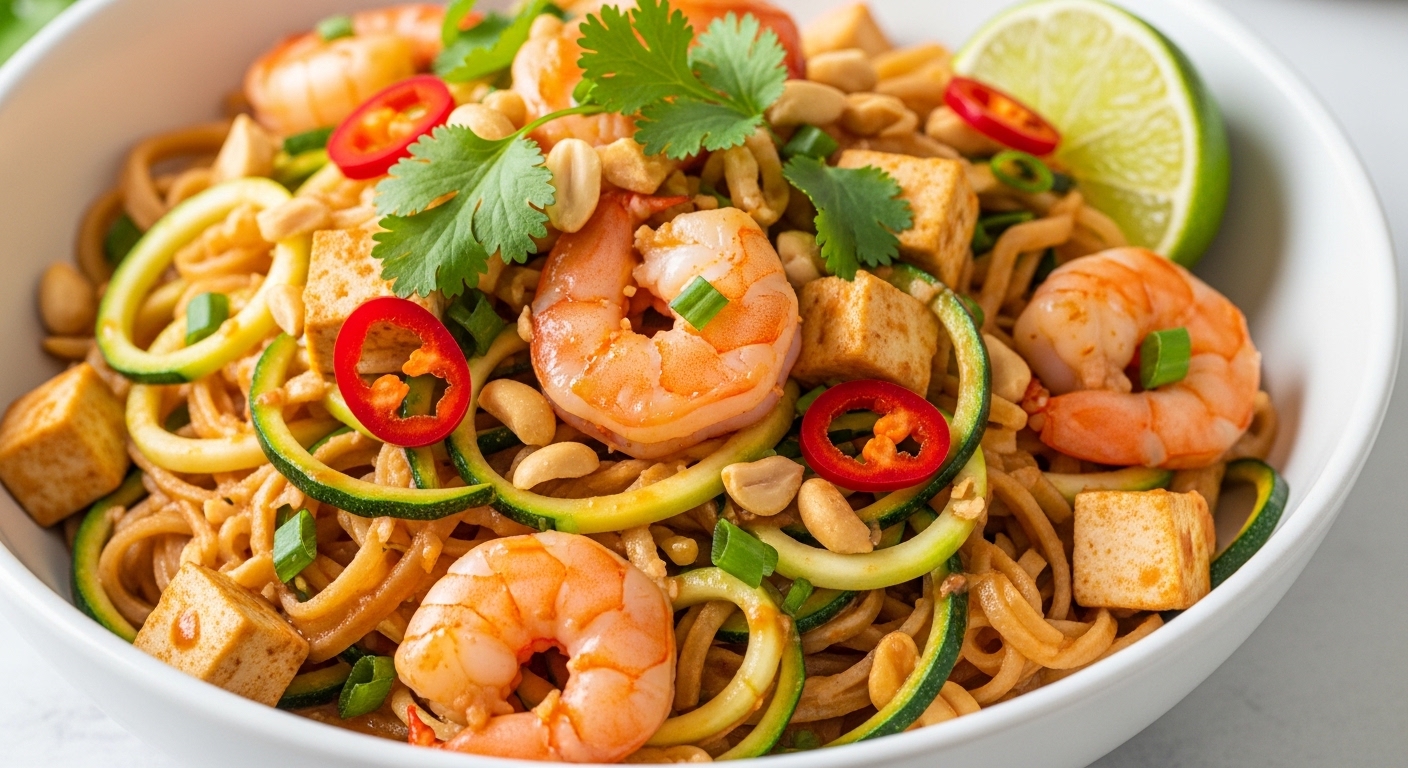
Looking for a satisfying, flavorful dinner that fits your keto lifestyle? You’re in luck. Keto Pad Thai Zoodles delivers the vibrant taste of traditional pad thai—with its tangy sauce, fresh herbs, and savory protein—but with a clever low-carb twist: spiralized zucchini noodles replace the high-carb rice noodles. This dish is not only gluten-free and carb-conscious but also rich in healthy fats and nutrients, making it a perfect fit for anyone following a ketogenic diet.
The magic of this recipe lies in balancing bold flavors without relying on sugar or refined carbohydrates. From the umami kick of fish sauce to the brightness of lime and the crunch of peanuts, every bite feels indulgent yet guilt-free. Whether you’re meal-prepping for the week or craving takeout at home, Keto Pad Thai Zoodles offers a delicious solution that satisfies both your palate and your dietary goals.
Why Keto Pad Thai Zoodles Are Perfect for Your Diet
Traditional pad thai often includes rice noodles, which are high in carbohydrates and can spike blood sugar levels—something to avoid on keto. By substituting them with zucchini noodles (zoodles), you dramatically reduce the net carbs while keeping the authentic taste. Zoodles are naturally low in calories and high in fiber, making them an ideal base for a keto-friendly meal.
This dish is also packed with healthy fats from ingredients like olive oil or sesame oil, which help maintain ketosis. Pairing it with protein sources such as shrimp, chicken, or tofu ensures balanced nutrition. Plus, the absence of added sugars in the homemade sauce keeps the glycemic load minimal.
Key Ingredients for Authentic Flavor Without the Carbs
To make Keto Pad Thai Zoodles truly shine, focus on quality ingredients that deliver depth and authenticity:
- Zucchini (spiralized into zoodles): The star of the show—fresh, hydrating, and low in carbs.
- Tamari or coconut aminos: A soy sauce alternative that’s gluten-free and lower in sodium than regular soy sauce.
- Lime juice and rice vinegar: For that signature tangy-sour balance.
- Sesame oil and garlic: Essential for aromatic richness and umami depth.
- Peanut butter (unsweetened): Adds creaminess and healthy fats without sugar.
- Protein of choice: Shrimp, chicken breast, or firm tofu work well.
- Garnishes: Fresh cilantro, bean sprouts, red pepper flakes, and crushed peanuts add texture and color.
Avoid using brown sugar or palm sugar substitutes in the sauce; instead, opt for erythritol or monk fruit for sweetness if needed. These alternatives provide sweetness without affecting blood glucose levels.
Step-by-Step Instructions for Perfectly Cooked Zoodles
Preparing Keto Pad Thai Zoodles is easier than you think. Follow these simple steps:
- Spiralize the zucchini: Use a vegetable spiralizer or julienne peeler to create long, noodle-like strands. Rinse briefly and pat dry with a paper towel to remove excess moisture—this prevents sogginess later.
- Prepare the sauce: In a small bowl, whisk together tamari, lime juice, rice vinegar, sesame oil, garlic, unsweetened peanut butter, and a pinch of red pepper flakes until smooth. Taste and adjust acidity or saltiness as desired.
- Cook the protein: Heat a non-stick skillet over medium-high heat. Add a tablespoon of oil (coconut or avocado work best) and sauté your chosen protein until fully cooked. Remove and set aside.
- Sauté the aromatics: In the same pan, add minced garlic and a splash of water or broth to deglaze. Stir in the sauce and bring to a gentle simmer.
- Combine everything: Toss the zoodles into the sauce and cook for 1–2 minutes just until warmed through—overcooking makes them mushy. Add the cooked protein back in and toss gently.
- Garnish and serve immediately: Top with fresh cilantro, bean sprouts, crushed peanuts, and extra lime wedges.
For best results, assemble the dish right before serving to keep the zoodles crisp and vibrant.
Tips for Customizing Your Keto Pad Thai Zoodles
Feel free to personalize this recipe based on your preferences or dietary needs:
- Add vegetables like bell peppers, mushrooms, or bok choy for extra crunch and nutrients.
- Use grass-fed butter or ghee instead of oils for a richer mouthfeel.
- For extra protein, sprinkle in some grated Parmesan or nutritional yeast.
- Skip the peanuts if allergic—substitute with sunflower seeds or omit entirely.
Remember: the key to great keto cooking is balancing macronutrients—keep fat content high, protein moderate, and carbs ultra-low.
Health Benefits Beyond Just Being Keto-Friendly
Beyond fitting seamlessly into a ketogenic plan, Keto Pad Thai Zoodles offer several health perks. Zucchini is rich in vitamin C, potassium, and antioxidants, supporting immune function and heart health. Healthy fats from sesame oil and peanut butter aid in nutrient absorption and satiety.
The dish also promotes gut health thanks to fiber from vegetables and probiotic-rich ingredients like fermented tofu (if used). Plus, its anti-inflammatory properties come from turmeric or ginger—optional additions that enhance both flavor and wellness benefits.
Key Takeaways
- Keto Pad Thai Zoodles replace rice noodles with spiralized zucchini to cut carbs while preserving flavor.
- The homemade sauce uses no sugar and features umami-rich ingredients like fish sauce and sesame oil.
- This dish is customizable, allowing substitutions for proteins and vegetables based on preference.
- It’s quick to prepare, typically ready in under 20 minutes.
- Perfect for meal prep, as leftovers stay fresh in the fridge for up to 3 days.
Frequently Asked Questions
Q: Can I use other types of pasta instead of zoodles?
A: While spiralized carrots or butternut squash can work, they increase carb count. Stick with zucchini for the lowest net carb option.
Q: Is this recipe dairy-free?
A: Yes, if you omit any cheese or use dairy-free peanut butter, it’s fully plant-based.
Q: How do I prevent zoodles from getting soggy?
A: Salt them lightly, rinse, and pat dry before cooking. Also, avoid overcooking—just warm through.
By choosing Keto Pad Thai Zoodles, you’re not sacrificing taste or satisfaction for your diet. Instead, you’re enjoying a smarter, more nutritious version of a beloved comfort food—without ever feeling deprived.