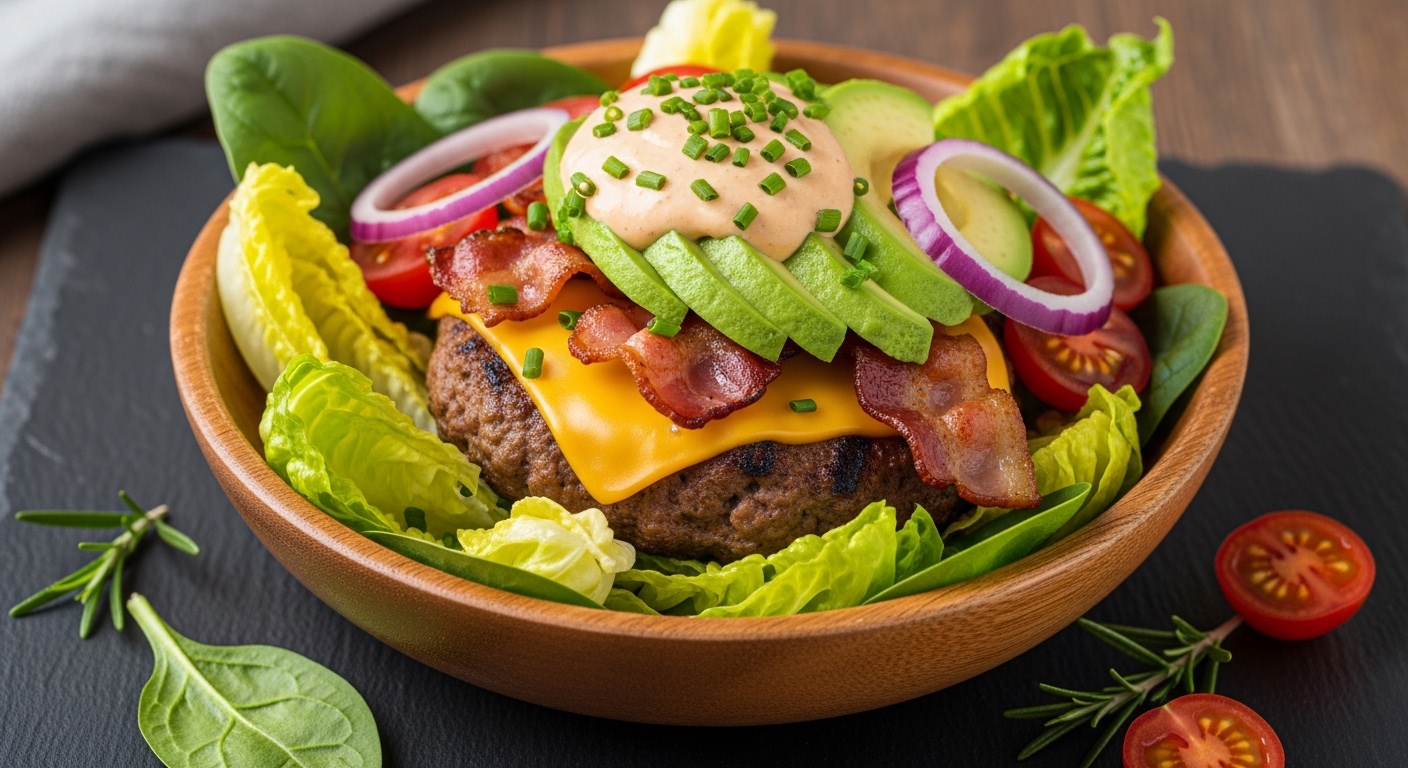
Looking for a satisfying, keto-friendly dinner that feels like a burger but delivers way more nutrition? Meet the keto loaded burger bowl—a hearty, flavor-packed dish that swaps traditional bun carbs for nutrient-dense bowls full of protein, healthy fats, and low-carb veggies. Perfect for meal prep or an indulgent dinner, this recipe transforms the classic burger into a keto-approved masterpiece.
This bowl is not just about swapping ingredients—it’s about reinventing comfort food for the ketogenic lifestyle. With every bite, you get the savory juiciness of a gourmet burger, elevated by crisp slaw, creamy sauces, and crunchy toppings—all while keeping net carbs in check. Whether you’re new to keto or a seasoned pro, this loaded burger bowl delivers on taste, texture, and satisfaction.
What Makes a Keto Loaded Burger Bowl?
A true keto loaded burger bowl goes beyond a patty and lettuce wrap. It’s a complete meal built around three pillars: high-quality protein, healthy fats, and low-carb vegetables. Unlike traditional burgers, which rely on bread buns and starchy sides, this version uses a foundation of cauliflower rice, shredded cabbage, or mashed avocado to replace carbs. Toppings like bacon, cheese, pickles, and creamy sauces are layered generously to enhance flavor without compromising ketosis.
- Protein source: Grass-fed beef, turkey, or plant-based alternatives
- Fat-rich base: Cauliflower rice, zucchini noodles, or avocado mash
- Low-carb toppings: Crispy bacon, sharp cheddar, red onion, tomato slices
- Flavor boosters: Garlic aioli, sriracha mayo, or tangy kimchi
The Benefits of Going Bowl-Style
Switching to a bowl format offers several advantages for keto dieters. First, it increases vegetable intake naturally, helping meet daily fiber needs. Second, portion control becomes easier when ingredients are visually separated. Finally, customization is limitless—each person can tailor their bowl to their macros and flavor preferences.
How to Build Your Perfect Keto Loaded Burger Bowl
Creating the ideal keto loaded burger bowl starts with smart ingredient choices. Here’s a step-by-step guide to crafting a restaurant-worthy meal at home:
- Cook your patty: Use 85% lean ground beef or a plant-based alternative. Season with salt, pepper, garlic powder, and smoked paprika. Cook over medium heat until fully browned. Avoid overcooking to keep it moist.
- Prepare the base: Replace rice or pasta with cauliflower rice (blanched or raw) or spiralized zucchini. You can also use mashed avocado for extra creaminess and healthy fats.
- Add crunchy textures: Layer crispy bacon bits, jalapeños, pickled onions, or crushed tortilla chips (in moderation) to mimic the crunch of a burger.
- Top with cheese: Sprinkle crumbled feta, shredded cheddar, or pepper jack for richness and melt-in-your-mouth appeal.
- Drizzle with sauce: Homemade ranch, garlic herb mayo, or a spicy chipotle aioli ties everything together.
Pro Tips for Maximum Flavor and Nutrition
To elevate your bowl even further, consider these expert tips:
- Let your burger rest for 2–3 minutes after cooking—this keeps juices inside.
- Toast the patty lightly under the broiler to add smoky depth.
- Use organic, grass-fed beef for higher omega-3 content and better fat quality.
- Swap regular bacon for turkey bacon if reducing sodium or calories.
- Experiment with global flavors—try Korean bulgogi beef, Mexican salsa verde, or Greek tzatziki.
Macros and Nutritional Breakdown
One of the best things about the keto loaded burger bowl is its flexibility. Below is an approximate macro profile based on a standard serving:
- Calories: 520–600 kcal
- Net Carbohydrates: 8–12g
- Protein: 35–40g
- Total Fat: 42–48g
- Fiber: 5–7g
These numbers vary depending on portion sizes and specific ingredients, but they comfortably fit within most keto guidelines (under 20g net carbs per day). Always track with a nutrition app for precision.
Why This Bowl Belongs in Your Meal Rotation
The keto loaded burger bowl isn’t just a trend—it’s a sustainable, delicious solution for busy weeknights. It satisfies cravings without guilt, supports energy levels, and keeps you feeling full longer thanks to its balanced macros. Plus, because it’s customizable, it works for various dietary preferences, including gluten-free, dairy-free (with substitutions), or paleo.
Unlike processed keto snacks, this bowl offers real food nutrients: antioxidants from veggies, complete proteins from meat, and heart-healthy fats from oils and avocados. It’s the kind of meal that fuels both body and mind.
Key Takeaways
- The keto loaded burger bowl replaces carb-heavy burger components with low-carb alternatives like cauliflower rice and avocado.
- It’s rich in protein, healthy fats, and fiber—ideal for maintaining ketosis and satiety.
- Customization makes it adaptable for different tastes and dietary needs.
- Prep ahead: Cook patties and chop toppings in batches for quick assembly throughout the week.
- Pair with a side salad or bone broth soup for a complete, satisfying meal.
Frequently Asked Questions
Q: Can I make this bowl ahead of time?
A: Yes! Cook and season your patties ahead, then store in the fridge for up to 3 days or freeze for 1 month. Assemble the bowl fresh when ready to eat to preserve crunch and freshness.
Q: What’s the best meat to use for keto?
A: Grass-fed beef is excellent due to its higher fat content and nutrient profile. Chicken thighs, lamb, or turkey also work well—just ensure total fat intake stays high enough to support ketosis.
Q: Is this bowl suitable for intermittent fasting?
A: Absolutely. As long as you stay under 20g net carbs and include healthy fats, this bowl fits perfectly within a 16:8 or extended fasting window. Add a splash of olive oil or avocado to boost calories if needed.
Q: Can I turn this into a vegan keto option?
A: Yes, use a high-fat, low-carb plant-based patty made from mushrooms, lentils, or tofu. Pair with coconut yogurt-based sauces and plenty of nuts or seeds for fat content.
Ready to upgrade your keto game? Try the keto loaded burger bowl tonight and experience why this bowl has become a staple in low-carb kitchens everywhere.