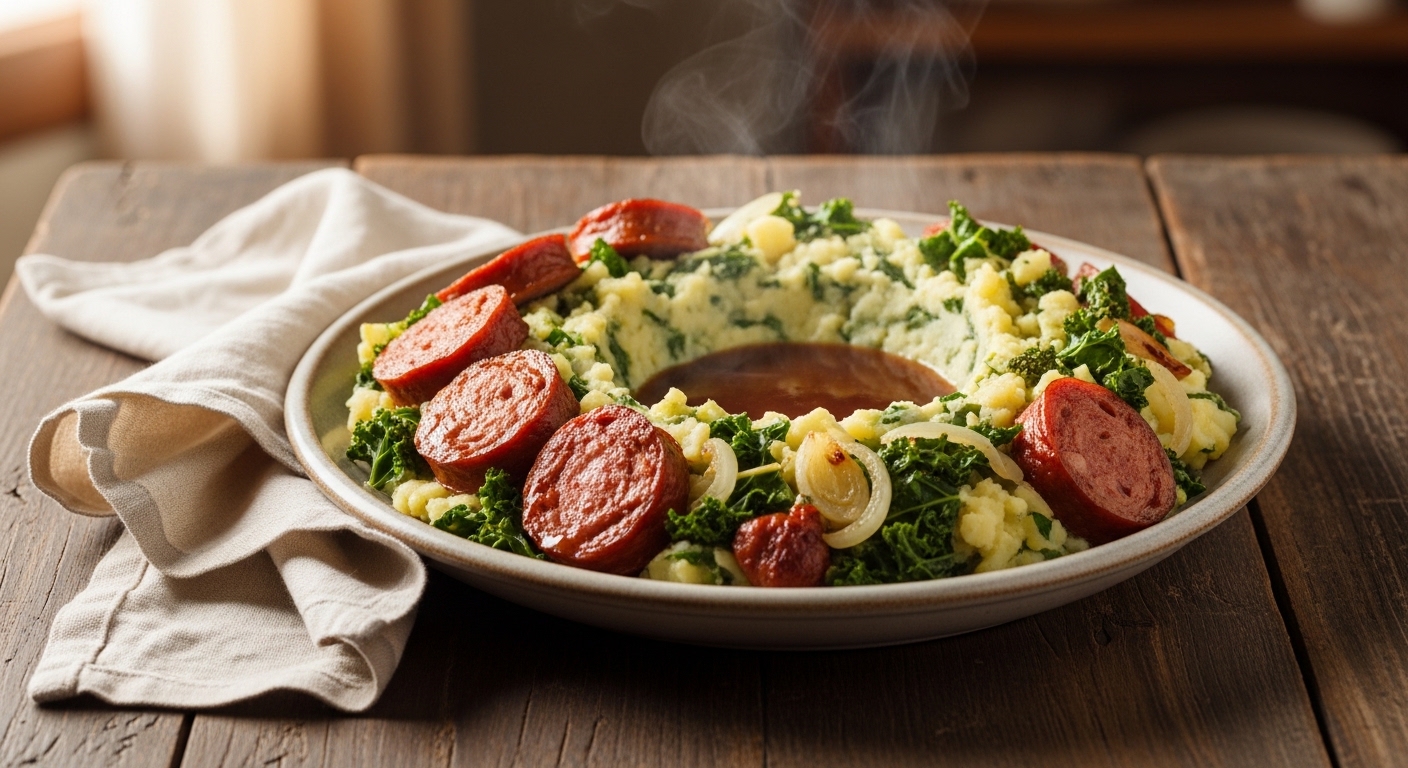
Imagine a warm, rustic dish that embodies the soul of Dutch comfort food—rich, earthy flavors, simple ingredients, and a satisfying crunch on top. That’s Dutch Stamppot for you. This beloved traditional meal is more than just mashed potatoes with vegetables; it’s a hearty one-pot wonder that brings warmth to cold winter nights and comfort to every bite. Made by mashing boiled potatoes, kale or another seasonal green, and often paired with smoked sausage (rookworst), stamppot is deeply rooted in Dutch culinary heritage. It’s a dish that speaks of simplicity, resourcefulness, and deep flavor—making it a favorite across generations.
If you’re searching for a filling, nutritious, and authentic Dutch recipe that feels like home, you’ve found your match. In this article, we’ll take you through everything you need to know about Dutch Stamppot—from its origins and cultural significance to a detailed, step-by-step recipe that even beginners can master.
What Is Dutch Stamppot?
Dutch Stamppot (pronounced “stamp-pot”) literally means “mashed potato” in Dutch. The name comes from the traditional method of mashing the mixture using a wooden stamp (a heavy wooden pestle) until it reaches a smooth yet slightly chunky texture. Unlike creamy American mashed potatoes, Dutch Stamppot has a rustic, hearty consistency that allows each ingredient—potatoes, greens, and protein—to shine.
The dish traditionally includes boiled potatoes and a leafy green vegetable such as kale, endive, or watercress. These are mashed together with butter and sometimes milk, then served with a side of smoked sausage (rookworst), making it a complete meal in itself. The combination of starch, fiber, fat, and protein makes stamppot incredibly satisfying and nutritionally balanced.
Quick Recipe Summary
| Metric | Details |
|---|---|
| Prep Time | 15 minutes |
| Cook Time | 40–45 minutes |
| Total Time | 55–60 minutes |
| Servings | 4 people |
| Cuisine | Dutch |
| Course | Main Dish |
| Calories (approx.) | 480 per serving |
Ingredients You’ll Need
To make an authentic and delicious Dutch Stamppot, gather these ingredients:
– 1.5 kg (3.3 lbs) yellow potatoes – preferably starchy varieties like Bintje or Maris Piper
– 400 g (14 oz) kale – washed, stems removed, roughly chopped (or substitute with endive, chard, or cabbage)
– 100 ml (3.4 fl oz) whole milk – optional, for creaminess
– 60 g (2 oz) butter – divided (use half for cooking greens, half for mashing)
– Salt and freshly ground black pepper – to taste
– 800 g (1.7 lbs) smoked sausage (rookworst) – sliced into thick rounds
– Optional: 1 tbsp apple cider vinegar or white wine for tanginess
Step-by-Step Instructions
Follow these steps to create a rich, comforting Dutch Stamppot that tastes like home.
Step 1: Prepare the Vegetables
Start by washing the potatoes thoroughly under cold running water. There’s no need to peel them—the skin adds texture and nutrients. Cut them into large, evenly sized chunks so they cook uniformly.
Next, prepare the kale. Remove the tough central ribs and chop the leaves finely. If using endive or another bitter green, slice it thinly. Set aside while the potatoes boil.
Step 2: Boil the Potatoes
Place the potato chunks in a large pot of salted water. Bring to a rolling boil and cook for 20–25 minutes, or until fork-tender. Drain well—make sure to remove all excess moisture, as this affects the final texture of the stamppot.
Step 3: Cook the Greens
While the potatoes are boiling, heat 30g (1 oz) of butter in the same pot over medium heat. Add the chopped kale (or other greens) and sauté for 3–4 minutes until wilted. Season lightly with salt and pepper. For extra flavor, add a splash of apple cider vinegar or white wine and let it evaporate.
Step 4: Mash the Stamppot
Once both the potatoes and greens are cooked, transfer the potatoes back into the pot. Add the remaining 30g (1 oz) of butter and the milk (if using). Use a potato masher or sturdy wooden spoon to mash everything together. The goal is not to make it fluffy like whipped cream, but to achieve a thick, chunky, and cohesive consistency where the potatoes, greens, and butter blend beautifully.
Season generously with salt and pepper—Dutch cuisine isn’t afraid of bold flavors!
Step 5: Sauté the Smoked Sausage
In a separate skillet, melt a small amount of butter over medium-high heat. Add the sliced smoked sausage (rookworst) and cook for 6–8 minutes, turning occasionally, until golden brown and heated through. The smoky aroma will fill your kitchen—pure comfort food magic!
Step 6: Serve
Scoop generous portions of stamppot onto warm plates. Top with several slices of roasted sausage. For a traditional touch, sprinkle a few crumbled bits of sausage skin (gehaktballen-style) on top or serve alongside.
Chef Tips for Perfect Stamppot
- Use starchy potatoes: Varieties like Bintje or Yukon Gold give the best texture—they hold their shape when mashed and absorb flavor beautifully.
- Don’t over-mash: Overworking the mixture leads to gluey, dense stamppot. A few chunks are perfect.
- Let greens cool slightly: Hot greens release too much liquid when added to the hot potatoes, making the mixture soggy.
- Season in layers: Salt the water when boiling potatoes, then adjust seasoning again at the end for balanced flavor.
- Warm your plates: Preheat dinner plates in the oven to keep the stamppot warm longer.
Common Mistakes to Avoid
- Using waxy potatoes: They don’t mash well and result in a grainy texture.
- Skipping the drain: Excess water ruins the consistency. Squeeze out every drop!
- Overcooking greens: They should be tender but still slightly crisp. Long cooking makes them mushy.
- Not letting the mixture rest: After mashing, let it sit for 2–3 minutes—it firms up and tastes better.
Ingredient Substitutions & Variations
Want to make stamppot your own? Here are some creative twists:
– Vegan version: Use olive oil instead of butter, plant-based milk, and smoked tofu or seitan sausage.
– Vegetarian: Skip the sausage or use mushrooms and lentils for a meaty texture.
– Healthier option: Replace half the potatoes with sweet potatoes or add grated carrots for sweetness and nutrients.
– Indian-inspired stamppot: Add garam masala, cumin, and turmeric to the mashed mix, and serve with paneer or spiced lentils.
– Winter variation: Swap kale for Brussels sprouts, leeks, or endive for a sharper, more complex flavor.
Serving Suggestions
Serve Dutch Stamppot family-style on a large platter. Pair it with:
– A crisp green salad with vinaigrette
– Pickles (mostarda or gherkins) for tang
– Warm rye bread or Dutch stroopwafels for dipping
– A glass of cold lager or herbal tea
For special occasions, garnish with crispy fried onions or bacon bits.
Storage and Reheating
Store leftover stamppot in an airtight container in the refrigerator for up to 3 days. To reheat, place it in a baking dish, cover with foil, and warm in the oven at 180°C (350°F) for 20–25 minutes, stirring halfway. Avoid microwaving—it can make the mixture soggy.
Nutrition Facts (Per Serving)
- Calories: ~480 kcal
- Protein: 18 g
- Carbohydrates: 58 g
- Fiber: 6 g
- Fat: 22 g
- Saturated Fat: 10 g
- Sodium: 650 mg
- Potassium: 1,200 mg
Note: Values vary based on ingredients used. Smoked sausage increases sodium and fat content.
Key Takeaways
– Dutch Stamppot is a hearty, traditional Dutch dish made from mashed potatoes and greens, typically served with smoked sausage.
– It’s a one-pot meal that balances carbs, fiber, and protein—perfect for cold weather.
– Authentic stamppot has a rustic, chunky texture achieved by using starchy potatoes and minimal mashing.
– Variations exist for dietary needs: vegan, vegetarian, or healthier versions with sweet potatoes.
– Proper technique—draining potatoes, cooking greens briefly, and seasoning wisely—makes all the difference.
Frequently Asked Questions (FAQ)
Q: Can I make Dutch Stamppot without sausage?
A: Absolutely! Many families eat stamppot without meat. Try adding mushrooms, lentils, or smoked tofu for protein. It’s just as satisfying.
Q: What greens can I use besides kale?
A: Endive, watercress, chard, cabbage, or even spinach work well. Each adds a unique flavor—endive is slightly bitter, kale is earthy.
Q: Is Dutch Stamppot gluten-free?
A: Yes, if you use gluten-free sausage. Always check labels, as some smoked meats contain wheat additives.
Q: Why is my stamppot too wet or mushy?
A: This happens if the potatoes aren’t drained properly or if too much liquid is added. Make sure to squeeze out all water from the boiled potatoes.
Q: Can I freeze Dutch Stamppot?
A: Not recommended. The texture becomes grainy after freezing and thawing. Best enjoyed fresh.
Conclusion
Dutch Stamppot isn’t just a meal—it’s a celebration of comfort, tradition, and simple ingredients done right. Whether you’re cooking for a cozy family dinner or introducing someone to Dutch cuisine, this dish delivers warmth in every spoonful. With its rich history, hearty flavors, and endless customization options, stamppot proves that the best meals don’t need complicated recipes—just care, patience, and good ingredients.
So roll up your sleeves, fire up the stove, and bring a taste of the Netherlands to your table. Your family will thank you—and you might just discover a new favorite comfort food forever.
Now, go ahead—make your Dutch Stamppot and enjoy the delicious journey from farm to fork. Gesond eten! (Eat well!)
Leave a Reply